The importance of construction technology: 12 key benefits

By
Marketing Team
@Onetrace
Construction technology is the use of digital tools, machines, and data to improve the planning, management, and execution of construction projects.
Despite its potential, it’s still finding its place in the industry.
That’s because construction still lags behind most (if not all) sectors in digitalisation, despite being among the largest sectors in Europe, generating around 10% of EU GDP.
Many firms continue to rely on manual processes, disconnected systems, and outdated ways of working that slow projects down and make day-to-day work harder than it needs to be.
This article breaks down the importance of construction technology to show why your firm shouldn’t follow the same slow pace of digital adoption that has held much of the industry back.
Key takeaways
Construction technology now supports most parts of project delivery
Digital tools are increasingly used for planning, scheduling, workforce management, reporting, and site operations.Better coordination helps reduce delays and project issues
Tools like BIM, drones, and construction software improve project visibility and help teams identify problems earlier.Construction software plays a key operational role
Unlike more specialist technologies, construction software supports the day-to-day management of projects, teams, and workflows.Onetrace combines multiple construction technology benefits in one platform
From workforce tracking and approvals to reporting and compliance, Onetrace helps (sub)contractors manage projects more efficiently.
What is construction technology?
Construction technology is the application of digital systems, advanced equipment, and data-driven processes throughout the construction project lifecycle.
The term covers a wide range of technologies used throughout the industry, from newer developments such as artificial intelligence (AI) and robotics to more established digital systems that support construction planning and site operations.
When it comes to these newer developments, industry sentiment still appears mixed.
At a government level, investment in construction innovation continues to grow, with the UK recently announcing £40 million in funding to support new robotics adoption hubs. These hubs aim to accelerate the use of robotics and automation within different industries, including construction.
At a firm level, however, confidence appears more cautious. Recent research found that only 6% of construction firms expect to significantly increase investment in AI in 2026.
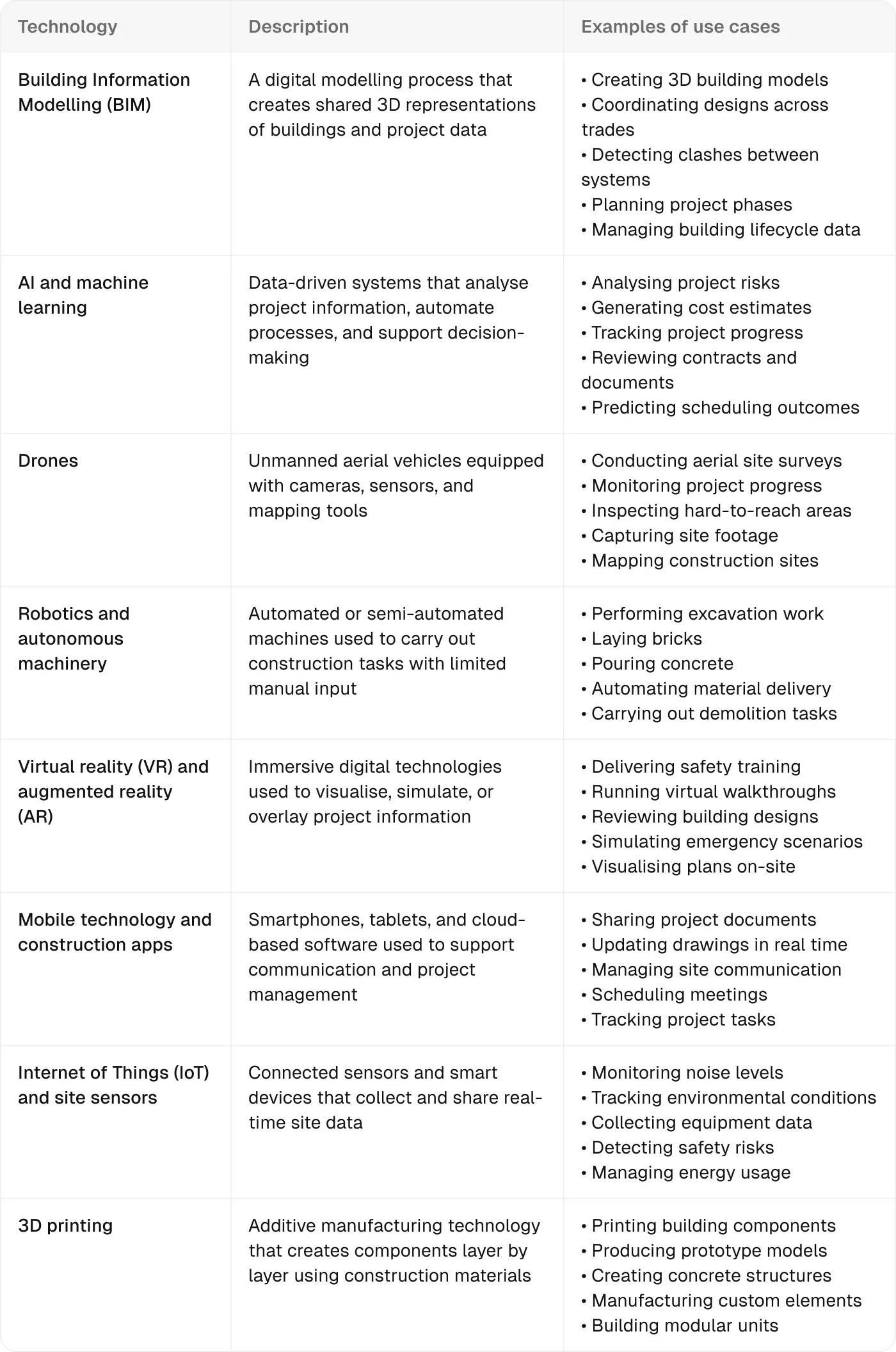
While AI and robotics often get the most attention, construction technology covers a much wider range of digital tools and systems.
The table below highlights some of the main ones currently used in the industry:
The importance of construction technology: 12 ways in which technology adds value
Construction technology now plays a role in almost every part of the construction process, from planning and design to site operations, communication, and project management.
Below are 12 of the most important ways technology adds value to modern construction projects.
1. It reduces project delays
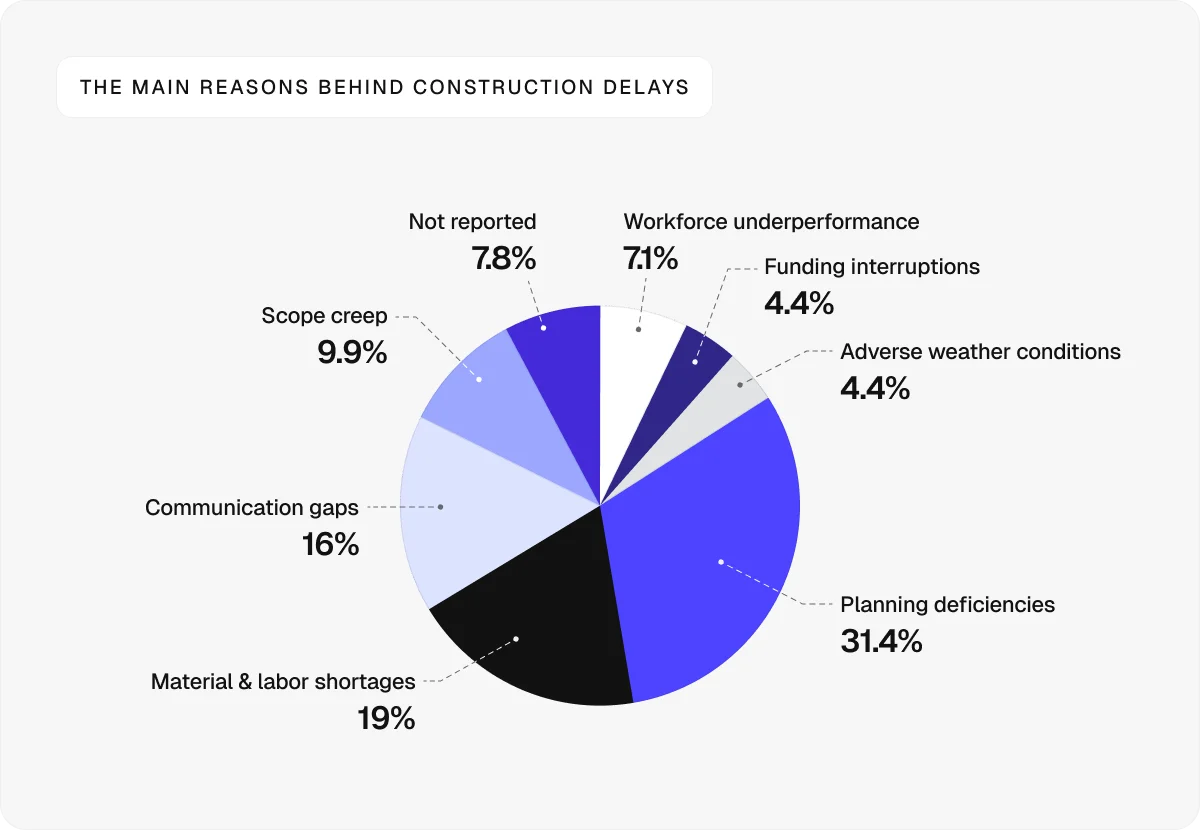
Project delays have long been one of the construction industry’s biggest challenges.
In one industry survey, more than 85% of construction professionals said delays had affected their projects, often leading to additional costs and longer delivery times.
How technology helps:
Construction management software gives project teams real-time visibility into schedules, procurement, deliveries, and crew coordination.
Mobile construction apps allow site teams and office staff to share updates, drawings, and changes without delays in communication.
AI tools analyse project schedules and progress data to identify risks, bottlenecks, and sequencing issues earlier.
Drones provide regular aerial progress updates that allow teams to quickly identify delays, access issues, or incomplete work across large sites.
2. It supports better project planning
With as many as 36% of construction project delays linked to the planning process, construction professionals can’t afford poor visibility and coordination at the early stages of a project.
How technology helps:
Construction scheduling software gives teams a central place to manage schedules, track milestones, and organise project information.
BIM software allows teams to create shared 3D models that improve coordination across trades.
AI, VR, and AR tools enable teams to identify potential issues before work begins.
Drones provide accurate site surveys and topographical data during the early planning stages.
3. It helps teams maintain consistent quality standards
Maintaining consistent quality on a construction project can be difficult when teams are working across multiple trades, suppliers, and site conditions.
How technology helps:
Construction software standardises data capture, keeps project documentation in one place, and supports multi-stage quality approval workflows among different teams and stakeholders.
Construction apps allow teams to report defects, complete inspections, and share updates directly from the site.
IoT sensors and smart cameras monitor materials, equipment, and workmanship in real time.
3D printing produces standardised components with more consistent dimensions and material application.
4. It improves cost management
Cost control remains one of construction’s biggest problems, with as many as 91% of construction projects going over budget.
How technology helps:
Construction software tracks project costs, labour hours, procurement, and budget changes in real time.
BIM software improves quantity forecasting and reduces costly clashes between trades before work starts.
Robotics and autonomous machinery reduce time spent on repetitive manual tasks and support more consistent output.
3D printing produces components with more precise material usage, helping reduce waste and avoid unnecessary costs.
5. It helps teams work more efficiently
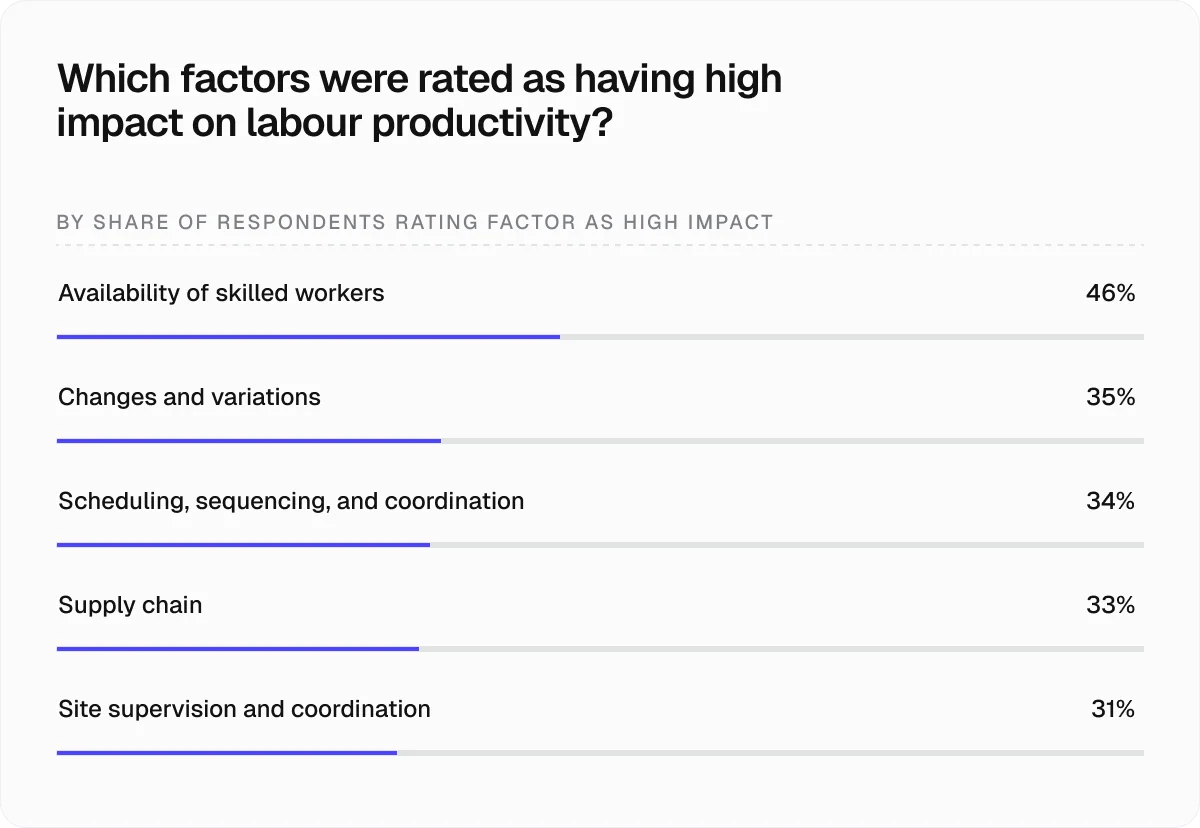
Improving productivity has long been a challenge in construction, especially on projects with changing layouts, moving schedules, and multiple subcontractors.
Many of the areas that construction professionals see as having the biggest impact on labour productivity—such as coordination, supply chain management, and handling project changes—are also areas where construction technology can make day-to-day work far more efficient.
How technology helps:
Construction software improves operational efficiency by keeping project tasks, schedules, and updates connected and easy to manage.
AI and machine learning tools analyse project and workforce data to identify more efficient ways of working.
Robotics and autonomous machinery automate repetitive tasks such as excavation, bricklaying, and material handling.
Mobile construction apps allow site teams and office staff to communicate more efficiently.
6. It keeps teams better connected
Construction projects involve multiple stakeholders working in different locations, making communication and coordination a constant challenge.
How technology helps:
Construction software centralises project communication, document sharing, and real-time project updates for faster coordination.
Mobile construction apps allow teams to access drawings, submit updates, and respond to issues on the site.
BIM software gives teams access to shared project models that improve coordination between trades.
7. It reduces pressure caused by labour shortages
Labour shortages continue to put pressure on construction firms across the UK, with the industry expected to need almost 240,000 additional workers by 2029.
How technology helps:
Construction workforce management software improves workforce planning by giving teams better visibility into labour allocation and site activity.
AI tools analyse workforce and project data to support recruitment planning and resource management.
Robotics take on repetitive site tasks, allowing skilled workers to focus on more complex work.
Autonomous machinery keeps excavation, grading, and material movement running with less manual input on-site.
Drones reduce the need for manual site inspections by capturing aerial footage and site data remotely.
8. It improves resource management
With as many as 95% of construction professionals expecting material costs to keep rising in 2026, managing project resources efficiently is becoming increasingly important for construction firms.
How technology helps:
Construction management software gives teams real-time visibility into labour costs, material usage, on-site activity, and project spend.
Timesheet apps make it easier for site teams to record hours worked, site activity, and material usage in real time.
AI tools analyse project data to identify inefficient resource allocation, procurement risks, and cost trends earlier.
BIM software allows teams to plan materials, quantities, and construction sequencing more accurately before work begins.
IoT sensors track equipment usage, site conditions, and material movement throughout projects.
9. It supports safer day-to-day site operations
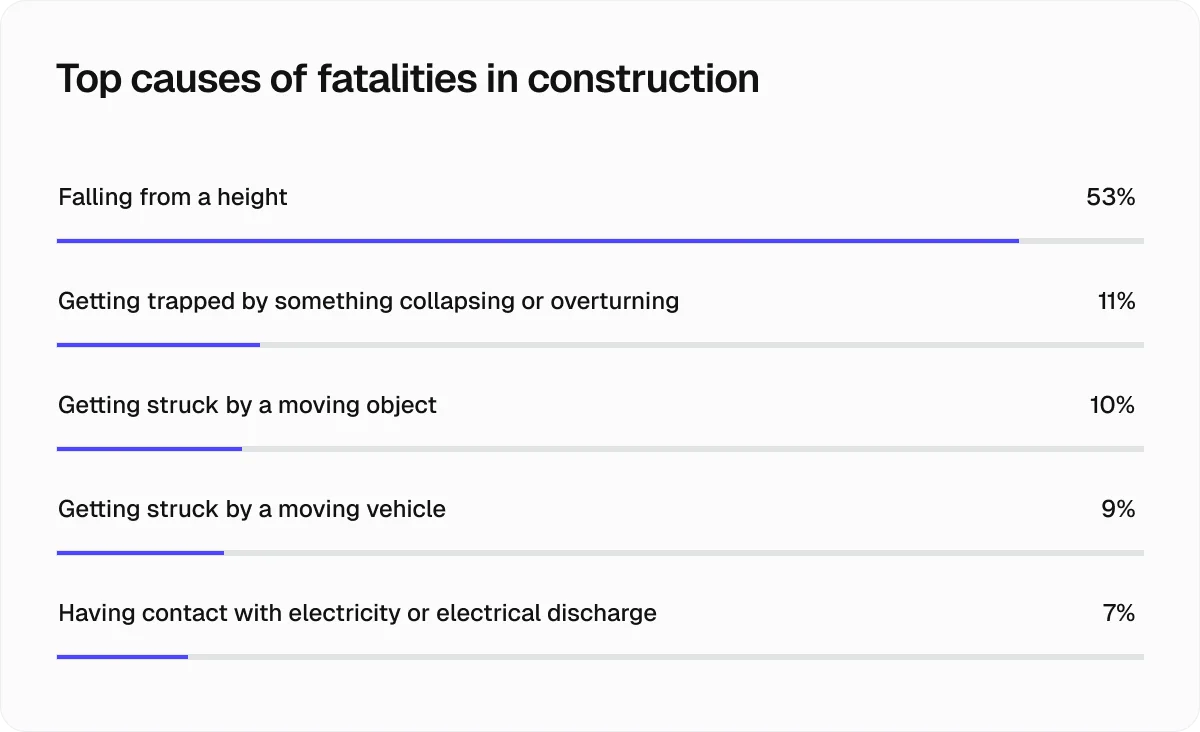
Construction remains one of the highest-risk industries for workplace injuries, with 35 fatal worker injuries and around 50,000 non-fatal injuries reported in 2024/25 in the UK alone.
How technology helps:
Construction software brings all key safety compliance activities into one centralised platform.
Wearable technology monitors worker location, movement, and vital signs in real time.
IoT sensors and smart site devices track environmental conditions (e.g., temperature and air quality) and keep workers out of hazardous or restricted areas.
VR and AR tools allow workers to complete safety training and hazard simulations before entering high-risk environments.
Drones carry out inspections and site monitoring without requiring workers to access hazardous areas manually.
Autonomous machinery reduces the time workers spend carrying out high-risk manual tasks on site.
10. It enables better decision-making
Construction projects generate large amounts of information during planning, procurement, labour, budgeting, and site operations, which makes timely decision-making difficult without the right systems in place.
How technology helps:
Construction software gives teams real-time visibility into schedules, costs, progress, and project activity, enabling data-driven decision-making.
BIM software allows teams to test design changes virtually and review their impact before work takes place on-site.
IoT sensors collect real-time data on equipment, materials, and site conditions project-wide.
VR and AR tools allow stakeholders to review project layouts and proposed changes before construction begins.
11. It improves day-to-day project management
Managing construction projects means coordinating people, materials, equipment, and site activity while dealing with numerous challenges that make organisation difficult to maintain.
How technology helps:
Project management software improves project oversight through live scheduling, workforce management, structured daily reports, and real-time site updates.
BIM software improves coordination between trades through shared project models and live design updates.
Wearable technology gives managers better visibility into workforce activity and site conditions.
12. It strengthens risk management
The US-based Construction Industry Institute has identified more than 100 different risks that can affect project execution, making effective risk management a critical part of delivery.
How technology helps:
Construction software centralises project data, reporting, and live updates to support faster risk assessment and issue tracking.
AI tools analyse project and workforce data to identify patterns linked to delays, coordination issues, and operational risks.
IoT sensors monitor equipment performance and site conditions in real time to identify emerging operational risks.
Drones provide regular aerial site data that supports risk assessments, progress reviews, and site monitoring.
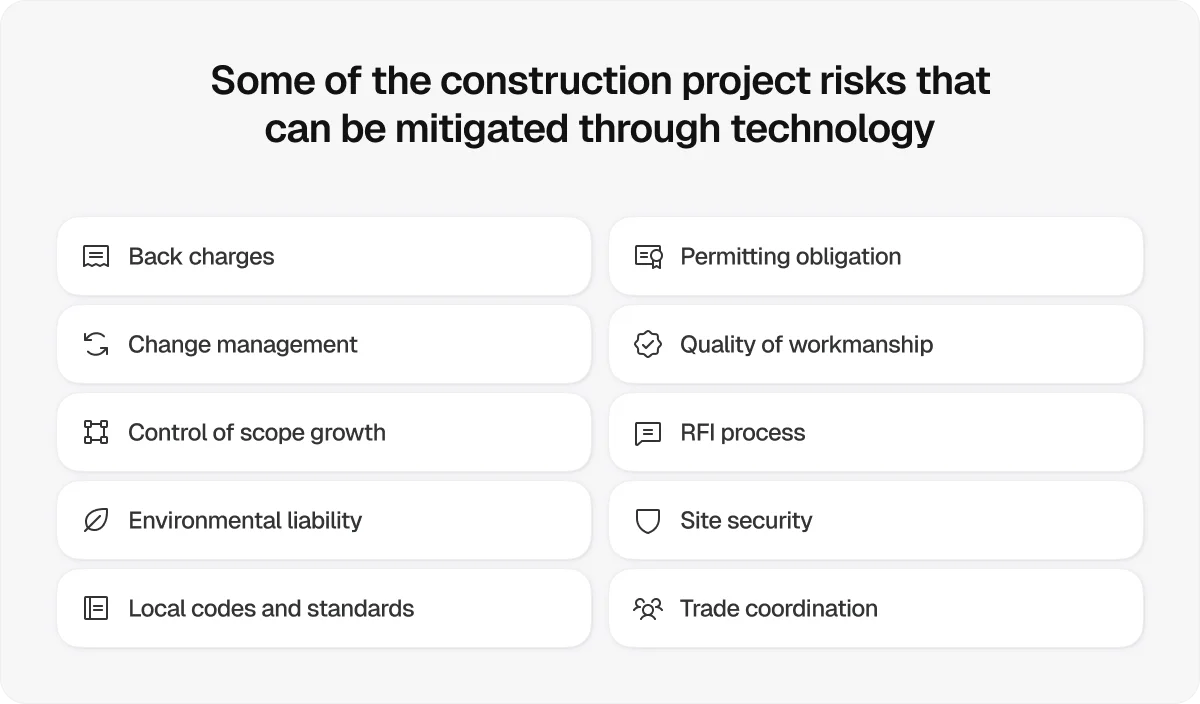
How Onetrace supports modern construction teams
While many construction technologies focus on specific parts of project delivery, construction software tools like Onetrace support the wider operational side of project delivery.
Combining Workforce and Traceability products, Onetrace helps (sub)contractors reap the full benefits of construction technology through the following features:
Customisable forms: Standardise on-site data capture with tailored forms that reduce reporting gaps and improve consistency at the project level.
Marked-up drawings: Track work directly against project drawings to improve visibility, coordination, and progress tracking across sites.
Branded reports: Generate structured reports instantly to support handovers, reduce disputes, and keep stakeholders informed.
QR codes: Create traceable digital records linked to physical work, making future inspections, maintenance, and compliance tracking easier.
Materials and rates: Track material usage, quantities, and costs in real time to improve resource management and cost control.
Photographic evidence: Capture before, during, and after site photos to strengthen quality assurance, compliance, and proof of work.
Approvals workflows: Move work through structured approval stages to reduce late-stage snagging and improve team accountability.
Timesheets and GPS tracking: Monitor workforce attendance and site activity in real time to support scheduling, labour tracking, and project oversight.
Planner and scheduling tools: Adjust teams and schedules quickly with visual planning tools that keep projects moving as priorities change.
Signed documents: Manage RAMS, Toolbox Talks, and compliance records digitally to improve visibility and reduce missed documentation.
Mobile-first access: Allow operatives to complete forms, upload evidence, and access project information directly from the site, even without a signal.
To learn more about these features and how Onetrace supports day-to-day project delivery, workforce management, and traceability, request a walkthrough tailored to your workflows, challenges, and project requirements.
FAQ
Why is technology important in construction?
Technology is important in construction because it helps firms improve efficiency, safety, communication, project management, and decision-making during project delivery.
What are the objectives of construction technology?
The main objectives of construction technology are to improve project delivery, reduce delays and costs, strengthen safety, increase productivity, and support better coordination between teams.
What are examples of construction technology?
Examples of construction technology include construction management software, BIM, drones, AI tools, robotics, wearable technology, IoT sensors, and 3D printing.
How is technology changing construction?
Technology is changing construction by replacing manual processes with more connected, data-driven, and automated ways of planning, managing, and delivering projects.
Which construction technology is best?
The best construction technology depends on the needs of the firm, project type, and operational challenges. That said, construction management software is one of the most versatile options because it supports multiple project delivery areas in one place.
Marketing Team
@Onetrace
The Onetrace marketing team is passionate about sharing insights, ideas, and innovations that help construction businesses stay connected, compliant, and efficient. Combining industry expertise with a love for clear communication, we aim to deliver content that empowers professionals to work smarter and safer.