Why you need construction scheduling software: 8 benefits

By
Marketing Team
@Onetrace
Construction scheduling software is a tool that helps you plan, organise, and monitor work on a job, so every task, team, and deadline is easy to see and kept on track.
More construction firms are now using these tools, reflected in the steady growth of the UK construction software market.
By 2035, this market is expected to reach around £628 million, growing at roughly 9% per year, with project management and scheduling tools making up the largest share.
To help you understand what’s driving this growth—and why you need construction scheduling software—this article breaks down its practical benefits.
Key takeaways
Construction scheduling software replaces guesswork with a shared plan
It brings tasks, people, and resources into one live schedule, so everyone knows what’s happening and what needs attention.Manual methods can’t keep up with modern projects
Spreadsheets and whiteboards lead to version confusion, missed updates, and poor coordination, especially when jobs become more complex.Better scheduling reduces delays and cost overruns
With most projects running late or over budget, having linked tasks, real-time updates, and quick adjustments helps prevent small issues from turning into major problems.Visibility and coordination are what keep projects moving
When teams can see progress in real time and work from the same information, it’s easier to make decisions, avoid clashes, and keep work flowing between trades.The right tool makes the difference, and Onetrace is built for the job
To get these benefits, you need software that fits how your operatives actually work. Onetrace brings scheduling, workforce planning, and documentation into one system, helping you stay organised, reduce admin, and keep projects on track.
What is construction scheduling software?
Construction scheduling software is a digital tool used to plan, manage, and adjust the timeline of a construction project.
It brings together tasks, people, and resources into one live schedule, so you can:
Build accurate timelines for project execution
Set task dependencies so work happens in the right sequence
Create short-term lookaheads for site teams
Allocate labour, materials, and equipment
Track progress against the plan in real time
Share updates with crews on site through mobile access
Thanks to these features, everyone—from site managers to subcontractors—can see what’s been done and what’s coming up.
Why you need construction scheduling software instead of manual methods
You need construction scheduling software primarily because manual tools like spreadsheets and whiteboards can’t keep up with the complexity and pace of modern job sites.
This becomes clear when you compare the performance of manual methods and scheduling software in day-to-day use:
Area | Manual methods | Scheduling software |
Schedule visibility | Multiple versions of the schedule circulate, leading to confusion and mistakes. | There’s one live, up-to-date schedule that everyone can access. |
Version control | Files get copied, renamed, and edited separately (e.g., ‘v3’, ‘final’, ‘final_final’). | Changes are made in one place, with a clear record of updates. |
Access on site | They’re hard to use on mobile, so crews often rely on outdated info. | Mobile access gives crews real-time updates on site. |
Task sequencing | Dependencies are manual and easy to miss. | Tasks are linked, so work follows the right order automatically. |
Handling changes | Updates rely on emails, calls, and people remembering to check. | Automatic notifications keep everyone informed instantly. |
Resource planning | It’s difficult to track who is available and what resources can be accessed. | Labour, equipment, and materials are planned and tracked in one place. |
Why you need construction scheduling software: 8 practical benefits
Beyond replacing manual methods, you need construction scheduling software because it delivers practical benefits that make projects easier to organise, coordinate, and deliver.
Here are eight of them:
1. It strengthens project and resource planning
Planning is where most construction projects are won or lost.
When timelines are unclear, or tasks aren’t properly sequenced, crews arrive too early or too late, tasks overlap, and work gets redone.
Resource planning is particularly challenging, given that labour is in short supply and equipment needs to be carefully scheduled across multiple jobs to avoid costly downtime.
Construction scheduling software gives you a more reliable way to plan both the job and the resources behind it by helping you:
Set out the full timeline, with well-defined phases and task order
Allocate labour and equipment, without clashes or double-booking
Sequence work properly, so crews aren’t waiting on each other
Build short-term lookaheads for what’s happening next on site
2. It prevents schedules from slipping
With over 85% of professionals reporting project delays in 2022, it’s undeniable that schedule overruns are the standard in construction. And not all of these are minor; some projects exceed their original schedule by more than 600%.
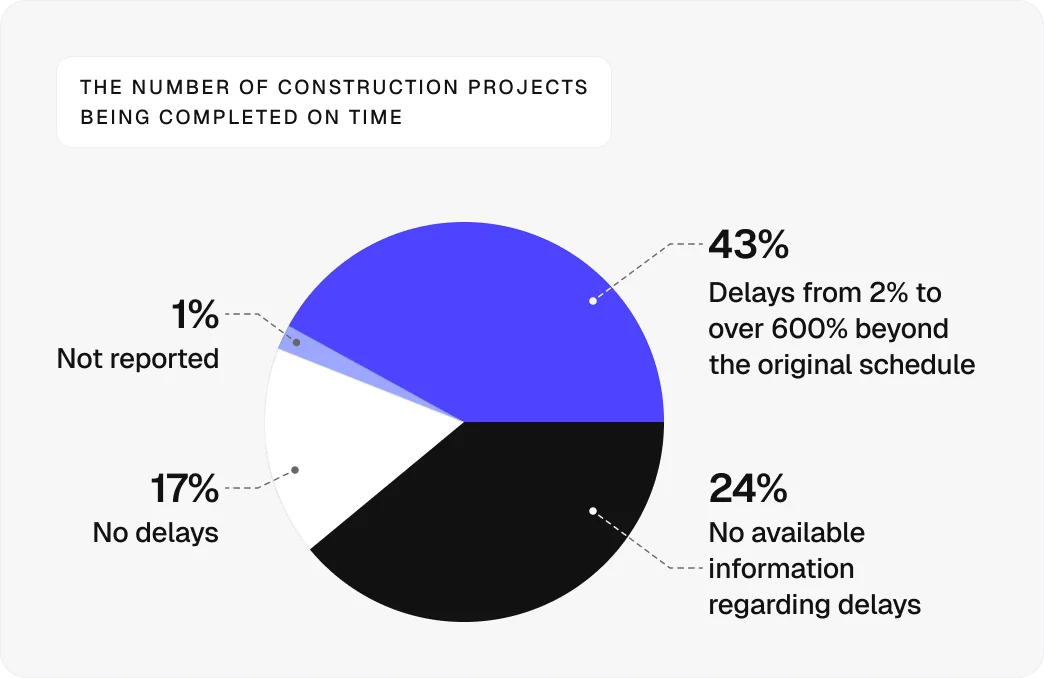
The key issue is that even small on-site setbacks—late deliveries, weather, or one trade running behind—can quickly derail everything else.
Construction scheduling software helps you stay ahead of these challenges by enabling you to link tasks. This way, you can see knock-on effects and adjust schedules as soon as something changes.
3. It gives you real-time visibility of progress
On most construction jobs, knowing what’s actually happening on site isn’t straightforward. You rely on updates from crews, site visits, or outdated reports, so by the time an issue shows up, it’s already affecting the schedule.
Construction scheduling software changes this by giving you a live view of on-site activity. You can see what’s done, what’s in progress, and what’s falling behind, without needing to be on site.
This level of visibility makes a real difference, as it helps you:
Spot delays early, before they affect other trades
Compare actual progress to the plan, so you know where you stand
Make faster decisions based on current information
4. It helps you stay in control of costs
Cost pressure is a constant in construction, with 75% of projects going over budget. Construction professionals don’t see this changing any time soon—95% of them expect material costs to rise, while 62% anticipate higher labour costs.
This means that you need every part of the job working in your favour to keep costs under control.
While scheduling software isn’t built specifically for that purpose, it plays a direct role in controlling spend.
It does so by helping you:
Avoid delays, which lead to extra labour and equipment costs
Reduce idle time, so you’re not paying crews to wait
Plan resources properly, avoiding last-minute hires or rentals
Keep projects in sequence, preventing rework and wasted materials
Stay on track, reducing the risk of penalties for late delivery
5. It keeps teams on the same page
Poor communication and coordination are some of the biggest causes of delays in construction.
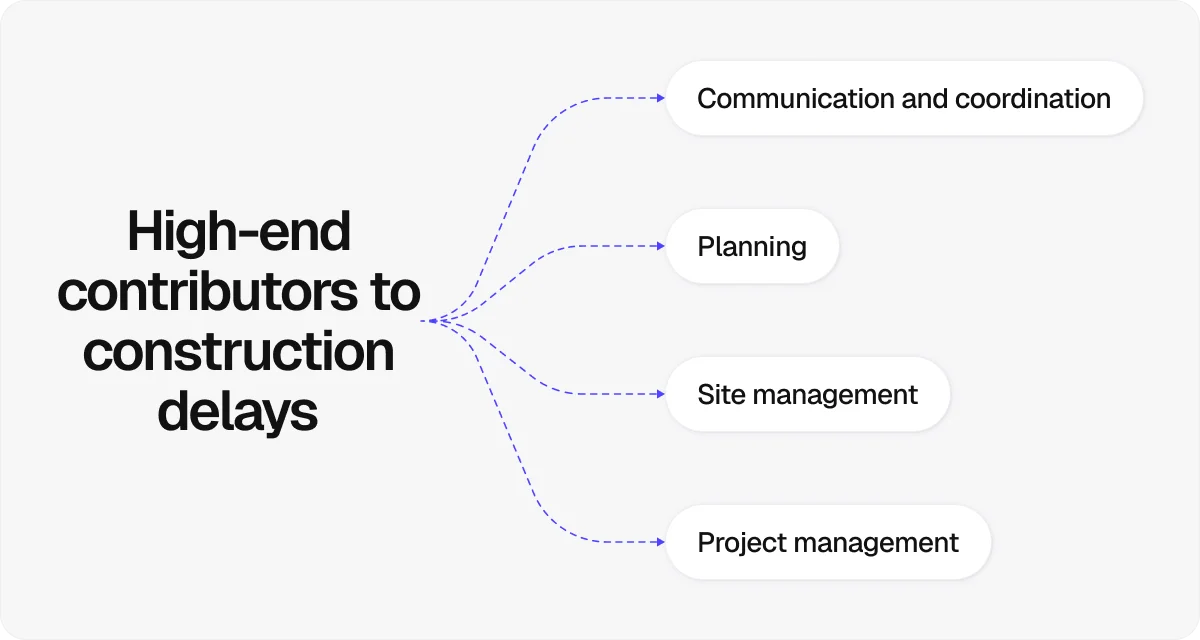
Research shows they are among the main contributors to project overruns, especially on complex jobs with multiple teams involved.
You can see this at scale in projects like Crossrail. Originally planned to open in 2018, it was delayed until 2022, with coordination and integration issues between contractors playing a key role.
On smaller jobs, the same problems show up in simpler ways: missed updates, unclear handovers, and teams working off different information.
Construction scheduling software helps you avoid communication issues by giving everyone a shared point of reference.
It allows you to:
Share one live schedule, so everyone sees the same plan
Send automatic updates, reducing calls and email chains
Attach documents and notes to tasks, keeping context in one place
Keep communication tied to the work, not scattered across tools
6. It reduces risk across the project
Construction projects come with risk at every stage, including safety hazards, weather delays, late deliveries, design changes, permit issues, and trade clashes.
In the UK, weather-related delays alone affect over 70% of construction projects, showing just how common disruption is.
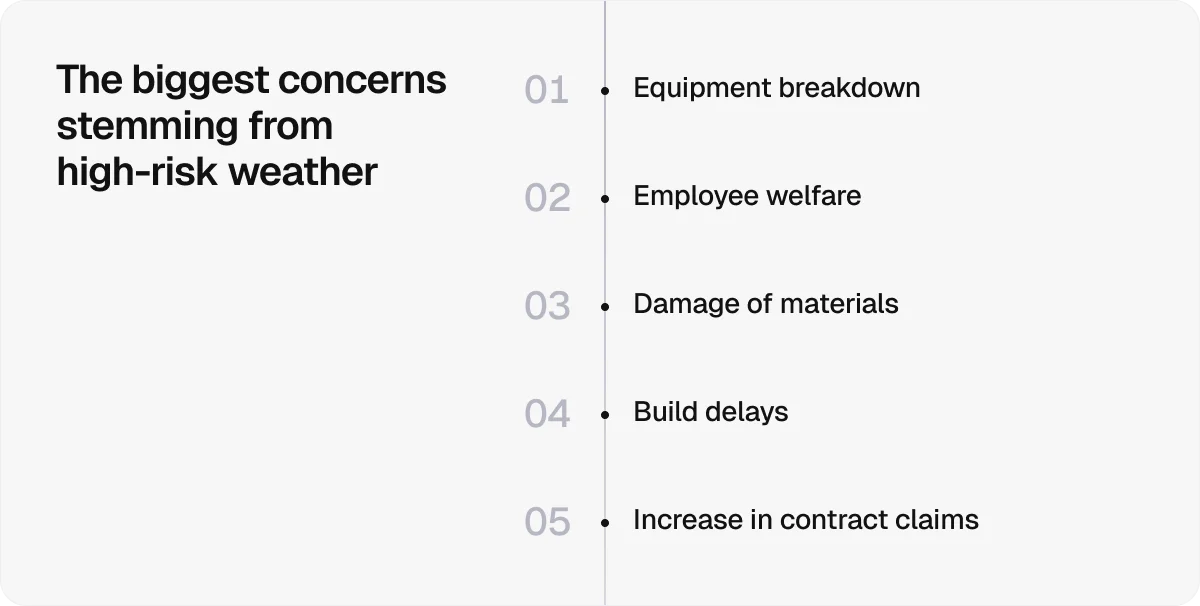
Construction scheduling software helps you manage these risks by giving you more control over the way work is planned and coordinated.
While better planning can’t necessarily remove all risks, it makes it easier to manage and reduces the chance of problems escalating.
7. It improves on-site efficiency and productivity
Labour is one of the hardest resources to use efficiently, which results in crews waiting for other trades, arriving at the wrong time, or redoing work that wasn’t set up properly.
Across the UK, avoidable errors alone account for around 5% of project value, with broader inefficiencies pushing that figure to 10%–25%.
With construction scheduling software, you can keep your operatives more efficient and productive by:
Scheduling crews at the right time, so they’re not waiting or sent home
Keeping work flowing between trades, reducing downtime
Matching people to the right tasks, based on availability and sequence
8. It improves accountability across the project
Construction projects involve many moving parts, so when something goes wrong, it’s often unclear who is responsible.
Poor documentation makes this worse.
A 2025 review showed that 39% of construction projects had no reliable delay records, which shows just how much uncertainty there can be. This uncertainty also increases the chances of disputes and leads to time being wasted resolving issues after the fact.
Since construction scheduling software acts as a central repository for project information, it gives you an accurate, reliable record of what was planned and what actually happened.
Being able to access previous schedules and view full timesheet histories for operatives allows you to hold the right people accountable at each stage.
Getting the most from construction scheduling software
You’ll only see the full benefits of construction scheduling software if you choose the right tool, one that fits how you actually work and is simple to use. It should be built for site teams and able to handle planning, coordination, and tracking in one place.
Onetrace ticks all of these boxes.
It brings scheduling, workforce management, and documentation together, so you can stay organised without adding more admin.
Here are Onetrace’s top scheduling features that support the benefits covered in this guide:
Operative schedule: Teams can view and update daily work plans in real time, keeping everyone aligned and reducing missed handovers.
Drag-and-drop planning: Schedules can be adjusted quickly as plans change, without the need to rebuild the entire programme.
People management view: You can see who is available, where they are, and what they’re assigned to, helping you avoid clashes and gaps.
Maps and directions: Operatives know exactly where they need to be, reducing delays and confusion on site.
Time tracking and timesheets: Hours are logged accurately, giving you reliable records for accountability and cost control.
Quick-start jobs: Work and timesheets can be launched directly from the schedule, cutting down admin and keeping jobs moving.
Centralised document hub: All key documents are stored in one place and linked to the schedule, improving communication and reducing errors.
Custom statuses and updates: You can track progress in real time using custom-made status updates that reflect how your team works.
Instead of juggling tools and chasing updates, you’re working from one system that keeps your jobs organised, your teams aligned, and your projects moving.
To learn more about why you need this construction scheduling software, schedule a personalised walkthrough with the Onetrace team.
FAQ
Why is scheduling important in construction?
Scheduling is important in construction because it keeps work in the right order, so trades don’t clash and crews aren’t left waiting. Without it, delays, rework, and wasted time are almost inevitable.
What are the benefits of using construction software?
The benefits of using construction software include better planning, clearer communication, and more control over timelines and resources.
What is the most popular construction software?
The most popular construction software depends on the size of the project and the type of work. For subcontractors, a common choice is Onetrace, as it’s built around how they actually work.
Marketing Team
@Onetrace
The Onetrace marketing team is passionate about sharing insights, ideas, and innovations that help construction businesses stay connected, compliant, and efficient. Combining industry expertise with a love for clear communication, we aim to deliver content that empowers professionals to work smarter and safer.