The importance of planning in construction: 10 key benefits

By
Marketing Team
@Onetrace
Construction planning is the process of organising a project’s tasks, resources, costs, timelines, and compliance requirements to ensure it’s delivered safely, on time, and within budget.
It serves as the foundation of two crucial parts of any construction project: the schedule and the budget.
This makes it a critical consideration in the UK construction industry, where most firms are working with tight margins, labour shortages, growing delivery pressure, and continued cost uncertainty.
Plus, the planning process itself is the primary source of project delays in 36% of cases, which only reinforces the need for stronger project control.
To help you better understand the importance of planning in construction, this article looks at its operational and commercial value.
Key takeaways
Strong planning helps reduce delays and disruptions
While some delays are unavoidable, successful planning helps contractors reduce the impact of those disruptions through better scheduling, procurement planning, workload allocation, and earlier risk identification.Better communication leads to smoother project delivery
Construction projects involve multiple stakeholders, which makes coordination essential. Shared timelines, regular updates, and stronger document management help teams stay aligned and avoid misunderstandings.Planning plays a major role in protecting profitability
Accurate budgeting, stronger cash flow management, reduced rework, and better resource allocation all help contractors maintain tighter control over costs and project margins.Good planning strengthens your commercial and contractual position
Strong documentation, clearer progress tracking, and better change management help contractors support valuations, defend claims, reduce disputes, and manage contractual risk more effectively.Construction management software makes planning easier to manage at scale
Platforms like Onetrace help contractors centralise project information, improve visibility, track costs in real time, strengthen compliance, and support smoother project delivery across every stage of the job.
The importance of planning in construction: 4 key operational benefits
These four operational benefits highlight how proper construction planning supports stronger project control, clearer coordination, and more reliable delivery.
1. It reduces delays and disruptions
Industry research shows that more than 85% of construction professionals have experienced project delays, while recent infrastructure analysis found that 43% of projects ran up to 600% beyond their original schedule.
Strong planning can’t guarantee there will be no delays, especially since some of the leading causes sit outside your control, including severe weather (40%) and market uncertainty (35%).
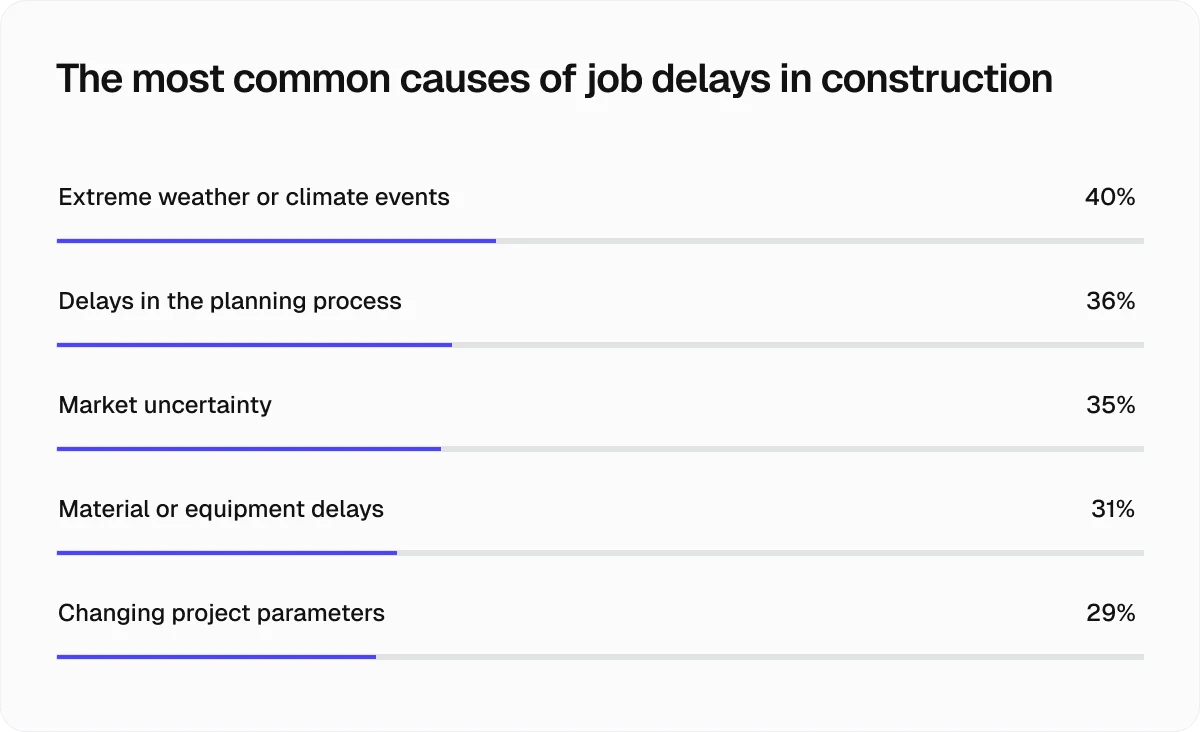
What effective planning can do, however, is reduce the impact of those problems before they escalate into wider project disruption. This is achieved through:
Structured scheduling that helps sequence trades correctly
Better procurement planning to reduce material delays
More realistic timelines and workload allocation
Earlier identification of risks and project bottlenecks
2. It improves communication across teams
With main contractors, subcontractors, suppliers, consultants, and clients all working across the same construction project, even small gaps in communication can quickly lead to delays, mistakes, duplicated work, or disputes.
Smart planning helps keep all of these stakeholders aligned by creating a shared understanding of responsibilities, timelines, and project expectations.
This is made possible by:
Centralised programmes and timelines for all stakeholders
Regular progress updates and project meetings
Stronger document management and information sharing across teams
When communication is backed by a well-structured plan, teams can reduce misunderstandings and make decisions faster.
3. It helps teams work more efficiently
On a busy construction site, there can be countless obstacles that affect productivity and efficiency. The table below shows how careful planning helps you avoid some of the most common ones:
Efficiency killer | How planning helps |
Material delays or missing deliveries | Procurement planning helps ensure materials arrive when they are needed. |
Equipment or plant not being available | Resource planning improves equipment allocation across the project. |
Trades arriving at the wrong time | Detailed scheduling helps sequence work correctly and reduce clashes between trades. |
Labour sitting idle on site | Well-thought-out workload allocation helps teams stay productive throughout the programme. |
Site congestion and overcrowding | Better coordination between teams improves site flow and working conditions. |
Last-minute programme changes | Realistic timelines and contingency planning reduce reactive decision-making. |
Delays in approvals or information | Communication plans and regular updates help resolve issues faster. |
4. It supports safer and more compliant projects
Construction sites naturally involve risk, which makes safety compliance a critical part of project planning from day one.
Without proper planning, teams are more likely to face unclear responsibilities, rushed work, poor coordination, and gaps in safety procedures—all of which increase the risk of accidents and compliance failures.
Given that workplace injuries and work-related illness account for around 2.2 million lost working days each year in construction, reducing avoidable risk remains a major priority across the industry.
This typically includes:
Early risk assessments to identify potential site hazards
Method statements that define safe working procedures
More realistic scheduling that reduces rushed or unsafe work
Contingency planning for weather, supply chain issues, and other disruptions
The importance of planning in construction: 6 key commercial benefits
Recent industry research found that 51% of firms reported lower-than-expected profits or losses due to increased costs, while 20% feared for their business viability.
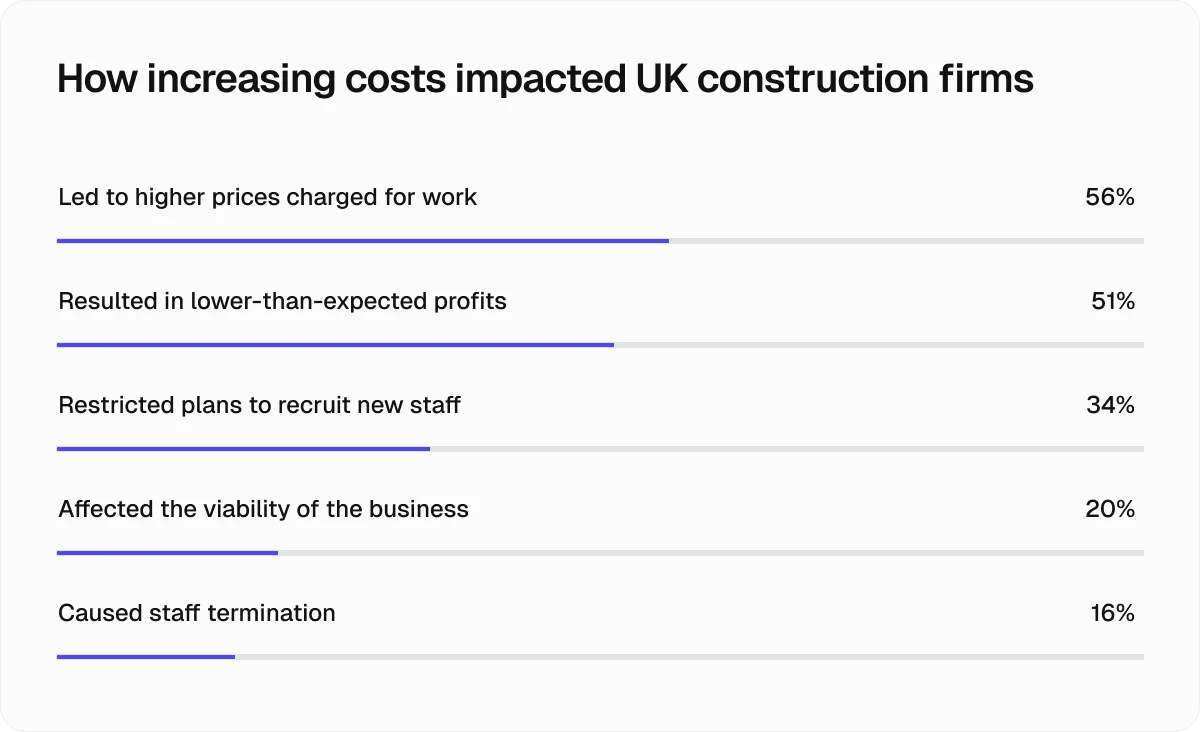
For this reason, the commercial side of construction planning matters just as much as the operational side.
Here are six key commercial benefits of good planning:
1. It improves budget control
With 75% of construction projects experiencing cost overruns, effective budget control plays a major role in long-term project success.
Proactive construction planning gives you that control through:
More accurate forecasting of labour, material, and equipment costs
Better visibility over project spending throughout the programme
Earlier identification of financial risks and cost pressures
Reduced scope creep and uncontrolled project changes
Contingency planning for unexpected project issues
When budgets are planned realistically from the start, contractors are in a much stronger position to keep projects financially stable and prevent cost overruns.
2. It helps prevent costly rework
Poor coordination, unclear project scopes, outdated information, and last-minute changes can all lead to work being repeated, corrected, or completely redone later in the project.
The financial impact of rework is significant, with industry estimates suggesting that the UK construction sector could save up to £25 billion each year by reducing avoidable errors.
Well-managed planning allows you to do just that through:
Defined responsibilities and project scopes
Better sequencing of trades and project activities
Stronger documentation and version control
More effective change tracking throughout the programme
3. It supports healthier cash flow
Even profitable projects can create financial strain when valuations are disputed, work progresses unevenly, and payments are delayed, which happens often for 13% of construction firms.
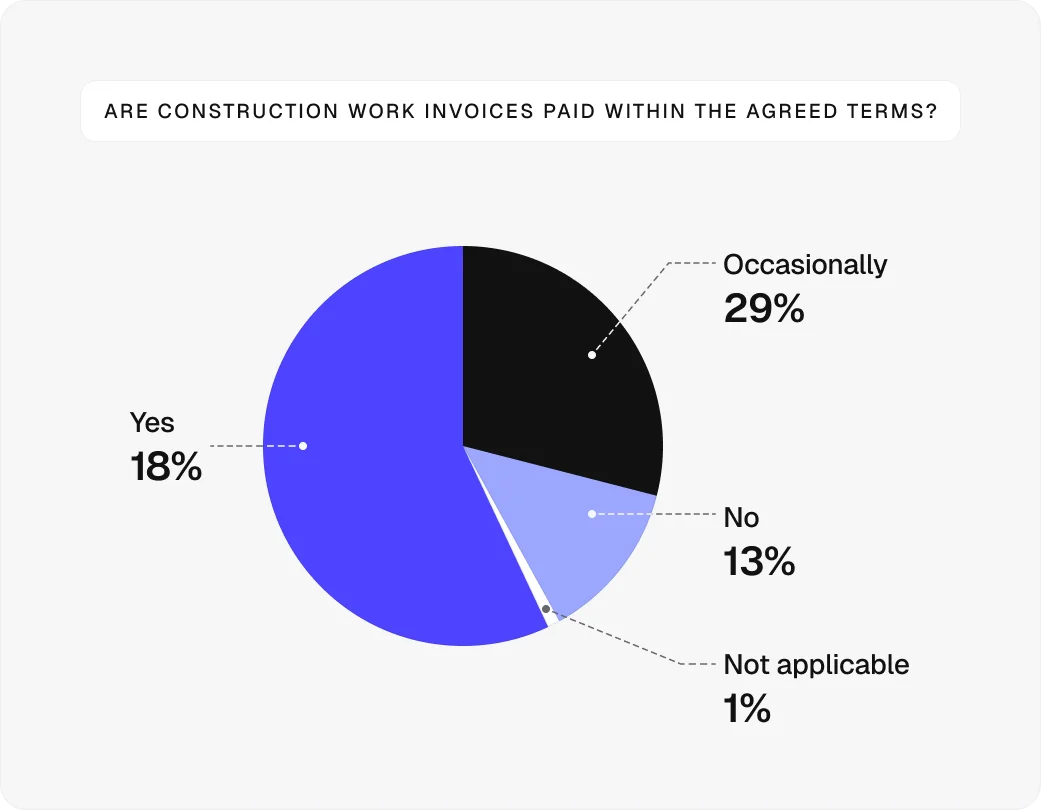
Effective planning helps improve cash flow by giving construction professionals the following:
More accurate schedules of work and project milestones
Better support for interim valuation and payment applications
Stronger evidence of completed work for QS reviews and approvals
Improved visibility over upcoming costs and incoming payments
4. It improves protection against disputes and claims
Construction projects generate constant change, whether through delays, design revisions, scope changes, or unforeseen site conditions.
Without proper planning and documentation, these issues can quickly develop into disputes over responsibility, programme delays, variations, or payment.
Effective planning helps contractors build a stronger commercial and contractual position throughout the project, thanks to:
Defined project scopes, responsibilities, and deliverables
Better tracking of delays, changes, and project variations
Stronger record-keeping across the project lifecycle
More accurate baseline programmes and progress reporting
Clearer evidence to support EOTs, variations, and payment claims
5. It reduces pressure on project margins
With rising labour costs, material price increases, and ongoing supply chain disruption, protecting project margins has become increasingly difficult for contractors across the UK construction industry.
The table shows how thorough planning helps contractors reduce the impact of the most common margin pressures:
Pressure on project margins | How planning helps reduce it |
Rising material costs | Earlier procurement planning helps contractors secure materials more efficiently and reduce reactive purchasing. |
Labour inefficiency | Better scheduling helps teams stay productive and reduces wasted labour hours. |
Supply chain disruption | Forward planning helps teams prepare for delays and reduce reliance on last-minute deliveries. |
Overstretched site teams | Workload planning helps distribute labour more realistically across the programme. |
Unexpected project costs | Contingency planning helps contractors prepare for risks before they affect profitability. |
Delays caused by safety incidents | Safer, better-organised sites help reduce operational disruption and lost time. |
6. It strengthens client relationships and reputation
Reliable planning helps contractors build stronger long-term relationships with clients.
When contractors consistently meet deadlines, communicate clearly, and manage projects professionally, they are far more likely to secure repeat work and strengthen their reputation within the industry.
Over time, this reliability can become a major commercial advantage, particularly in a competitive market where trust and delivery performance play a major role in winning future projects.
Onetrace: A smarter way to manage construction planning
Many of the benefits of planning in construction depend on having accurate, up-to-date project information that teams can use day to day.
That is where construction management software like Onetrace can make a major difference.
Whether you are running a single project or managing multiple sites at once, this software helps improve visibility, reduce admin, strengthen regulatory compliance, and boost productivity.
By centralising project information, Onetrace also helps contractors improve communication between site teams, managers, and clients while creating a stronger audit trail across the entire project lifecycle.
This can help reduce disputes and improve the efficiency of project delivery overall.
In addition, Onetrace includes a range of features designed to support stronger cost control and commercial performance, including:
Real-time job costing linked directly to materials, labour, and project activity
Configurable rates and rate sets for different clients, projects, and pricing structures
Productivity tracking across operatives, teams, and projects
Material management tools that improve procurement accuracy and cost visibility
Reporting tools that help monitor project profitability
Stronger documentation and traceability to support valuations, claims, and compliance
To see these features in practice, book a personalised demo with Onetrace. Our team will walk you through the platform based on your business needs, show you how it can help solve day-to-day project challenges, and help you get set up quickly if it’s the right fit for your workflows.
FAQ
Why is planning important in construction?
Planning is important in construction because it helps projects stay organised, predictable, profitable, and compliant with safety and contractual requirements.
What are the major reasons for construction planning?
The major reasons for construction planning include improving project scheduling, managing resources efficiently, controlling costs, reducing risks, supporting safety compliance, and improving communication across teams.
Marketing Team
@Onetrace
The Onetrace marketing team is passionate about sharing insights, ideas, and innovations that help construction businesses stay connected, compliant, and efficient. Combining industry expertise with a love for clear communication, we aim to deliver content that empowers professionals to work smarter and safer.