Quality control in construction: Checklist & process guide

By
Marketing Team
@Onetrace
In construction, quality control (QC) is the ongoing process of verifying that materials, workmanship, and completed work meet required standards, specifications, and regulatory requirements.
Surprisingly, QC is heavily neglected in the construction industry compared to areas like safety compliance, which receives 67% more staffing, six times more training, and much stronger incentive programmes.
The problem with this neglect is that when quality processes fail, errors and rework follow, adding expenses that can reach 10–25% of total project value and cost the UK construction industry up to £25 billion each year.
To help you spot issues early and maintain project standards, this guide breaks down the fundamentals of quality control in construction, including how to structure the QC process and create practical quality control checklists.
Key takeaways
Quality control reduces defects and rework
Strong QC processes help teams identify issues early, maintain consistent standards, and avoid costly delays or corrective work.Quality assurance and quality control aren’t the same
Quality assurance focuses on preventing defects through processes and standards, while quality control covers inspecting work and correcting issues on site.Effective quality control follows a clear process
Successful QC relies on defined standards, inspections, material checks, defect tracking, and structured handover procedures throughout the project.Checklists improve consistency and accountability
Construction quality control checklists help teams standardise inspections, reduce the chance of issues being overlooked, and maintain accurate compliance records on site.Digital tools simplify construction quality control
Platforms like Onetrace help teams manage inspections, approvals, and documentation more efficiently across projects.
What is quality control in construction?
Construction quality control is the system used to identify defects, verify workmanship, and ensure all work meets the required specifications, compliance requirements, and client expectations at every stage of the build.
What is the difference between quality assurance and quality control in construction?
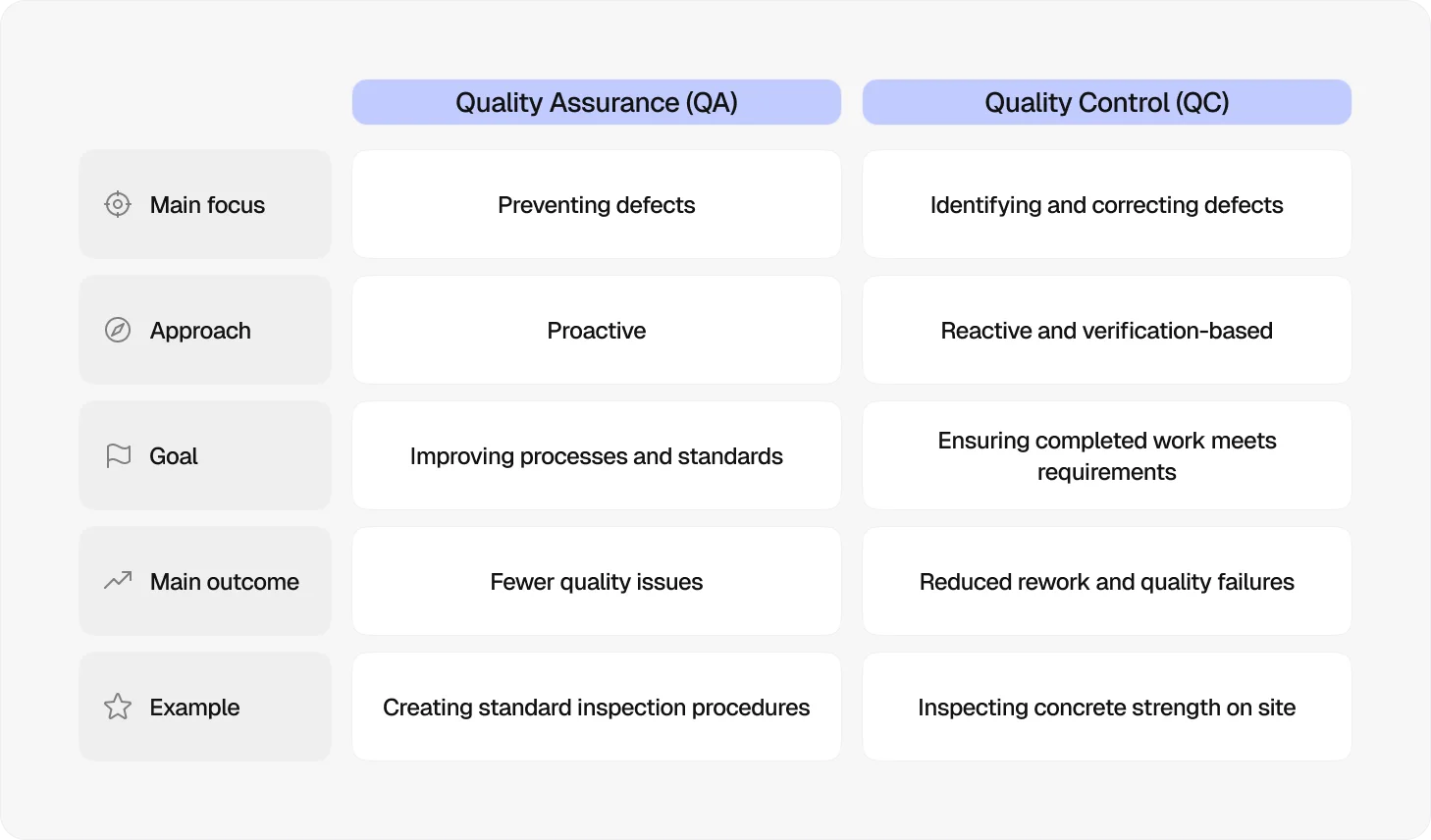
The main difference between quality assurance (QA) and quality control in construction is that the former focuses on preventing defects, while the latter aims to identify and correct them.
In other words, quality assurance is the proactive side of construction quality management. It involves creating the processes, standards, procedures, and documentation that help teams complete work correctly the first time.
Quality control, on the other hand, is the operational side, primarily carried out during and after construction work.
It focuses on inspections, tests, walkthroughs, punch lists, and corrective actions to verify that the on-site work meets the required quality standards and project specifications.
Why is quality control important in construction?
Quality control is important in construction because it ensures work is completed safely, consistently, and in line with project requirements from the early planning stages to final handover.
In practice, the QC process aims to help construction teams:
Deliver projects more efficiently, with fewer disputes and less disruption
Reduce defects and rework
Maintain consistent workmanship and installation standards
Improve site safety by identifying risks and failures early
Ensure compliance with relevant regulations (e.g., the Building Regulations 2010 and Construction (Design and Management) Regulations 2015 for UK contractors)
Meet client expectations, contract requirements, and technical specifications
Support ISO 9001 and wider quality management standards
Improve sustainability, durability, and long-term building performance
Protect the company’s reputation and strengthen client confidence
Which issues does quality control typically address in construction?
In construction, quality control typically addresses the following issues:
Workmanship issues, such as incorrect installation, inconsistent build quality, and poor construction practices
Material and product issues, including damaged materials, non-compliant products, and incorrect substitutions
Compliance issues, such as work failing to meet drawings, specifications, contract requirements, or regulatory standards
Inspection and documentation issues, including incomplete records, missing approvals, and undocumented design changes
Coordination and communication issues, such as trade clashes, outdated drawings, and miscommunication between project teams
Site management issues, including inadequate supervision, rushed work, and missed quality checks caused by schedule or budget pressure
Defects and rework, including snagging issues, recurring faults, and corrective work identified during inspections or handover stages
Who is responsible for quality control in construction?
The responsibility for quality control in construction is shared among multiple stakeholders.
The exact individual responsibilities can vary depending on the procurement route, contract structure, and project type.
For example, under Design and Build contracts commonly used in the UK, contractors often take on greater responsibility for both design coordination and quality delivery.
The table below outlines the main parties typically involved in construction quality control and their responsibilities across UK and European projects:
Role | Responsibilities |
Client / Project owner | Setting project quality expectations, approving standards, and overseeing compliance requirements |
Design team (Architects and engineers) | Defining specifications, drawings, technical standards, and approved construction methods |
Principal designer | Coordinating design risk management and supporting compliance with CDM Regulations 2015 |
Principal contractor | Managing overall construction quality, coordinating subcontractors, and ensuring work meets project requirements |
Project manager | Overseeing quality processes, coordinating communication, and monitoring project compliance and performance |
Site manager / Superintendent | Monitoring day-to-day site activities, identifying issues early, and verifying work on site |
Quality control manager | Managing inspections, tracking defects, documenting corrective actions, and overseeing QC procedures |
Quality inspectors | Conducting inspections, testing completed work, recording non-conformance issues, and verifying corrective work |
Subcontractors / Trade contractors | Completing work to the required standards, following specifications, and carrying out trade-specific quality checks |
Suppliers and manufacturers | Providing compliant materials, certifications, and product documentation that meet project requirements |
The construction quality control process: 6 key steps
Although quality control mainly focuses on inspecting and verifying work on the site, it still relies on clear project standards, specifications, and inspection procedures being established early in the project.
Here’s what a typical QC process looks like, step by step:
1. Define quality standards and requirements
To successfully maintain quality throughout a construction project, you must first define exactly which standards the work needs to meet.
These standards are typically based on:
Approved drawings
Technical specifications
Contract requirements
Client expectations
Relevant country-specific and European standards (EN)
Quality requirements and acceptance criteria should be clearly documented and understood across all project teams before work begins.
2. Create a construction quality control plan
A construction quality control plan is a document that outlines the processes, procedures, responsibilities, and inspection requirements used to maintain quality throughout a project.
A typical QC plan should define:
Inspection schedules and hold points for key stages of work
Testing requirements and acceptance criteria
Quality control roles and responsibilities
Inspection and reporting procedures
Processes for managing defects, non-conformance, and corrective actions
Documentation and record-keeping requirements
Material inspection and approval procedures
Communication processes between contractors, subcontractors, and project teams
Most projects also use Inspection and Test Plans and method statements to standardise inspections and ensure work is completed consistently across different trades and stages of construction.
The quality control plan should be reviewed and updated throughout the project to reflect design changes, site conditions, and ongoing quality findings.
3. Conduct material and supplier inspections
Materials and suppliers must be inspected before products are used on site to confirm they meet the required specifications, safety standards, and project requirements.
This typically includes:
Verifying material certifications and technical documentation
Checking CE or UKCA marking where required
Reviewing supplier approvals and quality records
Inspecting deliveries for damage, defects, or incorrect products
Confirming materials match approved submittals and specifications
Carrying out field testing or sample checks where necessary
Quality checks at this stage help prevent non-compliant or defective materials from creating larger quality and safety issues later in the project.
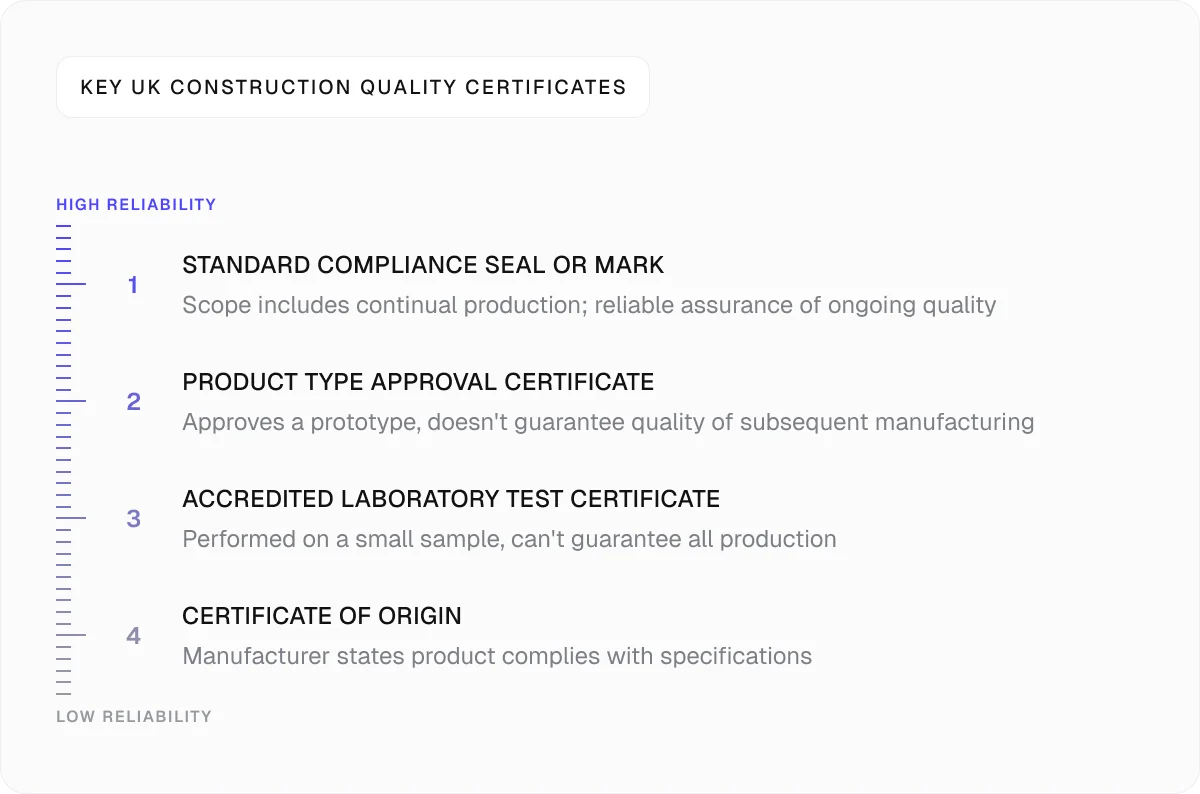
In some cases, products with recognised third-party certifications or quality marks may require fewer on-site inspections or reception tests, provided the certification covers ongoing compliance and production standards.
4. Perform on-site quality inspections
Carry out regular on-site inspections throughout the project to verify that work is being completed correctly and in accordance with approved specifications, drawings, and quality standards.
These inspections typically include:
Daily site inspections and progress checks
Trade-specific inspections
In-progress inspections at key construction stages
Snagging inspections to identify defects before handover
Photo documentation to create a traceable inspection record
5. Record non-conformances and corrective actions
Even with strong quality control processes in place, defects, omissions, and non-compliant work can still occur during construction.
A structured system for recording and resolving these issues is essential for maintaining quality standards throughout the project.
This stage typically covers:
Tracking issues through NCRs or defect management systems
Investigating root causes to prevent recurring problems
Assigning corrective actions to the responsible teams
Re-inspecting completed corrective work before sign-off
Maintaining accurate records for compliance and accountability
Quality issues should be addressed as soon as they’re identified. Doing so reduces the risk of delays, repeated defects, and more extensive rework later.
6. Conduct the final inspection and project handover
The final stage of the quality control process focuses on verifying that all work has been completed correctly before practical completion and handover.
This stage usually includes the following steps:
Carrying out final inspections and snagging checks
Confirming all defects and non-conformance issues have been resolved
Completing practical completion procedures and client walkthroughs
Preparing O&M manuals and as-built documentation
Providing warranty information, certificates, and compliance records
Securing final client sign-off and project approval
The handover stage is also an opportunity to review recurring quality issues, identify lessons learned, and update quality procedures and inspection checklists for future projects.
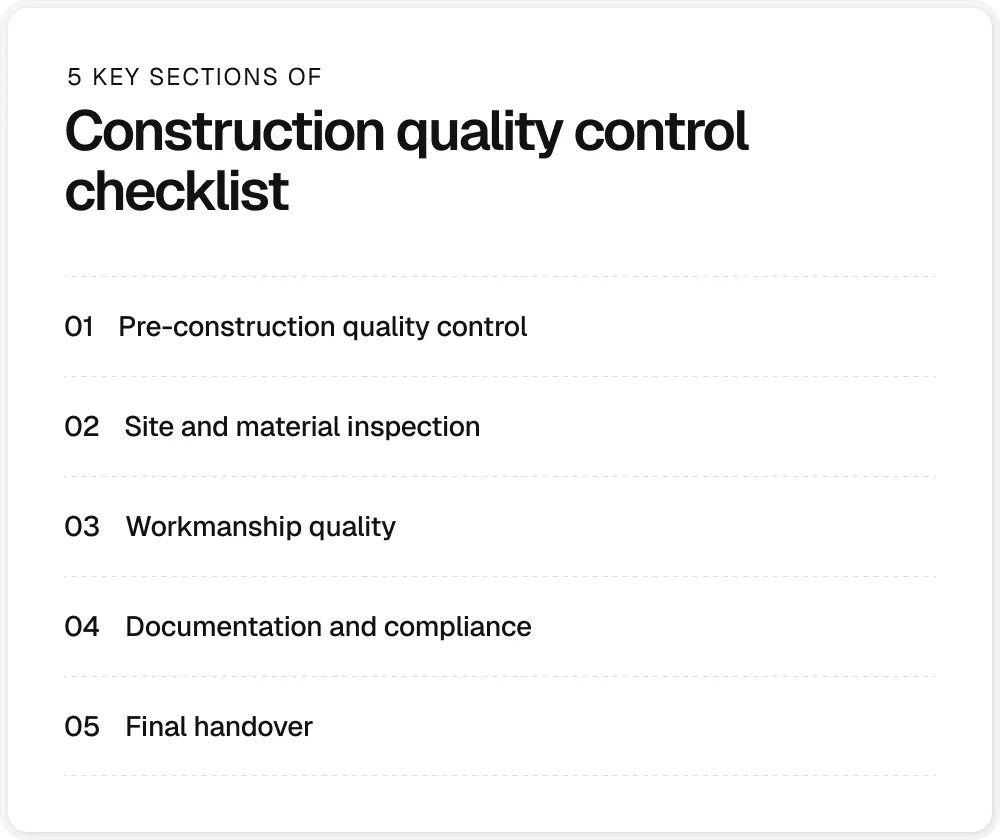
Construction quality control checklist: 5 key sections
A construction quality control checklist is a practical tool used to standardise inspections, track quality requirements, and reduce the risk of issues being missed on site.
Instead of relying on memory or verbal instructions, site teams can use these checklists to verify that work meets the required standards at each stage of the project.
A proper construction quality control checklist should be tailored to the specific project, trade, and construction phase. Rather than repeating the full specification document, it should focus on the most important inspection points and recurring risk areas teams need to monitor.
Here are the five sections every construction quality control checklist should cover:
1. Pre-construction quality control
Are the latest approved drawings available on site?
Have all project specifications been reviewed and communicated to relevant teams?
Have risk assessments and method statements (RAMS) been completed and approved?
Have supplier and subcontractor approvals been verified?
Are inspection schedules and hold points clearly defined?
Have the required permits, approvals, and compliance documents been secured?
Has the project team reviewed quality expectations and acceptance criteria?
2. Site and material inspection
Do delivered materials match approved specifications and submittals?
Are CE or UKCA markings present where required?
Have materials been inspected for damage, defects, or contamination?
Are storage conditions suitable for protecting materials on the site?
Are equipment calibration and maintenance records up to date?
Have material certifications and test records been verified?
Have non-compliant materials been identified and isolated?
3. Workmanship quality
Is the work being completed to the required tolerances and specifications?
Are installation methods following manufacturer guidelines and approved procedures?
Have key inspections been completed before covering up work?
Are finishes consistent and free from visible defects?
Are trade interfaces and coordination points properly aligned?
Have safety and compliance requirements been maintained during installation?
Have identified defects been corrected before progressing to the next stage?
4. Documentation and compliance
Have all inspections been properly recorded and signed off?
Are photos attached to inspection records where required?
Have all NCRs and corrective actions been closed out?
Have test certificates and compliance documents been uploaded?
Is the audit trail complete and easy to trace?
Have design changes and site modifications been documented correctly?
Are teams using the latest approved project information and drawings?
5. Final handover
Has the final snag list been completed and resolved?
Has the client walkthrough been carried out?
Have O&M manuals been prepared and submitted?
Have warranty documents and certificates been provided?
Have all final inspections and compliance checks been signed off?
Has as-built documentation been completed and approved?
Have lessons learned and recurring quality issues been reviewed with the project team?
Using technology to improve quality control in construction
Many teams still rely on paper forms, spreadsheets, manual reporting, and disconnected systems to manage quality control in construction.
On modern construction projects, however, this approach often leads to lost paperwork, delayed reporting, incomplete records, manual errors, and limited visibility across projects.
Construction management software helps solve these problems by giving teams a faster, more consistent way to manage key elements of the QC process.
Platforms like Onetrace are designed to support the full construction quality control process on the site and in the office, thanks to features like:
Custom forms: Standardise inspections, surveys, installations, and quality checks using configurable digital forms with mandatory fields to reduce missed information.
Project templates: Pre-build standard project structures, forms, and workflows to maintain consistent quality processes across multiple projects.
Mobile inspections: Allow operatives to complete inspections, capture evidence, and update records directly from the site in real time.
Offline working: Keep inspections and quality processes moving even in areas with a poor signal by pre-downloading drawings and project data.
Photographic evidence: Capture before, during, and after photos to support inspections, corrective actions, compliance records, and client sign-offs.
Material tracking: Maintain accurate records of material types, quantities, certifications, and usage across the project.
QR code tracking: Link physical installations to digital job records, so teams can instantly access inspection histories, maintenance records, and compliance information.
Approval workflows: Create multi-stage quality assurance and sign-off processes to improve accountability and reduce late-stage snagging.
Document management: Keep drawings, specifications, certificates, and compliance records organised and accessible in a single system.
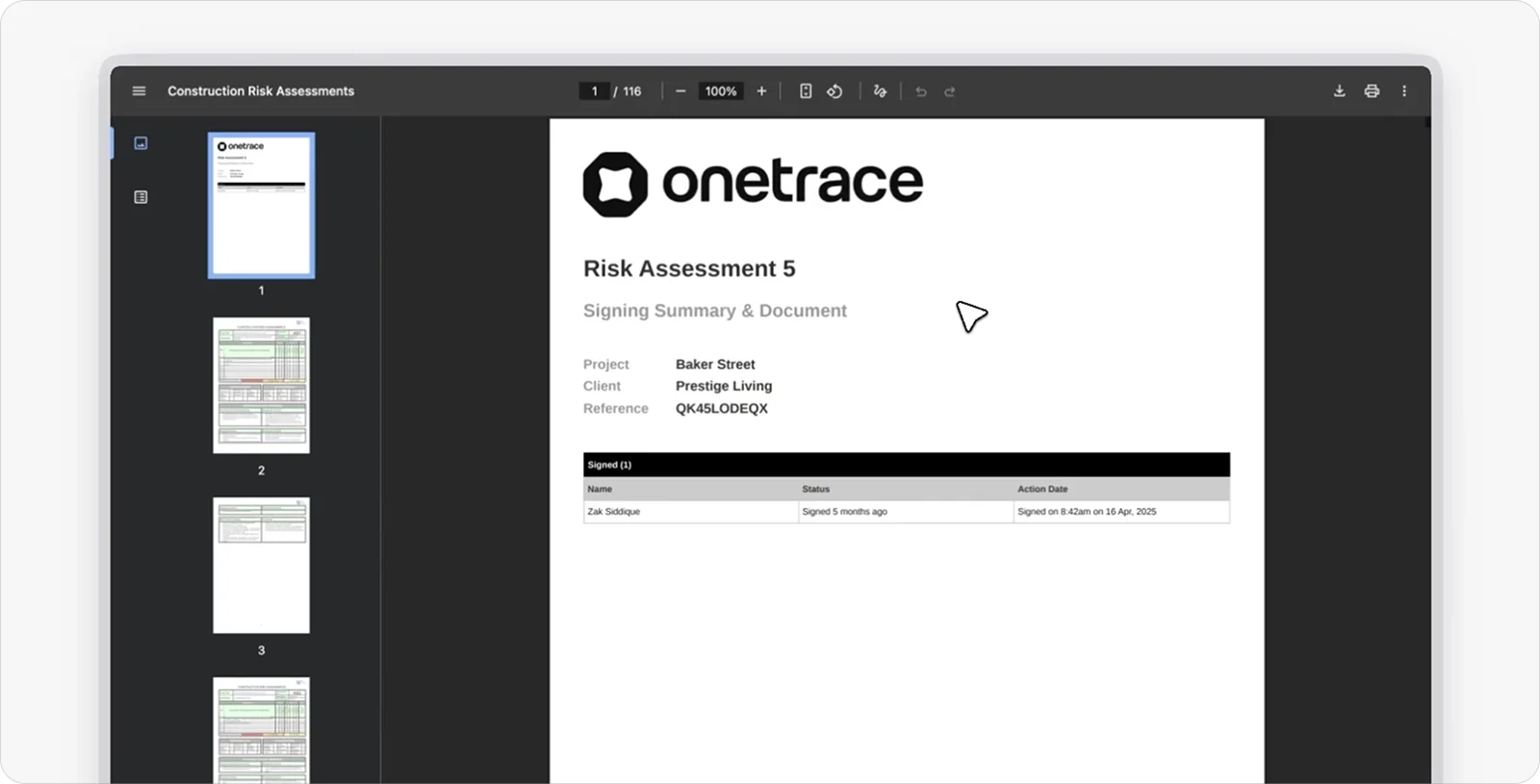
Signed documents: Manage RAMS, Toolbox Talks, and compliance sign-offs digitally with full visibility of acknowledgements and approval status.
Audit-ready reports: Generate structured PDF or Excel reports for audits and handovers with complete inspection and compliance records.
When used properly, these digital quality control tools help construction teams improve consistency, strengthen accountability, reduce rework, and build a more reliable quality process across every stage of a project.
To see how these features—and other tools built for construction teams—can support your quality control process and overall project delivery, book a personalised demo with the Onetrace team.
FAQ
What are the 4 types of quality control?
The four main types of quality control are inspection, testing, process control, and continuous improvement. In construction, these typically involve site inspections, material testing, compliance checks, and corrective actions to maintain project quality.
What are the 5 steps of quality control?
The five core steps of quality control are defining quality standards, creating a quality control plan, carrying out inspections and testing, recording non-conformance issues, and completing final inspections and handover checks.
Marketing Team
@Onetrace
The Onetrace marketing team is passionate about sharing insights, ideas, and innovations that help construction businesses stay connected, compliant, and efficient. Combining industry expertise with a love for clear communication, we aim to deliver content that empowers professionals to work smarter and safer.