Construction project execution: Best practices & strategies

By
Marketing Team
@Onetrace
From first bid to final sign-off, a construction project moves through many stages.
You start with pricing and scope, move into planning and design, mobilise the site, manage the build, and then handle testing, handover, and close-out.
Each phase brings its own tasks, people, and pressure.
Add real-world factors like weather, labour shortages, supply delays, shifting regulations, and tight margins, and construction project execution turns into a daily exercise in problem-solving.
While you can’t predict every disruption, you can put the right structures in place to stay in control when surprises happen.
These eight best practices and strategies should help you do just that, giving you clearer oversight, steadier progress, and fewer last-minute emergencies along the way.
Key takeaways
Strong planning prevents most site problems
Many execution issues are planning failures in disguise. A clear Project Execution Plan, realistic milestones, aligned scope, and early risk identification create the foundation that everything else relies on.Control time and cost through live scheduling and firm project controls
Cost overruns and delays are the most common disruptors. Set baselines early, track performance in real time, and treat your schedule as an active management tool to avoid them.Remove communication friction and leadership ambiguity
Fragmented teams and unclear authority slow projects down. Give site leaders decision-making power, standardise updates, and ensure everyone works from the same information. Clarity reduces rework and wasted time.Build safety and quality into daily work, not final checks
Lost working days, rework, and avoidable errors directly impact margins. Use structured risk assessments, quality checks, and staged approvals to catch issues early while they are still easy to fix.Bring everything together in one reliable system
Every best practice depends on accurate, shared information. A dedicated platform like Onetrace creates a single source of truth, connecting the field and the office so you can manage time, cost, quality, and risk with confidence.
1. Plan the job properly before you break ground
Most construction project execution problems are planning failures in disguise.
After all, planning is to a project what foundations are to a building: If it’s weak, everything built on top of it is at risk.
So, before site mobilisation, take the time to:
Break the work into clear phases with realistic milestones
Define scope, budget, and quality expectations
Build a detailed work breakdown structure
Review constructability with field teams
Identify key risks before they surface on site
Align procurement and long-lead items with the programme
Plan site logistics, access, and storage properly
At the centre of planning sits the Project Execution Plan (PEP).
This comprehensive document sets out who does what, how decisions are made, how costs are managed, and how risk, quality, and safety will be controlled.
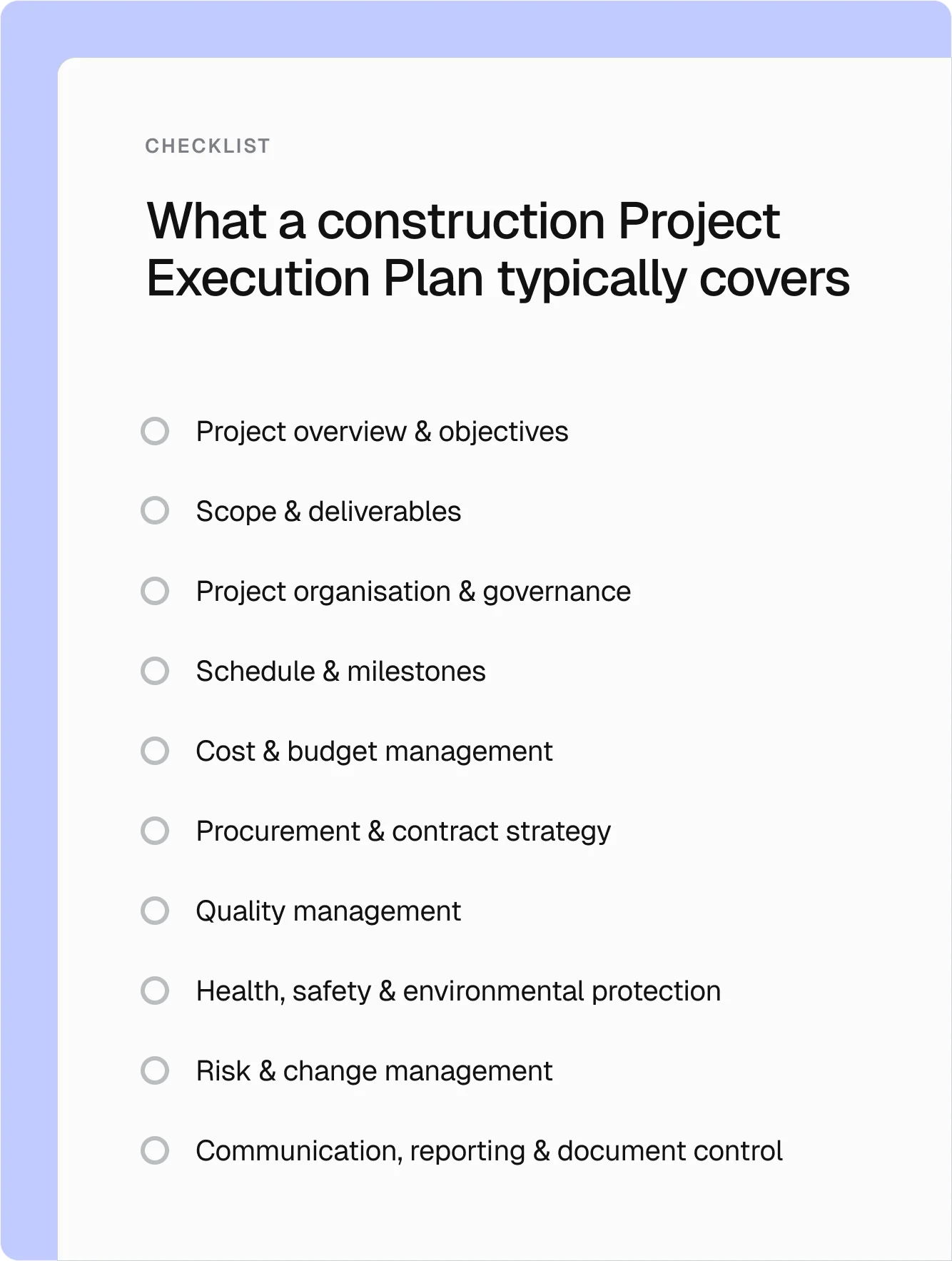
Used properly, PEP becomes the single reference point that keeps the whole project aligned.
2. Take control of time and cost from day one
The two issues that most often disrupt construction project execution are cost overruns and schedule delays.
A review of European Union transport megaprojects by the European Court of Auditors found that overall costs had increased by up to 82% compared to original estimates, with delays measured in years rather than months. While these are large infrastructure schemes, the pattern is repeated across the industry.
You may not avoid every setback, but you can limit the impact by putting firm controls in place:
Set a clear baseline schedule and cost plan from the outset.
Link weekly and short-term lookaheads to the main programme.
Track earned value and actual spend in real time.
Identify trends early and act before gaps widen.
Manage scope changes through a disciplined process.
The most important part is to keep scheduling live and dynamic. This helps you avoid major scheduling issues, which, in turn, protects both time and cost performance.
Pro tip:
When your schedule reflects what is actually happening on site, you can adjust early instead of reacting late.
A construction scheduling tool like Onetrace can help you do exactly that. This software allows you to stay on top of your schedule by:
Showing team allocation with a visual planner across sites and days
Providing real-time data through live timesheets and GPS-backed attendance
Highlighting risks early by linking materials, compliance, and site readiness
Supporting contingency planning with full visibility across projects
Keeping communication aligned between the site and office teams
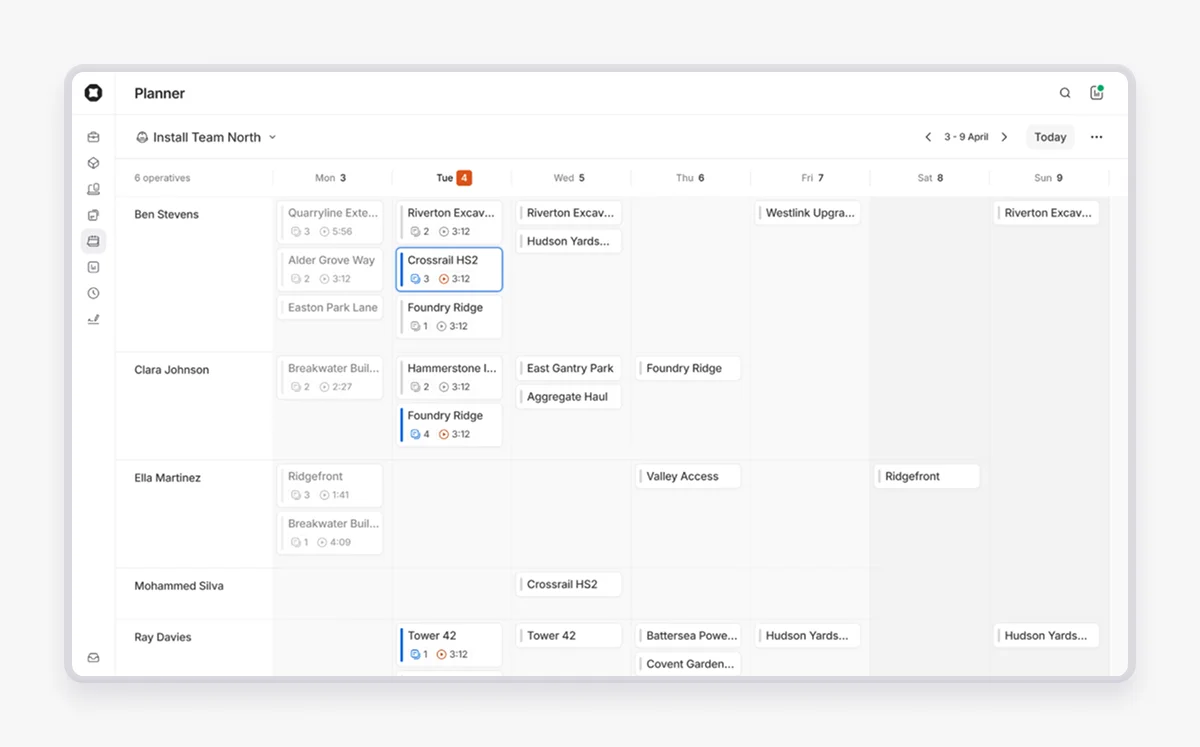
When scheduling is live, visible, and shared, delays are easier to prevent and recover from.
3. Refine how work happens day to day
As important as it is to have a clear overall view of the entire project, it’s just as critical to examine key construction workflows individually and look for ways to improve them.
If you focus only on managing at the programme level, inefficiencies in daily tasks can go unnoticed until they start affecting time, cost, and quality.
Breaking work down into repeatable flows helps you see where friction sits and where small changes can make a real difference.
You can do this by:
Reviewing lessons learned from past projects and applying them early
Mapping critical work sequences step by step
Identifying common bottlenecks between trades
Standardising repeatable tasks where possible
Tracking productivity at the task level, not just the milestone level
Asking site teams where delays or confusion usually arise
4. Create clear lines of authority and communication
Team fragmentation is one of the biggest obstacles to successful construction project execution.
Subcontractors, designers, engineers, and inspectors often work in silos, using different tools and chasing different priorities. With information scattered and decision-making unclear, delays and rework inevitably follow.
The best way to address this issue is by leading decisively on site and keeping communication aligned between all parties.
In practice, this means giving the superintendent clear authority to coordinate daily operations, solve problems quickly, and prevent trade clashes. A simple responsibility matrix can go a long way towards removing confusion about who decides what, who needs to be consulted, and who is accountable for delivery.
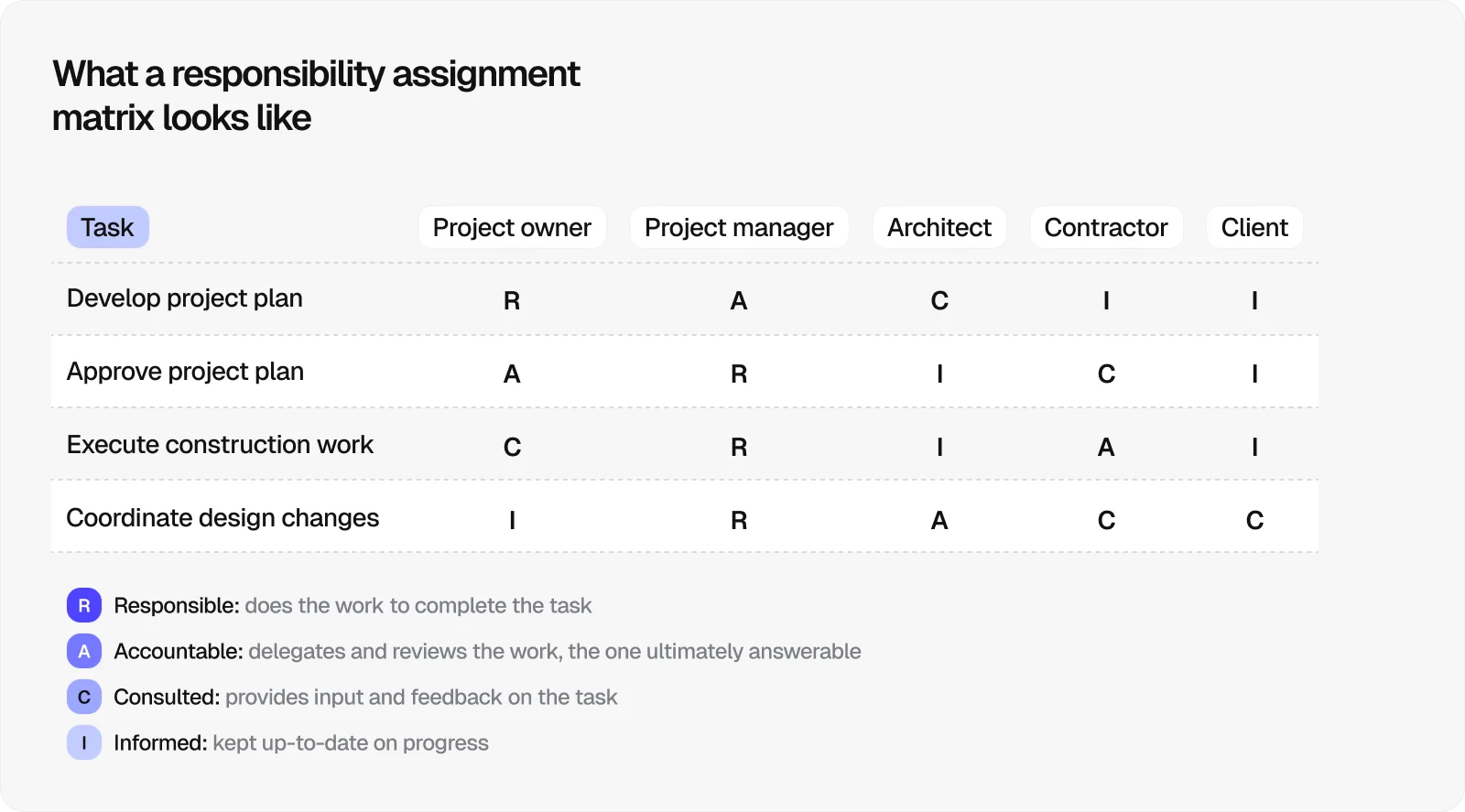
As for communication, you can avoid common issues by:
Holding daily coordination huddles and weekly trade meetings
Standardising updates so everyone works from the same live data
Using one shared platform for documents and site records
Sharing progress dashboards openly
Encouraging early reporting of issues without blame
5. Protect your people to protect your programme
In the UK construction industry, around 2.2 million working days are lost each year due to workplace injury (18%) and work-related illness (82%).
That makes safety compliance essential for protecting construction project execution, not just the well-being of workers on site.
To strengthen safety in practical terms, you should:
Carry out frequent construction site risk assessments
Hold regular Toolbox Talks to reinforce standards
Run proactive safety audits, not just reactive checks
Encourage near-miss reporting without blame
Make site leadership visibly committed to safe practices
Keep safety documents organised, accessible, and up to date
Track incidents and trends to prevent repeat issues
Pro tip:
Use construction site management software to make safety compliance part of daily work on site.
With Onetrace’s Signed Docs feature, you can:
Store all compliance documents in a safe location
Share documents through the app so crews can read and sign on site
Request and collect digital signatures in minutes, with instant alerts to operatives who still need to sign
Export documents with full signature trails for clients or inspections
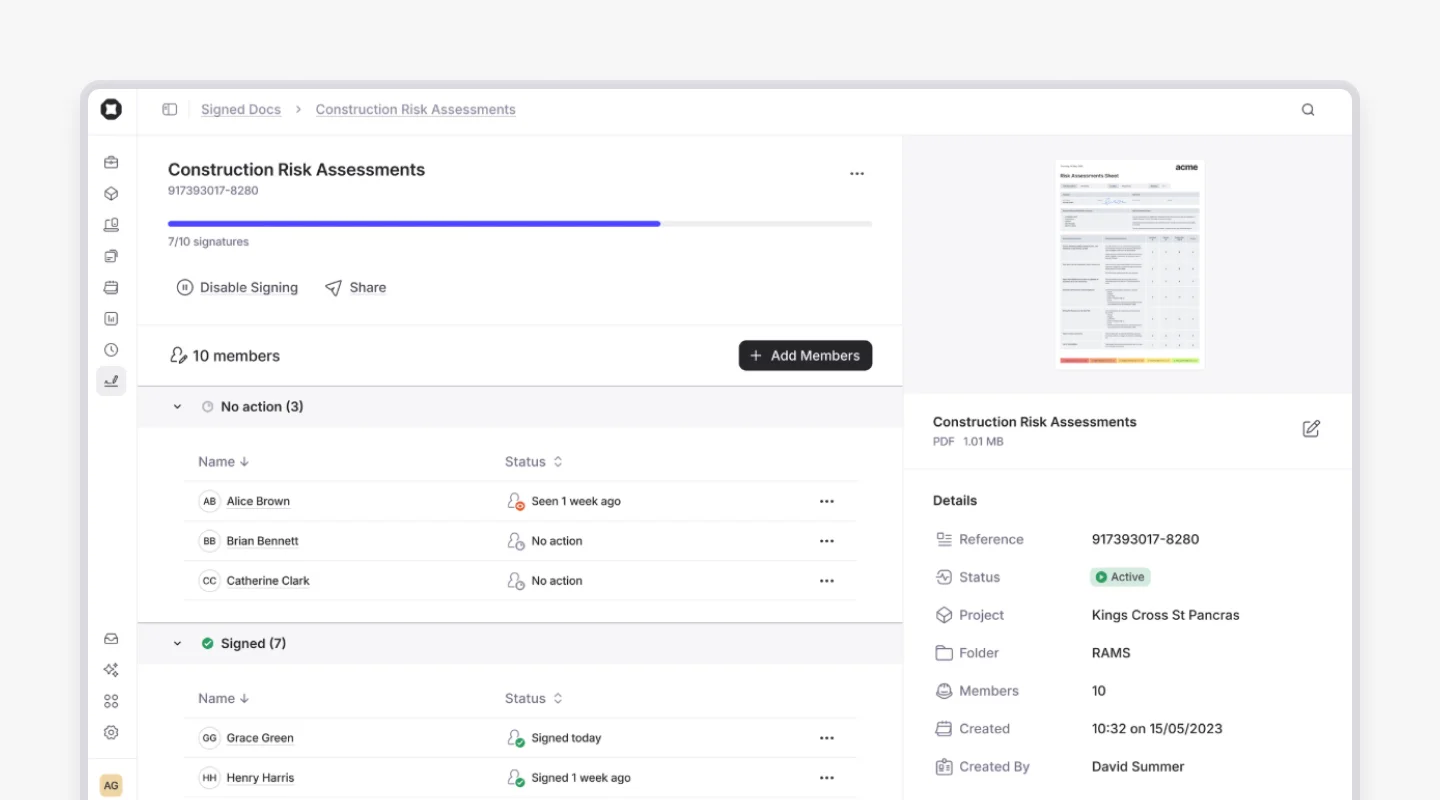
Signed documents create a visible record of who has acknowledged responsibilities and safe working methods, while live status tracking reduces the risk of missed compliance steps.
6. Take ownership of quality at every stage
In construction, quality isn’t just a matter of pride in your work. It has a direct impact on time, cost, and reputation.
According to the Get It Right Initiative in the UK, avoidable errors are estimated to cost the industry more than £20 billion a year, with direct costs alone equating to around 5% of project value.
To avoid costly rework and prevent small defects from becoming major setbacks, you need to embed quality into every stage of the construction project. This includes:
Setting defined acceptance criteria from the outset
Using Inspection and Test Plans to guide checks
Introducing hold points before covering up critical work
Reviewing mock-ups before full production begins
Tracking submittals and approvals carefully
Logging defects early with photo documentation
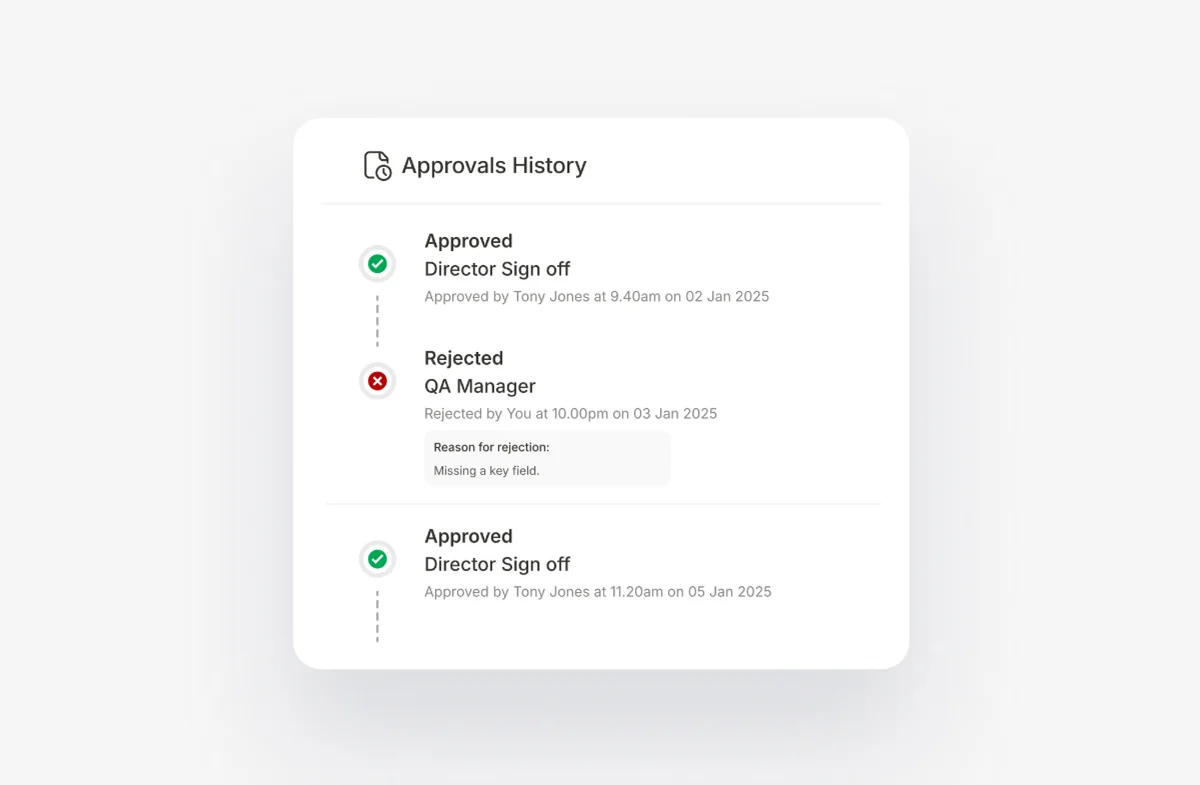
Multi-stage approvals are particularly effective in strengthening quality control and preventing defects from passing unnoticed to the next stage of work.
By checking and signing off tasks in sequence, you reduce the risk of covering up errors and limit costly rework later.
That’s why Onetrace’s Approvals feature allows operatives to submit digital job sheets, which pass through defined review stages aligned with your QA process. Supervisors or managers can then approve the work or reject it with clear feedback, creating a documented quality trail.
7. Treat risk as a live part of execution
Risk is inherently part of most construction projects.
The level of risk can be formally assessed through RAG status, which rates a project’s likelihood of delivering on time and within budget:
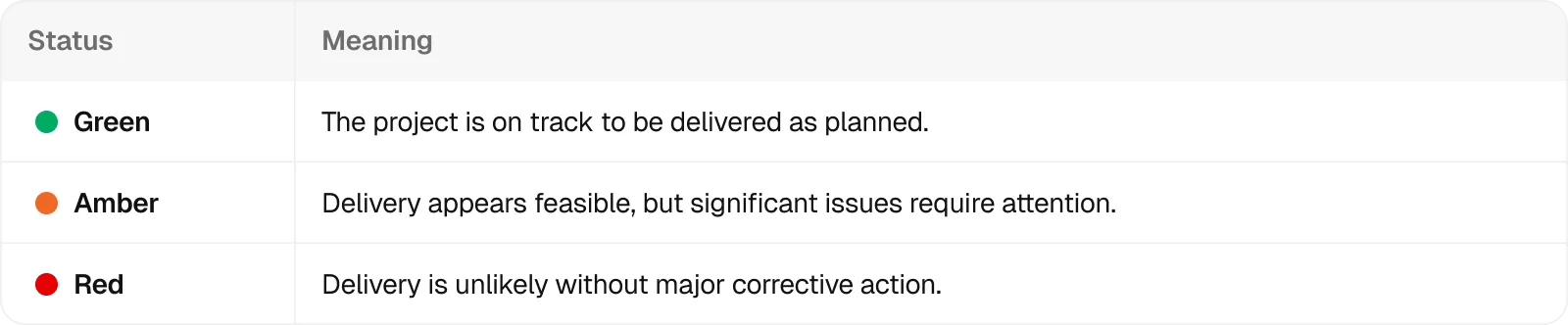
In 2023/24, 72% of major UK government projects were rated ‘Amber’. That means most projects face material risks during execution, even if they remain deliverable.
To reduce the likelihood of these risks turning into delays, disputes, or cost overruns, you need to manage them actively rather than reactively. In practice, this means:
Reviewing and updating the risk register at set intervals
Challenging key assumptions as the project progresses
Logging potential change orders as soon as issues emerge
Closely monitoring external factors such as weather, supply chains, and labour availability
Bringing field and management teams together for regular risk reviews
8. Align stakeholders through transparent reporting and documentation
While getting your internal processes in order is essential for successful construction project execution, changes from outside the site can affect delivery just as much as what happens on it.
These changes often result from unclear communication with clients and other stakeholders or late updates that lead to unrealistic expectations, rushed decisions, and avoidable tension.
To prevent such issues, you should make progress, risks, and adjustments visible early and consistently by:
Providing structured, regular progress reports against agreed milestones
Escalating issues early rather than waiting for formal review points
Communicating scope or cost changes with context
Keeping contracts, permits, and key documents organised and accessible
Recording decisions and approvals in writing to avoid disputes later
Pro tip:
When stakeholders can see progress for themselves, it reduces back-and-forth updates and lowers the risk of misunderstandings. That’s why you should give clients direct access to accurate, real-time project information.
With Onetrace, clients can be invited to specific projects with read-only permissions, allowing them to:
View live project progress and key records
Run and download reports in PDF or Excel format
Take part in the approval stages where required
Access selected documents and compliance files
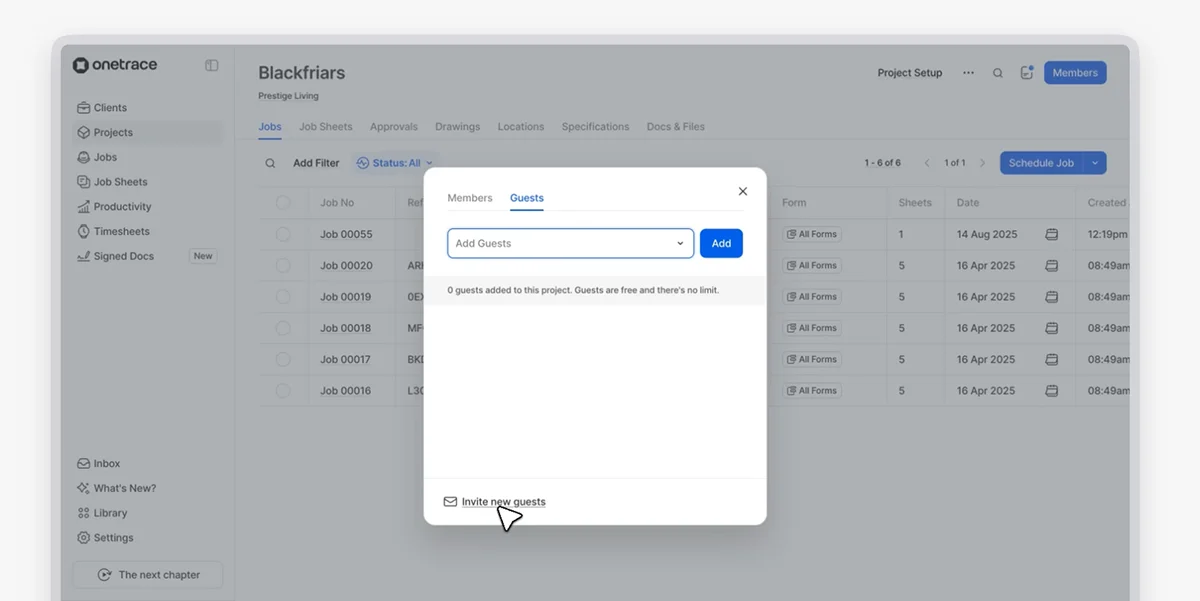
This approach keeps clients informed and reassured, without opening the door to micromanagement or disrupting day-to-day site operations.
Bring every construction project execution best practice into one place with Onetrace
Every best practice in this guide depends on one thing: reliable, shared information.
Planning only works if everyone sees the same scope, scheduling requires accurate data, and quality, safety, and risk management are only possible with current and visible records.
A dedicated construction management platform delivers the single source of truth that brings structure to construction project execution. It connects the field and the office, keeps data consistent, and gives decision-makers a live view of what’s happening on site.
Onetrace, in particular, is designed around the day-to-day realities of construction work, which makes it suited for real site conditions, not ideal scenarios.
This single tool brings scheduling, compliance, reporting, and communication into one structured system that’s easy to use for both site teams and office staff.
If you want to see how it could work for your projects, book a personalised demo and explore how Onetrace can help you stay organised, aligned, and in control from start to finish.
Marketing Team
@Onetrace
The Onetrace marketing team is passionate about sharing insights, ideas, and innovations that help construction businesses stay connected, compliant, and efficient. Combining industry expertise with a love for clear communication, we aim to deliver content that empowers professionals to work smarter and safer.