Pre-construction planning: Why it matters, and how to do it?

By
Marketing Team
@Omnius
Pre-construction planning is the work done to prepare the construction project for safe, efficient, and commercially viable delivery.
In the UK, pre-construction planning is also a legal requirement under the Construction (Design and Management) Regulations 2015, with a primary focus on managing health and safety risks before work starts on site.
But even without this obligation, it would still be one of the most important stages of any construction project, as poor planning is often the root cause of delays, budget overruns, and payment disputes.
These outcomes have turned into a persistent problem across the UK construction industry, where 90% of large infrastructure projects go over budget. In addition, only 14% of major government projects are currently rated as on track, and long-term funding certainty for infrastructure projects is expected to drop to just 33% by 2030/31.
To help you improve project outcomes from the outset, this guide explains what effective pre-construction planning looks like, why it matters, and how contractors approach it in practice.
Key takeaways
Good pre-construction planning reduces risk early
Strong planning helps contractors identify design issues, safety risks, cost gaps, and scheduling problems before they affect delivery, helping projects stay safer, more predictable, and more profitable.
Clear project scopes and accurate cost plans protect margins
Well-defined scopes, realistic budgets, and detailed programmes reduce the risk of disputes, delays, unexpected costs, and payment issues later in the project.
Communication and coordination matter just as much as technical planning
Keeping stakeholders aligned through clear workflows, reporting structures, and organised documentation helps teams make faster decisions and avoid costly misunderstandings.
Compliance and risk management should be built into the process from day one
Contractors must actively manage health and safety risks during the pre-construction phase. Early risk assessments, permits, and documentation reviews help prevent delays and compliance problems later on.
Construction management software helps keep the entire process under control
Platforms like Onetrace help contractors centralise and standardise project data, manage approvals, coordinate teams, and improve visibility across planning and delivery. This helps reduce delays, improve compliance, and keep projects moving smoothly from pre-construction to final payment.
What is pre-construction planning?
Pre-construction planning is the process of turning a project from an initial concept into a workable delivery plan before construction starts on site.
In practical terms, this is when contractors identify risks, resolve gaps in information, coordinate responsibilities, and build realistic programmes and cost plans. This sets the direction for everything that follows during construction.
Under CDM 2015, the pre-construction phase includes any period where design or preparatory work is being carried out for a project.
In most cases, it begins as soon as the client starts developing the project and continues until construction work is complete. That’s because design updates and health and safety considerations often continue throughout the build.
Pre-construction planning involves multiple stakeholders, each with different responsibilities across the project:
Stakeholder | Pre-construction duties |
Client / Developer | Defines project goals, budget, timelines, and project requirements |
Principal designer | Plans, manages, and coordinates health and safety during the design and planning stage and helps prepare and manage pre-construction information (PCI) |
Architects and designers | Develop designs, drawings, specifications, and technical details while helping identify and reduce design-related risks |
Engineers (Structural, Civil, MEP) | Assess structural requirements, site conditions, utilities, drainage, and building systems to support safe and practical delivery |
Principal contractor | Reviews constructability, sequencing, logistics, procurement, labour requirements, scheduling, and delivery risks before work starts |
Project manager | Coordinate communication, timelines, budgets, documentation, and stakeholder responsibilities across the project team |
Estimators / Quantity surveyors | Prepare cost plans, forecasts, tender pricing, valuations, and budget reviews to support financial planning and cost control |
Subcontractors and specialist trades | Provide technical input, programme feedback, buildability advice, and pricing for specialist works packages |
In the UK, one of the most important outputs of the pre-construction phase is the construction phase plan (CPP). Required under CDM 2015, this document sets out the project’s health and safety arrangements, site rules, identified risks, and control measures before construction work takes place.
Why pre-construction planning matters
Pre-construction planning matters because it helps contractors improve several key areas of project execution, including:
Budget accuracy: Well-defined scopes, realistic estimates, and early cost planning reduce the risk of overruns later in the project.
Schedule reliability: Better sequencing and programme planning help teams reduce the possibility of delays, downtime, and last-minute changes.
Resource allocation: Planning labour, materials, and equipment early improves productivity and reduces site disruption.
Risk reduction: Identifying design, safety, procurement, and site risks before work begins makes projects easier to manage once construction starts.
Change management: Accurate scopes and project documentation reduce misunderstandings, variations, and disputes between contractors and subcontractors.
Cash flow and payment timing: Well-planned milestones, accurate records, and better coordination support smoother valuations, approvals, and interim payments.
Health and safety compliance: Early planning helps contractors meet CDM 2015 requirements and put safer systems of work in place before workers arrive on site.
Communication and coordination: Bringing stakeholders together early improves decision-making and reduces confusion during delivery.
Client confidence: Strong planning gives clients greater confidence in project costs, timelines, and delivery expectations.
10 key stages of the pre-construction planning process
These 10 stages form the foundation of an effective pre-construction planning process, from early scoping through to project readiness.
1. Project scope definition
At this stage, the project team defines exactly what will be delivered, how it will be delivered, who is responsible for each part of the work, and which outcomes the project is expected to achieve.
The goal is to align client expectations, contract requirements, budgets, and programme timelines early, reducing the risk of scope creep, disputes, and costly changes during delivery.
Key priorities at this stage include:
Defining project objectives, deliverables, and success criteria
Confirming stakeholder expectations and responsibilities
Reviewing drawings, specifications, and contract requirements
Identifying exclusions, assumptions, and potential gaps in scope
Assessing early risks such as labour shortages, site restrictions, or long-lead materials
2. Site evaluation and feasibility
Site evaluation assesses whether the project can be delivered safely, practically, and within budget.
This stage focuses on identifying any site constraints, access issues, existing infrastructure, and environmental risks that could affect delivery later in the project.
Primary activities include:
Reviewing site conditions and ground surveys
Checking access routes, drainage, and utilities
Assessing zoning, permits, and regulatory requirements
Identifying hazards, such as asbestos or underground services
Evaluating logistical and environmental constraints
Flagging risks that could lead to delays, redesigns, or unexpected costs
3. Design review and coordination
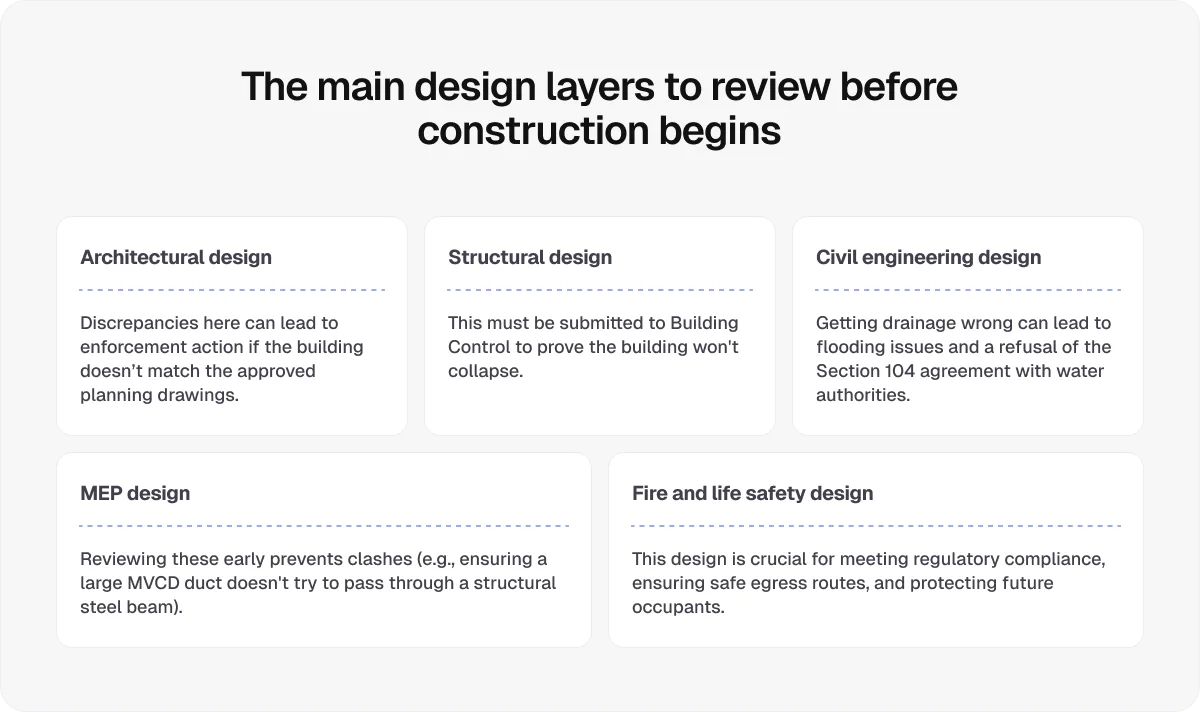
This stage refines the project design so drawings, specifications, budgets, and construction methods all work together in practice.
It brings architects, engineers, contractors, and consultants together to identify clashes, missing information, constructability issues, and compliance risks before they affect delivery.
This is also when teams review materials, building systems, and sequencing in more detail, often using value engineering or BIM models to improve coordination, reduce waste, and keep the design commercially viable.
4. Cost estimation and budgeting
Cost estimation and budgeting determine whether a project is financially realistic and commercially viable.
The aim is to build accurate cost plans that support competitive pricing, protect margins, improve cash flow visibility throughout the project, and maintain healthier payment cycles during delivery.
This stage typically requires:
Detailed quantity take-offs and tender pricing
Labour, material, and plant cost forecasting
Procurement package pricing
Contingency planning for project risks
Market price and supplier reviews
Margin forecasting and cost tracking
Valuation and payment schedule planning
5. Scheduling and timeline planning
Construction scheduling turns the project scope into a realistic delivery programme. It maps out key activities, trade sequencing, and resource allocation so work can progress in the right order and within agreed timelines.
A well-built programme improves coordination across teams while helping contractors plan labour, procurement, site access, and payment milestones more accurately.
To ensure these positive outcomes, this is what you should do during this stage:
Identify task dependencies and critical activities.
Assess scheduling risks and delays.
Build timelines around valuations and interim payments.
6. Risk assessment and mitigation
Under CDM 2015, conducting risk assessments is one of the most important responsibilities during the pre-construction phase, with principal designers required to identify, eliminate, or control foreseeable risks as early as possible.
This stage covers both health and safety risks and wider commercial risks that could disrupt the project later on.
Common areas reviewed include:
Design changes and coordination gaps
Site hazards and safety risks
Supply chain and procurement delays
Labour shortages and resource constraints
Budget overruns and programme delays
Regulatory and compliance risks
Quality control and buildability issues
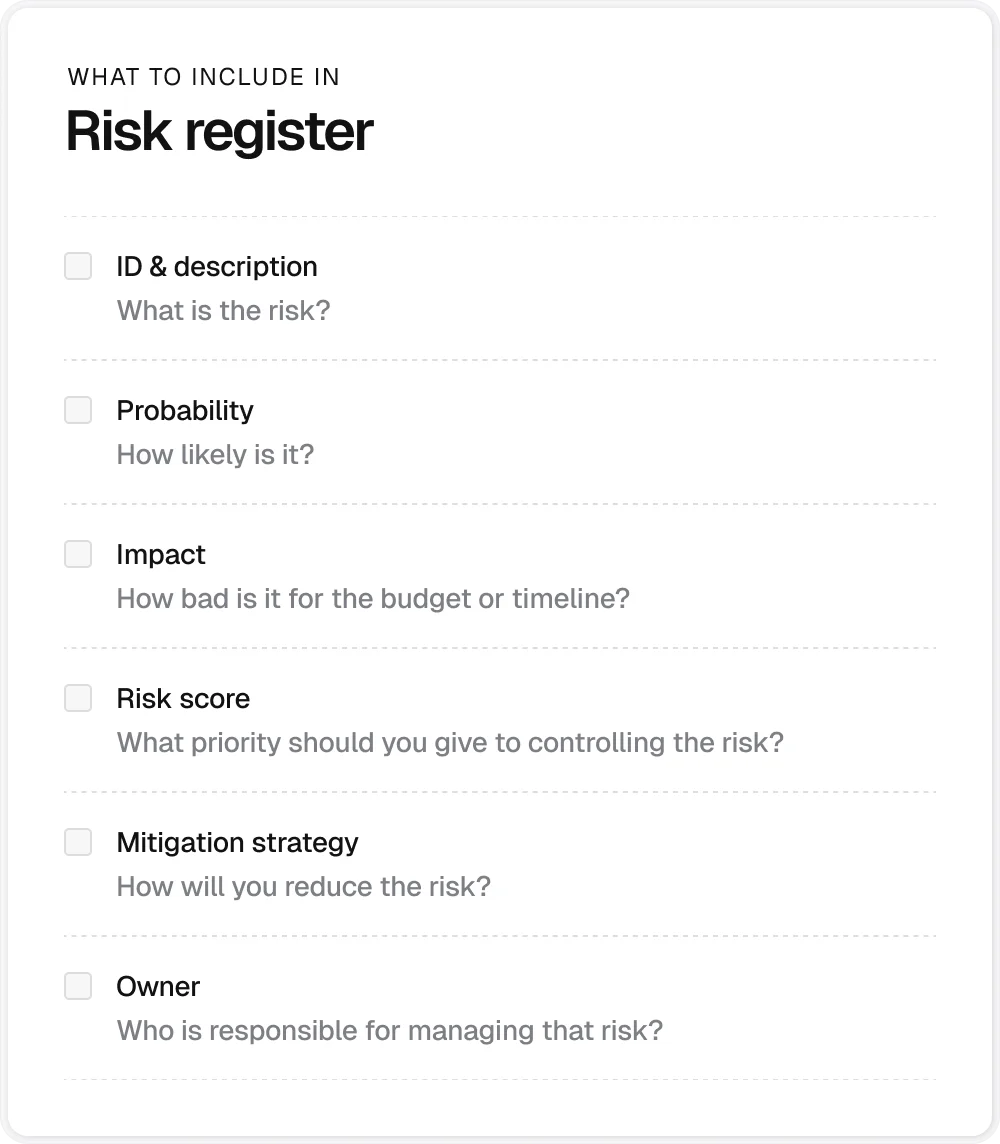
Most teams also create a risk register with mitigation actions, responsibilities, and contingency plans to help manage issues throughout delivery.
7. Procurement planning
Procurement planning focuses on sourcing the labour, materials, and equipment needed to deliver the project efficiently and on schedule.
The aim is to avoid delays, shortages, and unexpected cost increases by planning procurement activities early and aligning them with the project programme.
To achieve this aim, you should do the following:
Plan supplier packages
Review lead times and material availability
Coordinate equipment and plant requirements
Assess supplier risks and pricing volatility
Review health and safety information for materials and equipment
8. Permits, compliance, and documentation
This stage ensures the project meets all legal, regulatory, and contractual requirements before work progresses further.
The focus is on reducing the risk of delays caused by compliance issues or missing information.
In practice, this requires:
Obtaining permits, licences, and planning approvals
Reviewing building regulations and safety requirements
Preparing contracts and supporting project documents
Submitting drawings, assessments, and technical information
Managing compliance with CDM 2015 and other relevant regulations
Well-organised documentation helps projects move through approvals more efficiently and reduces administrative delays later in delivery.
9. Communication and collaboration planning
Communication planning defines how information will be shared across the project team and who is responsible for reporting, approvals, and decision-making.
Well-defined communication processes help reduce misunderstandings, improve coordination, and keep stakeholders aligned throughout the project.
This stage usually includes:
Setting reporting and update procedures
Defining approval and escalation workflows
Establishing communication responsibilities across teams
Coordinating information sharing between stakeholders
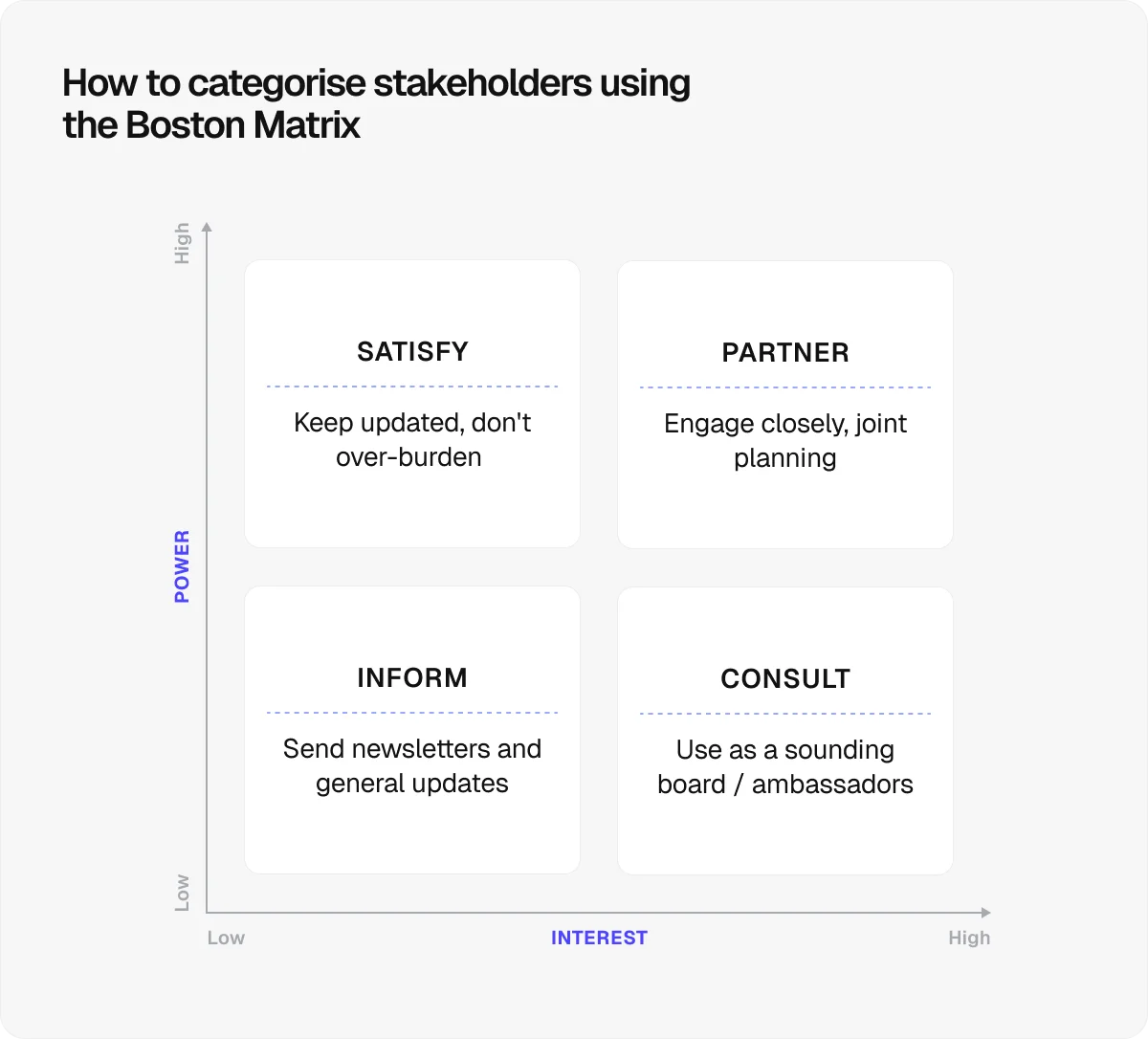
It’s also important to categorise stakeholders based on their level of involvement and influence, as not every party needs the same level of detail, reporting, or communication frequency.
10. Final pre-construction review
The final pre-construction review confirms that the project is ready to move into delivery.
It typically includes:
Final budget and cost validation
Programme and milestone confirmation
Stakeholder approvals and sign-offs
Readiness checks across teams and suppliers
Review of outstanding risks or unresolved issues
A thorough final review helps projects start with clearer expectations and fewer avoidable problems.
Best practices for effective pre-construction planning
For effective pre-construction planning, you should:
Standardise workflows and documentation: Consistent templates, checklists, and processes reduce missed information and make projects easier to manage across teams.
Use historical project data: Past costs, programme performance, delays, and procurement issues can help teams make more realistic decisions on future projects.
Create a single source of truth: Keeping drawings, estimates, schedules, and project documents in one place reduces confusion and version control issues.
Align planning with payment milestones: Structuring programmes carefully helps support healthier cash flow throughout delivery.
Maintain strong documentation standards: Accurate daily reports, site records, and progress photos make valuations, claims, and payment approvals easier to manage.
Review and update plans regularly: Pre-construction planning should stay flexible as project information, risks, and delivery requirements evolve.
Use construction management software: Connected systems improve visibility across budgets, schedules, documentation, approvals, and project communication.
How construction management software improves pre-construction planning
Pre-construction planning involves large amounts of information, multiple stakeholders, changing project requirements, and tight delivery timelines.
Construction management software like Onetrace helps you stay in control of all these moving parts by keeping project data, communication, and workflows connected in one place.
With Onetrace, you can maintain strong control over documentation, compliance, and delivery from the outset, thanks to features like:
Custom forms and templates: Create standardised survey, inspection, installation, and compliance forms to capture consistent project information during planning and mobilisation.
Digital site management: Organise projects by blocks, levels, and zones so teams can plan work, track locations, and structure site information more clearly.
Photographic evidence capture: Record surveys, risks, existing conditions, and completed work with time-stamped photos that support compliance, approvals, and payment applications.
Material tracking: Monitor materials, quantities, specifications, and rates early to improve procurement planning and cost visibility.
Approval workflows: Set up multi-stage approval processes for surveys, job sheets, QA checks, and documentation to reduce delays and improve accountability.
Documentation management: Store drawings, specifications, signed documents, compliance records, and project files in one searchable system instead of scattered folders and email chains.
Scheduling and workforce planning: Allocate teams, manage schedules, and adjust resources quickly using a visual planner.
Reporting and audit trails: Generate professional reports for clients, auditors, and project teams to help reduce disputes and support faster approvals and payments.
Through these features, Onetrace helps turn pre-construction planning into a more controlled, consistent, and commercially reliable process.
To see what this looks like in practice, schedule a personalised Onetrace walkthrough. If it feels like the right fit, our team will help you get up and running quickly.
FAQ
Who prepares the CPP?
Under CDM 2015, the principal contractor prepares the construction phase plan (CPP) before work starts on site.
What are the 7 stages of a construction project?
The seven main stages of a construction project include conception, design, pre-construction, procurement, construction, commissioning, and post-construction.
Who prepares the PCI?
Under CDM 2015, the client prepares the pre-construction information (PCI), usually with support from the principal designer.
Marketing Team
@Omnius
The Onetrace marketing team is passionate about sharing insights, ideas, and innovations that help construction businesses stay connected, compliant, and efficient. Combining industry expertise with a love for clear communication, we aim to deliver content that empowers professionals to work smarter and safer.