How to be a subcontractor in construction: Step-by-step guide

By
Marketing Team
@Onetrace
Subcontracting is deeply embedded in European construction. Micro construction companies make up the majority of the sector—over 95%—and many of them deliver work through subcontracted packages.
These numbers make sense in a market that’s both price-sensitive and labour-intensive.
But that’s not the only reason people take this path.
Many choose subcontracting for the freedom it offers: to set your own schedule, pick the projects you enjoy, and shape your career on your own terms.
If you’re thinking about joining the skilled professionals working this way, this 10-step guide on how to be a subcontractor in construction is a great place to start.
Key takeaways
Start with clarity about your role
Decide whether you’ll work as a labour-only or bona fide subcontractor, choose your trade, and define who you’ll work with. Clear direction helps you specialise and stand out when bidding for projects.Build credibility with skills and credentials
Strengthen both your technical and soft skills, then back them with recognised qualifications, licences, and safety certifications. These prove competence and open the door to better contracts.Protect your business before taking on work
Register your business properly, arrange insurance, and understand your legal duties. Having the right cover and systems in place builds trust and keeps you compliant.Be strategic when choosing projects
Avoid taking every job that comes your way. Focus on work that matches your capacity and strengths to maintain quality and safeguard your reputation.Use technology to stay organised and profitable
Modern project management software helps subcontractors track budgets, monitor progress, and manage documentation efficiently. Onetrace combines all these tools in one intuitive platform, helping subcontractors stay compliant, in control, and ready for growth.
Step 1: Find your place in the trade
There isn’t one single type of construction subcontractor, and that’s exactly why your first move should be to decide where you fit. This includes how you’ll work, who you’ll work with, and what you’ll specialise in.
A good place to start is your working model. Most countries make the distinction between:
Labour-only subcontractor: You supply the labour and hand tools, while the contractor provides materials, equipment, supervision, and insurance cover.
Bona fide subcontractor: You run the job your way, bringing your own tools and equipment and taking full responsibility for how the work is done.
Next, think about who you want to work with: general contractors, specialist firms, or local builders. This decision will shape the type of projects you take on and the skills you’ll need the most.
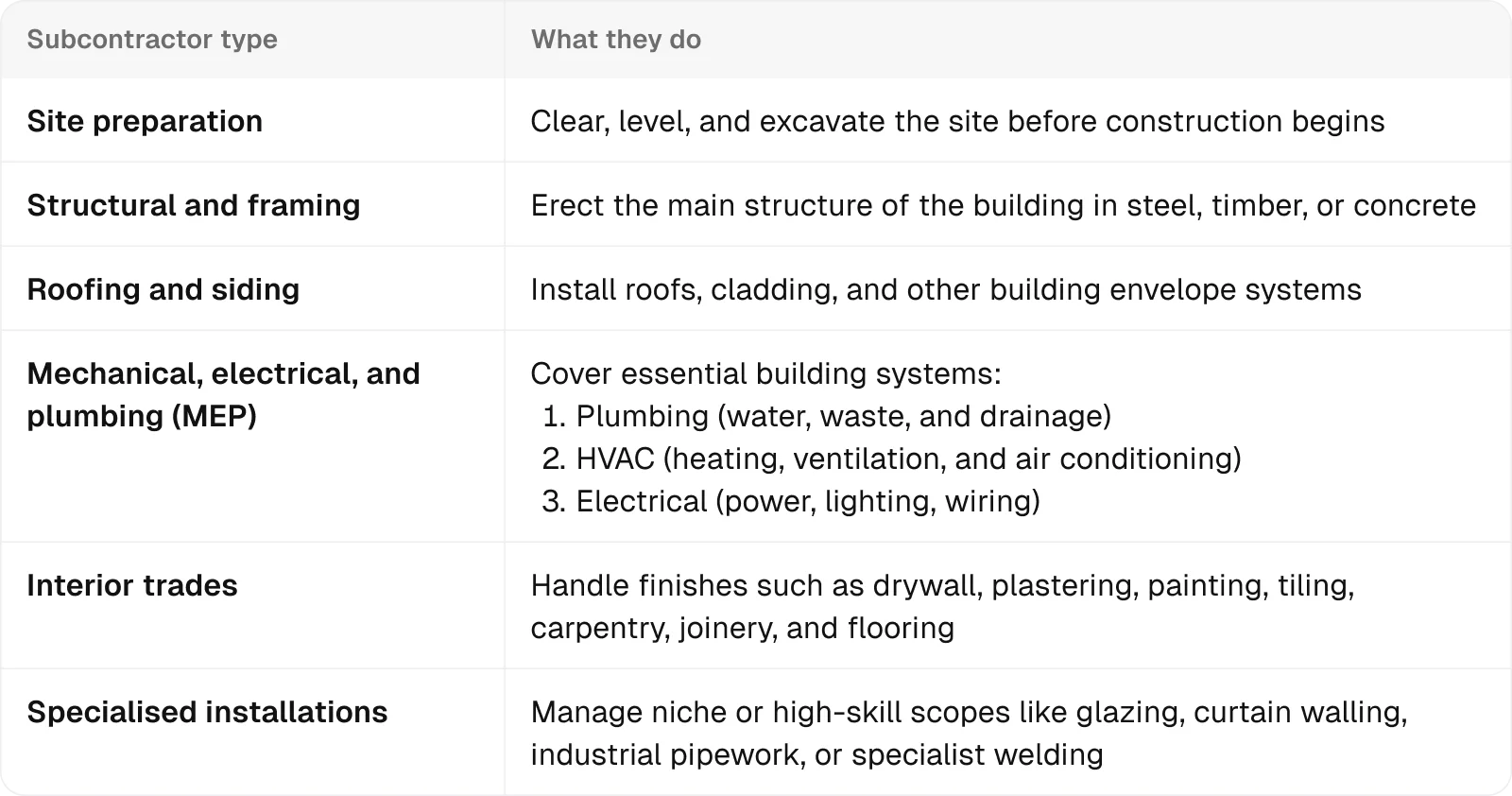
Finally, the best course of action is to focus on one trade and build deep expertise since this will make you stand out on-site and at tenders.
The table below shows some of the most common types of subcontractors in construction and what they do on projects.
Step 2: Learn your trade the right way
Strong trade skills are the foundation of every good subcontractor.
If you’ve already worked in construction, you’ve got a head start. However, becoming a subcontractor means showing that you can deliver consistent, high-quality work on your own.
Your exact training and certification requirements will depend on your country.
In the U.K., for example, you usually have to back your experience with recognised qualifications, such as NVQ Level 2 or 3. These prove competence to main contractors and are often required for site access or accreditation.
Many subcontractors earn their skills through apprenticeships or years of hands-on experience before any formal assessment.
In addition to hard skills, it’s also worth strengthening your teamwork, communication, and time-management skills. These qualities will help your projects run smoothly and build your reputation as someone contractors want back on site.
Step 3: Get the credentials that prove you’re qualified
Training builds your skills. Licensing proves you’re allowed to use them on site.
In construction, this means holding the right cards, registrations, and trade-specific certifications that show you can work safely and competently.
For the U.K. subcontractors, the licensing process often starts with a Construction Skills Certification Scheme (CSCS) card—the most common proof of site readiness.
Beyond that, certain trades require specialist registration, such as the Gas Safe Register for gas engineers or NICEIC certification for electricians.
Step 4: Make your business official
If you’ve chosen to be a subcontractor, that also means you’re in charge of running a business, not just doing the work.
To get paid properly and operate above board, you’ll need to register your business and meet basic legal and tax requirements.
This typically involves:
Choosing a business structure that fits your goals and the level of risk you’re willing to take on
Registering with the relevant tax authority so you can invoice and file taxes correctly
Setting up a separate business account to keep your finances clear and professional
In the U.K., for instance, subcontractors usually register as sole traders or limited companies with His Majesty's Revenue and Customs (HMRC). Most also sign up for the Construction Industry Scheme (CIS) to receive payments without excessive tax deductions.
Step 5: Protect your business before you step on site
Insurance isn’t just paperwork. It’s protection for your business, your clients, and your reputation.
If something goes wrong on site, the right cover can mean the difference between a temporary setback and a financial disaster. And even if nothing goes wrong, insurance shows clients that you take responsibility and run your business professionally.
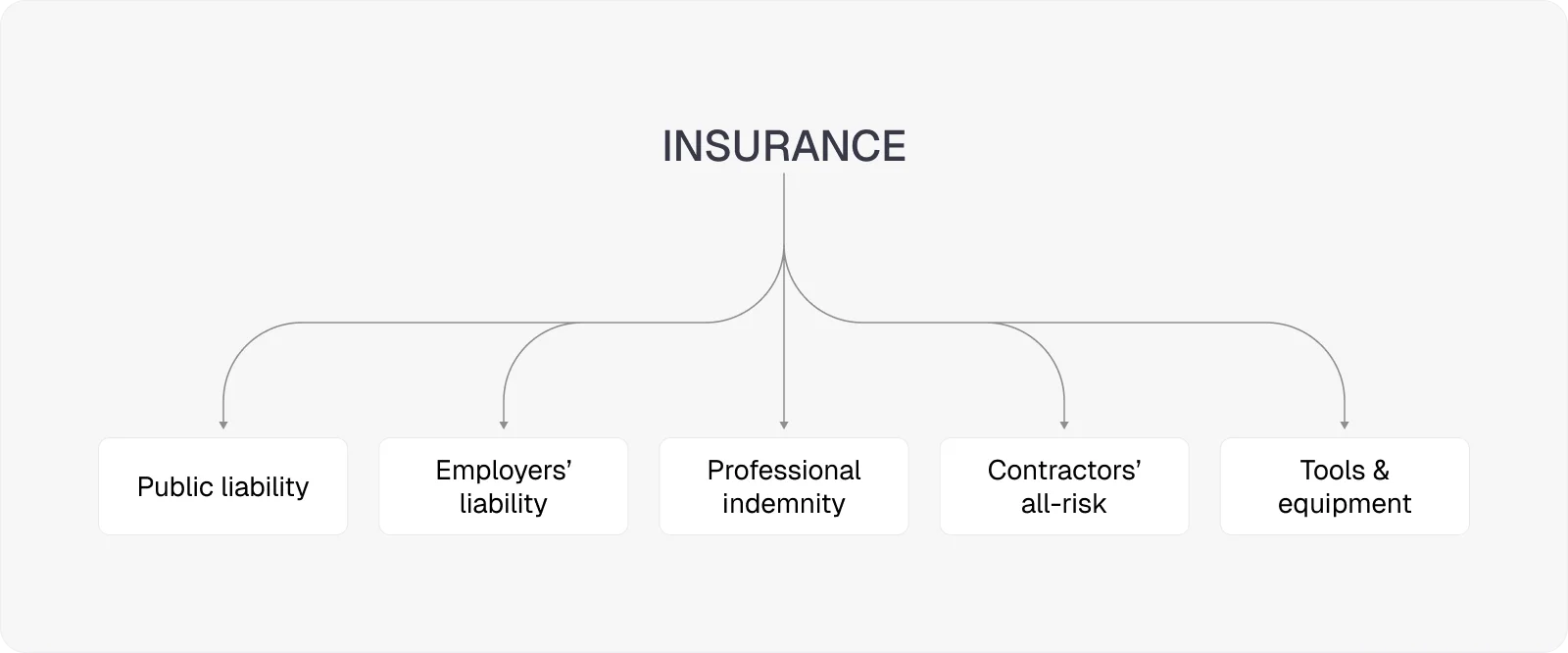
Most subcontractors carry several types of insurance, each covering a different kind of risk:
Public liability insurance: You’re protected if your work causes injury to someone or damage to property.
Employers’ liability insurance: You’re covered if an employee or labour-only subcontractor is injured or becomes ill while working for you.
Professional indemnity insurance: This policy protects you if a client suffers financial loss because of a mistake or bad advice in your work.
Contractors’ all-risk insurance: It covers materials, structure, and ongoing work against theft, fire, or accidental damage.
Tools and equipment insurance: This policy helps you repair or replace essential items if they’re lost, damaged, or stolen.
Step 6: Understand your legal health and safety duties
Before you start taking on contracts and projects, you need a solid grasp of your legal responsibilities around health and safety.
Every subcontractor has the duty to plan, manage, and monitor their work so it can be carried out safely. That includes coordinating with other teams, following site safety plans, and making sure everyone under your supervision knows the rules and risks.
You should also create your internal safety standards that mirror the requirements on site and keep key documentations like RAMS and inspection records in a centralised, easy-to-access hub.
This approach guarantees consistency across projects, helps you prove compliance when needed, and shows clients that safety isn’t just a box you tick.
Pro tip:
The easiest way to keep everything in place is to invest in a contractor management platform.
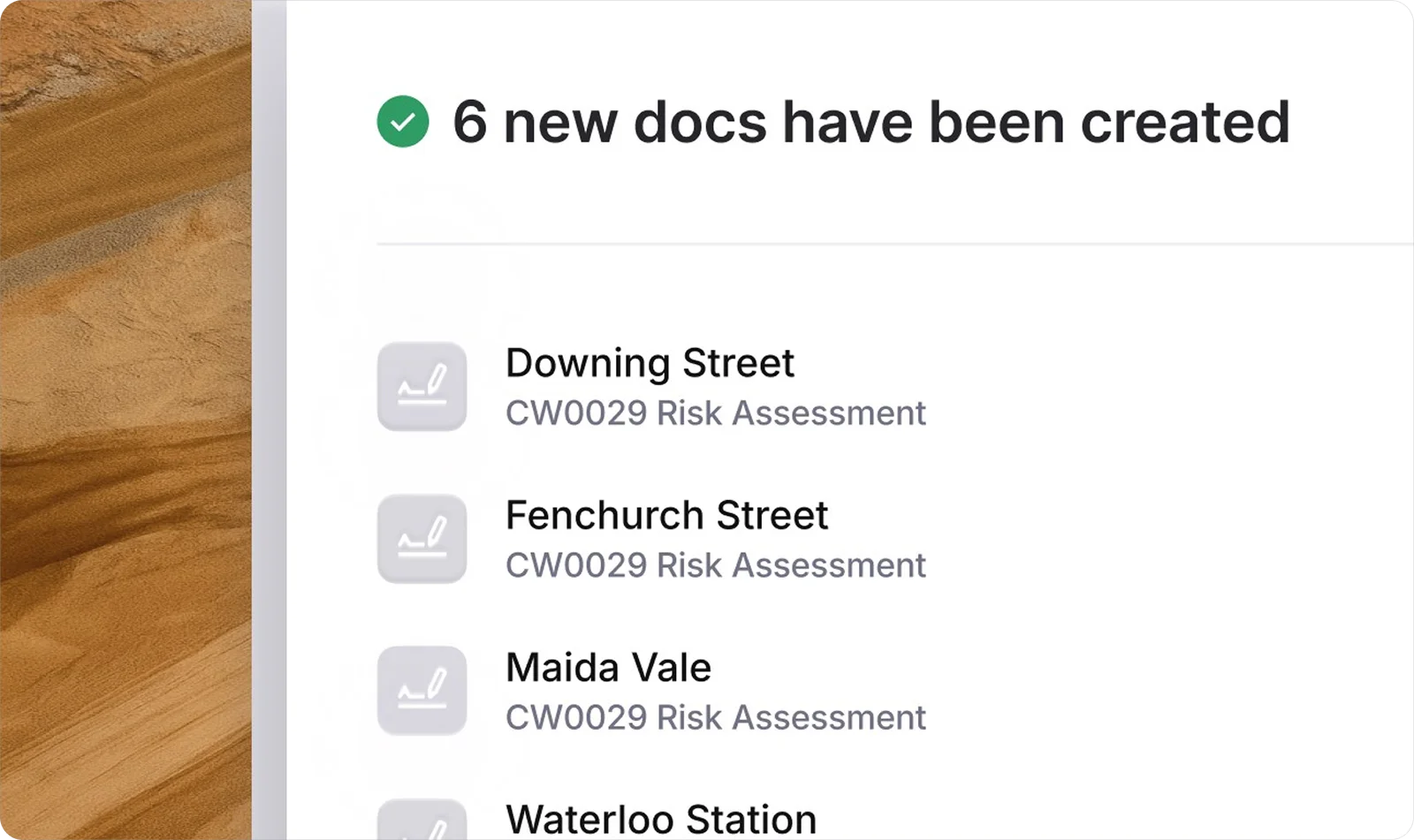
Onetrace, a software tool purpose-built for subcontractors, makes it simple to store and manage every piece of critical documentation in one secure location. This includes:
Quality assurance reports
Drawings, equipment specifications, and installation manuals
Signed RAMS and training acknowledgements
Safety audits and risk assessments
Step 7: Formalise your pricing and paperwork
The setup phase is almost done. Only one step separates you from landing real projects: setting up your contracts and pricing. This includes defining:
How you’ll charge for work
What terms you’ll accept
How you’ll protect yourself from disputes
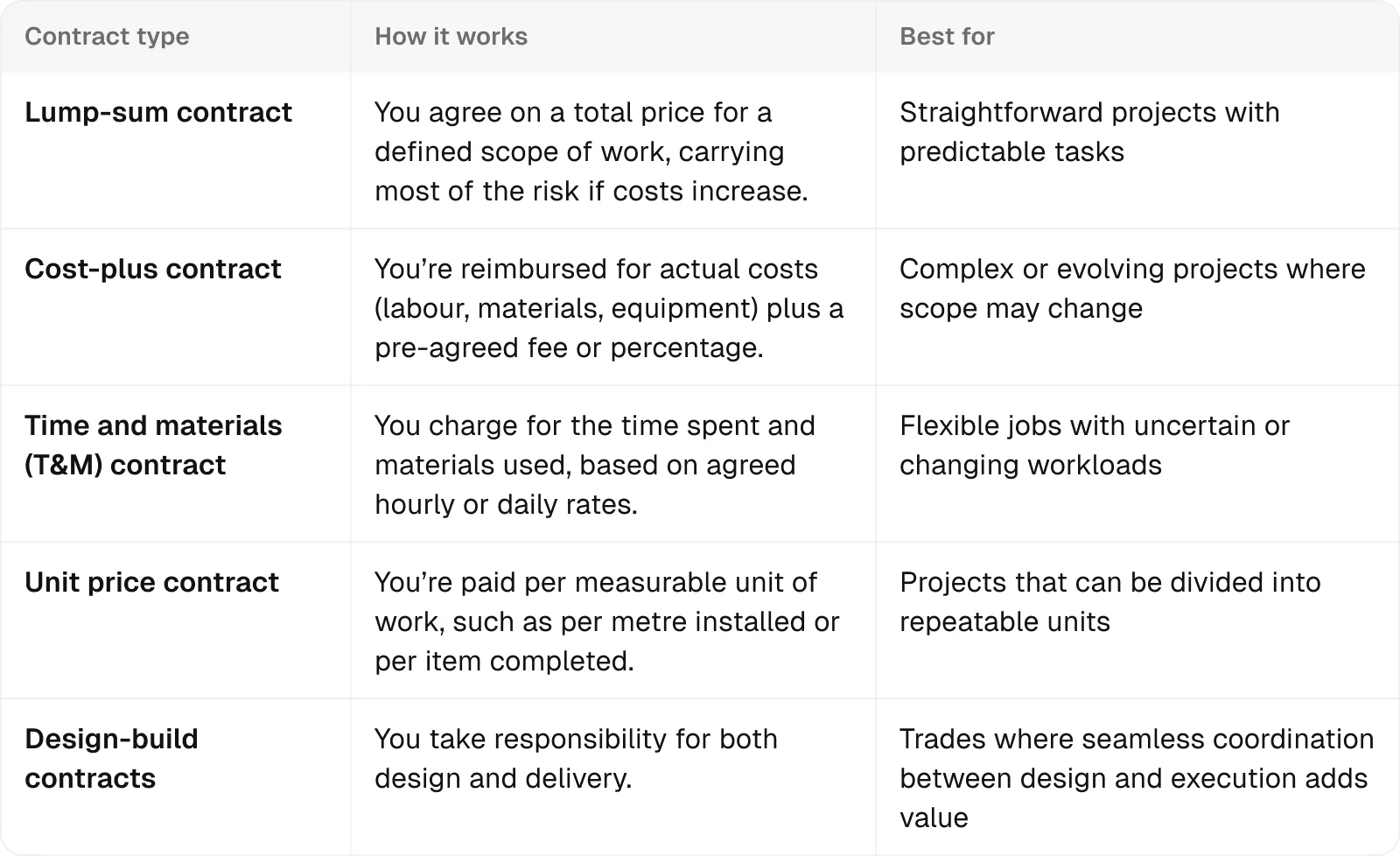
Some subcontractors prefer fixed prices, while others charge by the hour or per unit. Whichever model you choose, make sure everything is agreed in writing.
As far as contracts go, there’s no universal agreement in construction. Most subcontractors create a clear base contract and adapt it for each job to reflect scope, payment terms, timelines, and change procedures.
The table below outlines the most common types of subcontractor contracts and how they typically work:
Step 8: Seek out subcontracting opportunities
With the groundwork set, it’s finally time to put your business into motion.
To actually be a subcontractor, you need clients. Finding them takes persistence, professionalism, and a bit of marketing know-how.
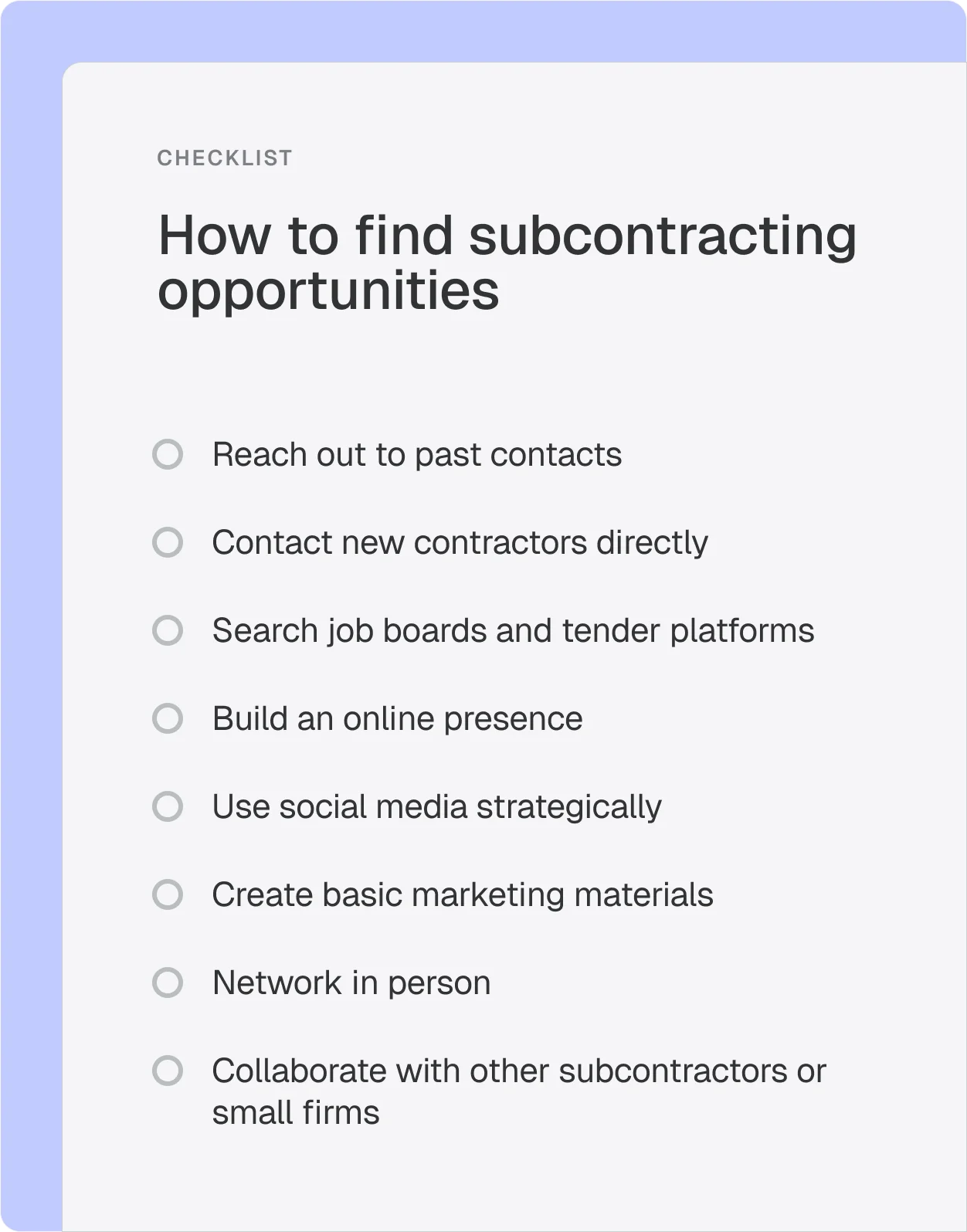
Here are some proven ways to uncover new opportunities and build a steady pipeline of projects:
Reach out to past contacts: If you have previous experience in construction, reconnect with contractors or clients you’ve worked with before.
Contact new contractors directly: Introduce your business to general and specialist contractors who take on the kind of projects you want to work on.
Search job boards and tender platforms: Many main contractors post openings or tenders for specific trades. Set aside time each week to check and apply.
Build an online presence: A simple website or portfolio page showcasing your work, credentials, and contact details makes you easier to find and trust.
Use social media strategically: Share updates, completed projects, and industry tips on LinkedIn or trade forums to attract attention from contractors.
Create basic marketing materials: Business cards, flyers, or a short brochure can help you make a professional first impression.
Network in person: Attend trade events, workshops, or supplier days to meet project managers and decision-makers face to face.
Collaborate when possible: Partner with other subcontractors or small firms on joint bids or complex projects to gain experience and visibility.
Step 9: Select your projects wisely
It’s natural to want as much work as possible, especially when you’re just starting out. But agreeing to every opportunity can quickly backfire.
Too many jobs at once often lead to missed deadlines, lower quality, and a reputation that’s hard to repair.
So, being selective isn’t about turning work away. It’s about protecting your time, your standards, and your name.
That’s why you should only take on projects that fit your capacity, play to your strengths, and align with the kind of business you want to build. In the long run, consistency and reliability will bring you more opportunities than overcommitment ever could.
Pro tip:
Staying selective is easier when you can clearly see what’s on your plate.
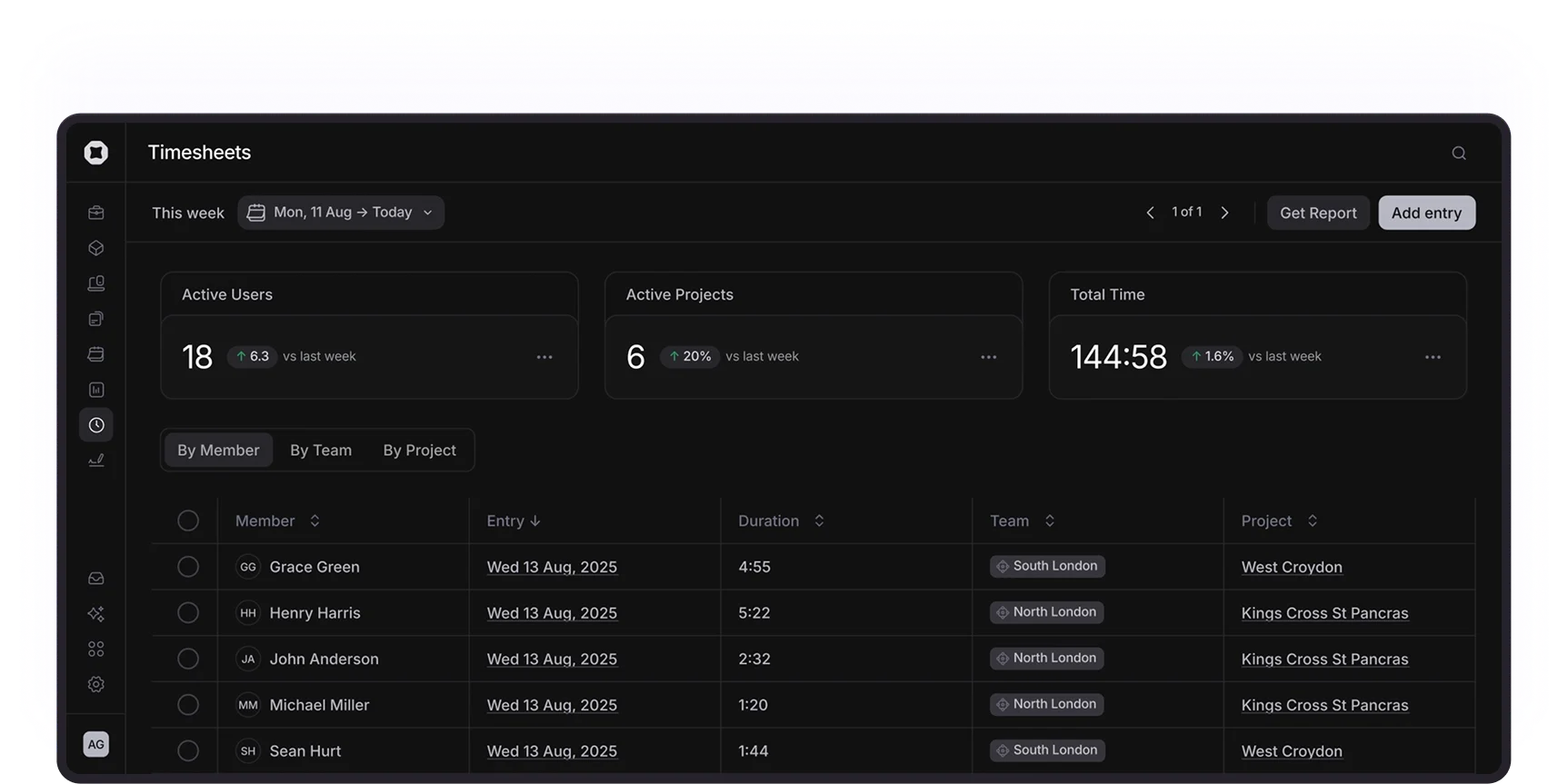
With Onetrace, subcontractors get real-time visibility across the platform. They can see schedules and progress tracking in the Planner and attendance through Timesheets.
Having everything centralised helps you plan realistically, avoid overbooking, and keep every project running smoothly from day one.
Step 10: Invest in the right construction management software
As soon as you onboard your first client, you’ll see just how much work happens off-site.
That’s why you should invest in a comprehensive project management platform designed for construction.
The right tool will save you hours of admin, reduce costly mistakes, and give you full control over your operations. This includes:
Tracking budgets and expenses in real time to keep projects profitable
Monitoring job progress to quickly identify delays or resourcing issues
Collaborating with clients and teams to keep everyone on the same page
Creating detailed reports to make data-driven decisions
A platform like Onetrace allows you to do all of this in a simple, intuitive way.
Your subcontracting journey starts here
Learning how to be a subcontractor in construction is one thing. Running your business efficiently is another.
That’s why Onetrace was built: to give subcontractors everything they need to stay organised, compliant, and in control.
Schedule a personalized Onetrace demo today and take the first step toward simpler, more organised projects.
FAQs
How do I set up as a subcontractor in construction?
Pick your trade, register your business, get the required licenses and insurance, invest in reliable project management software, and build relationships with contractors to start winning work.
What is subcontracting in construction?
It’s when a self-employed specialist is hired by the main contractor to handle specific tasks, such as electrical, plumbing, or finishing work.
Is it worth being a subcontractor in construction?
Absolutely. Subcontracting offers flexibility, independence, and higher earning potential, as long as you stay organised and manage projects professionally.
Marketing Team
@Onetrace
The Onetrace marketing team is passionate about sharing insights, ideas, and innovations that help construction businesses stay connected, compliant, and efficient. Combining industry expertise with a love for clear communication, we aim to deliver content that empowers professionals to work smarter and safer.