Understanding construction compliance: Fully explained

By
Marketing Team
@Onetrace
Construction is a heavily regulated industry. This makes sense because buildings need to be safe to construct, prove safe to use, and remain safe for years to come.
That’s why compliance runs through almost every part of a construction project, from planning to the products used on site.
At that level of detail, contractor compliance can start to feel like a growing list of checks, paperwork, and responsibilities, often on top of an already demanding job.
To help you make sense of it all, this guide explains what construction compliance really means, why it matters, and which types you’re likely to deal with on site and beyond.
Key takeaways
Construction compliance runs through the entire project lifecycle
Compliance applies from early design through delivery and sign-off, shaping how work is planned, carried out, documented, and approved.Health, fire, and building control are the highest-risk compliance areas
The biggest consequences come from failures in health and safety, fire and life safety, and building control. These areas exist to protect lives and ensure buildings perform as intended, which is why they are tightly regulated and closely enforced.Good compliance improves delivery, not just risk management
When compliance is built into day-to-day work, projects run more smoothly. There is less rework, fewer defects, faster approvals, and fewer surprises at inspection or sign-off, all of which support quality and programme certainty.Compliance directly affects reputation and the ability to win work
In competitive tenders, compliance is often the baseline for being considered at all. Clear, up-to-date evidence helps build trust with clients and regulators, supports repeat work, and prevents bids from being rejected due to avoidable gaps.Digital tools make compliance easier to manage and prove
Platforms like Onetrace help teams keep records in one place, capture evidence as work happens, manage approvals, and produce clear audit trails. This reduces admin, avoids last-minute chasing, and makes it far easier to stay compliant across projects.
What is construction compliance?
Construction compliance is the act of working in line with the laws, regulations, standards, and agreed requirements that apply to a construction project.
These rules are set by regulators, industry bodies, and project contracts, and are in place primarily to:
Keep people safe
Protect the environment
Ensure buildings perform as they should
Set clear expectations for how work is done
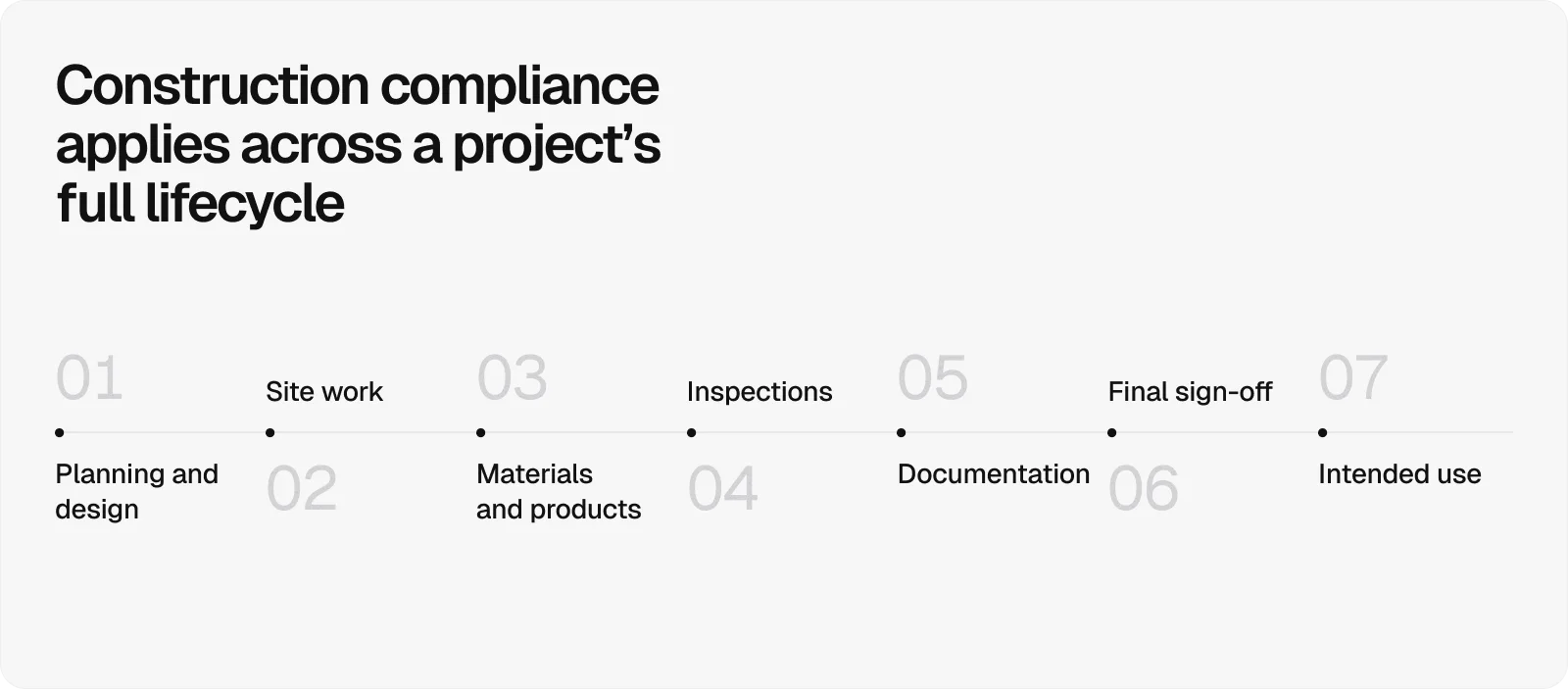
Construction compliance covers how a project is planned, delivered, and signed off, and applies from early design through to completion and use.
Construction compliance: 6 core types
Construction compliance covers several distinct areas, each with its own set of rules that affect how work is planned, delivered, and recorded.
The specifics of those rules depend on the country the project is in, the type of building, and the work being carried out.
The examples below use the UK as a reference point, but the same six core compliance areas apply across most construction markets.
1. Health and safety compliance
Health and safety is often seen as the most important area of construction compliance, and for good reason. Construction work exposes people to serious, everyday risks that can be life-changing or even fatal.
A few figures from the UK construction industry highlight the level of risk:
Around 79,000 construction workers are suffering from work-related ill health.
An average of 40 workers and four members of the public are killed on site per year.
Roughly 50,000 workers sustain non-fatal injuries at work each year.
These risks are why health and safety are so tightly regulated and closely enforced by the Health and Safety Executive through the following legislation:
The Health and Safety at Work etc. Act 1974: The core piece of legislation for workplace safety, which sets out the general duty to protect workers and others affected by construction work.
The Construction (Design and Management) Regulations 2015: These regulations focus on managing health and safety across the whole construction project, dictating clear duties for clients, contractors, and principal contractors.
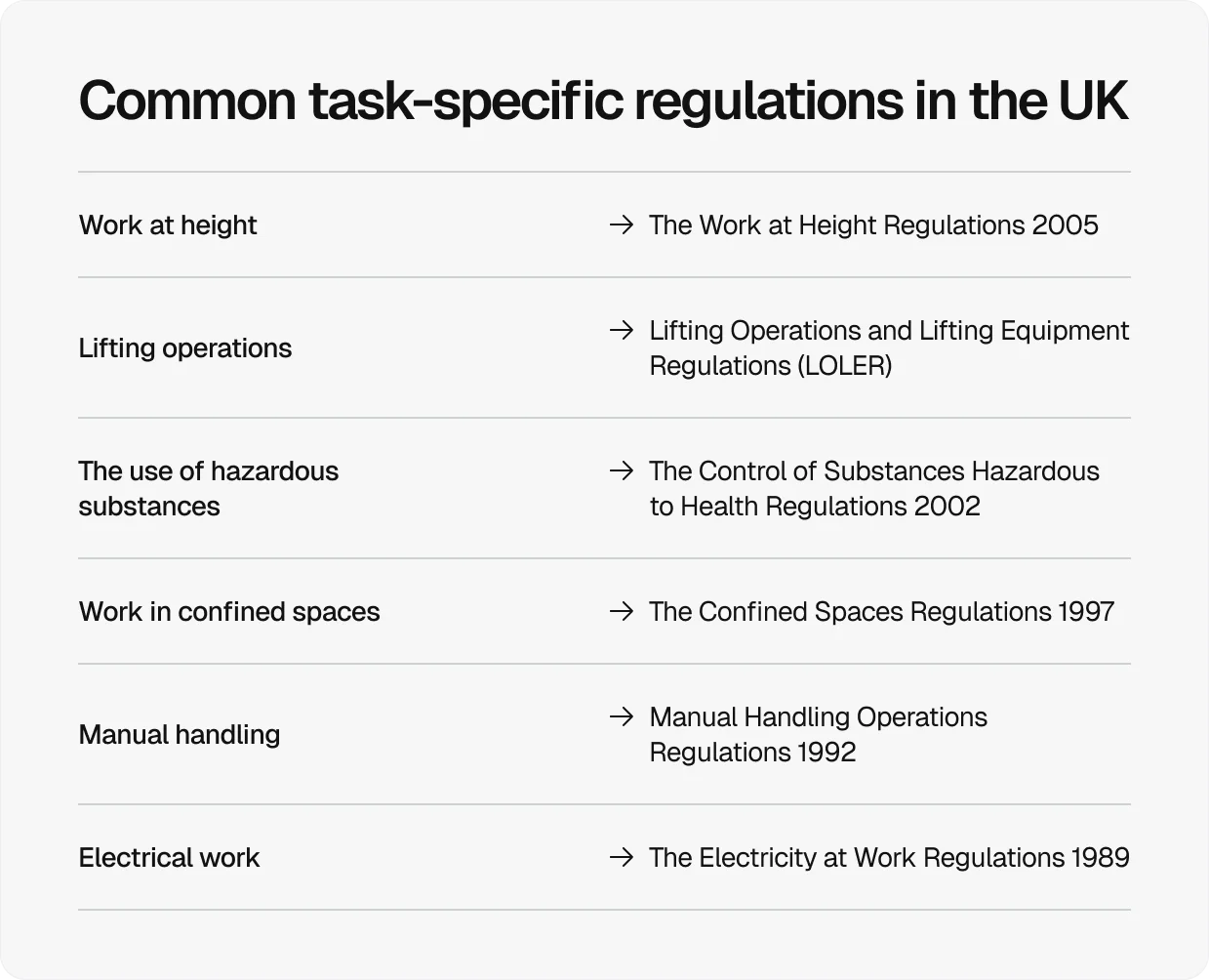
Task-specific regulations: These set requirements for higher-risk activities, such as work at height, lifting operations, and the use of hazardous substances.
Being compliant in this area involves:
Identifying and managing risks before work starts
Planning work so it can be done safely
Making sure workers are trained, competent, and properly supervised
Providing suitable equipment, including personal protective equipment (PPE)
Keeping sites safe for workers, visitors, and the public
Recording, reporting, and learning from incidents
2. Building control compliance
Building control compliance focuses on what is being built, making sure it meets the technical standards set out in The Building Regulations 2010. These regulations set the minimum technical standards for building work, covering areas such as:
Structural safety
Energy efficiency
Ventilation
Accessibility
Compliance is checked and enforced at key construction stages and has to be signed off before a building can be legally completed or occupied.
3. Fire and life safety compliance
Fire and life safety compliance technically falls under building control, but in UK practice, it’s treated as a separate category.
This is related to the catastrophic consequences of the Grenfell Tower fire incident, which transformed fire protection into one of the most closely scrutinised areas of construction compliance.
To stay compliant in this area, you must ensure that the building is designed, built, and managed in a way that allows fire spread to be properly controlled and people to escape safely in the event of a fire. This is achieved by:
Setting out a clear fire strategy and making sure it’s followed through design, construction, and handover
Carrying out appropriate checks and inspections to confirm that fire safety measures are installed correctly
Controlling changes to designs, materials, and methods that could affect fire performance
Managing fire-critical work and products so substitutions and variations are properly assessed and approved
Meeting additional duties for higher-risk buildings, where stricter controls and oversight apply due to a higher number of storeys or overall height
Keeping clear, accurate records that show what was designed, what was built, and what changed along the way
For many projects, this also means producing and maintaining formal evidence, such as inspection records, test reports, and compliance statements, to demonstrate that fire and life safety requirements have been met.
4. Planning and land use compliance
Planning and land use compliance controls what can be built, where it can be built, and how it can be used.
In the UK, planning rules have been shaped by safety, environmental, and community concerns, as well as lessons from past industrial accidents, such as Flixborough (1974) and Buncefield (2005).
In practice, being compliant in this area means:
Securing the correct planning permission or confirming permitted development rights
Complying with planning conditions during and after construction
Managing changes so work stays within approved plans
Meeting obligations such as Section 106 agreements, where they apply
Obtaining additional consent for listed buildings or work in conservation areas
Planning compliance often happens early, but it needs ongoing attention. Changes made on site can easily trigger breaches if they’re not checked against the original approval.
5. Environmental and sustainability compliance
Environmental and sustainability compliance aims to limit the environmental impact of construction work and meet legal requirements around how sites are managed, materials are used, and waste is handled.
This typically entails a series of steps, including:
Assessing and managing environmental impacts before work starts
Controlling emissions, noise, dust, and pollution during construction
Managing waste (reuse, recycling, and lawful disposal)
Protecting land, water, and nearby ecosystems
Meeting sustainability and energy-related requirements set through planning or regulation
Keeping clear records to show that environmental controls are in place and working
This area of compliance is becoming more demanding as expectations around sustainability, reporting, and long-term environmental impact continue to increase. This makes early planning and good record-keeping essential.
6. Product and materials compliance
Product and materials compliance ensures only approved, compliant products are used on site.
This compliance type matters because poor product choices or uncontrolled substitutions can undermine an otherwise sound design by causing rework, invalidating warranties, and creating disputes with clients and inspectors.
The right construction products must meet defined performance standards and be supported by appropriate certification, such as:
UKCA or CE marking
Manufacturer declarations and test evidence
Compliance with regulations covering machinery, equipment, and PPE
Equipment used on site must also meet safety requirements under regulations such as the Provision and Use of Work Equipment Regulations 1998, which focus on safe use, maintenance, and operator competence.
Product and materials compliance is often overlooked because it feels routine, but failures here are hard to undo once work is complete. That’s why you should make sure to:
Check markings, test reports, and review manufacturer information early
Verify whether products match the specification and approved design
Control substitutions so changes are reviewed and signed off
Keep records that show what was specified, what was supplied, and what was installed
Maintain traceability for safety-critical materials and components
Pro tip:
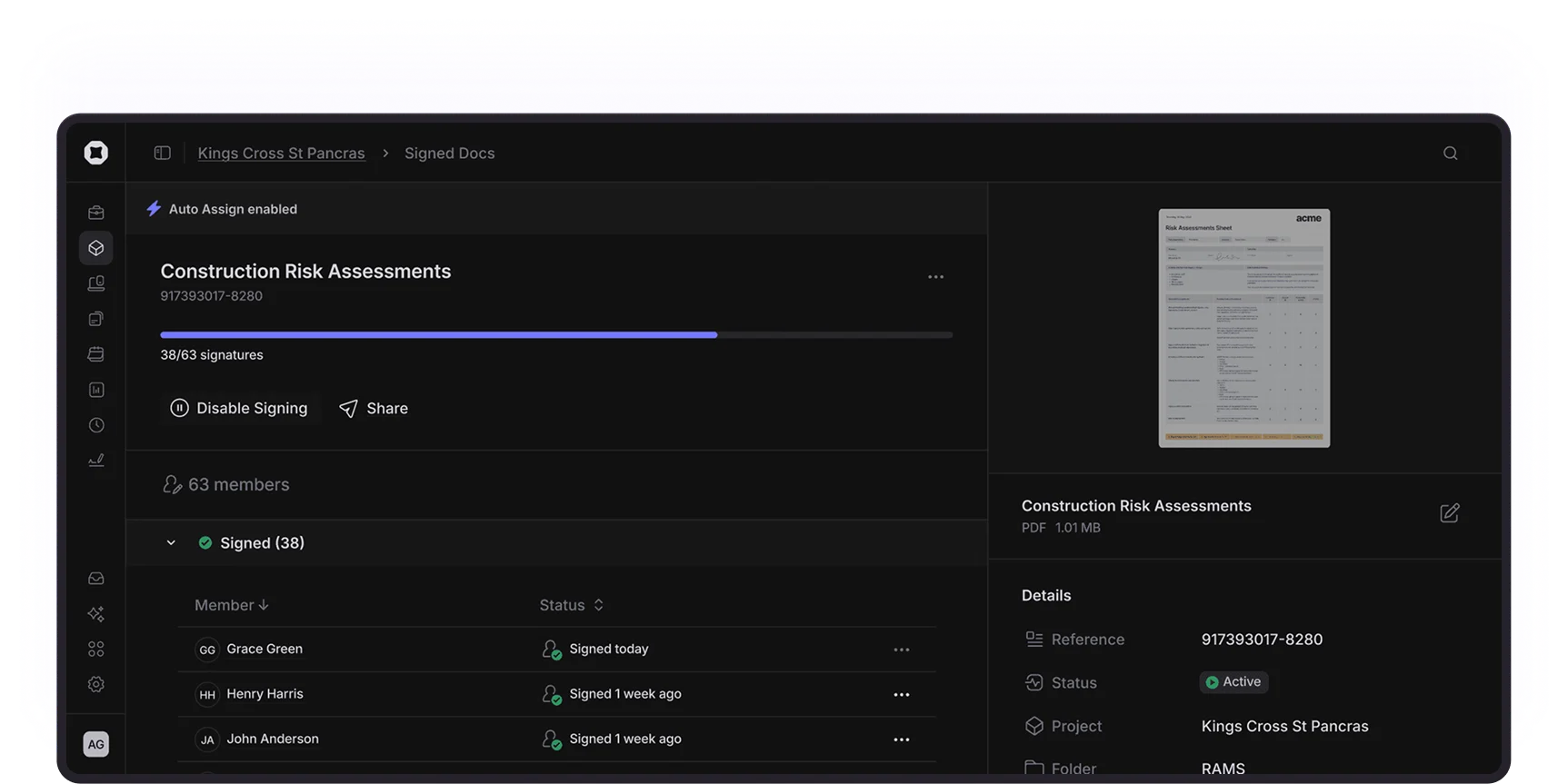
A construction management platform like Onetrace can make product and materials compliance much easier to manage day to day.
This platform helps teams:
Track materials used on site, including type, quantity, and key details
Keep a clear record of what was specified, supplied, and installed
Collect and manage compliance documents in one place
Get documents signed digitally, with live visibility of what’s been read and approved
Construction compliance: 6 real-world benefits
As regulatory oversight increases, compliance plays a bigger role in project success, both in terms of avoiding issues and keeping work moving smoothly.
Here are six key benefits of getting construction compliance right.
1. Protecting workers and the public
Construction compliance reduces the risk of accidents by setting clear rules for site safety, training, equipment, and working practices.
A safer environment also has a knock-on effect: Workers are better protected and feel more confident on site, morale improves, and teams are more focused and productive.
2. Safeguarding against legal and financial exposure
Most compliance failures end up costing time, money, or both—through fines, delays, rework, or lost contracts.
Strong compliance reduces the risk of enforcement action, compensation claims, and work being stopped. It also shows due diligence when decisions are challenged by clients, regulators, or insurers, helping protect both the project and the business behind it.
3. Improving project quality and efficiency
Construction compliance supports better build quality and smoother delivery.
When standards are followed, there’s less rework, fewer defects, and fewer surprises at inspection or sign-off.
Clear approval processes also help work move faster, with designs, materials, and contractors checked early rather than corrected later.
Pro tip:
Digital compliance tools can significantly streamline the approval process.
Onetrace allows work to move through clear approval steps, with feedback and sign-off captured in one place.
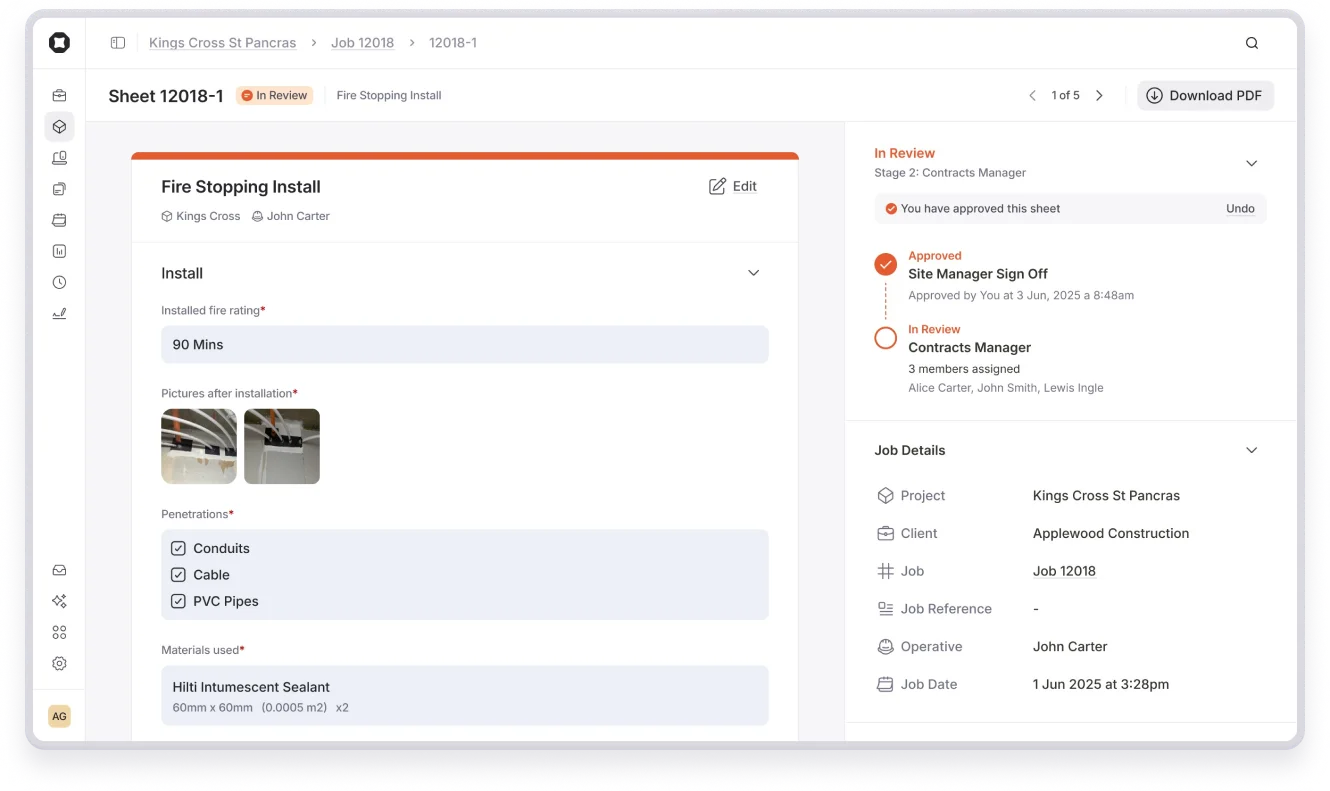
This helps you notice issues sooner, reduce late-stage snagging, and keep quality checks moving, whether teams are on site or in the office.
4. Protecting reputation and building trust
Studies show that poor image and reputation are one of the construction industry’s biggest challenges.
Strong compliance helps individual businesses stand out by demonstrating that they adhere to higher standards and take their responsibilities seriously.
Consistently doing things properly and not cutting corners builds trust with clients, partners, and regulators, and supports longer-term relationships and repeat work.
5. Winning more work
When it comes to competitive tenders in construction, compliance is often the baseline for being considered at all. It’s how you show that you can meet tender and regulatory requirements, manage safety risks, and deliver work to an agreed standard.
Go a step further by keeping evidence clear, up to date, and easy to share, and you’ll stand out among your competitors, helping win new contracts and retain existing clients.
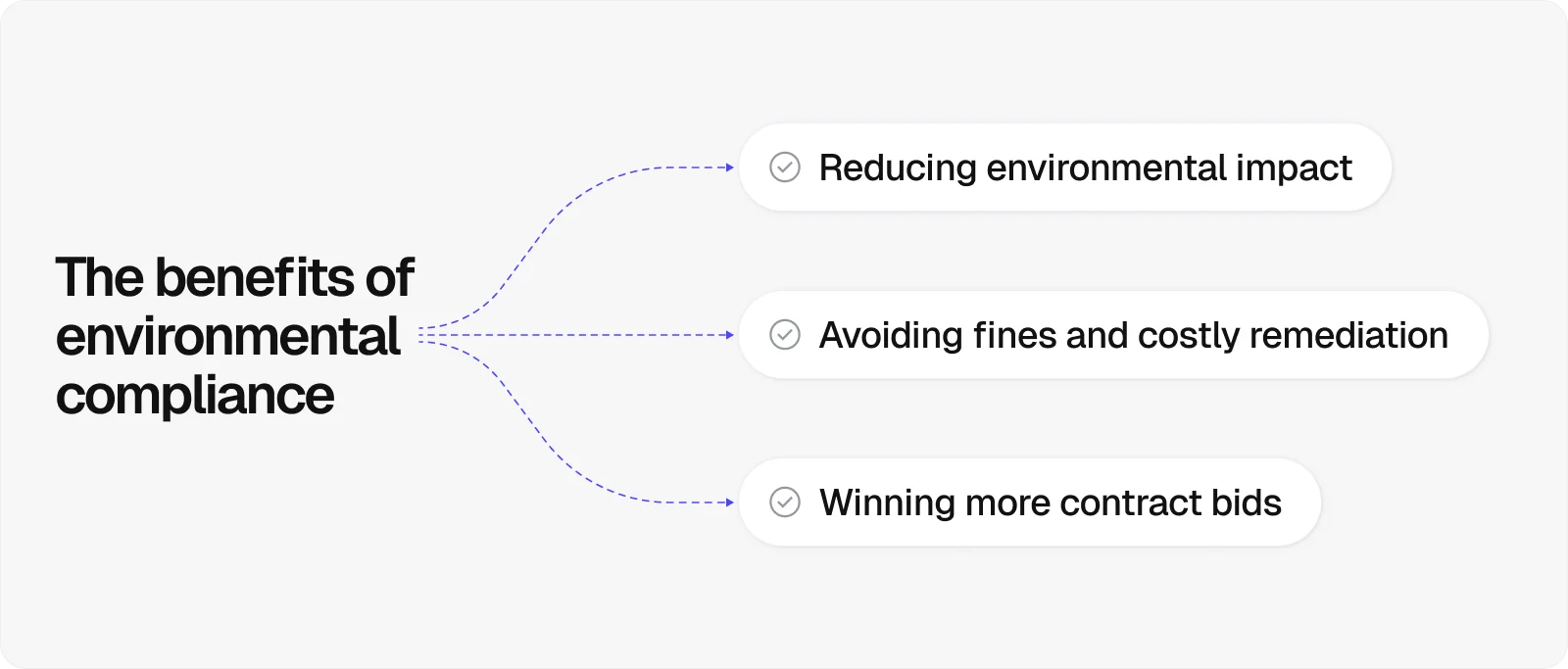
6. Supports environmental responsibility
By following rules on waste, pollution, and resource use, businesses can reduce their environmental impact, protect local land and waterways, and avoid fines or costly remediation when things go wrong.
As a bonus, many clients now factor environmental performance into procurement decisions, so strong compliance also supports bids and long-term client relationships.
How to maintain construction compliance: 7 factors to consider
Maintaining construction compliance takes ongoing attention across people, processes, and day-to-day decisions.
The table below highlights seven key areas to focus on and explains how they support consistent compliance.
What to pay attention to | What to do | How it strengthens compliance |
1. Clear processes | Set standard steps for approvals, checks, and sign-offs | Reduces gaps, inconsistency, and missed requirements |
2. Risk management | Carry out regular risk assessments and site checks | Identifies issues early, before they become incidents or breaches |
3. Training and competence | Make sure teams are trained for the work they’re doing | Helps work be done safely and to the required standard |
4. Regulatory changes | Keep up to date with changes in rules and guidance | Prevents compliance from drifting out of date over time |
5. Ownership | Assign clear responsibility for compliance | Avoids confusion about who is accountable |
6. Records and evidence | Keep accurate, up-to-date documentation | Makes compliance easy to demonstrate when required |
7. Tools and systems | Use digital systems to track and manage compliance | Reduces admin, errors, and last-minute scrambling |
How Onetrace supports construction compliance
There’s a reason digital tools are such a big part of the construction compliance conversation. They help teams keep records straight, prove work as it’s done, and stay in control without slowing delivery.
Onetrace is built specifically for subcontractors, focusing on the day-to-day realities of site work rather than generic compliance theory. This software allows you to:
Keep everything in one place, reducing lost paperwork and last-minute chasing
Record photographic evidence before, during, and after work to prove what was done
Give operatives the option to complete tasks on site, including forms, signatures, and evidence capture
Create clear audit trails, so evidence is ready when clients, auditors, or accreditors ask for it
Arrange a personalised walkthrough with the Onetrace team to see how compliance can be managed more clearly across your business.
Marketing Team
@Onetrace
The Onetrace marketing team is passionate about sharing insights, ideas, and innovations that help construction businesses stay connected, compliant, and efficient. Combining industry expertise with a love for clear communication, we aim to deliver content that empowers professionals to work smarter and safer.