What is construction workforce planning? [A complete guide]

By
Marketing Team
@Onetrace
Construction workforce planning is the process of aligning labour resources with project requirements to ensure work can be delivered efficiently and on schedule.
This kind of planning matters in any industry, but it has become critical in construction, where finding and keeping skilled labour is an ongoing challenge.
Currently, more than 2 million people work in the UK construction sector. That might sound like a strong workforce until you look at the trend. The total has fallen by over 300,000 workers in the past 20 years, but the pressure to deliver projects hasn’t eased.
With demand holding steady and fewer workers available, planning ahead is no longer optional.
When done well, construction workforce planning helps you keep projects on track, control costs, and make better use of the people you have.
With that in mind, let’s look at what it involves and how to do it effectively.
Key takeaways
Workforce planning is about matching labour to real project demand
It’s not just scheduling. It involves understanding skills, availability, and timing so work can move forward without delays or last-minute fixes.Labour issues are one of the main reasons projects fall behind
Shortages, turnover, and shifting timelines all affect delivery. Planning ahead helps you stay in control instead of reacting under pressure.Better planning improves productivity, cost control, and retention
When the right people are assigned to the right tasks, work runs more smoothly, costs stay predictable, and teams are less likely to burn out or leave.A structured process makes workforce planning practical
Breaking work into phases, assessing your workforce, forecasting demand, and adjusting in real time turns planning into something you can actually apply on site.Using the right tools makes workforce planning easier to manage
Tools like Onetrace help you keep workforce data in one place, schedule teams, track time on site, and revise plans as work changes. This gives you better visibility and more control over delivery.
What is construction workforce planning?
Construction workforce planning is a continuous process of assessing your available labour, matching it to project demand, and anticipating future needs to avoid gaps.
Keep in mind that this process goes beyond simple construction scheduling.
It requires understanding your workforce in detail—their skills, experience, certifications, and availability—and using that information to ensure work can move forward without delays or last-minute fixes.
At its core, construction workforce planning is about balance. You’re aligning the people you have with the work you need to deliver, both now and in the future, and you can only achieve this if your plan has a few key characteristics:
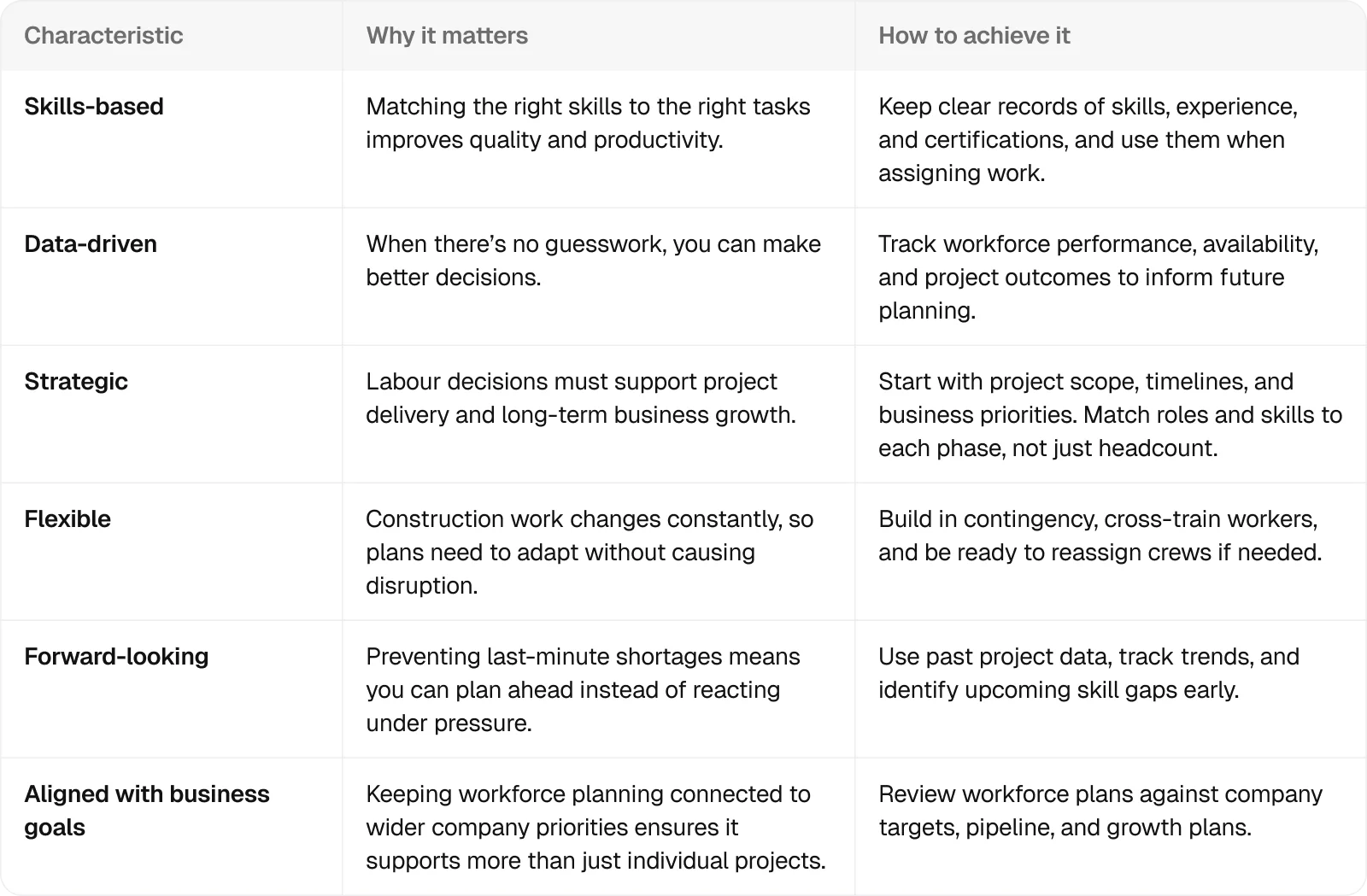
Why workforce planning is critical in construction
Workforce planning is essential because construction work is shaped by constant pressure on the labour force. Availability, skills, and timing all affect whether work moves forward or slows down.
Managing that pressure requires a clear plan, especially when some of the most common challenges in construction all tie directly to how labour is managed:
Labour shortages: Finding skilled workers is a major challenge in construction. Without a well-constructed plan, gaps in your workforce can delay work or lower its quality.
High turnover: People leave, responsibilities shift, and experience walks off site. If you don’t plan for this, you’ll face disruption and loss of continuity.
Project-based work: Labour demand rises and falls with each project. Without planning ahead, you risk being short-staffed one month and overstaffed the next.
Unpredictable timelines: Weather, design variations, and delays can shift schedules quickly. Labour plans need to be updated just as fast to avoid downtime.
Multi-site coordination: Managing teams across different sites makes it harder to track who’s available and where they’re needed most.
Construction workforce planning is designed to help you stay ahead of these issues, not just react to them. Here are some of the key benefits of getting it right.
It keeps work moving on schedule
Workforce planning lines up labour with each stage of the project, so work can start and finish on time. Instead of waiting for people to become available, you already know who will be needed and when, so you can ensure they’re in place when the work starts.
This matters in an industry where at least 42% of projects run into delays—and those delays are rarely minor. In infrastructure projects, timelines overrun by an average of 48%, adding substantial time to project delivery.
It makes better use of the people you have
Planning gives you a better view of who is available, what they can do, and where they are best placed. This makes it easier to assign the right people to the right tasks, which results in more consistent productivity.
Work gets done with fewer errors, less rework, and less wasted time.
At the sector level, construction productivity still lags behind other industries in Europe, and improving the use of labour is one of the most practical ways to raise performance.
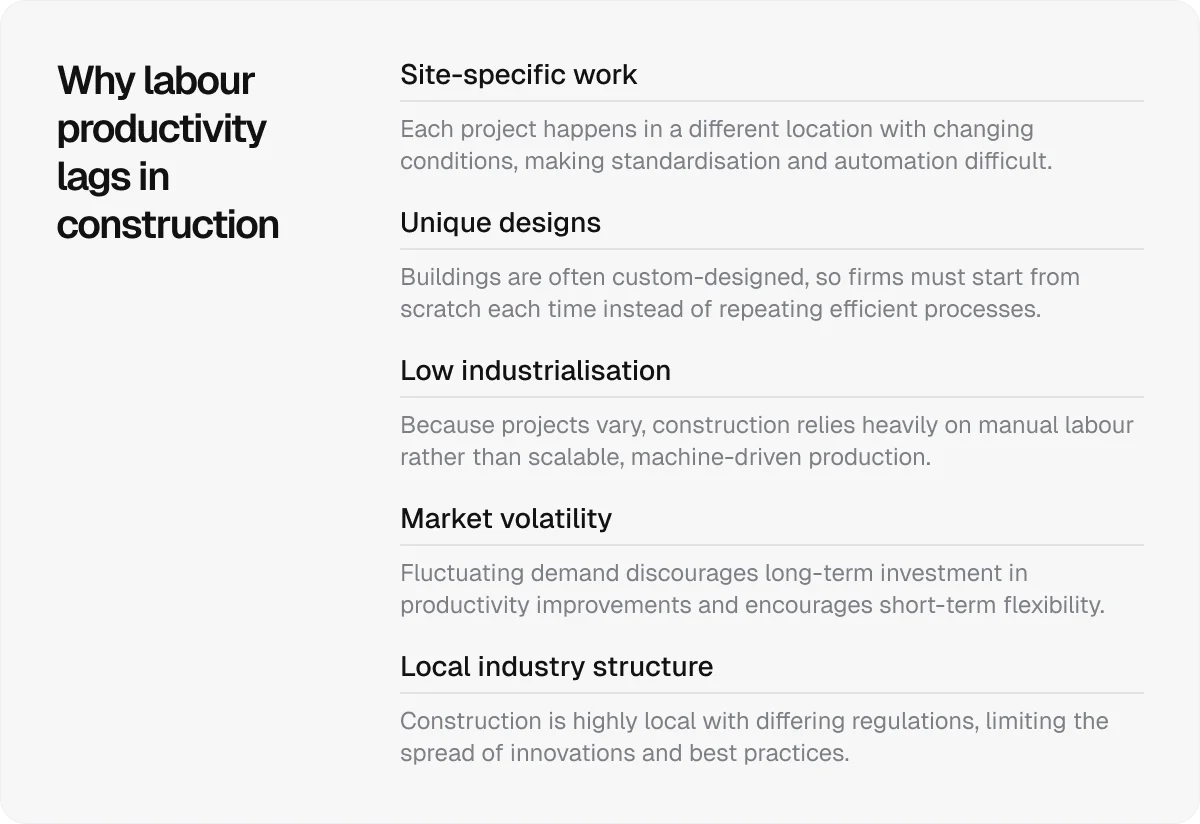
It keeps labour costs under control
With a structured plan, labour is allocated based on actual demand rather than rough estimates.
This approach reduces unnecessary overtime, limits paid downtime, and avoids last-minute hiring at higher rates.
Given that labour is one of the largest cost components in construction, these small improvements can make a noticeable difference.
It helps you keep skilled workers
Workforce planning makes workloads clearer and more balanced. You can see who’s stretched and who might be ready for more responsibility—and you can reshuffle work before issues build up.
This visibility has a direct impact on how people experience the job.
Since stress, depression, and anxiety have been identified as common causes of work-related ill health in the UK, regulators are increasingly treating mental health as part of the overall site risk that needs to be managed.
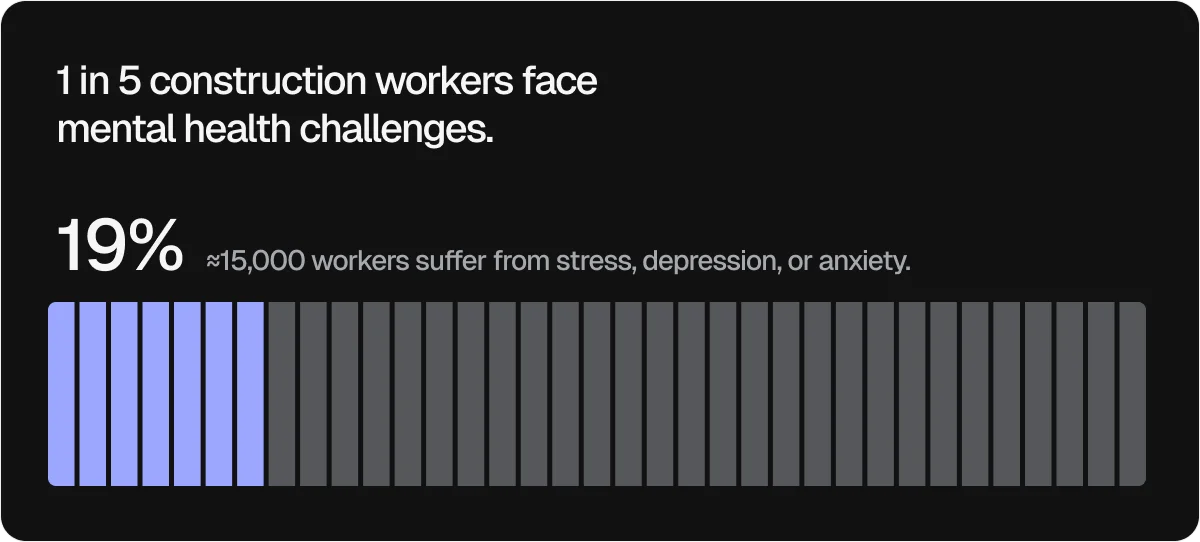
For workers, this approach leads to a more stable and manageable working environment.
For the business, it means experienced people are more likely to stay, keeping knowledge on site and reducing the need to constantly replace them.
It helps you stay compliant
Planning brings structure to how labour is tracked and managed. You know who is qualified for what, where they are working, and how their time is being used.
This makes it easier to stay within labour laws and safety requirements, especially on complex or multi-site projects, with clear benefits across the board.
It gives you a clearer view of what you can take on next
Workforce planning connects your current capacity with future demand.
By understanding how your workforce is being used today, you can make more informed decisions about upcoming projects and avoid committing to work you can’t properly staff.
This matters in the UK, where demand is growing faster than the workforce.
Construction output is expected to rise by around 2.1% per year, while employment is not keeping pace. The industry needs around 48,000 additional workers each year just to meet demand, with nearly half of that demand in skilled trades, such as carpentry and electrical installation.
A step-by-step guide to construction workforce planning
Workforce planning works best when it follows a clear process. Each step builds on the last, turning a rough idea of labour needs into something you can actually act on.
1. Start with the project, not the people
Begin with a detailed view of the work ahead, including:
Scope
Phases
Timelines
Key milestones
Labour demand varies across stages, so breaking the project down helps you understand when and where people will be needed.
2. Define the roles and skills required
Once the scope is clear, map out the roles needed to deliver it. Go beyond job titles and focus on skills, experience, and certifications.
Phases like groundworks, structural work, and finishing all rely on different trades.
So, to avoid mismatches that lead to delays or rework later on, you must be specific when identifying who is needed and where.
3. Assess your current workforce
Take a detailed look at the workforce you already have:
Who is available?
What skills and certifications do they hold?
Where are they currently assigned?
This assessment aims to understand how well your current workforce matches the work ahead.
You might have the right people overall, but if they’re not aligned to the right tasks, locations, or phases, your work won’t move as efficiently as it could.
Pro tip:
Use construction workforce management software to keep skills, roles, and certifications in one place.
With Onetrace, you can build a detailed profile for each worker, with information like:
Qualifications and certifications (with expiry dates and documents)
Roles and responsibilities across projects
Pay rates and employment details
Project access and permissions
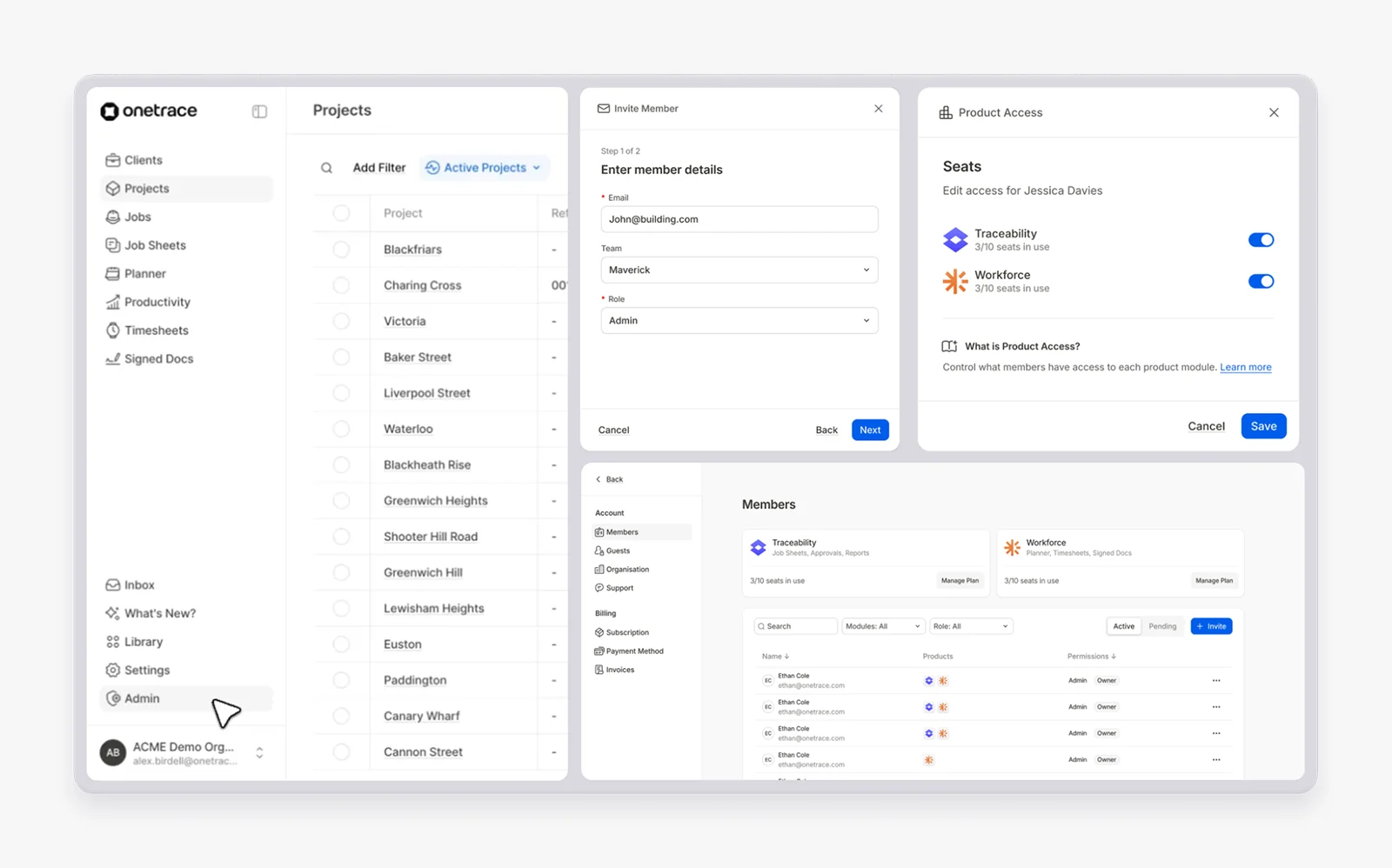
Having all of this in one place allows you to:
Match the right people to the right tasks quickly
Avoid skill mismatches and delays
Stay compliant without extra admin
Show clients your team is competent and ready
4. Forecast labour demand
With both project needs and current capacity in view, you can start forecasting.
Forecasting labour includes:
Reviewing project timelines in detail: Look at when key activities are scheduled and how long they should realistically take.
Using past performance as a benchmark: Compare current project plans against similar past jobs to see where timelines slipped, where labour was stretched, and what worked well.
Identifying when demand is likely to peak: Spot periods when multiple trades overlap or when workloads increase, so you can plan for higher labour needs.
Checking how long it takes to source workers: Factor in hiring lead times, especially for specialist roles, so you’re not caught short.
Allowing for delays and disruption: Build in some margin for weather, design variations, or site issues that could shift labour demand.
5. Build schedules and allocate labour
To turn your plan into action, assign people to tasks based on their skills and availability, and align this with your project timeline.
The goal is to keep teams productive without overloading them.
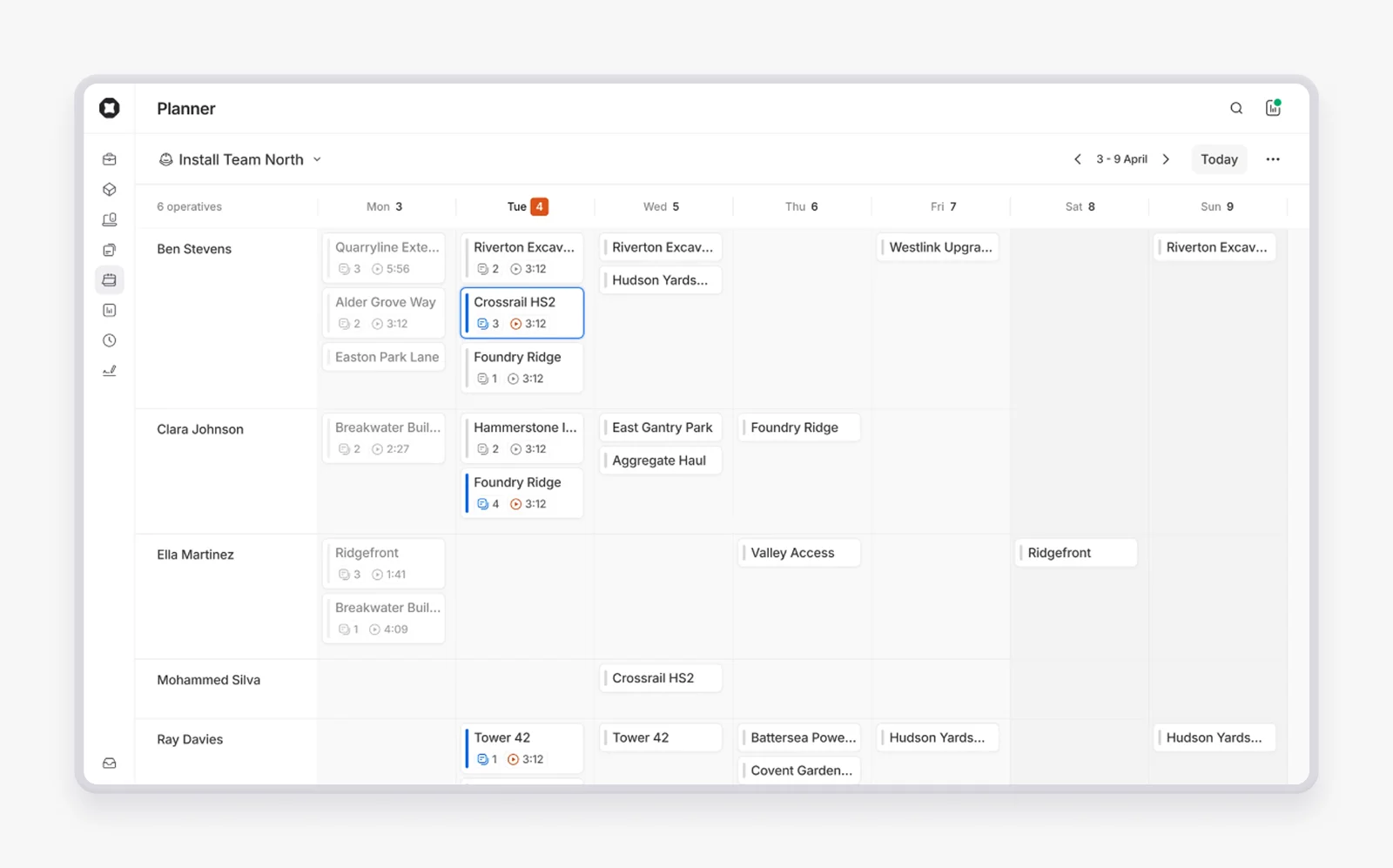
You can achieve this goal by using a dedicated workforce management tool like Onetrace’s Planner.
Planner gives you a single, live view of your workforce across projects, so you can see who’s available, who’s assigned, and where conflicts might appear.
Instead of working from static schedules, you can modify plans as things change without losing track of the bigger picture.
6. Monitor and adapt as work progresses
Plans in construction rarely stay fixed, as delays, weather, and changes in scope all affect labour needs.
That’s why you should regularly review your workforce, even after the project begins. Doing so allows you to spot issues early and respond before they affect progress.
Typical actions include:
Reassigning workers to different tasks or phases
Moving people between sites
Bringing in extra support
Covering absences or unexpected gaps
Shifting timelines
Stay in regular contact with site teams when making these decisions. Since they’re closest to the work, their input can help you adjust labour based on what’s actually happening, not just what was planned.
Bring construction workforce planning into your day-to-day operations
At its core, construction workforce planning is about making sure you have the right people, with the right skills, in the right place, at the right time.
To do that, this planning must be part of your project execution.
With its dedicated Workforce product, Onetrace is built to support this in practice, helping you manage your operatives in real time across sites.
This software allows you to:
Schedule and optimise labour with Planner: Assign operatives, spot conflicts, and shift work quickly as timelines change.
Track attendance and time on site: See who’s on site, when they arrive, and how hours are spent with live Timesheets and GPS tracking.
Stay on top of regulatory compliance: Manage documents, signatures, and certifications without chasing paperwork.
Give site teams real-time visibility: Allow operatives to see schedules, job details, and updates directly from their phone.
Connect site activity with planning decisions: Use live data from the site to adjust plans based on what’s actually happening.
The result is a more controlled, reliable way of working.
You spend less time chasing updates, reduce costly mistakes, and keep projects moving with fewer disruptions.
Book a personalised demo to see how Onetrace can support your workforce planning in practice.
FAQ
What are the 5 R’s of workforce planning?
The five Rs of workforce planning are the right size, right skills, right structure, right location, and right cost.
What are the 5 key elements of workforce planning?
The five key elements of workforce planning are demand forecasting, workforce supply analysis, gap analysis, action planning, and ongoing monitoring.
Marketing Team
@Onetrace
The Onetrace marketing team is passionate about sharing insights, ideas, and innovations that help construction businesses stay connected, compliant, and efficient. Combining industry expertise with a love for clear communication, we aim to deliver content that empowers professionals to work smarter and safer.