Construction project management plan: 11 key components

By
Marketing Team
@Onetrace
A construction project management plan is the overarching framework that defines the organisation, management, and delivery of construction operations from start to finish.
The value of strong project management in construction has long been recognised in the UK.
In fact, the project management sector was once closely tied almost entirely to construction and engineering.
Today, other sectors are increasingly adopting formal project management practices, but construction remains one of the UK’s biggest industries in this field, contributing £33.1 billion to the economy in 2024.
To help you put effective project management into practice on your own projects, this guide explains what a construction project management plan is, what it should include, and how to create one.
Key takeaways
A construction project management plan guides the full project delivery
It brings together scheduling, budgeting, logistics, communication, safety, and risk management into one structured framework.
A construction project management plan is different from a CMP
In UK construction, a CMP focuses on planning approval and external impacts, while a construction project management plan deals with internal project delivery.
Good project planning helps reduce delays and rework
Well-organised plans improve coordination, support better decision-making, and help keep projects aligned with programme, budget, and quality targets.
Project management plans should evolve throughout delivery
Regular updates help teams respond to changing site conditions, risks, procurement issues, and programme changes more effectively.
Construction project management software helps maintain better control
Tools like Onetrace help teams centralise project information, improve communication, manage approvals, and maintain stronger compliance throughout delivery.
What is a construction project management plan?
A construction project management plan is the central document that sets out how a construction project will be planned, managed, delivered, monitored, and controlled throughout its lifecycle.
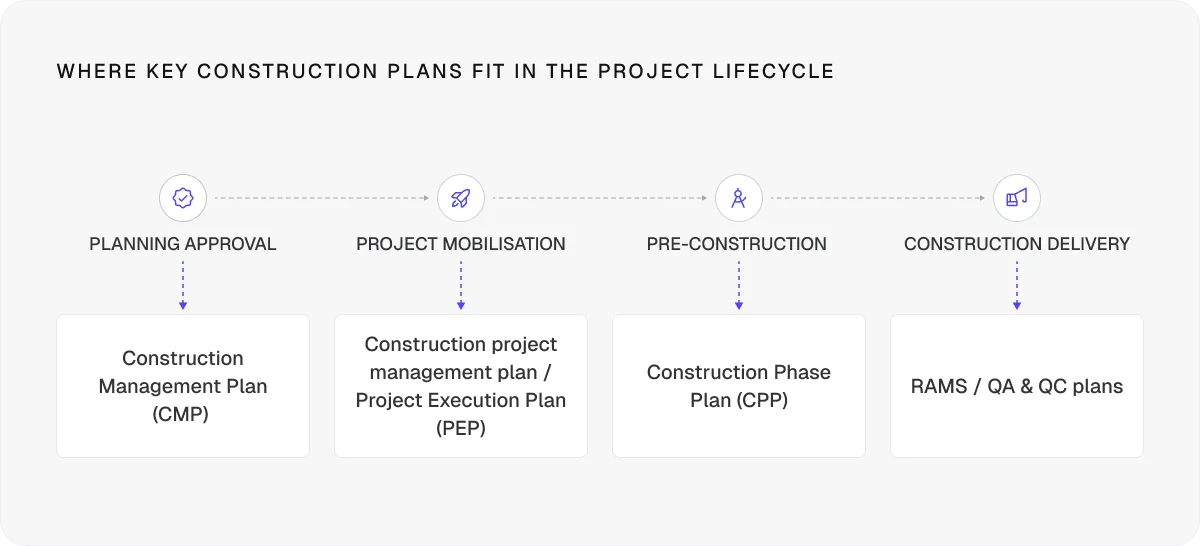
In UK construction, it’s important to distinguish a construction project management plan from a Construction Management Plan (CMP).
A CMP is usually linked to planning approval and focuses on the external impact of construction work on the surrounding area, covering issues like traffic management, noise levels, and environmental controls.
Local authorities often require a CMP before work starts, as it shows how disruption will be managed and reduced.
A construction project management plan, on the other hand, is internally focused. Its purpose is to coordinate the delivery of the project by defining the management of teams, contractors, resources, schedules, costs, and risks throughout the build.
Because of this, the project management plan often acts as the master plan for the project, with more specialised plans sitting beneath it, including:
Project Execution Plans (PEPs)
Construction Phase Plans (CPPs)
Quality control and assurance plans
Logistics, procurement, and traffic management plans
Why the construction project management plan matters
A construction project management plan might not be required by law, but it still matters because it helps construction teams:
Define clear project goals, timelines, and responsibilities
Coordinate labour, materials, and equipment more effectively
Reduce risks before they affect programme, cost, or safety
Improve communication between site teams, contractors, subcontractors, consultants, and clients
Manage scope changes and avoid unnecessary rework
Keep projects on schedule and within budget
Maintain quality standards and compliance requirements
Create a consistent process for reporting, approvals, and decision-making
Who uses the construction project management plan?
While the project manager usually creates and oversees the construction project management plan, stakeholders across both site and office functions use it to support decision-making, coordination, and day-to-day operations.
The table below breaks down what this looks like in practice:
Role | How they use the construction project management plan |
Project owner / client | Reviews project objectives, budget, delivery timelines, reporting structures, and overall project performance |
Project manager | Oversees the full plan, coordinates teams, tracks progress, manages risks, and ensures delivery stays aligned with programme, cost, and quality targets |
Principal contractor / main contractor | Uses the plan to manage site operations, sequencing, subcontractors, logistics, resources, and delivery milestones |
Site managers and supervisors | Follow the operational parts of the plan to coordinate day-to-day site activities, labour, safety controls, and reporting |
Subcontractors | Use relevant sections to understand schedules, responsibilities, access requirements, sequencing, and coordination with other trades |
Commercial teams / quantity surveyors | Monitor budgets, procurement activities, valuations, cost controls, and financial reporting against the agreed project framework |
Health and safety teams | Review how site risks, compliance requirements, welfare arrangements, and construction activities will be managed during delivery |
Procurement teams | Coordinate material lead times, supplier schedules, subcontractor packages, and procurement sequencing with the main programme |
11 key components of a construction project management plan
To be effective, a construction project management plan needs to be comprehensive enough to guide the full delivery of the project.
In practice, this means covering the following 11 key areas.
1. Project scope and objectives
A construction project management plan should clearly define what the project is expected to deliver, how success will be measured, and where the boundaries of the work sit.
This is achieved by including the following information:
Project overview
Scope of work
Deliverables
Key objectives
Having a well-defined scope helps keep the project aligned from the start, reduces misunderstandings, and limits scope creep as work progresses.
2. Roles and responsibilities
Well-established roles and responsibilities help ensure that everyone involved in the project understands what they’re accountable for, who reports to whom, and how decisions will be made.
Defining responsibilities early helps reduce confusion, improve coordination, and avoid delays caused by duplicated work or missed tasks.
3. Programme and scheduling
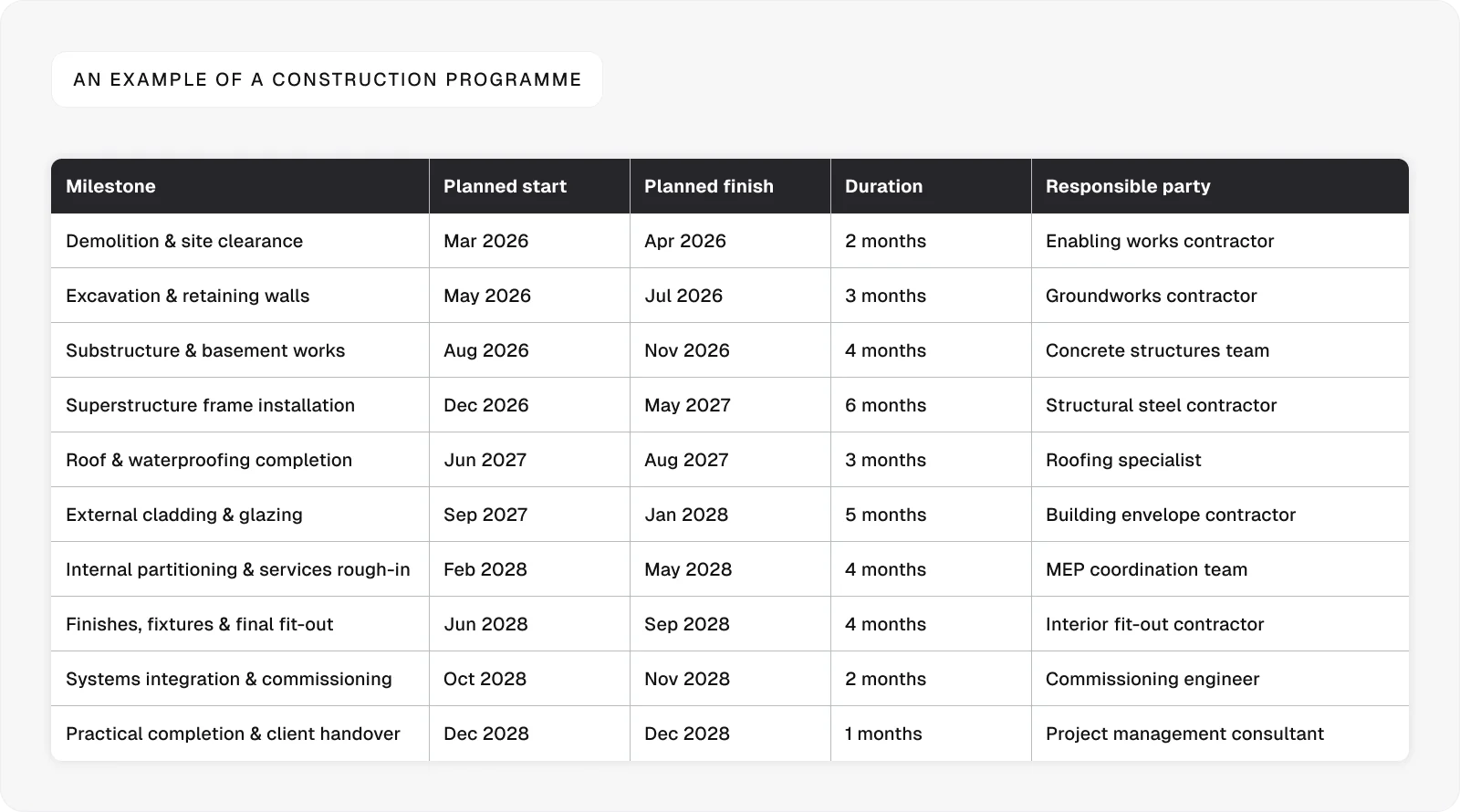
The programme sets out the overall timeline for the project, including major phases, milestones, sequencing, and target completion dates.
It gives teams a shared view of progress expectations from pre-construction to handover.
More detailed schedules usually sit beneath the main programme to manage trade activities, procurement, inspections, and day-to-day site operations. Together, they help keep work aligned, reduce delays, and improve resource planning within the project.
4. Budget and cost control
The budget section outlines the expected costs for labour, materials, equipment, and subcontractors, as well as contingency allowances within the project.
It also sets out procedures for cost tracking, monitoring, approval, and reporting throughout delivery.
Strong cost control helps teams identify overspending early, manage budget changes more effectively, and keep the project financially on track as work moves forward.
5. Risk management procedures
A construction project management plan should identify potential issues that could affect the project, including safety hazards, supply chain delays, design changes, budget overruns, and compliance risks.
It should also outline how those risks will be monitored, managed, and reduced if they arise.
Having a structured approach to risk management helps teams minimise delays, disputes, and unexpected costs, as well as respond to problems better and faster.
6. Health and safety management
Health and safety management covers the processes, responsibilities, and controls used to reduce project-wide risks.
This includes:
Site rules
Training requirements
Emergency procedures
Welfare arrangements
Safe systems of work for construction activities
In the UK, health and safety requirements are heavily shaped by the Construction (Design and Management) Regulations 2015 and guidance from the Health and Safety Executive.
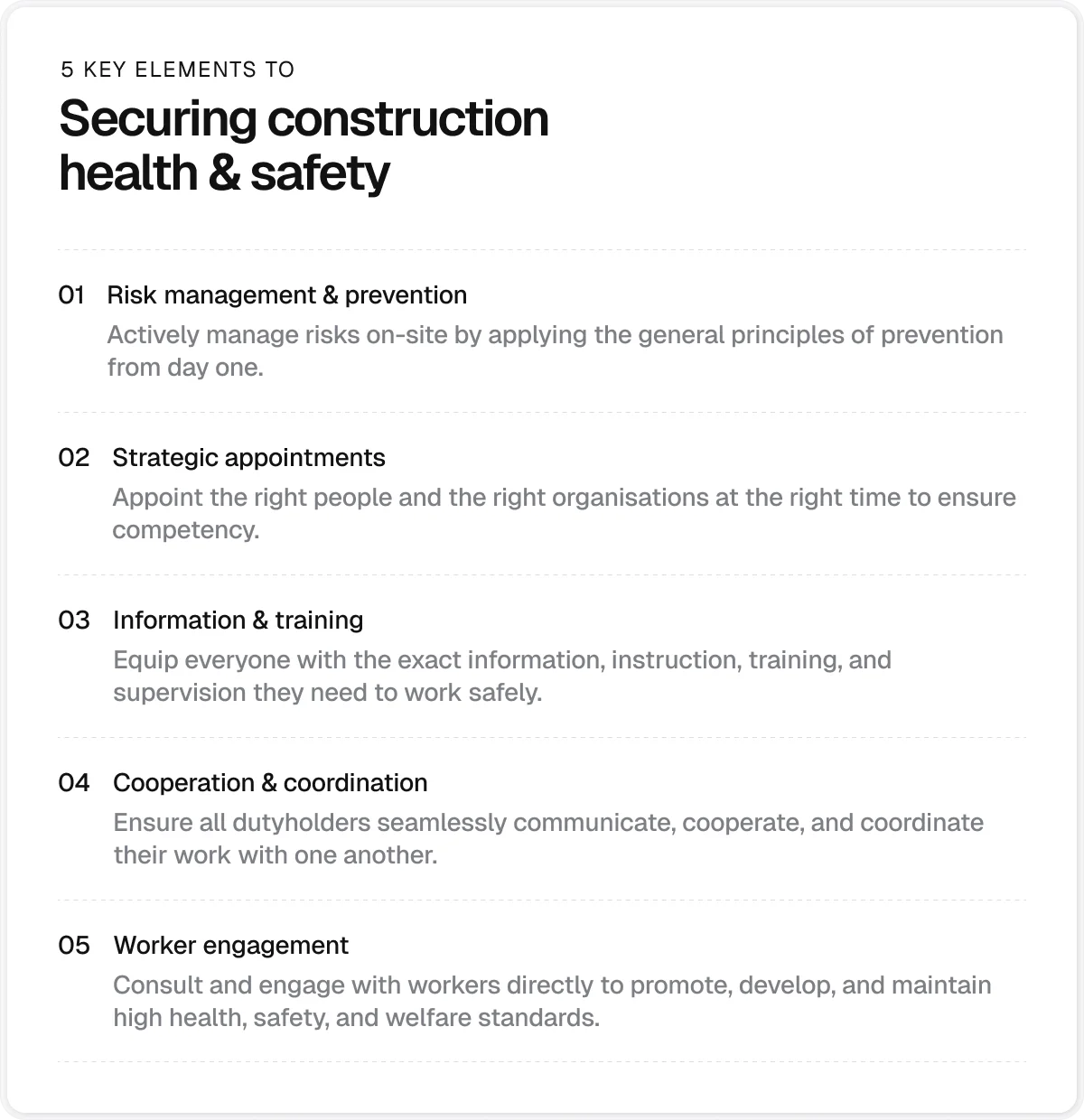
A robust approach to safety compliance offers numerous benefits, from protecting lives on site to reducing the risk of costly project setbacks.
7. Quality assurance and control processes
Construction projects need consistent processes for checking that work is being completed to the required standards.
Quality assurance and control processes usually cover inspections, testing procedures, approvals, snagging, and defect management across different stages of the build.
Having these processes in place helps teams identify issues earlier, reduce costly rework, and maintain consistent quality throughout project delivery.
Pro tip:
Maintaining quality throughout a project requires consistent monitoring at every stage of the work.
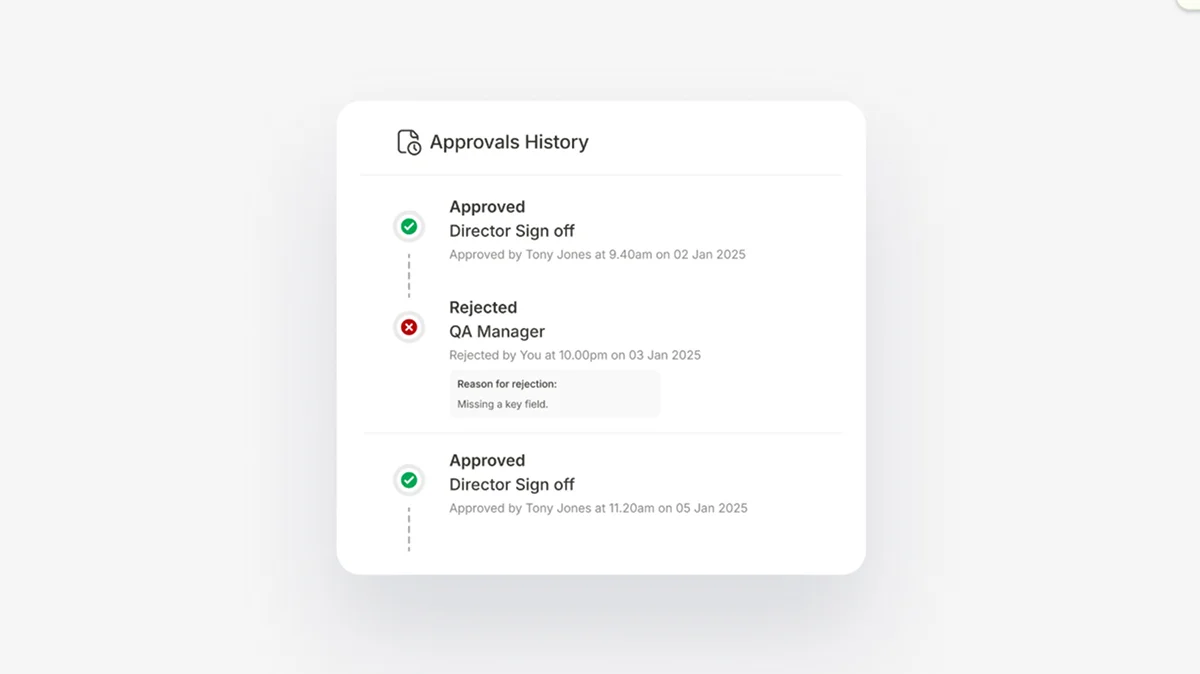
Construction project management software like Onetrace helps teams build approval checkpoints directly into their workflows, making it easier to review submitted work, flag issues early, track approval status in real time, and maintain audit-ready QC records at all times.
8. Procurement and subcontractor coordination
The procurement and subcontractor coordination section deals with sourcing, scheduling, and managing materials, equipment, suppliers, and trade contractors throughout the project.
This section typically includes:
Procurement timelines
Delivery planning
Subcontractor sequencing
Supplier management processes
On larger projects with multiple trade contractors and suppliers, teams often rely on supplier risk management software to assess financial stability, compliance history, and delivery reliability before awarding work.
Proper coordination in this department helps reduce supply delays, avoid clashes between trades, and keep construction activities moving in line with the programme.
9. Communication and reporting systems
Construction projects rely on consistent communication between all relevant stakeholders.
That’s why a construction project management plan should set out how updates, progress reports, approvals, and urgent issues will be shared over the course of the project.
In practice, this means establishing:
Reporting schedules
Meeting structures
Escalation procedures
Communication responsibilities
Digital collaboration and document-sharing processes
Having defined communication systems in place helps reduce misunderstandings, improve accountability, and keep project information consistent for all teams.
10. Site logistics and resource planning
A construction project management plan should explain how the site will operate on a practical level across all phases of the project.
This explanation usually involves construction site planning measures like:
Site access and egress
Traffic management
Pedestrian segregation
Storage areas and material handling
Plant and equipment coordination
Delivery coordination
Welfare setup
Temporary works and site setup
Waste handling
Bringing these activities together helps improve coordination on site and reduce operational disruption during the build.
11. Change management and document control
Changes to scope, drawings, specifications, or timelines are common during construction projects.
A construction project management plan should outline how those changes will be reviewed, approved, documented, and communicated before work moves forward.
Keeping project information organised and up to date reduces confusion, limits disputes, and helps prevent costly errors caused by outdated documents or uncontrolled changes.
How to write a construction project management plan: A step-by-step guide
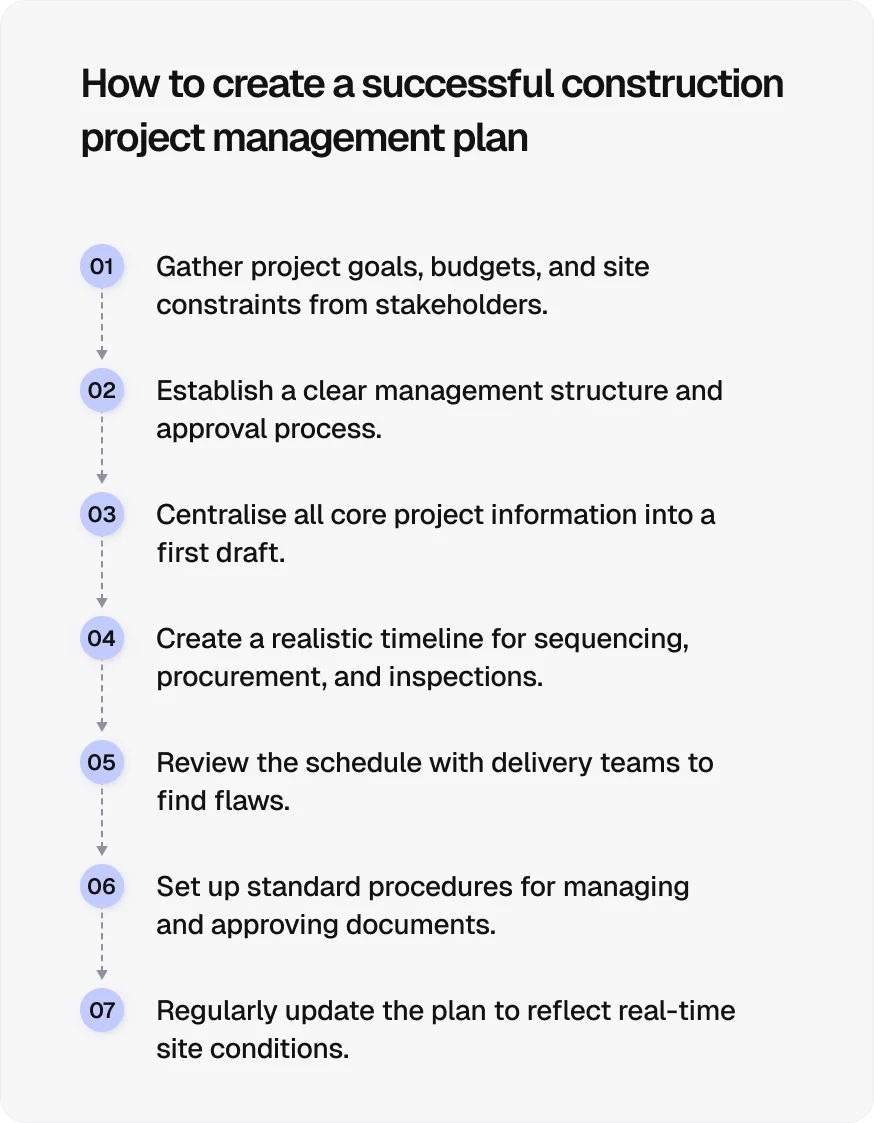
Writing a construction project management plan involves bringing together all the key elements of a successful project delivery into one workable framework that all teams can follow throughout the build.
These seven steps show what that looks like in practice:
Gather project requirements and constraints: Early discussions with clients, consultants, contractors, subcontractors, and site teams help establish the project goals, delivery expectations, budget limits, and site restrictions before planning begins.
Set out the project delivery approach: A well-organised management structure should outline responsibilities, approval processes, reporting lines, and coordination procedures for the project team.
Build the first working version of the plan: The main project information should be centralised and laid out logically, coherently, and practically.
Develop the project programme: A construction schedule should reflect realistic on-site progress, including trade sequencing, procurement lead times, inspections, and access requirements.
Review the plan with delivery teams: Feedback from the people delivering the work often helps identify unrealistic timelines, coordination gaps, or operational issues before construction starts.
Establish document control and approval procedures: Consistent processes for managing drawings, reports, revisions, and approvals help keep project information accurate and reduce confusion among different team members.
Update the plan throughout the project: Regular reviews of programme changes, site conditions, logistics, and risks help keep the plan aligned with the realities of project execution.
Improve construction project management with Onetrace
Construction project management brings major benefits to project delivery, but it also comes with constant operational challenges.
Delays, disconnected information, poor visibility across teams, inconsistent reporting, compliance gaps, and coordination issues can all make projects harder to manage as the project develops.
Many of these day-to-day problems become much easier to control when project information is centralised and managed through connected digital workflows.
That’s where Onetrace can help.
It allows you to:
Standardise project processes from the start: Custom forms, templates, mandatory fields, and conditional logic help teams build consistent project structures across surveys, inspections, installations, and compliance activities.
Improve communication between the site and office teams: Real-time syncing, mobile access, live project statuses, and structured reporting help office teams stay aligned with what’s actually happening on site.
Maintain stronger quality control throughout delivery: Multi-stage approval workflows allow supervisors, managers, and clients to review submitted work, provide feedback, reject incomplete jobs, and track approval history across the full project lifecycle.
Support more accurate resource and cost tracking: Material tracking, rates management, timesheets, and live project data help teams monitor labour, materials, and project costs more consistently throughout delivery.
Simplify regulatory compliance and document management: Signed documents, approval records, photographic evidence, and audit-ready reporting help teams maintain stronger compliance processes while reducing manual admin work.
To get a better understanding of how these features can help you create, manage, and maintain a successful construction project management plan, book a personalised demo with the Onetrace team.
FAQ
What is included in a construction management plan?
A construction management plan usually includes project scope, timelines, logistics, traffic management, site operations, health and safety procedures, environmental controls, communication processes, and resource planning.
What should a CEMP include?
A Construction Environmental Management Plan (CEMP) should include measures for managing noise, dust, waste, traffic, pollution, and environmental risks during construction work.
Who prepares a CEMP?
A CEMP is usually prepared by the principal contractor or main contractor, often with input from consultants, planners, and environmental specialists.
Marketing Team
@Onetrace
The Onetrace marketing team is passionate about sharing insights, ideas, and innovations that help construction businesses stay connected, compliant, and efficient. Combining industry expertise with a love for clear communication, we aim to deliver content that empowers professionals to work smarter and safer.