What is regulatory compliance in construction? [Explained]

By
Marketing Team
@Onetrace
Construction is one of the most heavily regulated industries, and for good reason.
According to Eurostat, almost a quarter of all fatal workplace accidents in the European Union (EU) occur in construction, making it the most dangerous sector to work in. Similar patterns exist in Great Britain, where fatal injury rates in construction remain around 4.8 times higher than the average across all industries.
Regulatory compliance exists to reduce these risks.
While one of its primary purposes is to save lives and prevent serious injuries, it also helps ensure that work meets legal standards, protects the environment, and keeps projects running without costly delays, fines, or disruptions.
With that in mind, we’ll explain what regulatory compliance in construction is, what it entails, and how to manage it in practice.
Key takeaways
Construction compliance protects people, projects, and businesses
Compliance helps prevent injuries, structural failures, fines, and legal issues. Without it, projects can face shutdowns, penalties, and reputational damage.Compliance must be managed throughout the entire project lifecycle
Requirements start during planning and continue through construction, inspections, and handover. Missing compliance at any stage can delay approvals or halt progress.Contractors must manage seven core areas of compliance
These include safety, labour laws, building regulations, material standards, permits, contracts, and environmental protection. Failing in any area can lead to delays, fines, or lost work.Good compliance practices reduce risk and improve business outcomes
Accurate documentation, regular audits, and staying up to date with regulations help prevent costly mistakes and build trust with clients and regulators.Technology like Onetrace makes compliance easier to manage and prove
Onetrace helps you track documents, qualifications, materials, and approvals in one place, making it easier to stay compliant and pass inspections.
What is regulatory compliance in construction? The basics
Regulatory compliance in construction is the process of ensuring that construction work follows all applicable laws, regulations, codes, and standards governing how projects are designed, built, and maintained.
These requirements exist to protect worker safety, ensure buildings are structurally sound, reduce environmental harm, and uphold legal and professional responsibilities across the project lifecycle.
What makes construction compliance different from most other industries is that it isn’t limited to policies or internal processes.
In construction, compliance affects how work is carried out on active sites, often involving multiple contractors and subcontractors, changing environments, complex and overlapping requirements, and oversight from several regulatory bodies, such as:
National health and safety regulators
Local authorities and building control bodies
Environmental regulators
Planning authorities
Fire safety authorities
Labour and employment regulators
Data protection authorities
Compliance requirements can also vary by location, project type, and scope, which adds another layer of complexity.
Still, regulatory compliance is a core part of delivering safe, lawful, and successful construction projects, and as such, it must be managed throughout the entire project lifecycle:
Phase | What happens | Why compliance matters |
Pre-construction | Project plans are developed, risks are assessed, and permits and approvals are obtained. | It ensures the project is designed to meet legal, safety, and environmental requirements from the start. |
Active site work | Physical work takes place, involving workers, equipment, materials, and subcontractors. | It protects worker safety, ensures correct building practices, and prevents violations. |
Inspections and regulatory approvals | Regulators and inspectors review work at defined stages to confirm it meets required standards. | It confirms compliance before work progresses. |
Project completion and handover | Final checks, certifications, and documentation are completed before the building is occupied or used. | It ensures the building is safe, legally approved, and ready for use. |
Regulatory compliance in construction: 7 core areas explained
Regulatory compliance in construction covers a wide range of requirements that can be broadly grouped into the following seven areas:
1. Workplace health and safety
Workplace health and safety compliance is the process of following regulations designed to prevent injuries, occupational illness, and fatalities. These rules cover areas such as personal protective equipment (PPE), safe site conditions, hazard control, and emergency procedures.
Such rules are especially important in construction, where risks are part of daily work.
Even when considering only non-fatal workplace accidents across the EU, construction still has the highest rate, with 2,899 incidents per 100,000 workers—higher than transport, manufacturing, or services.
Beyond these immediate safety risks, non-compliance in this department can lead to:
Site shutdowns and project delays
Legal action and liability claims
Loss of contracts and reputational damage
Higher insurance premiums and operating costs
Significant fines and financial losses
This level of enforcement is reflected in the UK Health and Safety Executive’s actions, with 246 criminal prosecutions in one year, a 96% conviction rate, and over £33 million in fines.
Pro tip:
While risk can never be fully eliminated in construction, it can be managed and controlled.
The right processes—and the right tools—make it much easier to keep safety checks consistent and maintain clear compliance records.
One way to do this is by using construction site management software like Onetrace, which helps support on-site safety by:
Standardising job sheets, with built-in safety checks, procedures, and sign-offs for each task
Keeping accurate worker records, including timesheets that show who was on site and when
Providing precise site locations using what3words, helping teams and emergency services find exact locations quickly
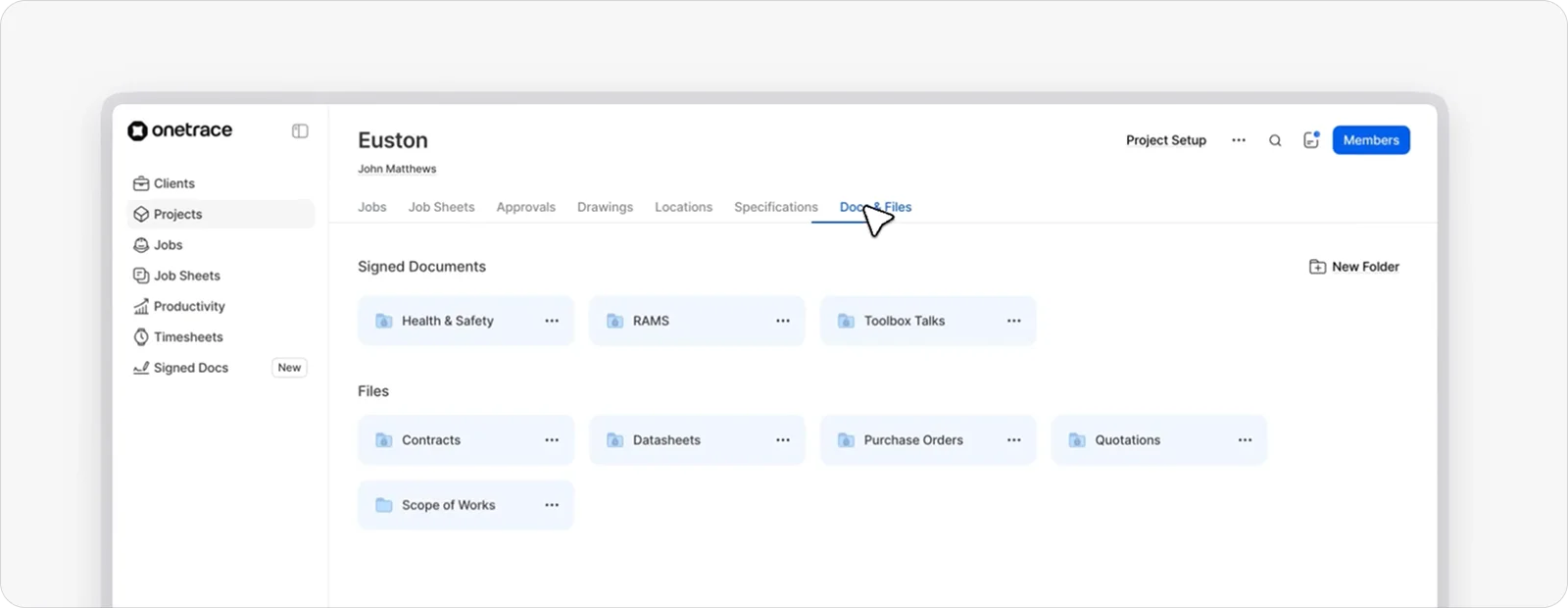
Storing compliance documents in one place, including risk assessments, safety certificates, and site drawings
2. Employment and labour
Employment and labour compliance ensures construction workers are hired, paid, and managed in line with relevant labour laws and employment regulations.
These rules protect worker rights, ensure fair pay and working conditions, and confirm that everyone on site is legally qualified and authorised to work.
In practice, this includes maintaining accurate workforce records, such as:
Employment contracts and worker identification
Payroll records, tax documents, and timesheets
Proof of qualifications, licences, and certifications
Insurance certificates and eligibility-to-work documentation
When these requirements aren’t met, contractors may face the following consequences:
Fines for employing workers without the legal right to work
Penalties for underpaying wages or failing to meet employment standards
Suspension or exclusion from public sector contracts
Legal claims from workers over pay, conditions, or unfair treatment
Increased scrutiny and inspections from labour regulators
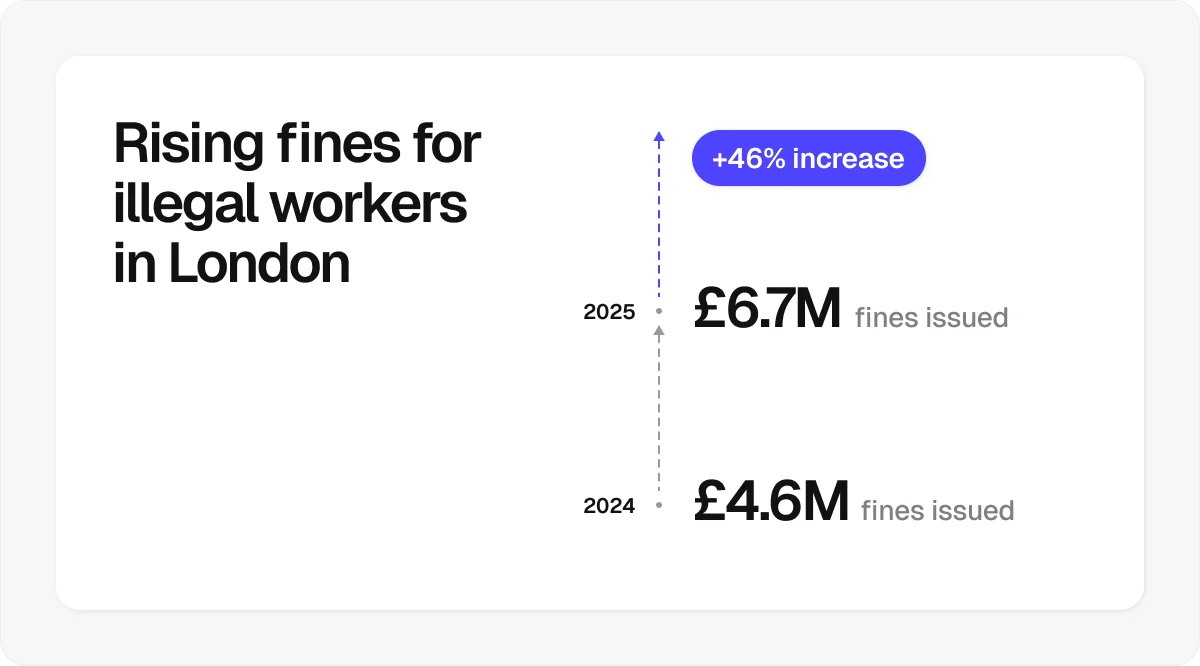
In the first half of 2025 alone, UK authorities fined 117 construction businesses in London over £6.7 million for employing illegal workers, reflecting stricter oversight across the sector.
3. Building and structural regulations
Building and structural regulations set the minimum standards for how buildings are designed and constructed.
They cover areas such as structural integrity, fire safety, accessibility, and material performance. Their goal is to ensure buildings are safe, durable, and fit for use throughout their lifecycle.
Non-compliance can lead to serious consequences, including:
Failed inspections and costly rework
Project delays or stop-work orders
Legal disputes and liability claims
Refused occupancy certificates
Long-term safety risks and structural failures
The importance of these regulations became clear after the Grenfell Tower fire in London. The subsequent review found serious failures in building safety compliance and called for stronger oversight, clearer accountability, and better record keeping to prevent similar tragedies.
4. Material quality and standards
Material quality and standards compliance ensures that all construction materials meet required safety, performance, and certification standards. This includes verifying that materials are tested, approved, and suitable for their intended use.
The goal is to support the construction of safe, durable buildings by using reliable components that perform as expected over time.
Failing to meet material standards can result in:
Failed inspections and required replacements
Material seizures or rejected deliveries
Contract disputes and project delays
Reputational damage and financial loss
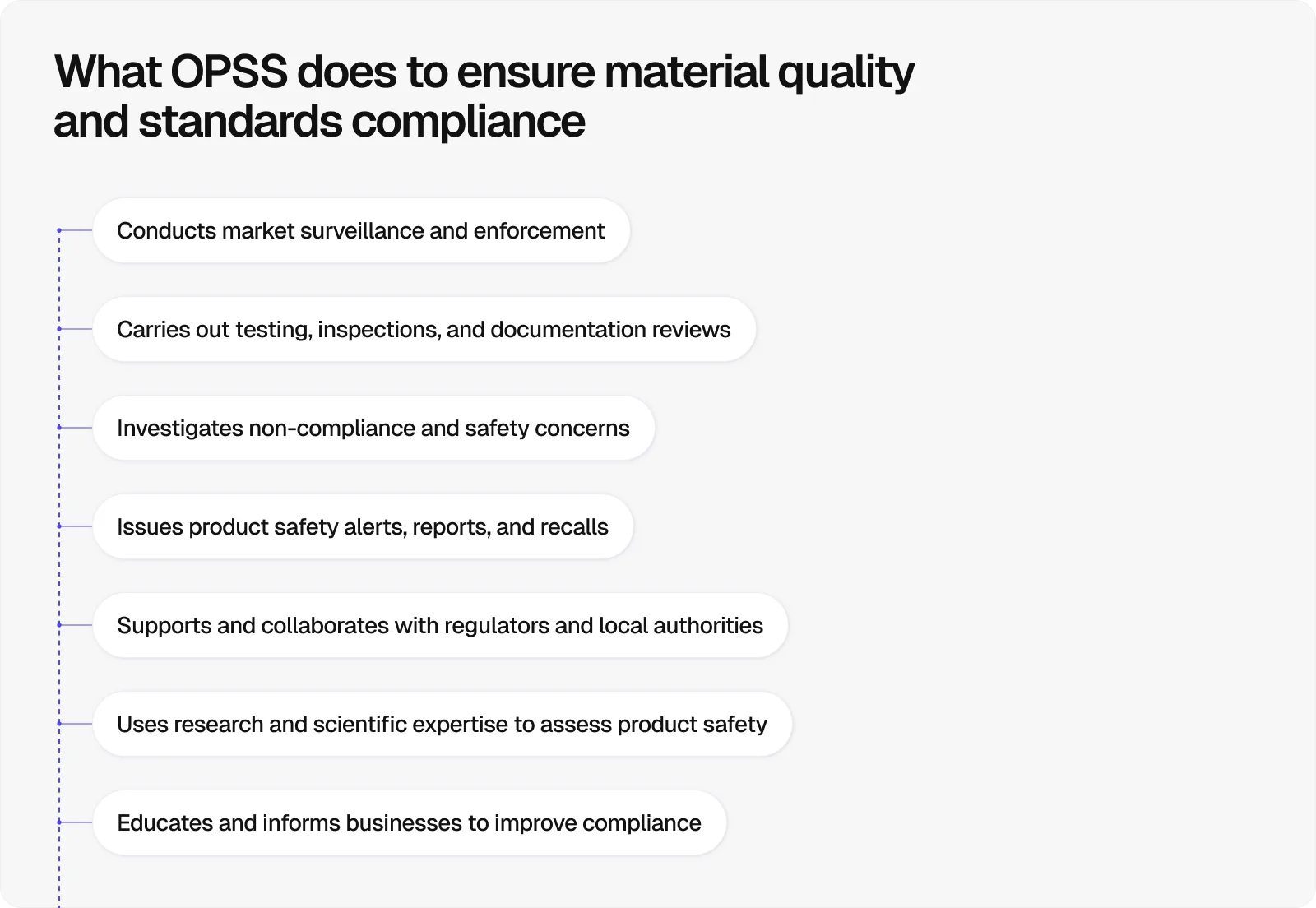
In the UK, the Office for Product Safety and Standards regulates construction products and enforces compliance. Its role is to ensure materials meet declared performance standards and to protect the public by holding manufacturers and contractors accountable.
5. Contractual and financial requirements
Contractual and financial compliance means adhering to the agreed contract terms and meeting all financial and legal obligations associated with a construction project. This includes payment terms, project scope, reporting, tax requirements, and procurement rules.
The purpose of this compliance type is to protect all parties involved in the project, maintain transparency, and provide a clear framework for delivering work as agreed.
Besides the typical legal and project-related consequences, disregarding contractual and financial requirements can also lead to:
Breach of contract claims from clients, contractors, or subcontractors
Withheld payments due to unmet contractual conditions or missing documentation
Disqualification from public tenders or framework agreements
Tax investigations or penalties for incorrect financial reporting
Disputes over scope, variations, or payment terms that delay project completion
6. Construction permits and zoning
Construction permits and zoning compliance refers to obtaining official approvals and following land-use regulations before starting work.
Permits confirm that the project meets building codes and local requirements, while zoning laws define how land can be used, including the types, sizes, and purposes of buildings.
Besides fines, legal enforcement actions, and delays, failing to secure the correct permits or follow zoning rules can lead to:
Immediate project suspension or stop-work orders
Forced design changes or removal of completed work
Legal disputes with authorities or neighbouring properties
7. Environmental protection and sustainability
Environmental protection and sustainability compliance involves following regulations that limit the environmental impact of construction activities.
These rules cover areas such as waste management, emissions, pollution control, and protection of natural resources.
Failing to comply with them can result in:
Mandatory environmental cleanup or site remediation at the contractor’s expense
Legal liability for pollution, habitat damage, or improper waste handling
Suspension of work until environmental violations are resolved
Loss of environmental permits or approval to continue the project
How to achieve regulatory compliance in construction: 8 best practices
While managing compliance involves many responsibilities, taking a structured approach makes it far more manageable in practice.
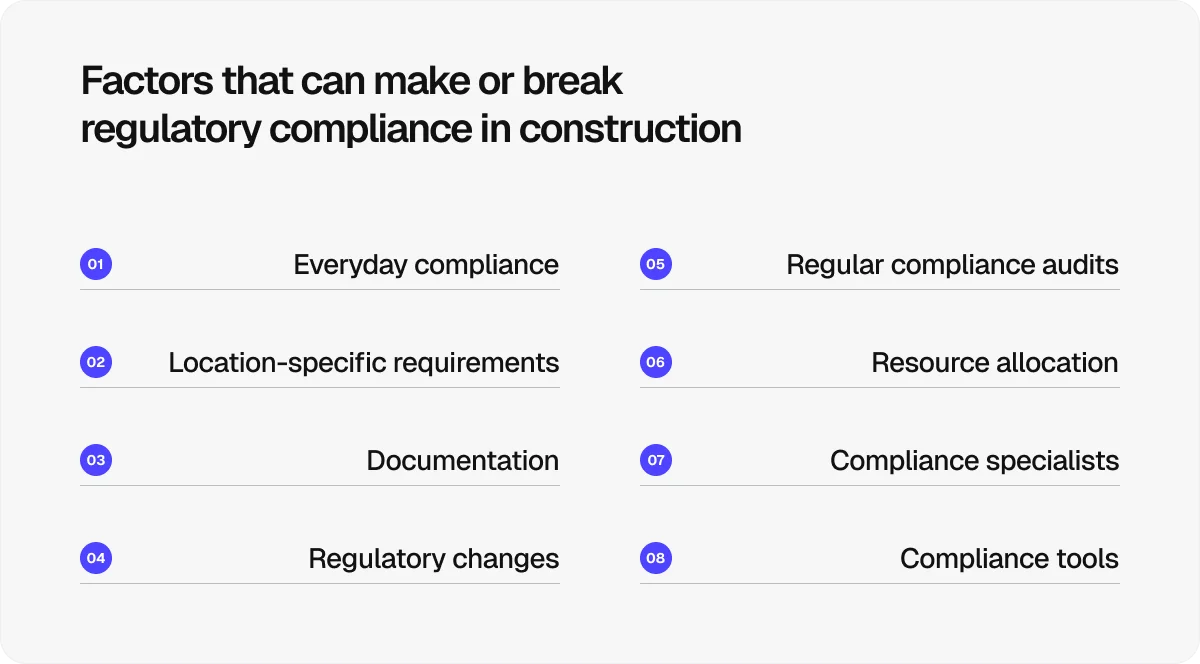
These eight best practices provide a clear starting point to help contractors and subcontractors stay compliant:
Treat compliance as part of everyday operations: Build it into planning, site work, and project management from the start. This reduces risk, prevents delays, and helps projects run more smoothly.
Account for location-specific requirements: Identify and follow the regulations that apply in each jurisdiction where you operate. Overlooking local laws, permits, or standards can affect your wider operations, not just one project.
Maintain accurate and complete documentation: Keep permits, training records, required regulatory reports, and certifications organised and up to date. Clear records make inspections easier and protect your business if issues arise.
Stay up to date with regulatory changes: Monitor updates to safety, environmental, and building regulations through training, industry bodies, or digital tools. Requirements change, and falling behind increases the risk of violations.
Conduct frequent compliance audits: Review your processes, documentation, and site practices regularly to identify gaps early and reduce the likelihood of project disruption.
Allocate adequate resources to compliance: Provide sufficient time, budget, and trained staff to manage compliance properly. While research has found that compliance costs can reduce profits by up to 12% for small and medium enterprises, investing adequate resources helps you avoid far greater losses.
Work with qualified professionals and compliance specialists: Collaborate with legal advisors, consultants, and experienced subcontractors who understand regulatory requirements.
Invest in the right tools and technology: Use construction site management software to track certifications, manage documentation, and standardise safety checks. Doing so can help you reduce human error and make compliance easier to manage.
How Onetrace helps you stay compliant
Onetrace is designed to support compliance across all areas of construction, thanks to an extensive list of features, which includes:
Signed Docs: Store and track RAMS, contracts, certificates, and safety documents in one place, helping you meet requirements for health and safety, contractual, and regulatory documentation while maintaining a transparent audit trail.
Timesheets: Record when workers arrive and leave the site, helping demonstrate employment and labour compliance, verify workforce presence, and provide evidence during audits or inspections.
QR codes: Tag installations and assets so teams can instantly access full work histories, supporting building regulations, material traceability, and long-term maintenance compliance.
Approvals: Set structured approval workflows with recorded sign-offs, helping meet building regulations, contractual obligations, and inspection requirements while ensuring accountability.
Client management: Maintain comprehensive records of client communications, contracts, and project progress, supporting contractual compliance and improving transparency with clients and regulators.
Reports: Generate professional reports with all required compliance data, making it easier to demonstrate compliance during audits, inspections, and project handovers.
Qualification tracking: Monitor worker certifications and training, helping meet employment, labour, and health and safety requirements while proving workforce competency.
Material tracking: Pre-configure and track approved materials to ensure material standards compliance, supporting building and structural regulations, and providing traceability needed to meet environmental protection and sustainability requirements.
By consolidating all compliance activities into a single system, Onetrace helps reduce administrative effort, improve traceability, and make compliance easier to manage across every project.
To see what this looks like in practice, schedule a personalised walkthrough with the Onetrace team today.
Marketing Team
@Onetrace
The Onetrace marketing team is passionate about sharing insights, ideas, and innovations that help construction businesses stay connected, compliant, and efficient. Combining industry expertise with a love for clear communication, we aim to deliver content that empowers professionals to work smarter and safer.