8 reasons why construction safety compliance is important

By
Marketing Team
@Onetrace
Construction is one of the most tightly regulated industries, which makes sense given how complex, fast-moving, and high-risk construction work can be.
Every project must meet a wide range of regulatory requirements, covering aspects like planning, contracts, insurance, and workforce management.
While all forms of compliance play an important role in keeping projects on track, safety compliance stands out as critical.
This article explains why construction safety compliance is important and how it supports safer sites, smoother projects, and stronger businesses.
Key takeaways
Safety compliance protects workers and the public
Construction sites involve heavy machinery, work at height, and hazardous materials. Well-established safety procedures help control these risks and protect workers, visitors, delivery drivers, and people passing near the site.Following safety rules helps avoid legal and financial problems
Construction companies are legally required to meet safety regulations. Failing to comply can lead to enforcement action, fines, compensation claims, and project disruption.Good safety practices help keep projects running smoothly
Accidents, unsafe conditions, and investigations can quickly delay work. When safety procedures are built into daily site operations, teams can remove safety failures as a source of disruption.Safe sites build stronger businesses and teams
Companies that manage safety well earn a reputation for reliability and professionalism. This helps secure future work while also improving worker confidence, retention, and overall team performance.The right tools make safety compliance easier to manage
Keeping track of inspections, safety documents, and site activity can be complex. Construction site management software like Onetrace helps streamline compliance by standardising processes, capturing site data, and maintaining clear audit trails across projects.
1. It keeps construction sites safe for everyone nearby
Construction sites are busy, high-risk environments. Heavy machinery moves through tight spaces, work often takes place at height, and hazardous materials are handled every day.
Without proper controls, these conditions can quickly lead to serious harm.
The 2025 Construction Statistics Report from the Health and Safety Executive (HSE) shows just how often these conditions lead to injury, illness, and loss of life:
35 workers died from fatal injuries in construction in 2024/25, giving the sector a fatal injury rate of 1.92 per 100,000 workers—around 4.8 times higher than the average across all industries.
Falls from height caused 53% of construction deaths over the past five years, making them the leading cause of fatal accidents in the sector.
Around 50,000 construction workers reported a non-fatal workplace injury, resulting in an injury rate of 2.5% compared with 1.8% across all industries.
An estimated 79,000 construction workers suffer from work-related ill health, with musculoskeletal disorders accounting for 53% of cases.
Respiratory illness affects around 0.23% of construction workers, compared with 0.11% across all industries.
However, on-site operatives aren’t the only people at risk.
So are visitors, delivery drivers, and members of the public who live, work, or pass near construction sites. In 2024/25 alone, four members of the public were fatally injured in construction-related incidents.
This is why safety compliance matters so much.
Well-defined procedures, proper training, the right protective equipment, and well-managed sites all work together to control these risks.
2. It protects equipment, tools, and site assets
Protecting people will always be the first priority on any construction site. But protecting equipment, tools, and materials matters, too.
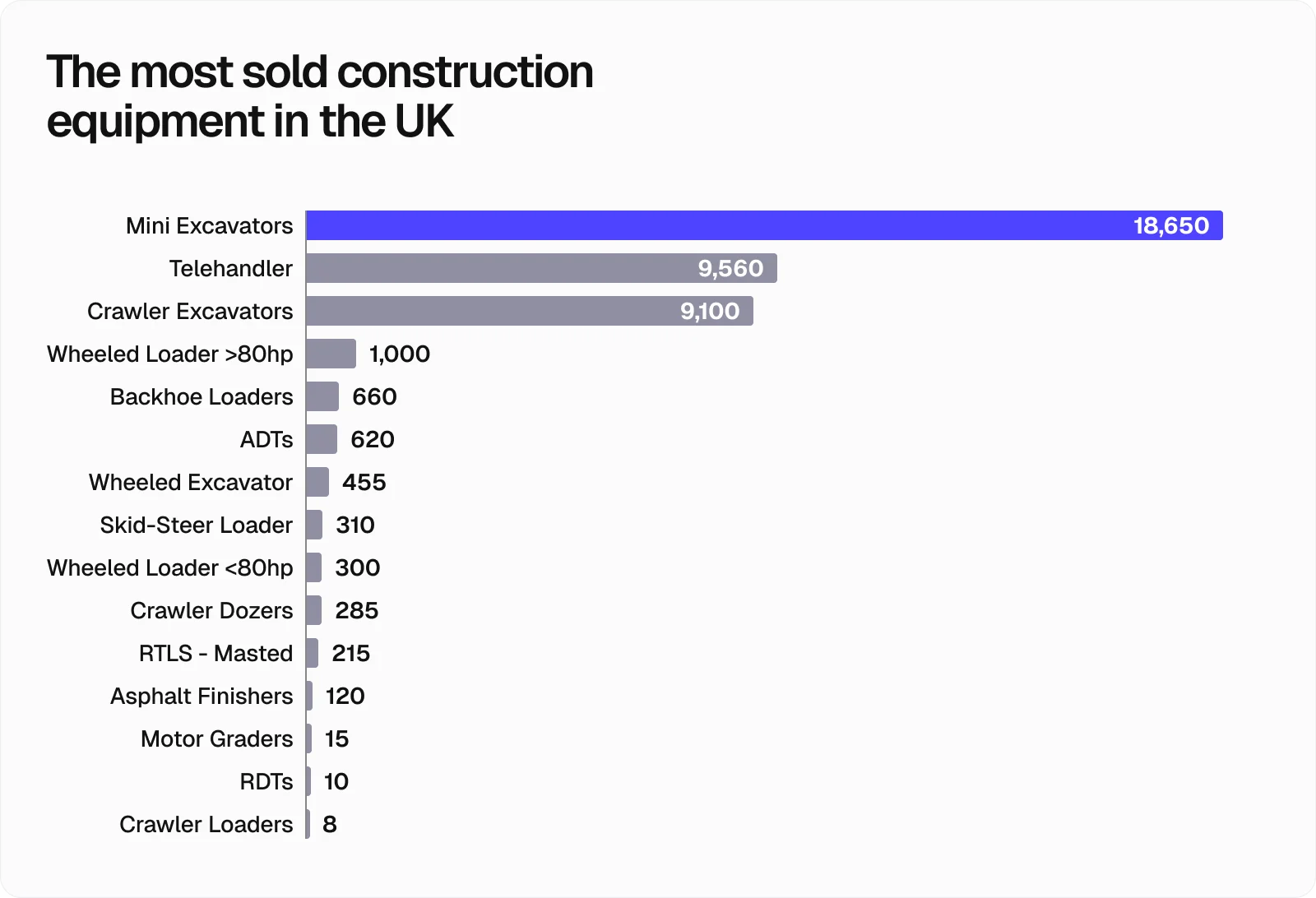
Construction projects rely on expensive machinery and site assets to keep work moving, with the following products being the most commonly sold in the UK in 2023:
Mini excavators
Crawler excavators
Telehandlers
At the same time, many contractors no longer own most of the machinery they use.
The UK market has steadily shifted towards plant hire, with rental companies accounting for around 68% of the equipment market in 2023.
However, whether equipment is rented or owned, contractors are responsible for ensuring it remains in safe working condition. Without regular inspections and maintenance checks, it’s difficult to confirm that machinery and tools continue to meet safety standards.
This responsibility is particularly important for equipment used directly by operatives, such as rope access gear and climbing harnesses.
With these items being part of daily work, proper inspection, handling, and maintenance are essential to keep both workers and projects safe.
3. It ensures construction companies meet their legal duties
Safety compliance isn’t something companies choose to follow just because it helps protect workers. It’s also a legal requirement, with the exact regulations varying by country.
In the UK, construction safety is governed by laws such as the Construction (Design and Management) Regulations 2015 and the Health and Safety at Work etc. Act 1974, which set out straightforward responsibilities for clients, contractors, and designers.
These rules require companies to plan work safely, manage risks, and ensure that everyone involved in a project understands their duties.
Oversight and enforcement are the responsibility of the HSE, the national regulator responsible for workplace health and safety. The HSE has the authority to inspect sites, stop dangerous work, and prosecute businesses that fail to meet their legal obligations.
Its enforcement activity in 2024/25 shows how seriously these duties are taken:
246 criminal prosecutions were completed, with a conviction rate of 96%.
More than 4,400 enforcement notices were issued, including around 3,200 Improvement Notices and 1,200 Prohibition Notices stopping dangerous work.
Over 13,200 inspections were carried out, with more than 7,000 of them focused on work-related health risks.
4. It protects projects from unexpected costs
Safety compliance helps construction businesses manage financial risk.
When work is planned and carried out safely, companies can avoid the expenses that follow accidents, regulatory breaches, or project disruption, including:
Regulatory penalties, with courts issuing over £33 million in fines in cases brought by the HSE in 2024/25
HSE Fee for Intervention charges, where businesses must pay £183 per hour when inspectors identify a material breach of safety law and spend time investigating and correcting it
Medical treatment and compensation claims from workplace injuries, with work-related injury and ill health in the construction sector estimated to cost around £1.4 billion each year
5. It strengthens your reputation in the industry
Safety compliance plays an important role in how a construction business is seen by clients, contractors, and regulators.
Companies that consistently run safe, well-managed sites build a reputation for professionalism and reliability. That reputation matters when it comes to securing future work.
Many clients and principal contractors review safety records, incident histories, and compliance practices before awarding contracts.
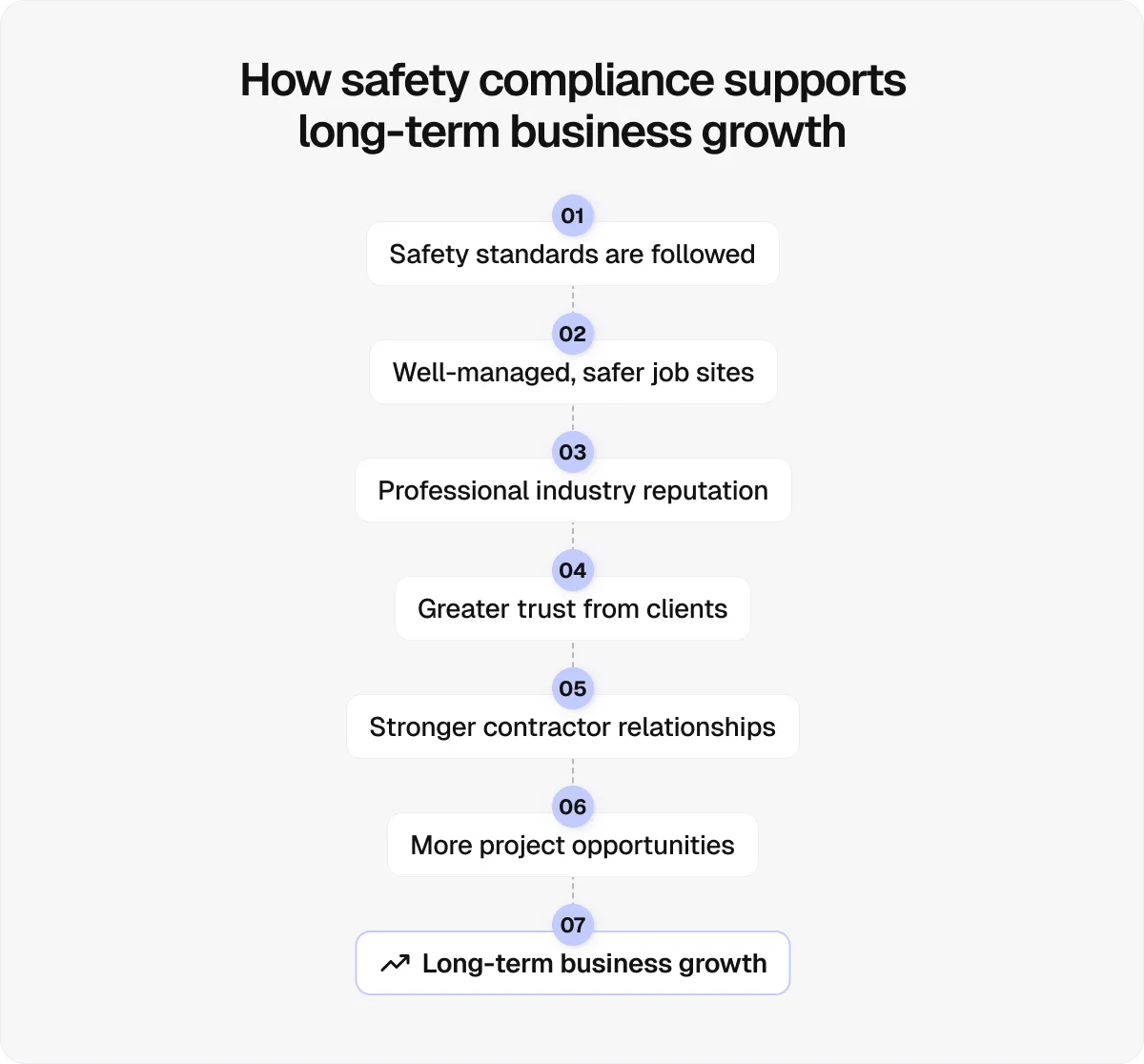
Over time, consistent safety compliance helps build trust within the industry. It signals that a company takes its responsibilities seriously, making it easier to maintain partnerships, win new projects, and support long-term business growth.
6. It keeps projects running smoothly
No construction project runs without challenges. Weather, supply issues, and scheduling conflicts can all affect progress.
When safety compliance is built into everyday site practices, companies can at least avoid safety failures, helping projects move forward more smoothly.
In the worst-case scenario, safety non-compliance can lead to a complete site shutdown, which can delay project milestones and disrupt schedules that many other contractors depend on.
However, even smaller incidents can cause disruption.
Workplace injuries, equipment damage, or unsafe conditions often trigger investigations, temporary work stoppages, or staff absences while the issue is resolved.
And these absences add up: In construction, around 2.2 million working days are lost each year due to workplace injury and work-related illness.
7. It improves the quality of work
Safety compliance helps ensure that construction work is carried out properly and to the required standards, as many safety rules are closely tied to good building practice.
For example, proper scaffolding and fall protection allow workers to carry out tasks at height safely and with better control, while safe lifting procedures help ensure heavy components are positioned accurately without damaging materials.
When the right controls are in place, teams are less likely to rush or cut corners.
This reduces the risk of defects, structural problems, or costly rework later in the project, helping deliver buildings that meet both safety and quality standards.
8. It supports worker wellbeing and satisfaction
Work-related stress and mental health problems are reported less often in construction than in many other industries. Around 0.7% of construction workers experience work-related stress, depression, or anxiety, compared with 2.0% across all industries.
Even so, the issue is taken very seriously across the sector.
In fact, the HSE is increasingly treating psychological health as a core part of workplace safety, not a separate issue.
Employers are now expected to assess risks such as excessive workload, stress, or poor working conditions under the same regulations that cover physical hazards.
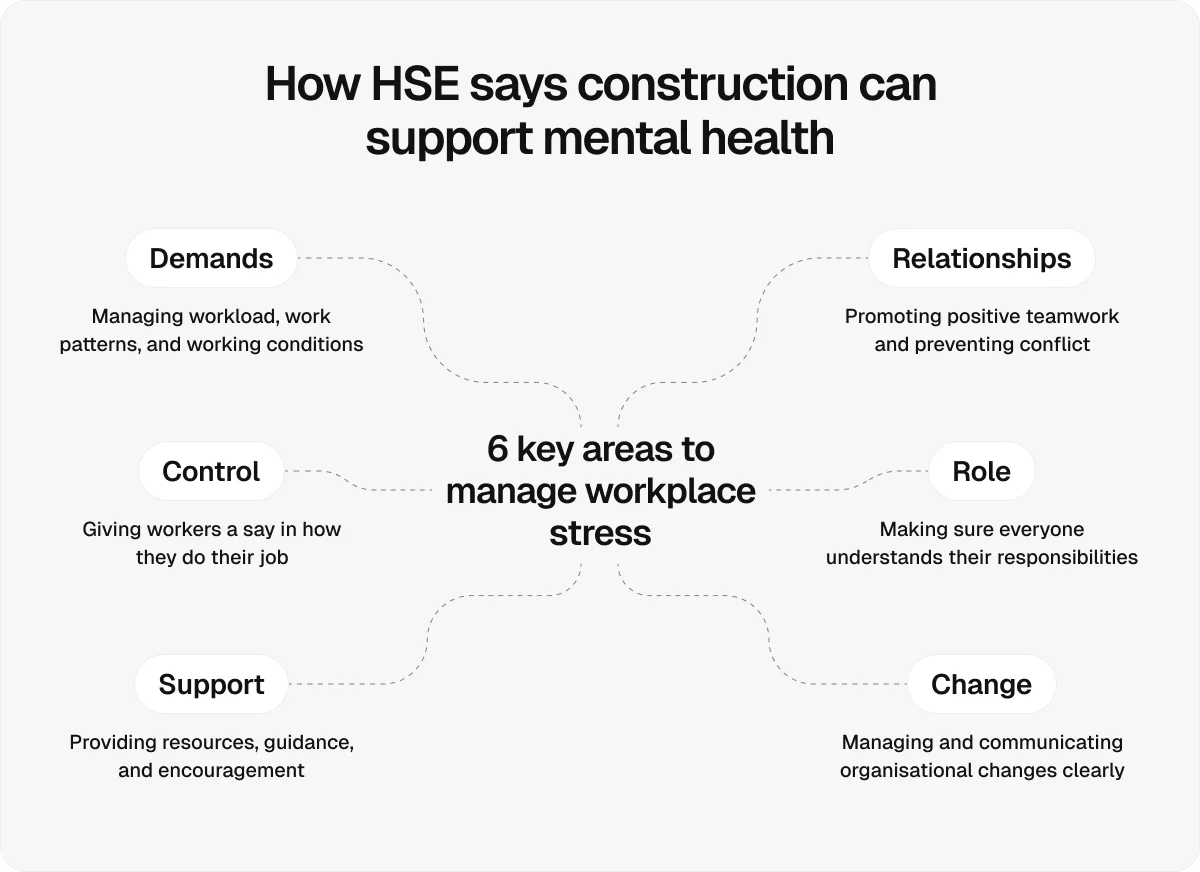
Safety compliance plays a key role in supporting this broader view of worker wellbeing.
When companies plan work properly, manage workloads, and maintain safe site conditions, workers are more likely to feel supported and confident in their roles.
This also matters for the long-term health of the industry.
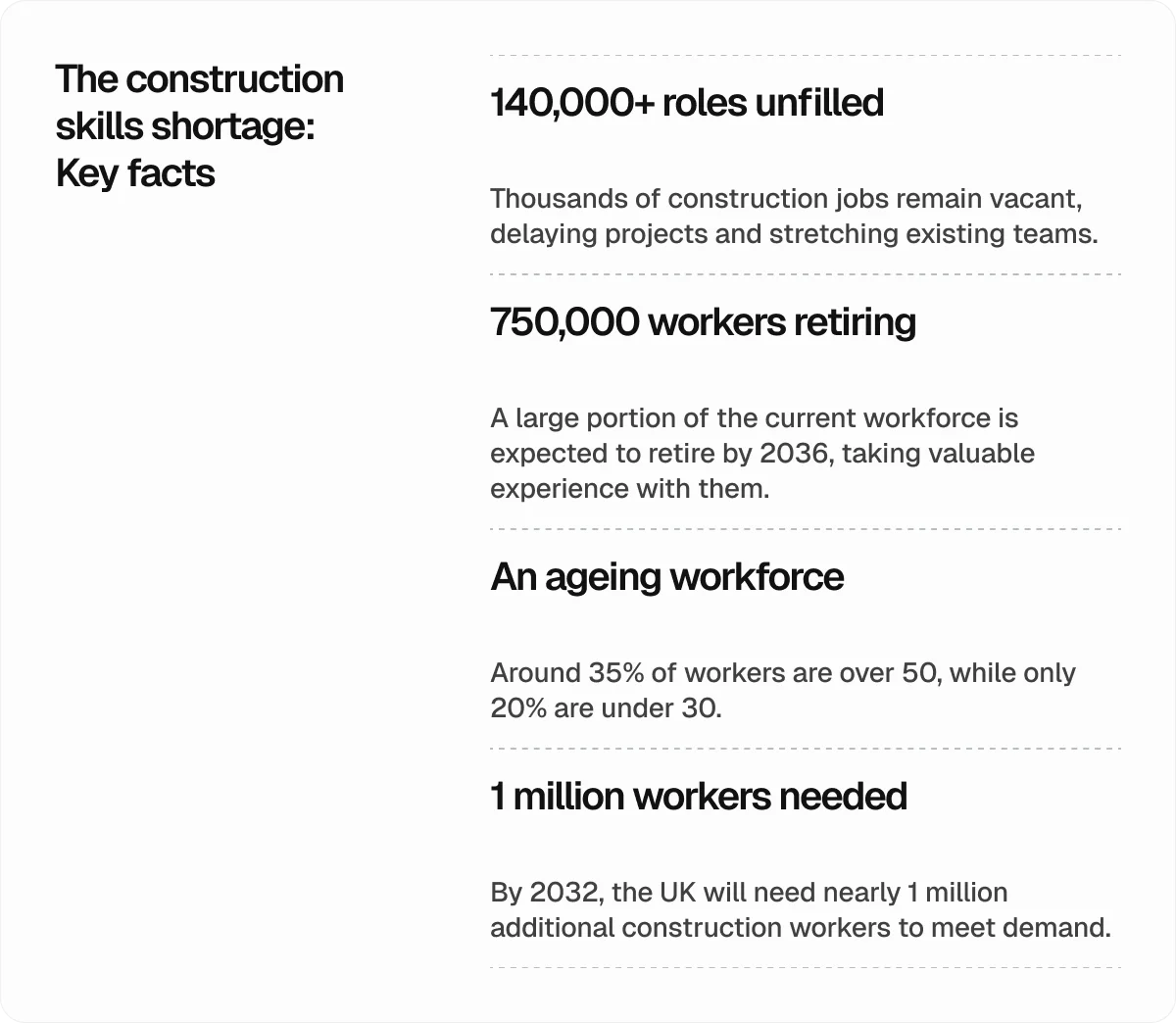
The UK construction workforce has shrunk by more than 300,000 workers between 2005 and 2025, according to data from the Office for National Statistics. At a time when skilled labour is in short supply, businesses need to do everything they can to retain experienced workers.
Safe, well-run sites help achieve that.
When people feel protected and valued at work, job satisfaction improves, and teams are more likely to stay and grow with the business.
How to ensure construction safety compliance
Construction safety compliance requires well-defined processes, good communication, and consistent documentation across all projects.
Ensuring this compliance in practice means:
Carrying out regular risk assessments
Keeping up with changing regulations
Training workers properly
Making sure site procedures are followed
It also means keeping accurate records so that safety decisions, inspections, and approvals can be traced when needed.
One of the most effective ways to manage all of this is through construction site management software.
A central platform like Onetrace helps teams capture information on site, standardise processes, and maintain traceable records of safety-related activity.
Below are some of the ways its features support safety compliance on construction projects:
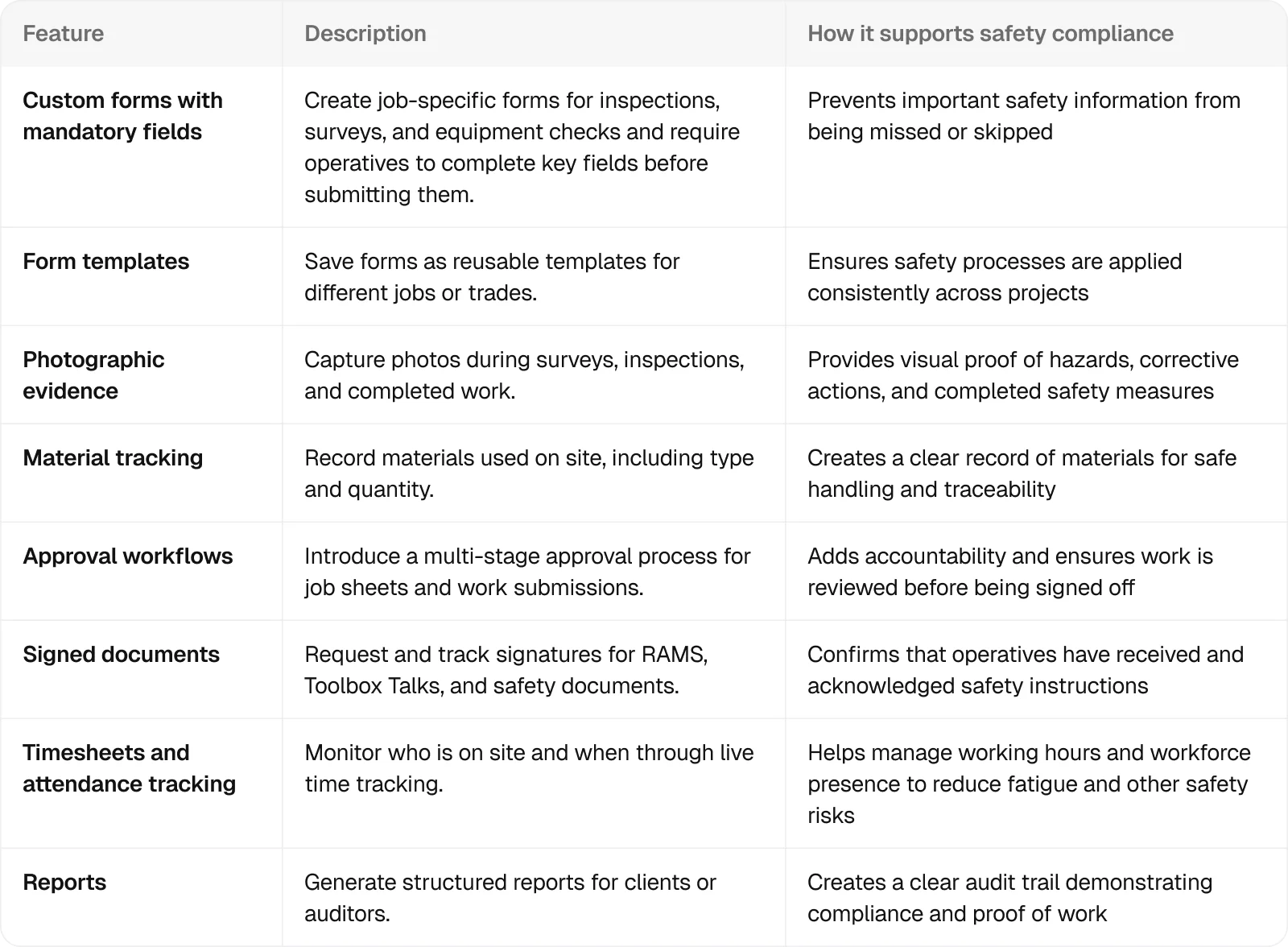
With the right systems in place, safety compliance becomes part of everyday project management rather than an additional burden.
If you’d like to see how this works in practice, book a personalised demo of Onetrace and explore how it can help you manage safety compliance more efficiently across your projects.
Marketing Team
@Onetrace
The Onetrace marketing team is passionate about sharing insights, ideas, and innovations that help construction businesses stay connected, compliant, and efficient. Combining industry expertise with a love for clear communication, we aim to deliver content that empowers professionals to work smarter and safer.