Construction workflow best practices: What to adopt & avoid

By
Marketing Team
@Onetrace
Construction labour productivity has been on the decline for decades.
In Europe, construction output per worker has fallen by around 15% since the 2000s, while productivity in sectors like manufacturing has increased significantly.
Some of the pressure on productivity in construction comes from factors that can’t be controlled, such as weather, supply issues, and red tape.
However, a significant factor sits much closer to home: how projects are planned, sequenced and coordinated from start to finish.
In other words, a large share of performance comes down to the efficiency of your construction workflows.
With that in mind, let’s break down the characteristics of construction workflows that work and the ones that are better left behind.
Key takeaways
Strong construction workflows create clarity from start to finish
Construction workflows define who does what and how information moves. When everyone understands their role and the sequence of work, projects run with fewer delays, less rework, and better cost control.Weak habits quietly damage productivity and margins
Relying on private message threads, re-entering data across systems, managing RFIs reactively, or working from vague scopes all create confusion and waste. These habits lead to delays, disputes, duplicated work, and avoidable cost overruns.Consistency and visibility are what separate strong projects from struggling ones
Standardised reporting, automated task handovers, and structured approvals give teams real-time insight into progress, risks, and responsibilities. This makes it easier to act early rather than fix problems later.Front-loading planning and treating closeout as ongoing protects quality and cash flow
Investing time in pre-construction reduces scope gaps and change orders. Managing punch lists, approvals, and documentation throughout the project makes the final handover smoother and increases the likelihood of being paid on time.The right software makes strong workflows practical, not theoretical
Building efficient workflows across multiple sites is difficult without a connected system. Onetrace brings live visibility, standardised processes, multi-stage approvals, and clear documentation into one platform, helping you reduce friction and stay in control.
What are construction workflows?
Construction workflows are straightforward, repeatable sequences of tasks that guide a project from planning to completion. They set out what needs to happen, who is responsible, and how work and information move between teams.
When done well, they bring order to a complex process involving multiple trades, suppliers, and project phases.
More specifically, a well-designed workflow can help:
Improve communication between the office and the site
Protect quality and safety standards
Make planning and future projects easier to manage
Reduce errors and rework
Strengthen efficiency across projects
Improve cost control
Workflows are usually designed and overseen by individuals on the operational side of the project. That’s typically a project manager, operations manager, or senior lead responsible for delivery.
However, while one person may own the workflow, many people carry it out. Site teams, subcontractors, office staff, and suppliers all play a part.
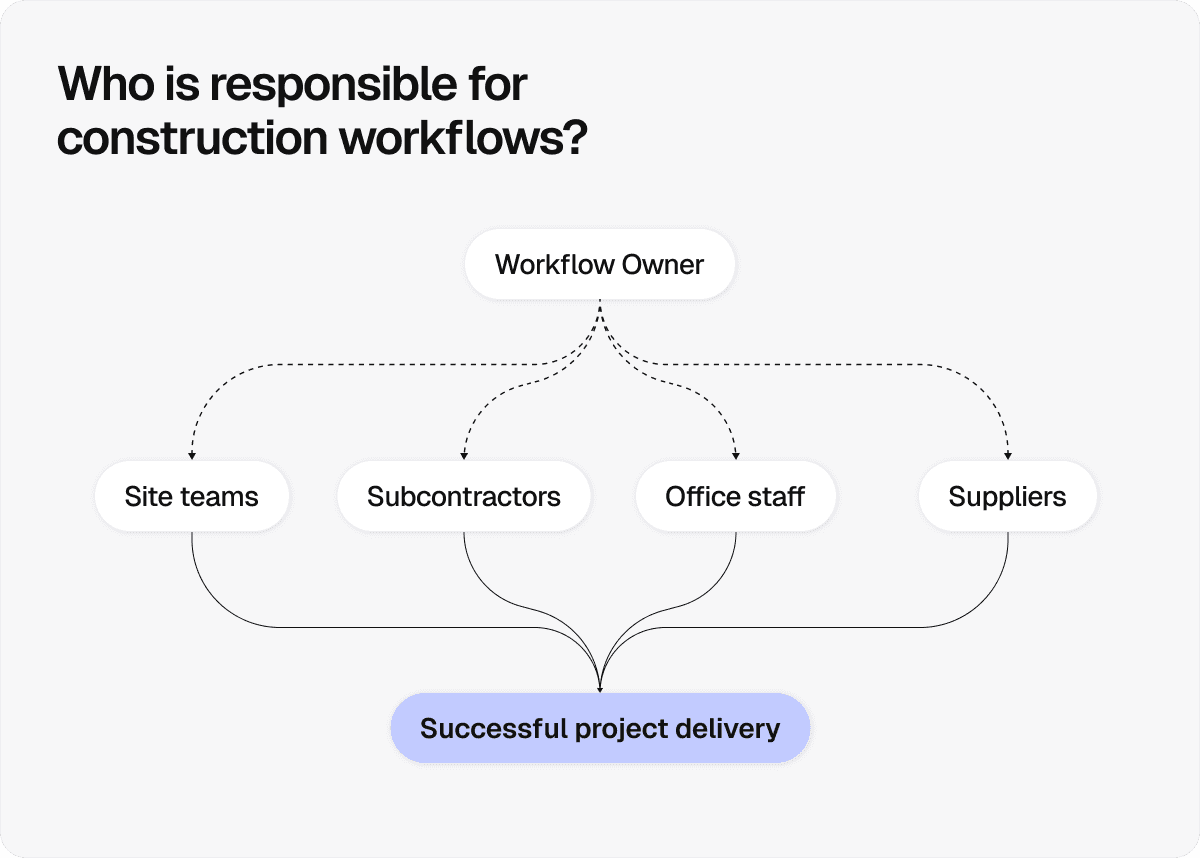
A workflow will only function well when everyone understands their role and how their work connects to the next step.
Construction workflows that work vs those that don’t
Workflows can look similar on paper, but in practice, the gap between strong and weak execution is quite wide.
The table below gives an easy-to-follow overview of the key factors that separate construction workflows that keep projects moving from those that create delays, rework, and frustration.
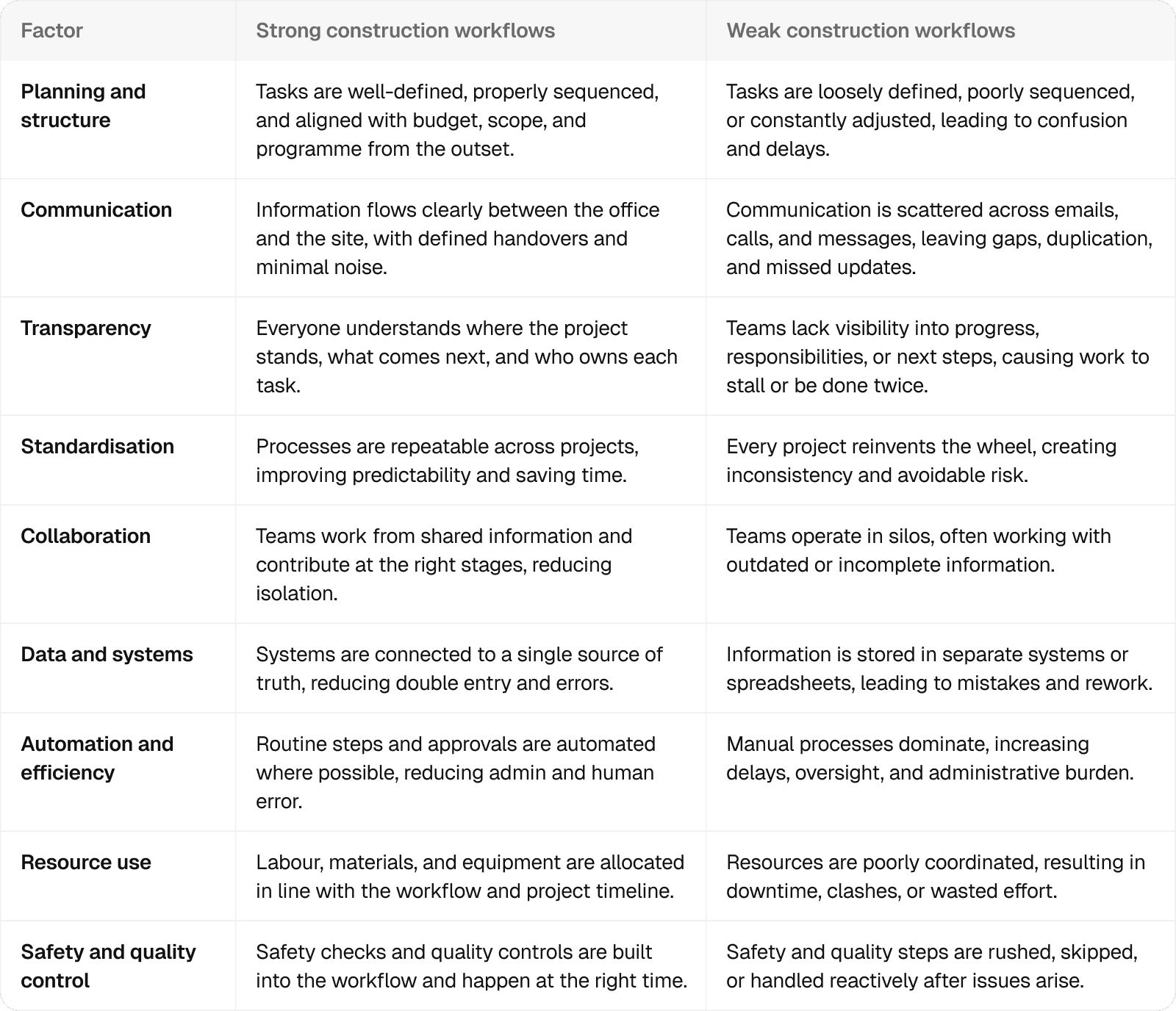
Ticking every box for a strong construction workflow is only possible with good construction site management software, like Onetrace.
This platform provides a single source of truth for your projects and supports strong workflows by:
Providing live visibility of attendance, progress, and job status, so office and site teams share the same real-time information
Standardising processes through reusable form templates to ensure every project captures consistent, high-quality data in the same format
Supporting multi-stage approval chains that build accountability, prevent late-stage snagging, and improve quality control
Tracking materials by type, quantity, and cost to improve resource allocation and reduce waste
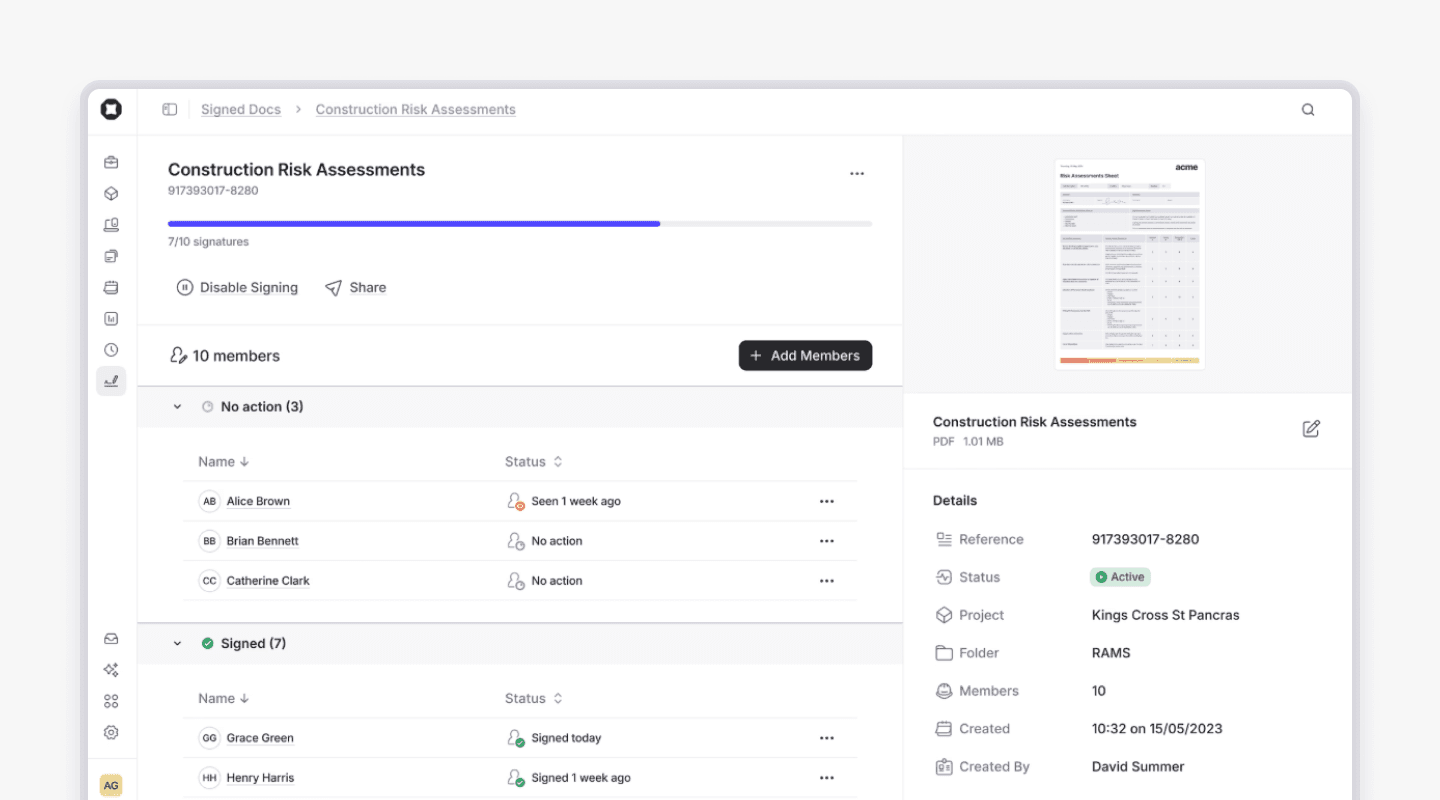
Recording digital signatures for RAMS, Toolbox Talks, and compliance documents, improving safety, audit trails, and transparency
4 construction workflow habits to leave behind
Core construction workflows, such as pre-construction, design, and change management, each have best and worst practices.
However, some weak habits show up more often than others and tend to cause the most disruption over time.
Here are four of those that you should leave behind:
1. Managing project decisions through private message threads
Instant messaging platforms like WhatsApp are still widely used in construction because they are quick, familiar, and easy to access on site. When something needs attention, a message often feels faster than logging into a system.
However, as practical as these tools seem, they often result in fragmented communication. Decisions, approvals, and instructions end up scattered across private threads and inboxes rather than stored in one shared place.
This leads to:
Key stakeholders being left out of important decisions
Critical information buried in personal message chains
No mapped out audit trail of who agreed to what
Increased risk of rework due to missed updates
Reduced accountability when disputes arise
2. Re-entering the same data across multiple systems
Many construction workflows still rely on paper notes, spreadsheets, and email handovers.
A site engineer writes updates in a notebook, later types them into Excel, then emails them to a project manager, who uploads them into another system.
Every manual transfer creates another chance for mistakes, missed details, or outdated information. It also drains time, with employees losing several hours a week simply re-entering data.
3. Managing RFIs through slow or undefined processes
Requests for Information (RFIs) are a standard part of pre-construction and delivery. They exist to clarify drawings, resolve gaps, and help crews build correctly.
When managed well, RFIs protect quality and reduce rework.
The problem starts when the RFI process is slow, unclear, or handled across disconnected tools. If there’s no standard format, no direct submission route, or no defined response time, crews are left waiting, which is a direct hit on productivity.
In the long run, a poorly managed RFI process can result in:
Work progress that is based on assumptions, increasing rework
Cost overruns and programme delays
No reliable record to learn from for future projects
4. Relying on vague scoping and guesswork in estimating
Well-defined scope and accurate estimating are the foundation of every financial workflow, from budgeting and change orders to invoicing and payment.
When early assumptions are vague or key subcontractor input is missing, the problems rarely stay contained, causing:
Frequent and avoidable change orders
Cost overruns
Disputes over scope and responsibility
Strained relationships between contractors and subcontractors
Increased risk of delayed payments or legal action
4 construction workflow practices to strengthen
The following four practices strengthen the core workflows that run through every project, improving clarity, accountability, and control.
1. Automating communication and task handovers
Automating communication within your workflow ensures that information moves instantly and consistently between teams. Instead of relying on manual follow-ups, defined triggers push the process forward.
This approach helps:
Keep everyone aligned with the same live information
Ensure tasks are assigned directly and tracked to completion
Reduce response times across teams
Maintain visibility from pre-construction to closeout
Strengthen accountability without increasing admin effort
Pro tip:
Automation works best when it reflects how your projects actually run. Pairing automation with customisation allows you to build workflows around your real stages of work, rather than forcing teams to adapt to generic labels.
Onetrace’s custom statuses are a good example of this in practice.
They allow you to define your own status names, colours, and icons to match each phase of your workflow, whether that’s survey, installation, snagging, or completion.
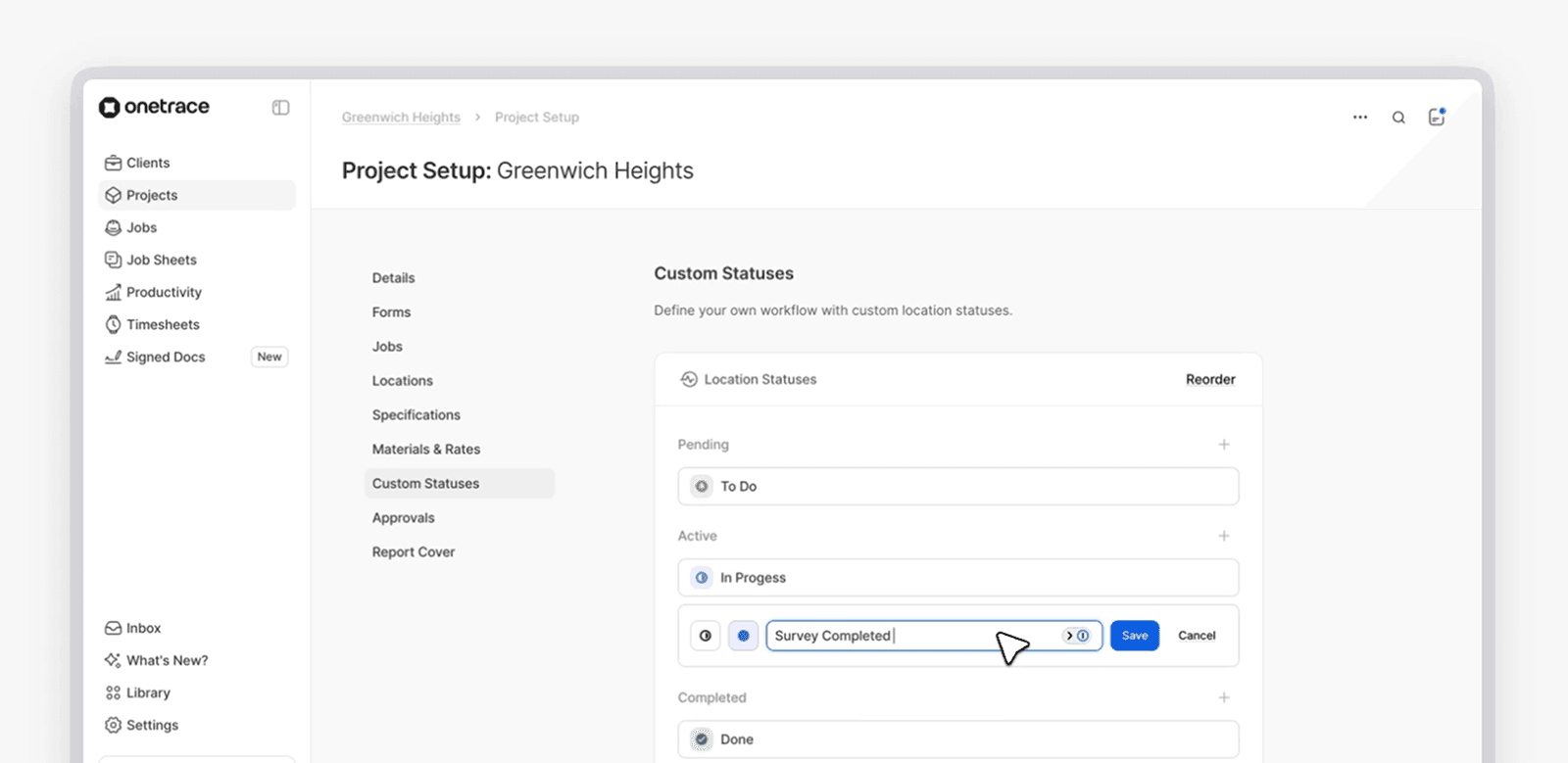
This combination of automation and tailored statuses improves tracking, keeps teams aligned, and builds a traceable history of work at each location.
2. Standardising digital reporting across projects
Successful firms move away from inconsistent or one-off reporting and instead use standardised digital forms for daily logs, inspections, and safety checks.
When construction reporting is consistent, data feeds directly into a shared view of the project, allowing managers to see whether:
Tasks are on schedule
Resources are being used as planned
Costs remain aligned with the budget
Across multiple sites, this approach makes it easier to spot patterns, bottlenecks, or recurring issues and address them before they turn into delays or added costs.
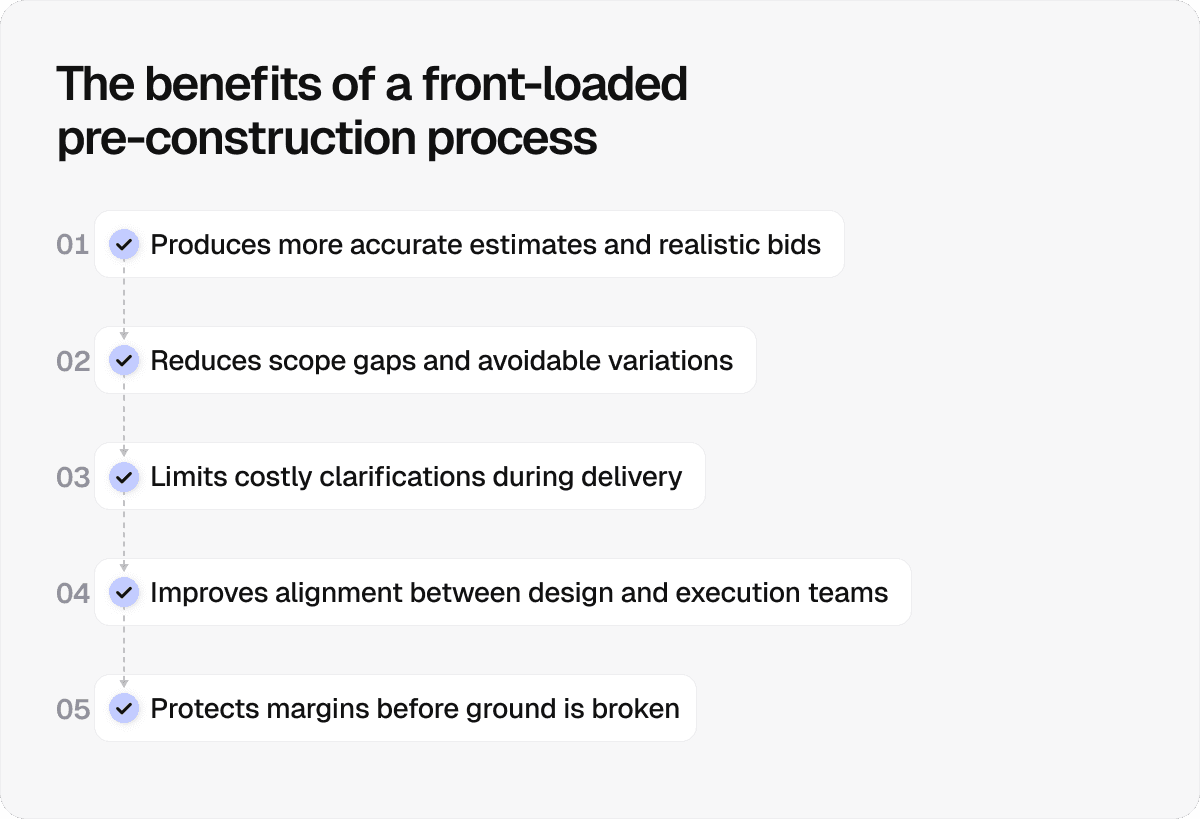
3. Investing in thorough pre-construction planning
Pre-construction sets the direction for everything that follows. That’s why this phase should never be rushed or treated as a formality.
Instead, you should make sure that:
Estimators coordinate closely with speciality contractors and suppliers
Drawings and specifications are reviewed carefully
Scope gaps, clashes, and buildability concerns are addressed before site teams mobilise
The goal of ‘front-loading’ pre-construction is simple: resolving issues early, while they are still cheap and manageable.
4. Treating closeout as a continuous workflow
Closeout is often seen as the final step—something that happens once the physical work is complete. In reality, it should run throughout the life of the project. This includes:
Updating punch lists as work progresses
Addressing non-conforming items early
Capturing documentation in real time
Securing staged approvals as milestones are met
Keeping compliance records and sign-offs up to date
Tracking variations and agreed changes as they occur
Besides improving handover confidence, this approach allows you to maintain quality control from day one and improves the chances of being paid on time.
Pro tip:
One sign-off is rarely enough on complex projects.
That’s why Onetrace supports multi-stage approval chains that reflect how your business actually operates.
A job sheet can move from operative submission to supervisor review, then on to operations or client sign-off.
At each stage, work can be approved or rejected with unambiguous feedback.
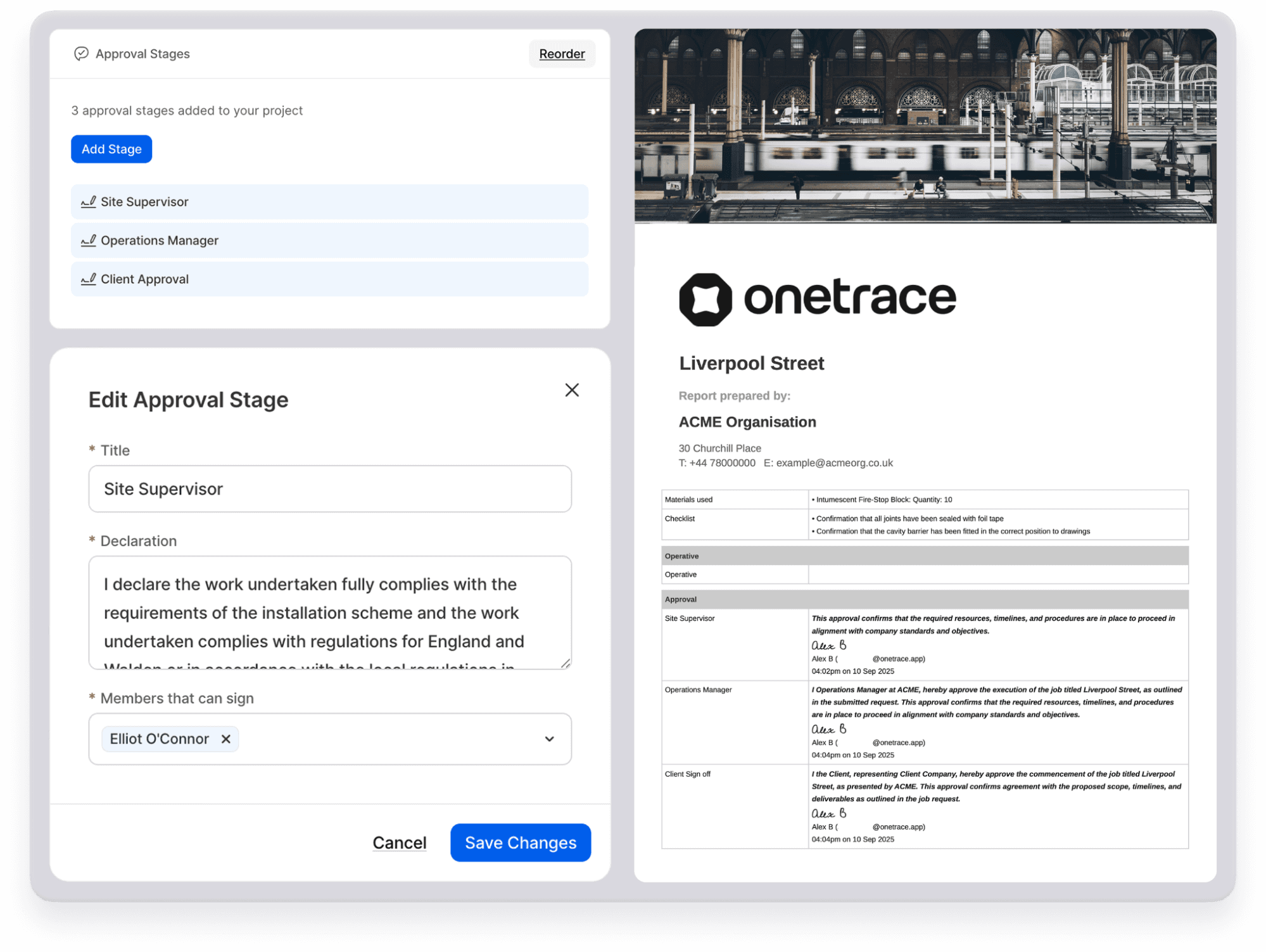
All approval statuses are visible in real time, and the full history of decisions is recorded.
This creates structured accountability, improves quality control, and reduces the risk of disputes at closeout.
Making construction workflows work in practice
Most construction project problems start in the gaps between tasks, teams, and decisions. Tight workflows close those gaps by making it obvious who does what, when work happens, and how progress is tracked.
Onetrace helps you put that structure in place without adding layers of admin.
It gives you one clear view of what’s happening across your projects and makes it easier to keep work, quality, and documentation aligned as jobs move forward.
To see how this would look in your own day-to-day operation, book a personalised demo with the Onetrace team today.
Marketing Team
@Onetrace
The Onetrace marketing team is passionate about sharing insights, ideas, and innovations that help construction businesses stay connected, compliant, and efficient. Combining industry expertise with a love for clear communication, we aim to deliver content that empowers professionals to work smarter and safer.