What is site drainage in construction? A complete guide

By
Marketing Team
@Onetrace
Flooding remains one of the most damaging and disruptive risks across Europe.
In the UK alone, nearly 2 million people are exposed to flooding each year, and around a third of England’s critical infrastructure, including roads, railways, energy networks, and water systems, is also at risk.
Flood damage to property and transport infrastructure already costs around £2.4 billion annually, with long-term economic effects.
While extreme weather events can’t be prevented, well-managed drainage systems can help control surface water flows, reduce system overload, and protect properties from avoidable damage.
However, proper drainage is about getting things right at the construction stage, not retrofitting systems once problems emerge.
With this in mind, let’s outline what site drainage in construction is, why it matters, and how it should be delivered in practice.
Key takeaways
Site drainage is about controlling water so construction can proceed safely and efficiently
It covers surface water, groundwater, and foul water, all of which behave differently and must be managed separately to avoid flooding, instability, and safety risks during the build.Drainage is a shared responsibility across the project team
Clients, designers, contractors, and subcontractors all play a role, with legal accountability resting on those commissioning, designing, and carrying out the work. Clear coordination is essential to avoid gaps and confusionGood site drainage is required throughout the entire construction lifecycle.
It is needed before work starts, during active construction, and at completion, not just at handover. Decisions made early on affect safety, programme, and long-term performance.Poor drainage creates real, avoidable problems on site
These include structural movement, flooding, erosion, restricted access, increased accident risk, regulatory non-compliance, and defects that only appear years later.Managing drainage properly means managing compliance day to day
Turning plans into consistent action is where many projects struggle. Tools like Onetrace help teams manage drainage checks, approvals, evidence, and sign-offs alongside wider construction compliance, making it easier to apply good practice to real projects.
What is site drainage in construction? The basics
Site drainage in construction is the planned control and removal of water from the construction site to ensure building work can be carried out safely and effectively.
It combines engineered systems and on-site measures to prevent water from accumulating around excavations, foundations, access routes, and working areas.
What types of water does site drainage address?
Site drainage primarily addresses surface water, groundwater, and foul water generated or encountered during construction activities.
The table below breaks down these three water types:
Type of water | Description | Example |
Surface water | Rainwater that flows over land or built surfaces rather than being soaked into the ground | Rainwater running off unfinished roofs, temporary haul roads, and newly paved areas |
Groundwater | Water held within the soil and rock below ground level, which can enter excavations through seepage or infiltration | Water entering a lift pit or service trench overnight |
Foul water | Wastewater produced by on-site welfare facilities and containing domestic waste | Wastewater discharged from temporary toilets, sinks, and site welfare units |
These types are managed separately on site to ensure drainage systems function as intended during construction.
Who is responsible for site drainage in construction?
Responsibility for site drainage in construction sits with multiple parties across the project. However, the legal accountability rests on those commissioning, designing, and carrying out the building work.
Here’s how this usually looks in practice:
Clients and developers: Clients are responsible for ensuring that adequate site drainage is included within the scope of works and that sufficient resources are allowed for compliant drainage provision.
Designers and engineers: Designers and civil engineers are in charge of planning and specifying drainage systems that meet regulatory requirements and are appropriate for site conditions and construction activities.
Principal contractors: Principal contractors are responsible for coordinating site drainage activities, managing temporary drainage arrangements, and controlling water-related safety and pollution risks throughout the construction phase.
Subcontractors: Subcontractors must install drainage systems in accordance with the design, protecting them during construction, and ensuring they function as intended.
Pro tip:
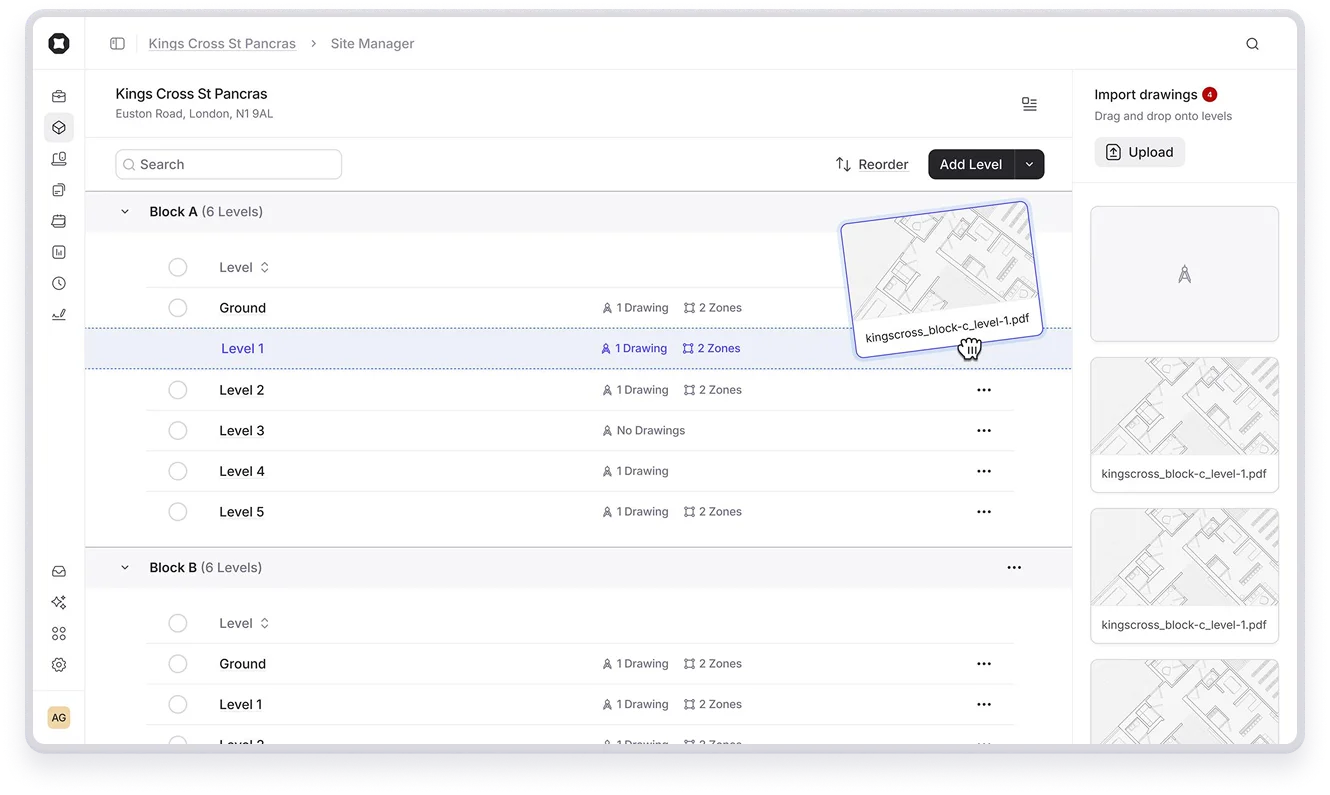
Given that site drainage responsibilities are shared across multiple roles, it’s important to centralise the management and communication of drainage information.
One effective way to do this is by using construction site management software like Onetrace.
This way, you can store drainage records about installs, inspections, and surveys in one place, making it easier to track what’s been completed, what’s in progress, and what still needs attention as construction moves forward.
When is site drainage required?
Site drainage is required throughout the construction lifecycle. This includes:
Before construction starts: Drainage systems manage existing surface water and groundwater conditions, support safe excavation, and enable construction activities to begin without water-related constraints.
During construction: Drainage is required throughout the build to manage temporary water flows, protect excavations and partially installed systems, and ensure drainage infrastructure isn’t damaged, blocked, or compromised.
At completion: Permanent systems must be fully installed, tested, and operational before handover, with no damage or defects introduced during construction.
Which construction projects require site drainage?
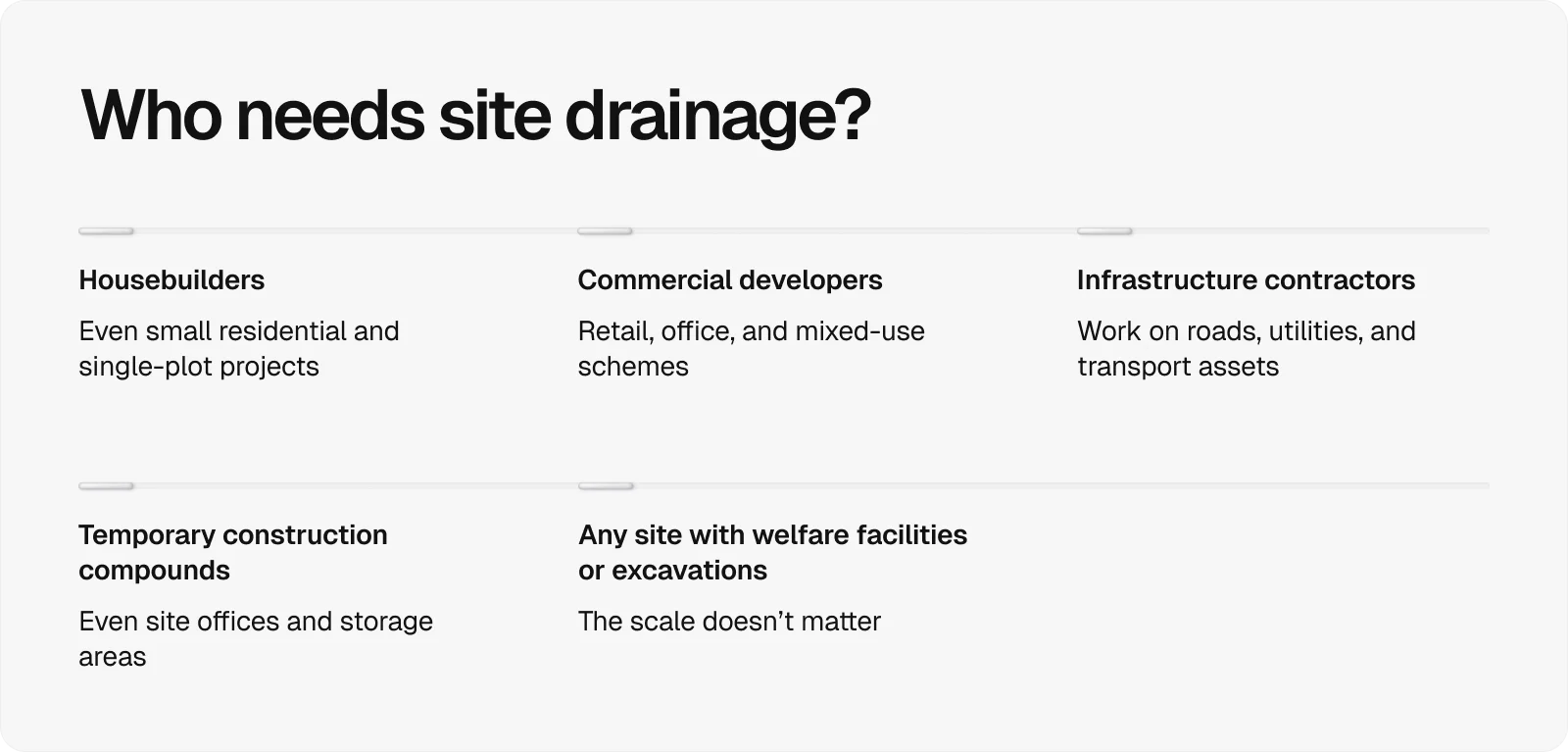
Site drainage is required on all construction projects, not just large-scale or complex infrastructure schemes. Its use is tied to construction activity itself, rather than project size or value.
Approved Document H of the Building Regulations, which outlines how to meet the statutory requirements for drainage and waste disposal in England, applies to all building work carried out under the Building Regulations 2010, including:
New builds
Extensions
Certain alterations (any change or addition that affects how water or waste is drained or managed)
Why is site drainage important in construction? 7 key reasons
Site drainage is important in construction because poor water control leads to safety risks, delays, and long-term defects. Here’s why it needs to be done properly during the build:
1. Protecting structural integrity
Excess groundwater can soften the ground, cause settlement, and lead to cracking in walls and floors. As conditions change, this movement can damage pipes, distort structures, and create defects that are difficult to fix.
On live sites, unstable ground also increases the risk of trench failure and displaced temporary works.
Effective site drainage helps by controlling groundwater and keeping water away from foundations and excavations. As a result, ground conditions remain stable during construction, protecting the structure from the outset.
2. Preventing flooding
Heavy rainfall can overwhelm drainage quickly, especially on low-lying ground. Excavations and open ground act as water traps, allowing runoff to collect where it causes the most disruption.
Flooding during construction can lead to a series of problems, including:
Delays
Damaged materials
Unstable ground conditions
Well-planned site drainage reduces the risk of these issues by providing a clear path for water to drain away.
By managing runoff and accounting for heavy rainfall early on, drainage helps keep sites operational and prevents short-term flooding from turning into long-term problems.
3. Avoiding soil erosion
When water is left to flow unchecked, it erodes topsoil and weakens the ground beneath it. Sloped areas are especially vulnerable, as runoff gains speed and carries material away from working areas and access routes.
As soil loses strength, surfaces become uneven and harder to work on.
Good site drainage slows and controls water movement, keeping soil in place and making ground conditions predictable. This helps maintain stable working areas and reduces the risk of delays.
4. Improving site accessibility
Access issues often show up first when drainage isn’t working.
Waterlogged ground turns haul roads into bottlenecks, plant movement becomes restricted, and routine tasks take longer after rainfall.
This results in:
Lost time
Damaged temporary surfaces
Unnecessary pressure on the programme
Good site drainage keeps water off access routes and working areas, so people and machinery can move safely and consistently.
5. Reducing safety risks
Slips, trips, and falls are the leading cause of non-fatal injuries in construction, with wet and slippery surfaces consistently highlighted as a major factor.
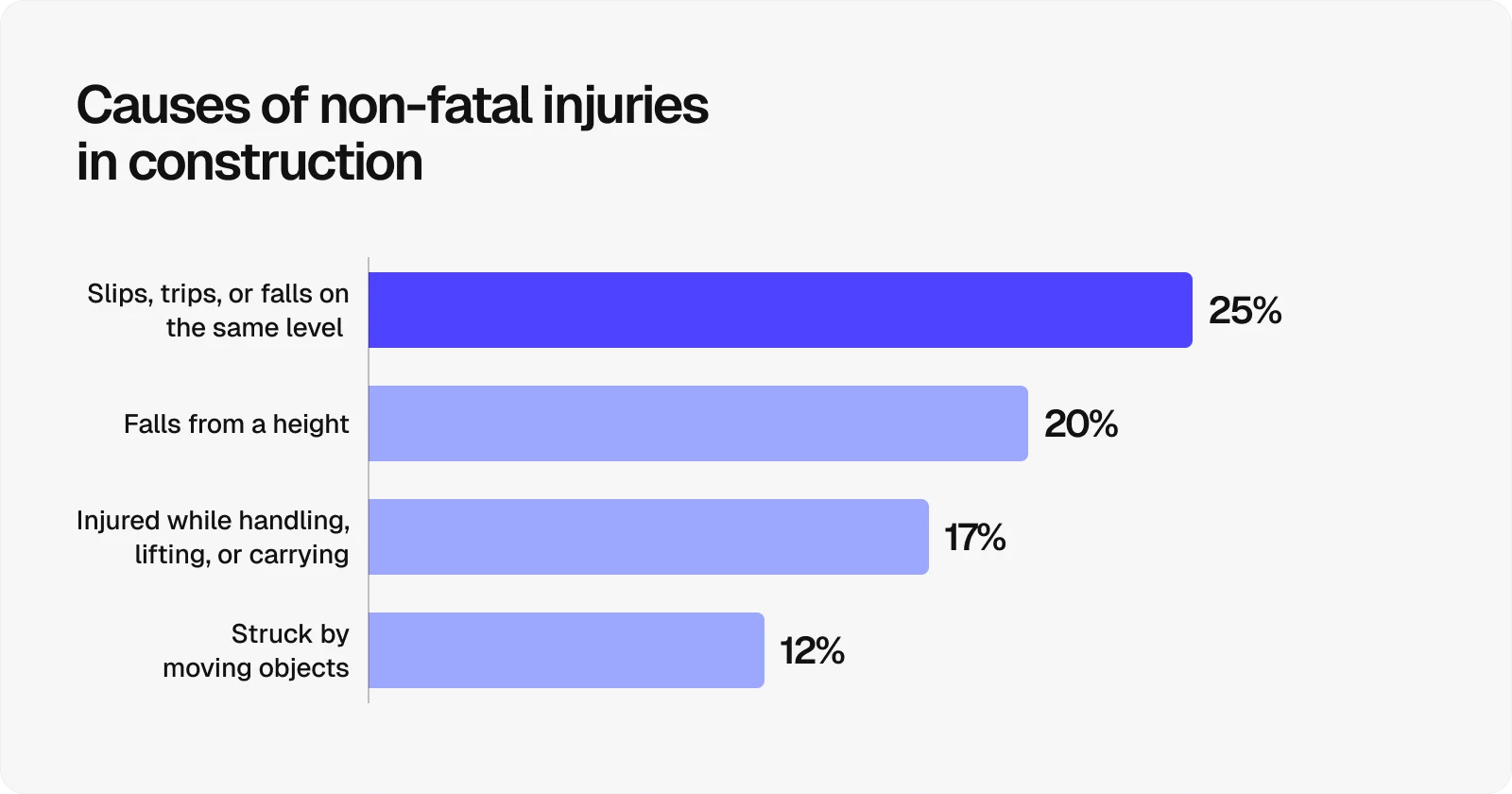
When water is left to pool on site, walkways become hazardous, ground conditions deteriorate, and everyday tasks carry more risk than they should.
Poor drainage is often at the root of these conditions.
Standing water and muddy surfaces increase the chance of accidents, especially around access routes and active work areas. Well-planned site drainage helps keep surfaces drier and more predictable, lowering risk and supporting safer working conditions throughout the build.
6. Meeting legal and regulatory duties
Site drainage is a formal requirement of construction work, not just a matter of good practice.
The risks that drainage addresses, from flooding to unsafe excavations, are treated as serious hazards under the law.
In the UK, documents like the Building Regulations Part H set clear expectations for how water must be managed, with oversight by bodies such as the Environment Agency.
Not fulfilling these expectations can lead to non-compliance with Building Regulations, creating issues with building control bodies and resulting in:
Delayed approvals or sign-off
Remedial works, often at a higher cost
Other enforcement action, ranging from additional inspections to stopping work altogether
Pro tip:
Drainage compliance is just one piece of wider construction compliance, which is crucial in an industry as tightly regulated as construction.
That’s why having software with built-in compliance features makes day-to-day work simpler and more reliable.
With Onetrace, for example, you can:
Enforce mandatory fields so critical compliance information can’t be missed
Capture photographic evidence before, during, and after works
Create clear reports for clients, auditors, and handovers
Run approval workflows that flag issues early and speed up resolution
Request and track signatures for RAMS, Toolbox Talks, and other key compliance documents
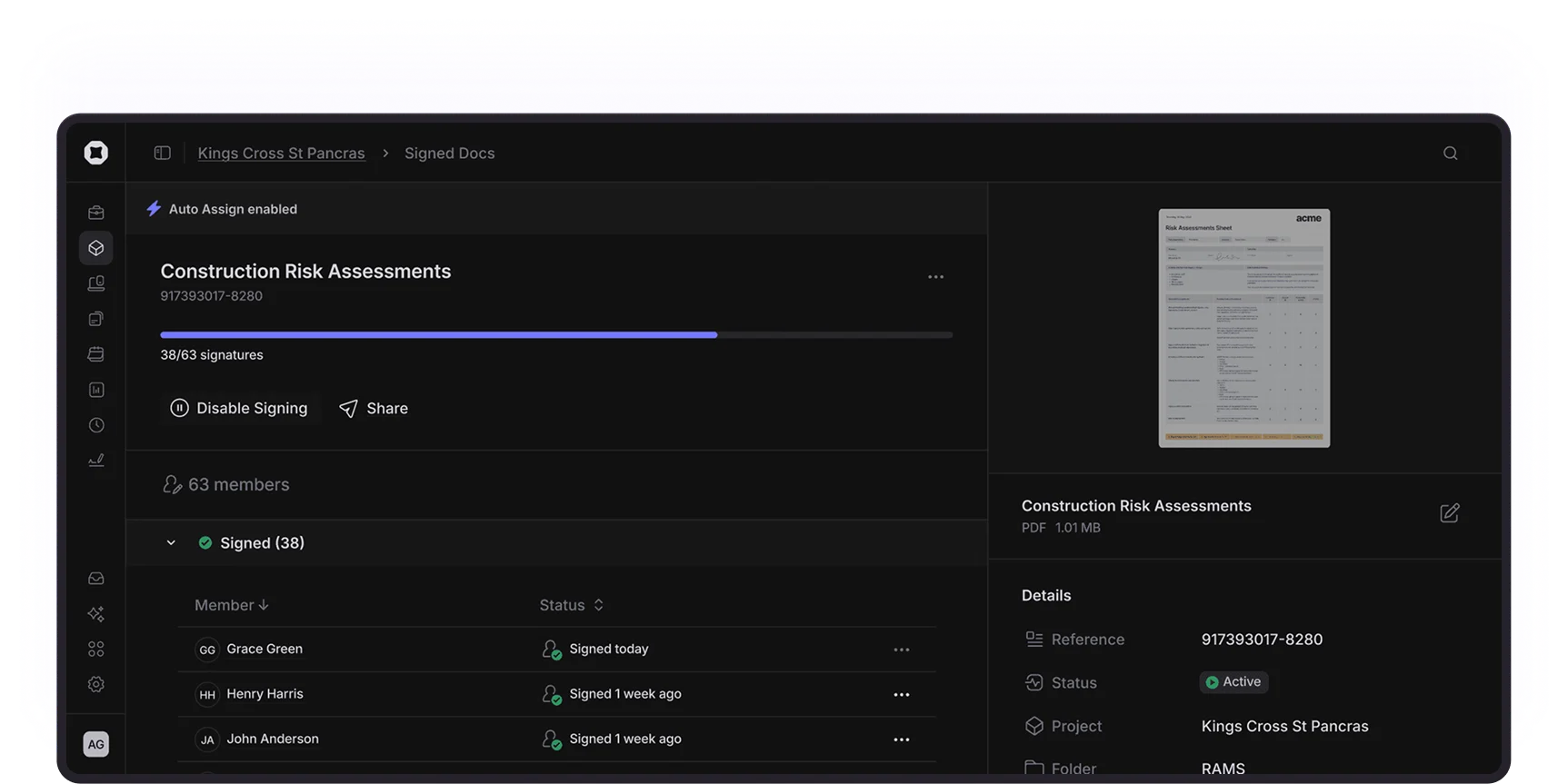
Together, these features help teams meet compliance requirements without slowing down day-to-day site work.
7. Supporting long-term drainage performance
When 6.3 million properties in England alone already face flood risk, the last thing you need is drainage problems built in during construction.
Drains that are damaged, poorly connected, or left untested can create defects that only show up years later, increasing flood risk and maintenance costs over the life of the asset.
Good site drainage protects future performance by making sure systems are:
Protected during works
Tested before handover
Main types of site drainage systems used in construction
Most construction projects rely on a combination of site drainage systems rather than a single solution.
The table below outlines the most common options and how they’re typically used.
Drainage type | What it does | Where it’s typically used | Why it matters during construction |
Surface drainage | Moves rainwater across the ground surface | Open sites, haul roads, paved areas | Prevents flooding of excavations and working areas |
Temporary surface drainage | Controls runoff during the build | Groundworks and early construction stages | Keeps sites operational during heavy rainfall |
Temporary foul water drainage | Manages wastewater from welfare facilities | All active construction sites | Ensures compliance with legal requirements for health and hygiene |
Subsoil drainage | Removes excess water from the ground | Sites with poor drainage or high moisture | Maintains ground stability and protects foundations |
Soakaways or infiltration systems | Allows surface water to drain into the ground | Residential and low-rise developments | Manages runoff where sewers aren’t available |
Attenuation systems | Stores water and releases it slowly | Larger or constrained sites | Reduces peak flows and downstream flood risk |
Best practices for site drainage in construction
Effective site drainage doesn’t come from a single decision or product. It comes from careful planning, proper installation, and effective drainage management throughout the build.
The practices below reflect what works best on UK construction sites:
Start with a thorough site survey: Topography, soil type, water tables, and flow paths should be assessed first so drainage decisions are based on real site conditions.
Identify and separate different types of water: Surface water, foul water, and groundwater behave differently and must be managed separately under UK regulations.
Design grading and falls early: You should shape surfaces to direct water away from structures and working areas before relying on pipes or pumps.
Use surface drains and channels where runoff collects: Inlets and channels should be placed where water naturally gathers to prevent pooling and flooding.
Include pumping where gravity drainage isn’t enough: Low-lying sites and basements often need pumps with suitable capacity and clear discharge routes.
Plan for flood risk and surcharge: You should consider extreme rainfall and downstream sewer capacity so drainage doesn’t increase flood vulnerability.
Prevent pollution from site runoff: Silt, oils, and washout water should be managed so contaminated runoff doesn’t leave the site untreated.
Protect drainage during construction: You should cover open drains, protect pipework from traffic, and prevent damage before systems are live.
Test and verify before handover: You should inspect drainage, prove connections are correct, and address defects before they become long-term problems.
Follow safe systems of work: Drainage work involves excavations and confined spaces, and it must be planned with proper safety controls.
Onetrace: Making site drainage work on real projects
Understanding what site drainage in construction is and why it matters is only the starting point.
The real challenge is making sure drainage plans, checks, approvals, and evidence are followed consistently, day after day.
That’s where technology plays a critical role.
Modern project management software helps teams turn good drainage planning into clear actions, tracked progress, and reliable records.
With Onetrace, site teams can manage drainage-related compliance alongside their other construction obligations. Forms, approvals, sign-offs, photos, and reports all live in one place, giving everyone clear visibility and accountability from groundworks through to handover.
Book a tailored demo to see how Onetrace fits into day-to-day drainage and compliance work on site.
Marketing Team
@Onetrace
The Onetrace marketing team is passionate about sharing insights, ideas, and innovations that help construction businesses stay connected, compliant, and efficient. Combining industry expertise with a love for clear communication, we aim to deliver content that empowers professionals to work smarter and safer.