Top 10 advantages of scheduling in construction work in 2026

By
Marketing team
@Onetrace
Construction scheduling is the process of planning, sequencing, and timing every task, resource, and milestone in a project so work happens in the right order and at the right time.
Scheduling matters in every industry that relies on coordination and deadlines, but it’s vital in construction, where delays quickly turn into cost overruns and lost trust.
In 2025, construction firms made up 10% of all business administrations in the UK, making it one of the hardest sectors to manage and sustain.
While scheduling can’t stop timber prices from rising or interest rates from fluctuating, it’s the primary tool used to prevent the ‘cash flow death spiral’ that leads to administration.
This article breaks down the top 10 advantages of scheduling in construction, showing the key ways it helps teams stay in control, work more efficiently, and deliver projects with confidence.
Key takeaways
Scheduling turns complex projects into manageable plans
A well-structured schedule breaks the project into clear phases and tasks, giving teams a roadmap to follow and reducing confusion on site.Good scheduling is the key to staying on time and on budget
By setting realistic timelines, linking tasks, and aligning resources, scheduling helps prevent delays, reduce wasted time, and keep costs under control.Efficient scheduling improves productivity and coordination
When work is properly sequenced, teams avoid clashes, downtime, and rework, allowing projects to move forward efficiently.Scheduling supports better decisions, communication, and risk management
A live, updated schedule gives everyone access to the same information, helping teams spot issues early, respond to risks, and make informed decisions faster.Using scheduling software helps you unlock these benefits in practice
Tools like Onetrace turn your schedule into a real-time, shared system with live updates, resource tracking, and clear reporting, making it easier to stay in control and deliver successful projects.
What are the advantages of construction scheduling? 10 ways it helps projects
Construction scheduling improves how projects are planned, managed, and delivered, covering everything from time and cost control to coordination, risk, and day-to-day execution on site.
But these benefits don’t come from having a schedule alone. They come from creating and using it properly.
That’s why we’ll cover the 10 most valuable advantages of scheduling in construction, and how to unlock each one in practice.
1. It provides a structured roadmap for the entire project
A construction schedule lays out every phase of the job—from site prep to final inspection—so everyone knows what needs to happen, when, and in what order.
It essentially turns a complex build into a step-by-step plan the whole team can follow.
How to unlock this advantage
Build your schedule around real project phases, not rough estimates.
Break the project into phases, then into smaller, manageable tasks with defined outputs.
Keep the schedule updated as the job progresses so it stays a reliable reference point.
2. It minimises schedule overruns and missed deadlines
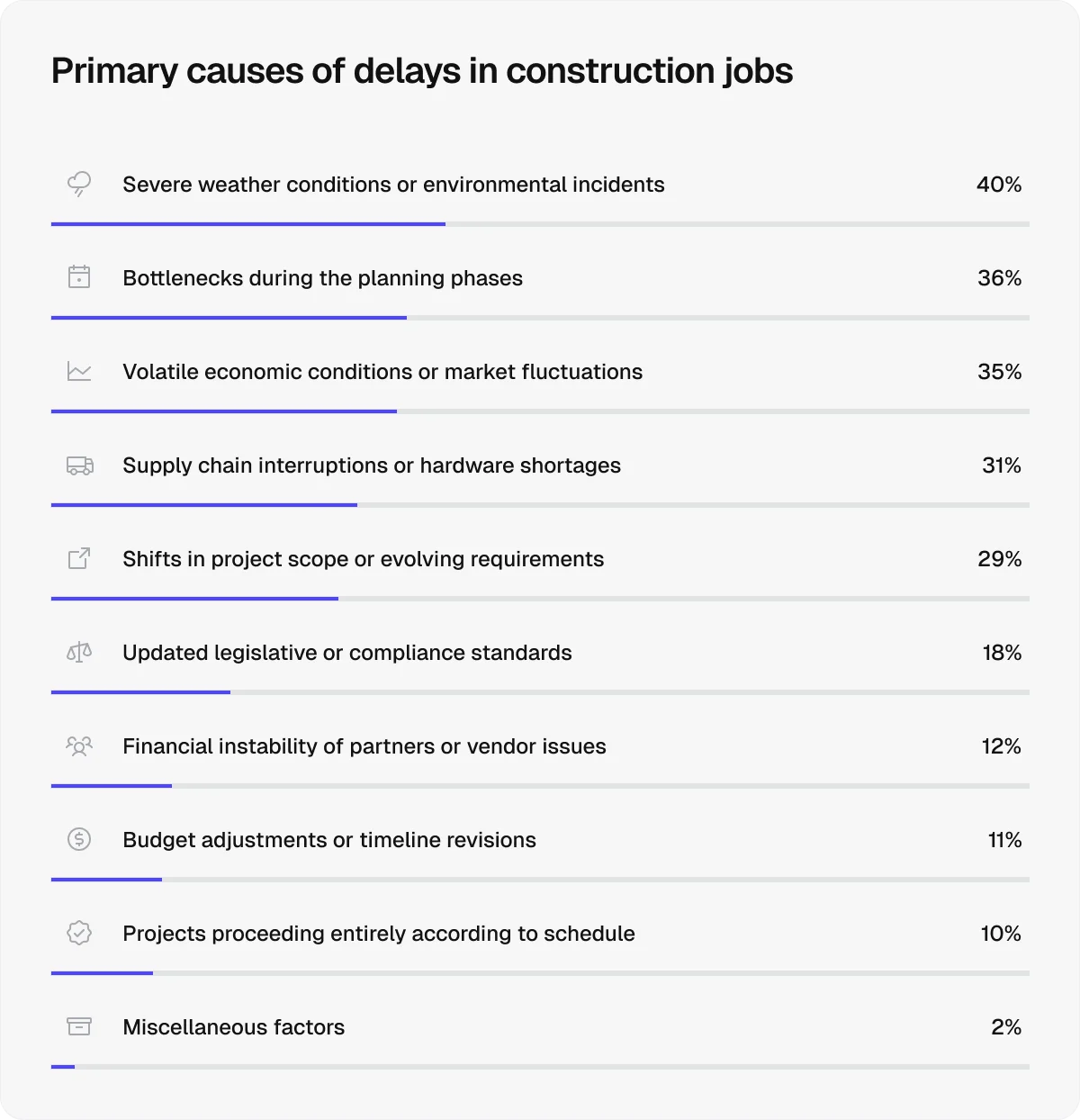
Delays are the norm in construction, with as many as 85% of projects affected at some stage, according to a 2022 survey.
There are more than a few factors that can disrupt a project once it’s underway.
In 2025, the most common causes of delays were extreme weather (40%), planning process delays (36%), and market uncertainty (35%), with materials and changing project scope also playing a role.
A well-prepared schedule helps you in two ways:
Preventing time issues you can control, such as poor sequencing, trade clashes, and idle time
Adjusting to external delays, including weather, regulatory hold-ups, and material shortages
It does the latter by giving you options when something slips.
Because tasks are linked and sequenced, you can see what’s affected and what isn’t and react by re-sequencing work and bringing forward tasks that are ready.
How to unlock this advantage
Set realistic task durations based on past projects and site conditions.
Identify critical tasks and dependencies early so you can prioritise them.
Avoid overloading the schedule with overly ambitious deadlines.
3. It enables more efficient task execution
A construction schedule enables work to happen in a logical sequence and at the planned time.
With each task carefully positioned within the timeline, crews know exactly when their work needs to start.
As a result, work flows from one task to the next without lost time between activities, errors from work done out of sequence, and overlaps between trades.
This setup allows teams to stay focused and do more work in less time.
How to unlock this advantage
Sequence tasks in a logical order based on how work actually happens on site.
Make sure each task has outlined start conditions so teams aren’t waiting around.
Align labour and materials with the schedule so work can begin as planned.
4. It ensures efficient allocation of project resources
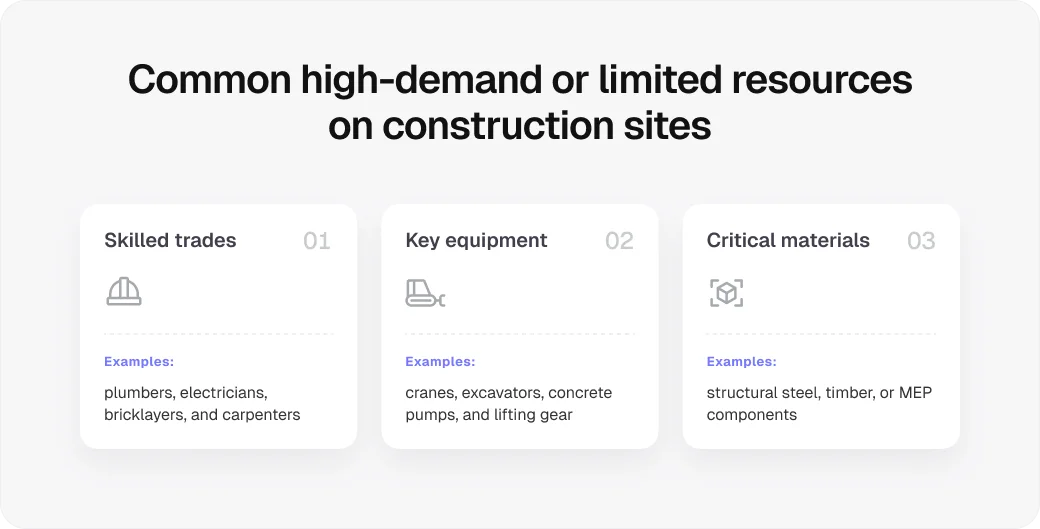
Resource management is one of the hardest parts of running a construction project.
Labour is in short supply, with 72% of firms reporting a lack of skilled workers—an issue serious enough to trigger £600 million in government investment to train more people.
Materials are no easier to manage.
While inflation has eased from its 2022 peak, overall costs remain high and are expected to rise by a further 15% by the end of the decade.
In line with this, 75% of construction firms share concerns about higher material costs putting constant pressure on margins.
These numbers make one thing clear: on a construction site, every worker, delivery, and piece of equipment matters.
A well-built schedule reflects this by planning labour, materials, and equipment across each phase, so resources are where they need to be, when they’re needed.
How to unlock this advantage
Identify all required resources early, including labour, materials, equipment, and specialists.
Avoid double-booking by checking availability across all active jobs.
Plan material deliveries to match when they’re needed on site.
Build in buffers for high-demand or limited resources.
5. It keeps spending aligned with the project budget
Cost pressure is a constant in construction.
With profit margins of just 2%–4% and rising material and labour costs, construction became the most financially stressed sector in 2025, with over 100,000 UK companies affected.
Similar to delays, financial problems can arise due to numerous factors, including poor planning, wasted time on site, and resources not being used efficiently.
A robust schedule brings these issues under control by tying each task to the labour, materials, and equipment it requires. As a result, you can avoid paying for time that isn’t productive or ordering materials too early or too late.
Construction scheduling also gives you a clear baseline to measure progress against, making it easier to spot when costs start to drift and take action before they escalate.
How to unlock this advantage
Build your schedule before finalising quotes so costs are based on real timelines.
Sequence work to avoid delays that increase labour and overhead costs.
Use the schedule to plan purchases and negotiate better pricing where possible.
6. It enhances communication across stakeholders
With multiple teams, trades, and stakeholders involved in each construction project, effective communication is key to successful execution.
The table below shows some of the common sources of miscommunication in construction and how scheduling helps address them.
Source of miscommunication | How scheduling helps |
No single source of truth | It creates a centralised schedule that ensures everyone is working from the same information and towards shared milestones. |
Outdated or inconsistent project information | It keeps schedules updated and accessible, ensuring decisions are based on accurate, current data. |
Lack of structured communication processes | It supports regular progress tracking and scheduled updates, improving consistency in communication. |
Delays in addressing issues | It enables early identification of problems so teams can respond quickly and collaboratively. |
Weak collaboration between stakeholders | It encourages coordinated planning and shared accountability, improving teamwork and problem-solving. |
How to unlock this advantage
Share the schedule across teams to improve visibility and alignment.
Set clear communication routines around schedule updates and progress.
Encourage teams to raise issues early and adjust the schedule collaboratively.
7. It supports better risk planning and response
Construction accounts for around 17% of all company insolvencies in England and Wales, despite contributing only 6%–7% of the economy.
That gap shows how exposed construction projects are to delays, cost overruns, and unexpected disruptions.
Many of these risks come from factors outside your control—weather, supply issues, or regulatory changes—but they’re often made worse by poor planning.
A reliable schedule helps you plan for risk instead of reacting to it.
It highlights critical tasks, shows where delays will have the biggest impact, and allows you to build in buffer time for known issues. It also makes it easier to spot potential problems early, so you can adjust before they affect the wider project.
How to unlock this advantage
Highlight dependencies so you know where issues will have the biggest impact.
Carry out regular risk assessments and update the schedule as new risks emerge.
Plan backup options for high-risk activities or resources.
8. It ensures high-quality work and safer job site conditions
Quality and safety go hand in hand on a construction site.
When work is rushed or poorly sequenced, mistakes happen, increasing costly rework that accounts for around 5% of project value—and up to 10%–25% when indirect costs are included.
A schedule helps protect quality by giving each task the time and space it needs.
It prevents trades from stacking on top of each other, ensures proper curing and inspection periods, and keeps work progressing in a controlled, logical order.
Safety is just as critical.
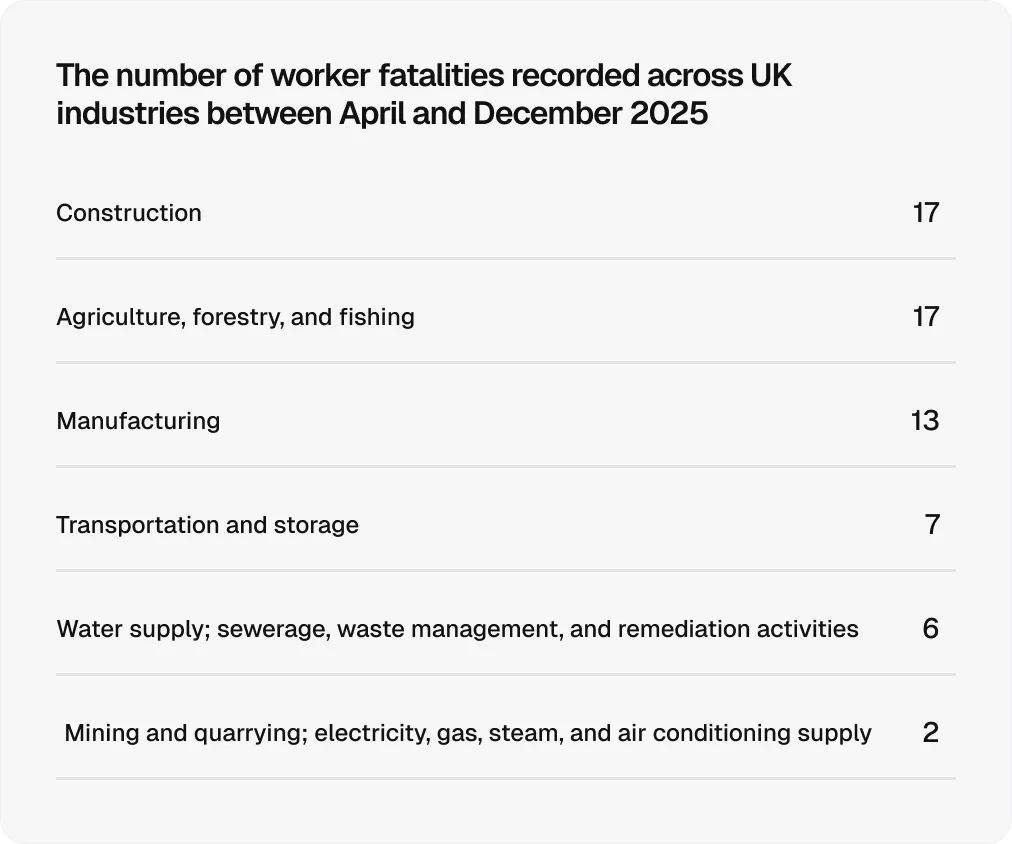
Construction remains one of the most dangerous industries, with 17 worker fatalities recorded between April and December 2025 in the UK alone.
A crowded, unplanned site increases the risk of accidents, especially when high-risk activities overlap or take place without proper preparation.
A structured schedule reduces these risks by separating trades, planning hazardous work in advance, and ensuring the right safety measures are in place before work begins.
The result is a safer, more controlled environment where teams can focus on doing the job properly.
How to unlock this advantage
Build in dedicated time for quality checks, inspections, and sign-offs at key stages.
Define clear handover points between trades so work isn’t passed on incomplete.
Schedule high-risk activities during controlled periods, not alongside routine work.
9. It improves transparency in progress reporting
A construction schedule gives you a straightforward way to track project progress.
Breaking the project into milestones shows what’s been completed, what’s in progress, and what’s falling behind.
This creates a shared benchmark for everyone involved, so:
Operatives know where they stand.
Project managers can step in early if something slips.
Clients can see that work is progressing as planned.
Keeping clients in the loop builds trust, sets clear expectations, and gives them confidence that the project is being managed professionally and delivered as agreed.
How to unlock this advantage
Break the schedule into milestones that reflect real progress.
Compare actual progress against the plan regularly.
Use milestones as checkpoints to review performance.
10. It enables more informed and timely decisions
Construction projects depend on fast, well-informed decisions, but making these is often hard in practice.
That’s because poor data flow across the industry—and up to 96% of data going unused—leaves teams working with incomplete or outdated information.
A current schedule contributes to valuable workforce intelligence, which, in turn, gives managers the insight they need to make timely, informed decisions.
How to unlock this advantage
Use the schedule as a single reference point for project data.
Link decisions to schedule impacts to understand time and cost implications.
Share schedule updates across stakeholders to support faster decisions.
Unlock the advantages of scheduling in construction with Onetrace
Many of the advantages of scheduling in construction are much easier to achieve with the right tools.
Manual scheduling methods like spreadsheets or whiteboards struggle to keep up, as they’re slow to update and prone to errors, leaving teams working from outdated information.
Construction scheduling software turns your schedule into a live, working tool.
It connects planning with what’s actually happening on site, keeps everyone aligned, and makes it easier to act quickly when things change.
Onetrace is built to do exactly that for subcontractors, keeping projects organised, teams aligned, and work moving.
Here’s what Onetrace offers to help you unlock the full value of scheduling:
Central hub for project data: Keep schedules, job data, materials, and documents in one place so everyone works from the same information.
Real-time updates from the site: Capture progress as it happens and keep managers and teams aligned.
Consistent data capture: Use customisable forms, photos, and required fields to reduce errors and improve quality.
Material tracking: Keep a record of what’s used on site to support better resource and cost control.
Visual scheduling with Planner: Assign operatives and adjust schedules quickly with a simple drag-and-drop calendar.
Built-in accountability: Track who’s on site, what’s been done, and what’s next with timesheets and custom job statuses.
Accurate reporting and proof of work: Generate structured reports with full evidence to improve transparency and speed up payments.
Thanks to these features, your schedule stays accurate, up to date, and useful throughout the project.
To learn more about the benefits of construction scheduling software for your specific projects, arrange a tailored walkthrough with the Onetrace team.
FAQ
What are the benefits of using a schedule builder?
The benefits of using a schedule builder include better time management, improved resource allocation, clearer communication, and more accurate progress tracking.
What is the purpose of a schedule on a construction project?
The purpose of a schedule on a construction project is to plan, sequence, and manage tasks so that work is completed in the right order and on time.
What is the difference between construction planning and scheduling?
The difference between construction planning and scheduling is that planning defines what needs to be done, while scheduling sets out when and in what order it will be done.
Marketing team
@Onetrace
The Onetrace marketing team is passionate about sharing insights, ideas, and innovations that help construction businesses stay connected, compliant, and efficient. Combining industry expertise with a love for clear communication, we aim to deliver content that empowers professionals to work smarter and safer.