How to start a plumbing business in 10 steps [A 2026 guide]

By
Marketing Team
@Onetrace
Starting a plumbing business means setting up your own plumbing services and taking on the operational, financial, and legal side of running the business.
It’s a route many plumbers consider once they’ve built experience, and for good reason.
You benefit from consistent demand, full control over your working hours and jobs, and the opportunity to earn more as you win repeat work.
While there are over 46,000 businesses in the UK plumbing and heating sector, demand still outpaces supply, so there’s no shortage of work for those starting out.
If you’re looking to take advantage of that demand and build something of your own, this guide breaks down how to start a plumbing business in 10 practical steps.
Key takeaways
Build skills and experience before going solo
The strongest start comes from combining formal qualifications with real on-the-job experience, so you can work safely, confidently, and independently.Match certifications to the work you want to do
There isn’t a single licence you need, but certain jobs require certifications like Gas Safe or CSCS. These not only keep you compliant but also build trust with customers.Plan your business before you launch
A simple business plan helps you define your services, pricing, target customers, and costs, giving you a clear direction from day one.Stay on top of finances and day-to-day operations
Setting up proper bookkeeping, invoicing, and job tracking early helps you stay profitable and avoid common issues as work increases.Use the right systems to grow efficiently
As jobs become more complex, tools like Onetrace help you stay organised, track work accurately, and keep control across multiple projects, making it easier to scale your business with confidence.
How to start a plumbing business: 10 key steps to follow
Starting a plumbing business in the UK means handling legal requirements while also putting the right foundations in place to run and grow your business.
This 10-step guide covers both sides.
1. Get the right qualifications and training
There are several ways to get into plumbing, depending on your experience and where you’re starting from.
The table below breaks down the most common routes and what each one involves.
How to enter | What it involves | What it requires |
College course | Studying plumbing at a college, then moving into a trainee role with an employer | Usually 4–5 GCSEs (grades 9–4), including English and maths (especially for T Levels) |
Apprenticeship (Foundation) | Starting in a basic support role and building skills before progressing to higher training | Usually no formal qualifications; mainly for ages 16–21 (or up to 24 in certain situations) |
Apprenticeship (Advanced) | Training on the job while studying, working toward full qualification as a plumber | Typically 5 GCSEs (grades 9–4), including English and maths |
Work (On-the-job training) | Beginning as an assistant and learning practical skills directly in the workplace | Some GCSEs (especially English and maths) and good practical ability |
Direct application | Applying straight into plumbing roles if you already have relevant experience | Experience and/or qualifications in related fields (e.g. building services, heating, ventilation) |
If your goal is to start your own plumbing business, the strongest route is one that combines formal qualifications with real on-the-job experience.
In practice, this usually means completing a Level 2 or Level 3 qualification and building experience through an apprenticeship or by working alongside an experienced plumber.
This gives you both the technical skills and the confidence to handle work safely and independently—something customers expect as standard.
2. Make sure you have the required licences and certifications
In the UK, you can legally carry out general plumbing work without a specific trade licence.
That said, the type of work you take on will determine what certifications or registrations you might need.
Here are a few typical licences and certifications to be aware of:
Gas Safe registration: Any work on gas appliances requires Gas Safe registration, as it proves the engineer is legally qualified to carry out gas work safely.
CSCS card: Access to most construction sites depends on holding a Construction Skills Certification Scheme (CSCS) card, which shows that basic health and safety standards are met.
OFTEC registration: Work involving oil-fired heating systems calls for OFTEC registration, confirming the required training has been completed.
MCS certification: Installation of renewable systems like heat pumps often relies on MCS certification to demonstrate compliance with recognised standards.
These credentials allow you to meet legal requirements and stay compliant as your business grows. Plus, having the right credentials helps you build trust with your customers.
3. Create a detailed business plan
Before taking concrete steps to set up your plumbing business, you need a clear idea of what you’re building and how it will work in practice.
A solid plumbing business plan should cover:
What you want from the business and how you plan to get there
What type of plumbing work you’ll offer, such as domestic, commercial, or specialist services
Who you plan to work for and the type of jobs you want to take on
How much you’ll charge and how your rates compare to others in your area
What you’ll need to invest in upfront, including tools, transport, and setup costs.
How you’ll manage cash flow, track income, and plan for growth
Where you’ll operate and how far you’re willing to travel for jobs
When you’ll be available, including evenings or emergency call-outs
How you plan to get your first jobs and build a steady flow of work
You don’t need everything to be perfect from day one, but having these questions answered makes the next steps much easier and gives your business a solid base to grow from.
4. Choose your business structure
Before you register your business, you need to decide how it will be structured.
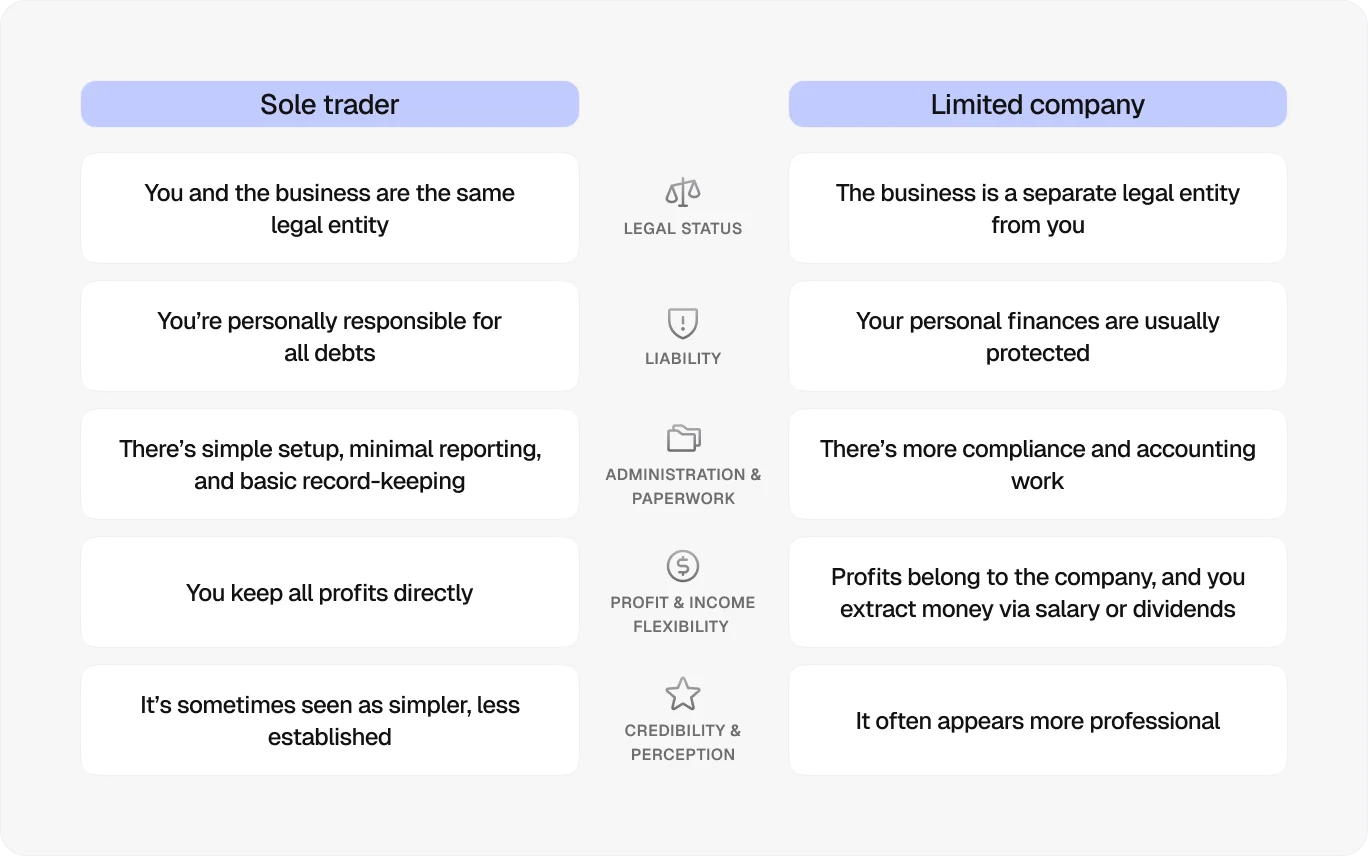
In the UK, most plumbers choose between two options: sole trader or limited company.
Many plumbers start as sole traders because it’s quick to set up and relatively easy to manage. You run the business as an individual, keep admin to a minimum, and pay tax through self-assessment.
The trade-off is that you’re personally responsible for any debts.
Once your income grows and you’re ready to take on staff, you can switch to a limited company for more protection and flexibility. However, a limited liability company also comes with more paperwork, reporting requirements, and admin.
5. Register your business
Once you’ve chosen your structure, the next step is to register your business with the relevant authority.
If you’re setting up as a sole trader, you’ll need to register for self-assessment with HMRC. If you’re forming a limited company, you’ll need to register with Companies House and set up corporation tax with HMRC.
6. Invest in the right tools and equipment
If you’ve been working for someone else, you’ve likely relied on company-issued tools.
Starting your own business means building your own kit—choosing tools you trust and setting yourself up to handle jobs on your own.
Most plumbers will need the following:
Tool / Equipment | Examples | Notes |
Core hand tools | Adjustable wrenches, pliers, pipe cutters, hacksaws | Used on most jobs, so it’s worth investing in good quality from the start |
Power tools | Cordless drill, impact driver, grinder | Speeds up work and improves efficiency on site |
Specialist equipment | Drain inspection camera, pipe benders, flue gas analyser | Depends on the type of work you plan to take on |
Plumbing stock | Pipes (plastic and copper), valves, fittings | Helps avoid delays on jobs |
Vehicle | A van (ideal) or car when starting out | Acts as your mobile base and storage for tools and materials |
Safety gear (PPE) | Gloves, goggles | Essential for working safely and meeting basic safety standards |
Buying tools is often one of the highest upfront costs, but they’re long-term assets that support every job you take on.
Pro tip:
If you’re starting on a budget, focus on the essentials first and build your kit over time. You can buy second-hand tools or rent larger equipment until the work justifies the investment.
7. Set up software to manage your work
When starting a plumbing business, there’s another type of tool worth investing in early: plumbing software.
Running jobs on paper or spreadsheets might work at the start, but it quickly becomes impossible to manage as work picks up. Using software instead comes with numerous benefits, including better job visibility, less admin, and more reliable records.
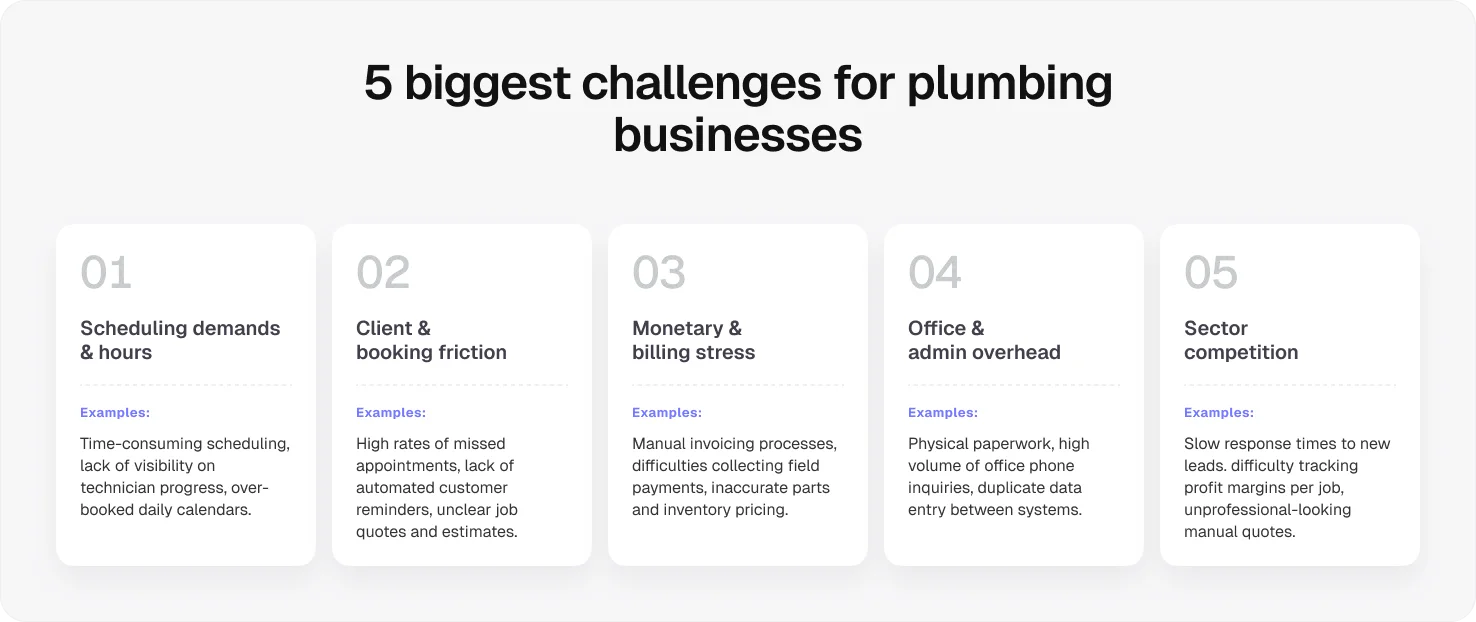
These help you deal with the common challenges most plumbing businesses face, including:
Scheduling and workload: Having a complete view of your jobs and availability makes it easier to plan your days and avoid overbooking.
Customer communication: Giving customers access to a simple portal helps them see updates, confirm details, and avoid confusion.
Admin and paperwork: Storing site photos and records in one system cuts down on paperwork and duplicate data entry.
Invoicing and payments: Using recorded job details, materials, and rates helps you create accurate invoices and avoid undercharging.
Competition: Faster response times, professional quotes, and better job tracking help you win more work and keep control of your margins.
Pro tip:
It’s easy to default to plumbing-specific software, but that can box you into a narrow way of working.
A broader construction management system like Onetrace will give you more control over jobs, records, and team activity as your workload expands.
8. Protect your business with insurance
Insurance is essential for protecting your business against accidents, damage, or customer claims.
It helps safeguard both your finances and your reputation as you take on work.
Most plumbing businesses rely on a mix of the following insurance types:
Public liability insurance: It covers injury to customers or damage to their property if something goes wrong during a job.
Tool insurance: This protects your tools against theft or damage, helping you avoid costly replacements.
Vehicle insurance: Your work vehicle is covered against accidents, damage, and theft when used for business purposes.
Employers’ liability insurance: This becomes a legal requirement as soon as you hire staff and covers claims made by employees.
Professional indemnity insurance: It protects you if your advice or work leads to financial loss for a customer.
Many providers offer these as a package, which makes it easier to get the right cover in place from the start.
9. Get your finances in order
Running a plumbing business means staying on top of your finances from day one. This includes tracking what comes in and what goes out, making sure you stay profitable.
At a basic level, you’ll need a system for bookkeeping (recording your income and expenses) and accounting (understanding and managing those numbers).
Many plumbers choose to work with an accountant to keep their finances accurate and compliant.
Other essentials you should put in place early are a business bank account and an invoicing system. Getting your finances set up properly has a direct impact on what you earn.
In the UK, plumbers typically earn between £24,000 and £46,000, depending on their experience, with self-employed plumbers often able to earn more based on workload and rates.

10. Start marketing your services
Getting set up is only half the job; you also need a steady flow of work.
Plumber marketing is what helps people find you, trust you, and choose you over other plumbers in your area.
Some of the most effective ways to market a plumbing business include:
Word of mouth: Good work leads to recommendations, which are one of the strongest drivers of new jobs.
Website: A simple, informative website helps you look professional and makes it easier for customers to find and contact you.
Local SEO: Showing up in local search results helps you get found by people actively looking for a plumber.
Social media: Platforms like Facebook and Instagram can help you promote your work, share updates, and connect with local customers.
Flyers and business cards: Distributing these in your local area is a low-cost way to get your name out early on.
Online directories: Listing your business on trade directories and local platforms increases your visibility.
Customer reviews: Positive reviews build trust and can directly influence whether someone chooses you.
Lay the groundwork for a well-run business with Onetrace
The systems you put in place early on will shape how your business runs as workload increases.
For plumbing subcontractors in particular, a system like Onetrace helps you stay organised, keep control of your work, and avoid common issues as jobs become more complex.
This is made possible thanks to features like:
Consistent job records: Create tailored job forms for installs, inspections, or surveys, so every job is captured in the same structured way with no missing details.
Clear proof of work: Record photos before, during, and after jobs, giving you a full visual record of what’s been done on site.
Structured project setup: Use templates to set up new jobs with the right forms, materials, and workflows already in place, saving time and keeping work consistent.
Accurate material and cost tracking: Log materials, quantities, and rates as work happens, so you always know what each job is costing.
Live site visibility: Track progress through custom statuses, drawings, and pinned locations, so you can see exactly what’s happening across jobs.
Built-in quality checks: Send work through approval stages as it’s completed, catching issues early instead of at the end of a project.
Team and time tracking: Monitor who’s on site and when, helping you manage labour and keep projects on schedule.
Simple reporting: Turn completed work into professional reports that support handovers and help you get paid faster.
If you’re planning to grow beyond one-off jobs and into more structured, site-based work, putting a system like this in place early makes that transition much easier.
Schedule a tailored walkthrough of Onetrace to learn more and start building a more organised way of working.
FAQ
What is the best way to start a plumbing business?
The best way to start a plumbing business is to get qualified, gain hands-on experience, create a clear business plan, and set up the right systems before taking on work.
What kind of plumbing makes the most money?
Specialist and high-demand work, such as commercial plumbing, gas heating, and renewable systems, tends to make the most money.
How do I get more customers for my plumbing business?
You can get more customers for your plumbing business by building a strong local presence through word of mouth and positive reviews, as well as consistent, reliable service.
Marketing Team
@Onetrace
The Onetrace marketing team is passionate about sharing insights, ideas, and innovations that help construction businesses stay connected, compliant, and efficient. Combining industry expertise with a love for clear communication, we aim to deliver content that empowers professionals to work smarter and safer.