
Subcontractor vs independent contractor: 5 key differences

By
Marketing Team
@Onetrace
The UK construction industry is vast and varied, including everything from sole traders fitting kitchens to Tier 1 contractors building motorways. The sector employs an estimated 2.05 million people across the country, with construction workforce data tracked quarterly by the Office for National Statistics.
What makes this vast sector distinctive is its high level of self-employment.
Around 790,000 workers—39% of the construction workforce—were self-employed in early 2026. This includes both individuals and businesses that work independently, often benefiting from greater flexibility, more control over the projects they take on, and better opportunities to grow their income and expertise.
Among this self-employed workforce, two categories stand out: subcontractors and independent contractors. While the terms are often used interchangeably, they describe different working arrangements.
If you’re considering working as—or working with—either type of professional, this subcontractor vs independent contractor guide breaks down the five key differences between them so you can make the right call for your business.
Key takeaways
Independent contractors and subcontractors aren’t the same
An independent contractor works directly for a client, while a subcontractor is hired by a contractor to complete part of a wider project.Subcontractors often have less day-to-day autonomy
While both can be self-employed, subcontractors usually need to follow the contractor’s schedules, reporting processes, quality standards, and site requirements.Payment risk is often higher for subcontractors
Because they sit further down the payment chain, subcontractors can be more exposed to late payments, retention issues, and cash flow challenges.Proper record-keeping helps protect both parties
Clear documentation, proof of work, and accurate project records can reduce disputes, support payment applications, and clarify responsibilities. Platforms like Onetrace help subcontracting businesses and independent contractors keep all information in one place, from site evidence and variations to approvals and reporting.
What are independent contractors in construction?
In UK construction, an independent contractor is a self-employed sole trader or business that provides services to a client under a commercial contract. They work independently, taking responsibility for delivering agreed work while managing their own business operations.
Independent contractors are widely engaged in the construction sector, allowing developers, property owners, and construction firms to bring in specialist expertise or additional capacity when a project requires it. Depending on the agreement, they may be engaged for a specific task, a defined project, or ongoing support over a longer period.
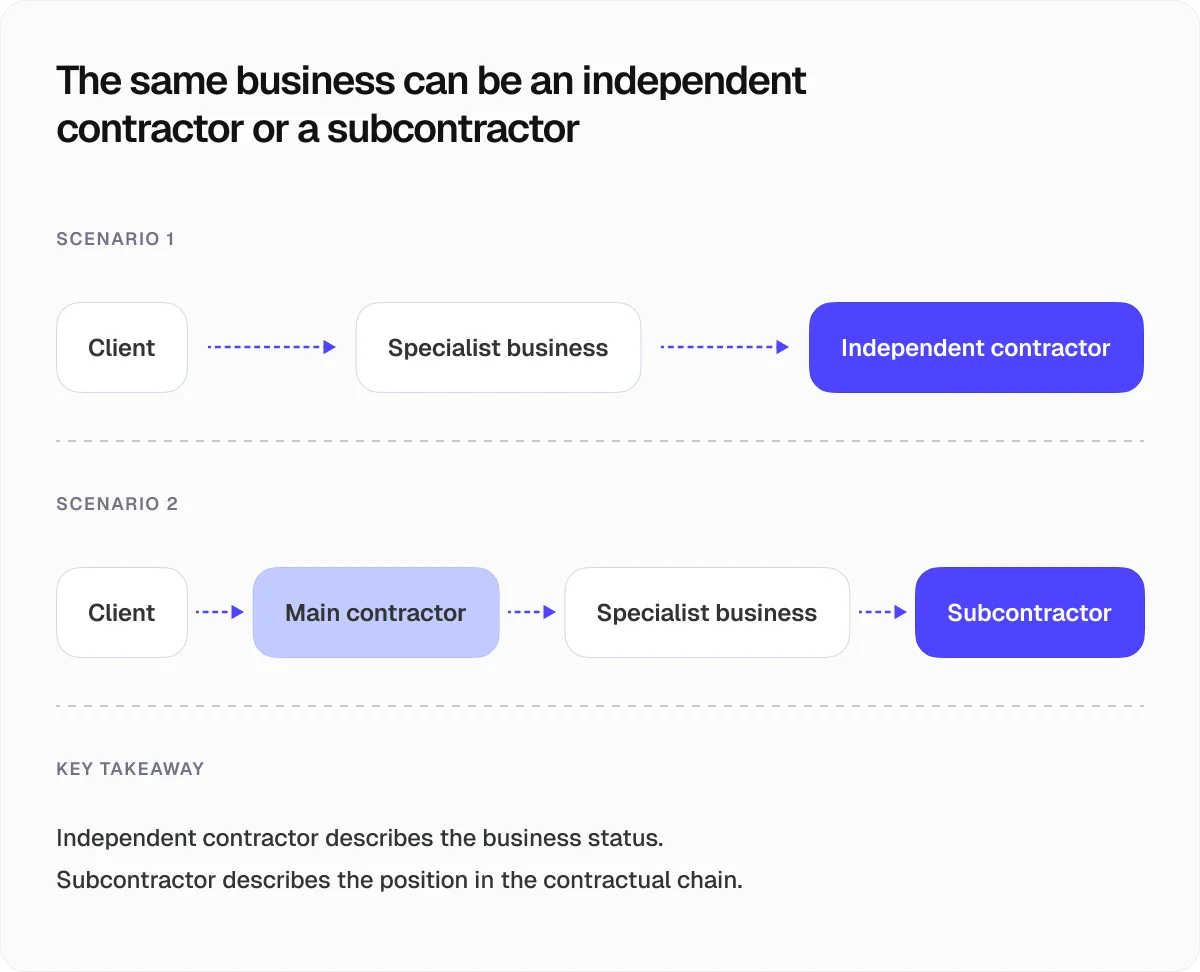
Importantly, an independent contractor isn’t a job title.
Instead, it describes a person’s or company’s business status and contractual relationship with a client. In other words, it refers to how the work is provided rather than what type of work is being carried out.
This distinction matters because, in construction, an independent contractor may also work as a subcontractor depending on the contractual arrangement.
What are subcontractors in construction?
In the UK, a subcontractor is a self-employed individual or business that’s hired by a contractor to carry out part of the work the contractor has agreed to deliver. Rather than working directly for the end client, subcontractors are engaged to complete specific tasks, trades, or specialist services within the wider project.
Subcontracting is a common feature of construction projects, where work is often divided between multiple specialists. A main contractor may bring in subcontractors for areas like electrical work, plumbing, or roofing, and other specialist trades needed to complete the project.
Crucially, a subcontractor describes a position within a contractual chain rather than a worker’s employment status. This means that, just like independent contractors can work as subcontractors, many subcontractors are also independent contractors.
Subcontractor vs independent contractor: 5 main differences
These five differences will help you understand where subcontractors and independent contractors fit within a construction project and what sets them apart.
1. Contractual relationship
The key difference between independent contractors and subcontractors lies in who holds responsibility for delivering the work to the end client.
An independent contractor typically has a direct agreement with the client and is accountable for meeting the terms of that contract. The contractor manages the client relationship, defines the scope of work, and takes responsibility for the final outcome.
Subcontractors, by contrast, work under a separate agreement with the contractor that hired them. Their responsibility is usually limited to the specific work package, trade, or service set out in the subcontract rather than the project as a whole.
2. Role in project delivery
Independent contractors are usually hired to provide a service or deliver an agreed outcome for a client. Depending on the project, they may take responsibility for coordinating resources, managing specialist work, or delivering a complete package of services.
Subcontractors, on the other hand, are usually brought in to complete a specific element of that work. As a result, their role is often narrower and more specialised, concentrating on particular tasks or specialist areas of the project.
This division of roles allows construction contractors to draw on specialist expertise without needing every skill in-house.
3. Working autonomy
Both independent contractors and subcontractors usually have control over how they carry out their work. However, independent contractors often have greater freedom because they work directly with the client and set their own approach to delivering the agreed outcome.
Subcontractors generally retain a high degree of independence, too, but they need to work within additional requirements set by the contractor overseeing the project. These may include:
Quality standards
Coordination with other trades
As a result, subcontractors can face more day-to-day constraints than independent contractors, even when both operate as self-employed businesses.
4. Payment arrangements
Independent contractors usually invoice the client directly and receive payment from the organisation that commissioned the work. This gives them a direct commercial relationship with the party funding the project and allows them to negotiate rates, payment terms, and deliverables directly.
As for subcontractors, they invoice the contractor that brought them on instead of the end client. Even if their work forms a critical part of the project, their payment is tied to the subcontract agreement rather than the client’s obligations.
This distinction can have significant implications if payment issues arise.
Because subcontractors sit further down the payment chain, they can be more exposed to delays and disputes.
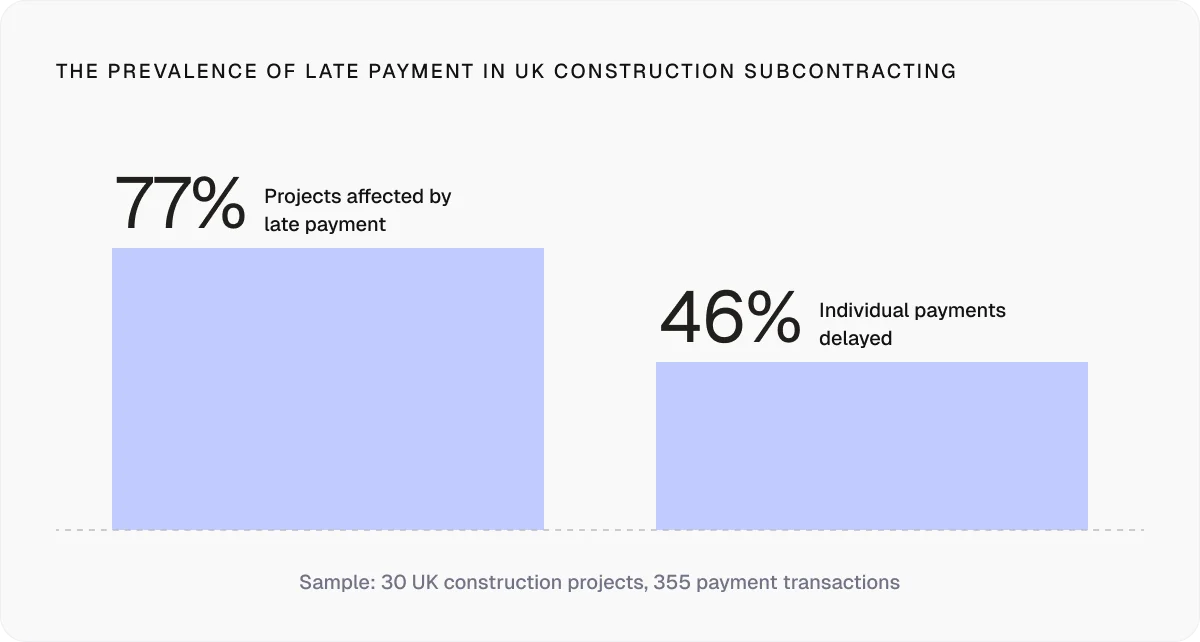
Research into UK construction payment practices showed that late payment affected as many as 77% of subcontract projects studied. The study also found that delayed retention payments could significantly affect subcontractors’ cash flow and, in some cases, absorb much of the project’s profit.
This uncertainty means that subcontractors need to pay closer attention to payment schedules, retention clauses, and the financial stability of the contractor they are working for.
While no system can eliminate payment risk, using construction management software built specifically for subcontractors can help reduce disputes and strengthen the evidence behind every invoice.
For example, Onetrace allows subcontractors to capture site activity, materials used, completed work, variations, and photographic evidence in a single system, creating a traceable audit trail throughout the project.
This information can then be turned into professional PDF or Excel reports, giving clients a clear record of the work completed and providing subcontractors with stronger evidence to support invoices and resolve payment queries more quickly.
5. Liability and risk
Independent contractors are normally the primary point of contact for the client. So, if work is delayed, fails to meet the agreed specification, or leads to a dispute, the client will usually look to them first. Even when specialist work has been carried out by others, the independent contractor remains responsible for delivering the overall service promised to the client.
Subcontractors are generally responsible only for the work they’ve been engaged to carry out. If a subcontractor installs a system incorrectly or fails to meet the agreed standard, the contractor may seek to recover costs or damages from them.
This is why carefully drafted contracts, well-defined scopes of work, and proper record-keeping are important for both parties. They establish who carried out the work, what was agreed upon, and how disputes are resolved.
What both independent contractors and subcontractors should pay attention to
Most independent contractors and subcontractors in the UK construction industry are self-employed. However, neither term automatically means an individual is self-employed. Instead, employment status depends on the reality of the working relationship rather than the label used in a contract.
In some circumstances, a person working as a subcontractor or independent contractor may be classed as a worker or employee for legal purposes.
When determining employment status, the following factors are usually considered:
How much control the hiring business has over the work
Whether the individual must carry out the work personally
How much financial risk they take on
Whether they have the right to provide a substitute
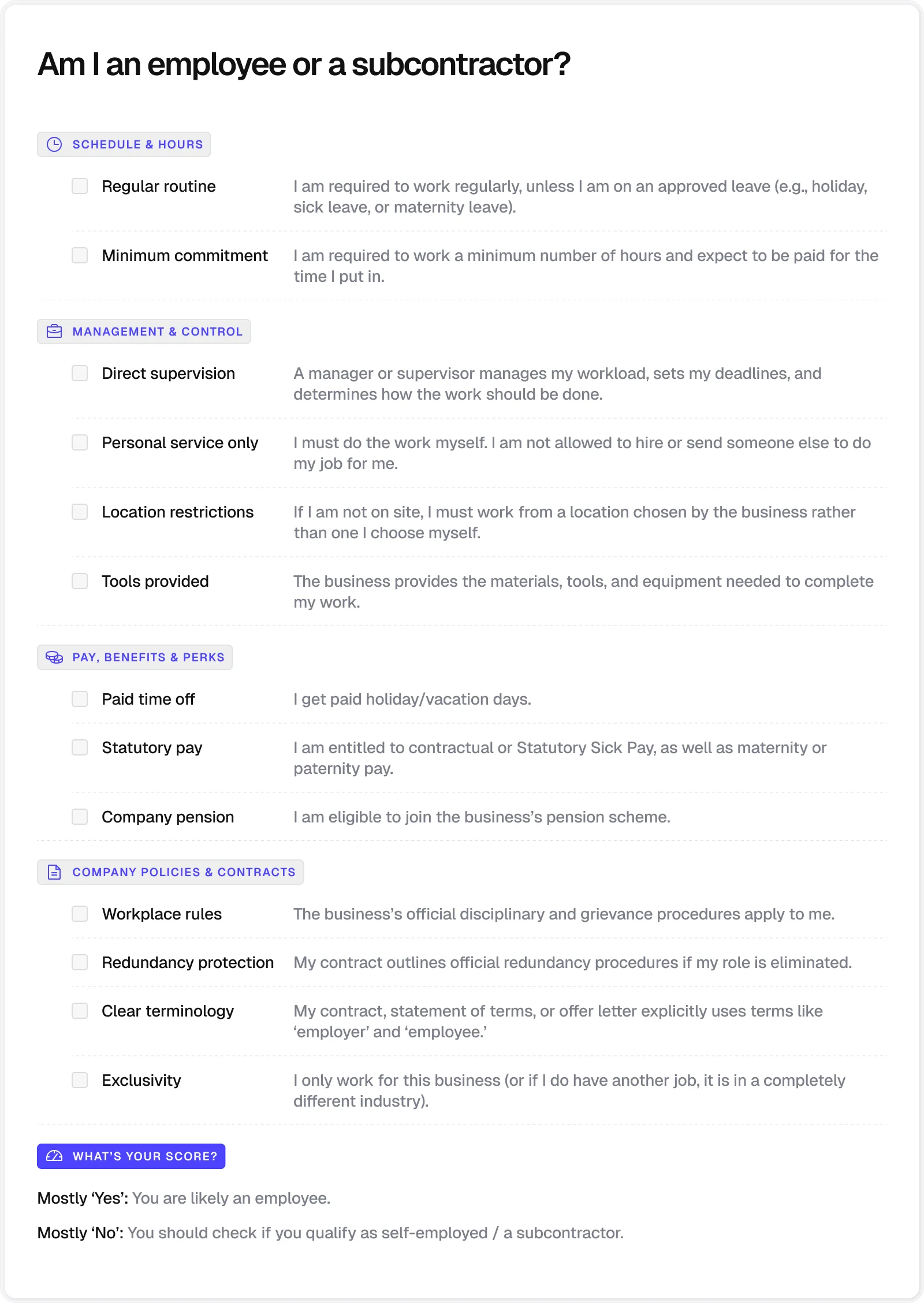
This distinction matters because employment status can affect tax obligations, employment rights, and legal responsibilities.
For example, an independent contractor operating through a limited company may need to consider IR35 rules if the working arrangement closely resembles employment.
Pro tip:
Regardless of whether you work as a subcontractor or independent contractor, your contracts and working practices must accurately reflect the relationship. If there’s uncertainty, seeking professional legal or tax advice can help avoid issues later on.
How Onetrace can help both subcontractors and independent contractors
Subcontractors and independent contractors face many of the same day-to-day challenges. They need to keep projects organised, maintain accurate records, demonstrate completed work, and ensure clients have the information they need when they need it.
Onetrace allows construction businesses to manage these tasks more efficiently through a range of features, including:
Custom forms and templates: Standardise surveys, inspections, and installations across projects to capture consistent information and reduce errors.
Photographic evidence: Record work before, during, and after completion to create a verifiable record of site activity and support client sign-off.
Material tracking: Monitor material usage, costs, and quantities to improve project visibility, cost control, and invoicing accuracy.
Variation tracking: Document changes to the original scope of work and maintain a complete record of additional work carried out throughout the project.
Approval workflows: Streamline quality control by allowing supervisors, managers, clients, and other stakeholders to review and sign off work through a structured approval process.
Document management: Store contracts, certificates, quotations, RAMS, and other project documents in one place to make information easier to access and manage.
Project and workforce management: Track schedules, timesheets, productivity levels, and project progress from a central platform to improve visibility across multiple jobs.
To see how these features can help you maintain better control across your projects, book a personalised Onetrace demo. Our team will walk you through the platform, show you the features most relevant to your business, and answer any questions you may have.
FAQ
What is the difference between a contractor and a subcontractor?
The main difference between a contractor and a subcontractor is that the former holds the main contract with the client and is responsible for delivering the project, while the latter is hired by the contractor to complete a specific part of the work.
What are the three types of subcontracts?
The three broad ways to classify subcontractors are by their commercial arrangement (labour-only or bona fide subcontractors), their employment and tax status (such as PAYE or CIS), and their organisational form (individual tradespeople, labour gangs, or specialist subcontract firms).
Are freelancers and subcontractors the same?
No. A freelancer typically works directly for clients, while a subcontractor is hired by a contractor to carry out part of a wider project.
Why use a subcontractor?
Subcontractors provide specialist skills, additional capacity, and trade expertise that allow contractors to deliver projects more efficiently.
What’s another name for a subcontractor?
Another name for a subcontractor is a specialist contractor or trade contractor, depending on their role and scope of work.
What is the downside to subcontracting?
One potential downside of subcontracting is reduced control over scheduling, quality, and communication compared with using an in-house workforce.
Marketing Team
@Onetrace
The Onetrace marketing team is passionate about sharing insights, ideas, and innovations that help construction businesses stay connected, compliant, and efficient. Combining industry expertise with a love for clear communication, we aim to deliver content that empowers professionals to work smarter and safer.