Types of electrical work in construction & their importance

By
Marketing Team
@Onetrace
As of 2025, the electrical installation market is worth £256.57 billion. It’s a sector that keeps growing, both in terms of the work itself and the number of businesses and tradespeople needed to deliver it.
This steady rise reflects a simple truth: electrical work isn’t a side task in construction. It’s one of the core elements that keeps the project moving.
After all, electrical work is what keeps the light on, powers the tools that shape the build, and ensures the final space is ready for people to live or work in.
But what counts as electrical work in construction? Is it just wiring, lighting, and a few sockets?
It goes far beyond that.
Electrical work covers everything from temporary power on day one to the systems that run and protect the finished building.
This article breaks down the six main types of electrical work in construction, why they matter, and how each one supports a safe, reliable building long after the project is completed.
Key takeaways
Electrical work starts long before the building is finished
Temporary power is essential for keeping early-stage construction moving. Without it, trades cannot run tools, lighting, or welfare facilities, and the electrical team cannot begin installing permanent systems.Permanent power distribution protects both the site and the finished building
Main panels, subpanels, breakers, and switchboards ensure electricity is delivered safely and consistently. Good distribution reduces the risk of overloads, prevents nuisance trips and cuts the likelihood of site fires caused by overheated cables.Interior wiring forms the backbone of a safe electrical installation
Cables, conduits, and junction boxes must be planned and installed correctly to avoid faults, fire risks, and future maintenance issues. Quality wiring keeps systems reliable and supports efficient power use across the building.Lighting, HVAC, and low-voltage systems all rely on precise electrical work
These systems shape comfort, safety, and day-to-day use. From emergency lighting to fire alarms and HVAC controls, each depends on clean electrical installation and correct documentation to pass inspections and deliver long-term performance.Onetrace helps electrical contractors manage these complex workflows with confidence
Onetrace brings forms, evidence, approvals, and documentation into one place, making it easier to track progress, prove compliance, and maintain quality across every type of electrical work.
1. Temporary power and construction-site electrical setup
Electrical work isn’t only about powering the finished building. It also has to power the build itself.
From day one on site, trades rely on a steady, safe supply of electricity for tools, lighting, lifting gear, and welfare facilities.
This early stage may be unseen once the project is handed over, but it’s the base that lets the rest of the work unfold as planned.
What it includes
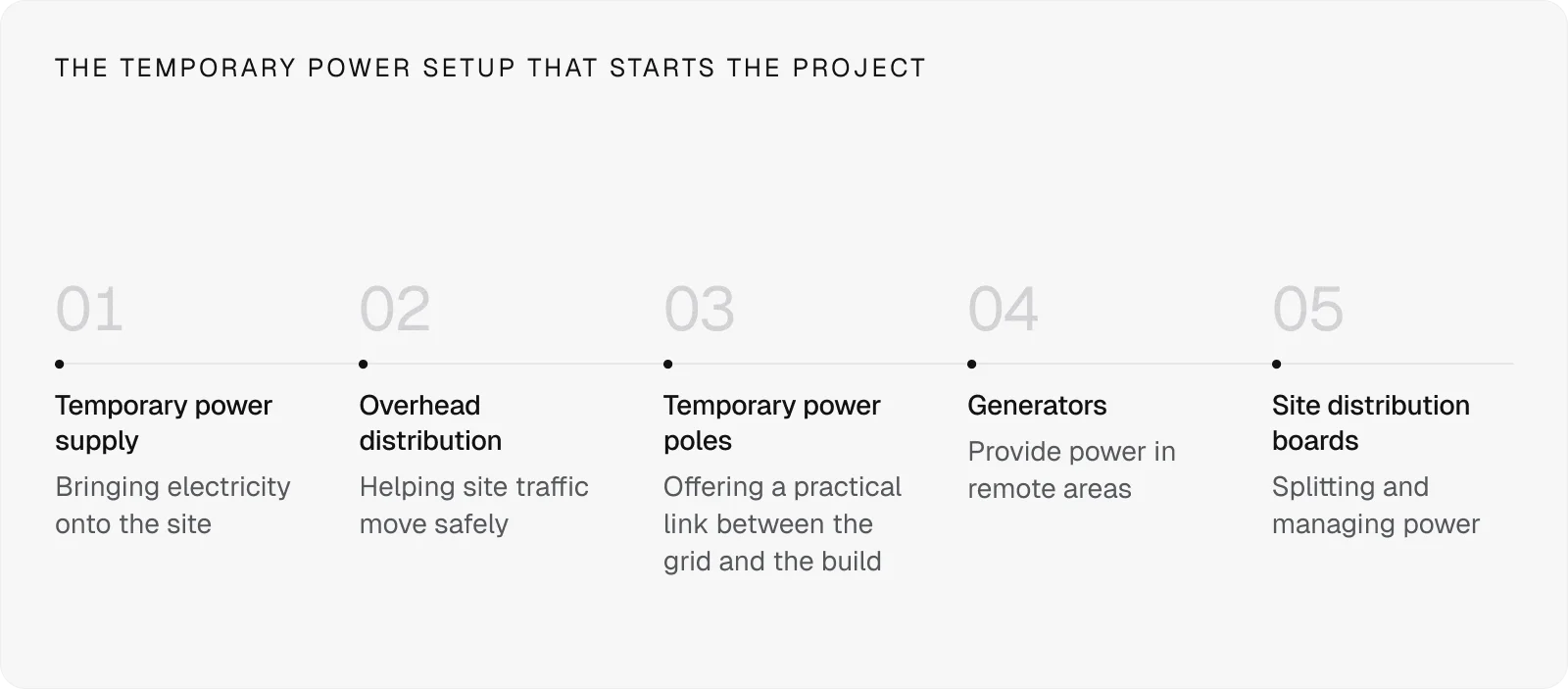
Temporary power usually brings together several parts, each designed to give the site the energy it needs while work is underway:
Temporary power supply: Early-stage panels, boards, and cabling bring electricity onto the site before any permanent systems are live.
Overhead distribution: Poles, lines, and cable runs keep wiring high and out of harm’s way, reducing trip risks and helping site traffic move safely.
Temporary power poles: These poles offer a practical link between the grid and the build while there’s no permanent connection yet.
Generators: Portable or fixed units provide power in remote areas or when grid access is delayed.
Site distribution boards: These boards split and manage power across different work zones and teams.
Some sites use underground feeds instead of overhead runs. Buried cables and ducts keep power protected from weather, traffic, and vandalism, which can be useful in built-up or sensitive areas.
In addition, high-voltage setups may be needed when the mains supply is far away or the load is higher. These rely on specialised switchgear, transformers, and cabling, and must be installed by electricians trained for high-voltage work.
Why it matters
Without a solid temporary setup, even simple tasks slow down, and key trades can’t get started.
This setup also gives the electrical team the stable power they need to begin installing and testing the permanent system without delay.
2. Power distribution systems
Once temporary power is in place and the site is running, the focus shifts to the systems that will feed electricity through the finished building. In other words, it’s time for permanent power distribution.
These systems take the incoming supply, break it down into safe, manageable circuits, and move it to where it’s needed across the building.
What they include
Power distribution relies on several linked parts that shape how electricity flows through the structure:
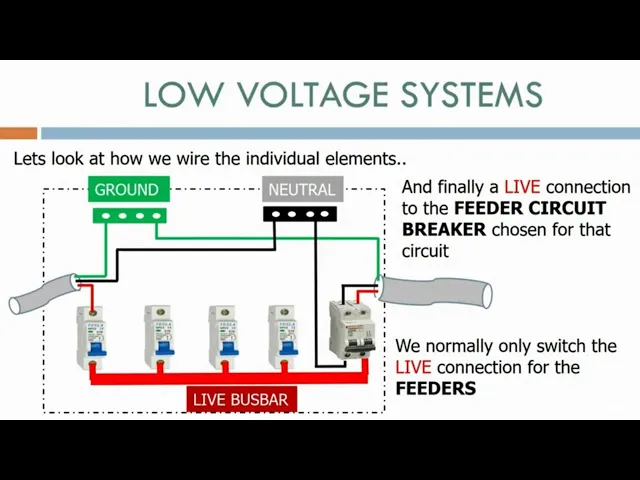
Service entrance and main panels: These bring utility power into the building and house the main disconnects, metres, and distribution boards, acting as the first control point for the entire electrical system.
Subpanels and branch circuits: Subpanels split power across floors or zones, helping spread the load and route power to the right areas. Branch circuits then feed specific rooms, equipment, or systems.
Circuit breakers: These protective devices cut power automatically when a fault or overload occurs, preventing wires from overheating and reducing the chance of electrical fires.
Switchboards: These central units group circuits in one place, organising how power is shared and making maintenance and fault-finding easier.
Why they matter
Good distribution protects the site from avoidable problems.
It stops heavy tools from tripping shared circuits, keeps temporary lifts fed with steady power, and limits the strain that can lead to overheated cables. That last point matters as cable faults are a known contributor to hundreds of fires recorded on construction sites every year.
Once the building is in use, the same structure ensures rooms, systems, and equipment all receive the right supply without stressing the network, helping prevent faults and extending the life of the installation.
Pro tip
A safe and reliable distribution system isn’t just about the hardware. Clear oversight and accurate records make it far easier to manage complex circuits and prove the work meets the right standards.
Using electrical contractor software like Onetrace gives you a structured digital layout of the building—mapped by blocks, levels, and zones—so operatives can pin panels, subpanels, and switchboards in the right place and keep information organised.
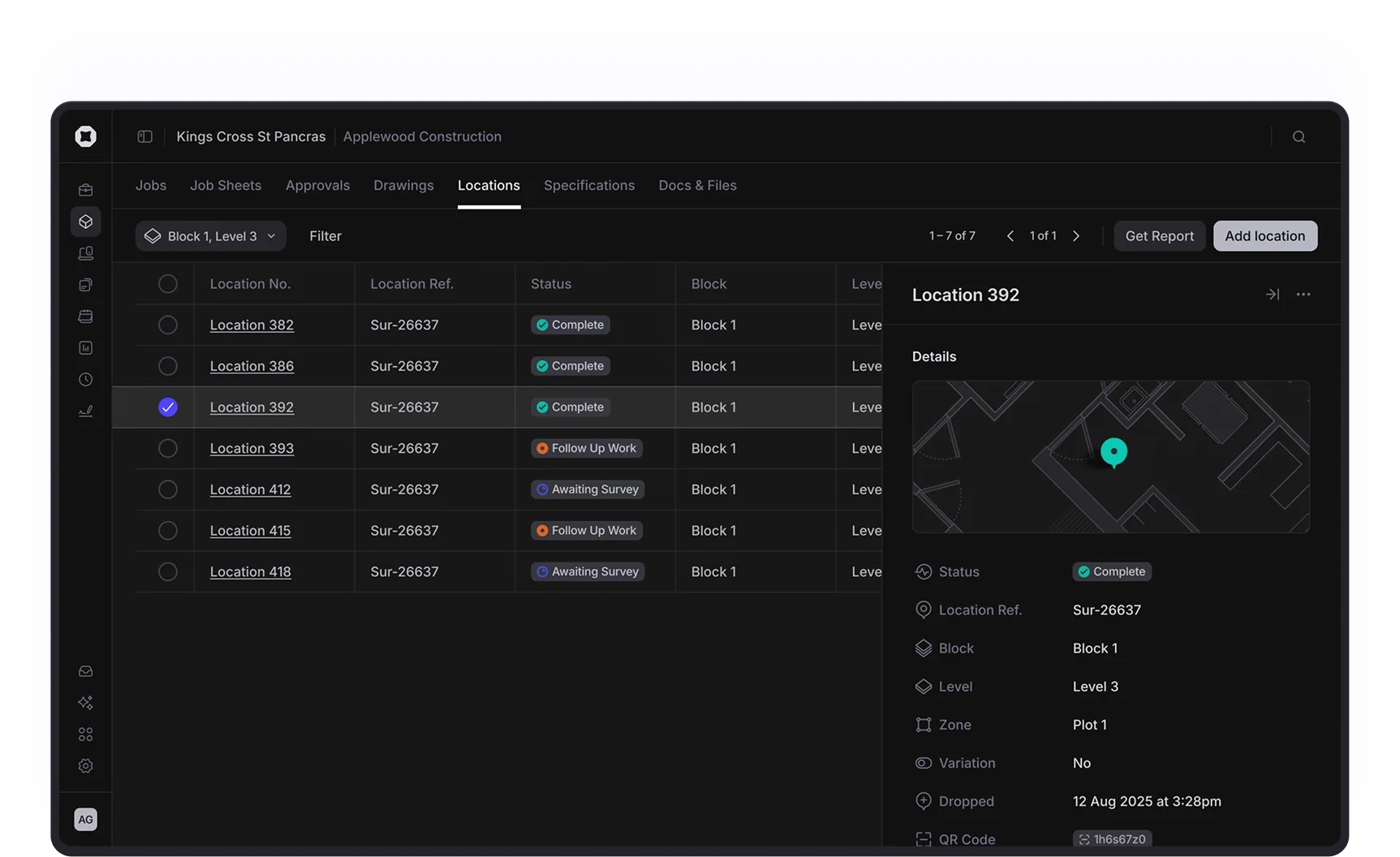
Onetrace also lets you set up tailored checklists for inspections, breaker tests, and panel installation. These forms keep data consistent, guide operatives through the right checks, and build a clear record for audits and sign-off.
3. Interior electrical wiring
Interior electrical wiring is the network of conductors that distribute electrical power throughout a building, ensuring every outlet, switch, appliance, and system receives the electricity it needs to function.
Installed in stages, this wiring forms the backbone of a safe, efficient, and code-compliant electrical system.
The first stage—rough-in wiring—takes place during framing, before walls are enclosed, setting the foundation for the entire system.
Once the structure is enclosed, the process moves into final wiring, where switches, outlets, light fixtures, and devices are connected and brought online, completing the building’s electrical network.
What it includes
Interior wiring is made up of several coordinated components that work together to deliver power safely and reliably:
Cables: Non-metallic, metal-clad, and other specialty cable types carry electrical current from panels to devices throughout the building.
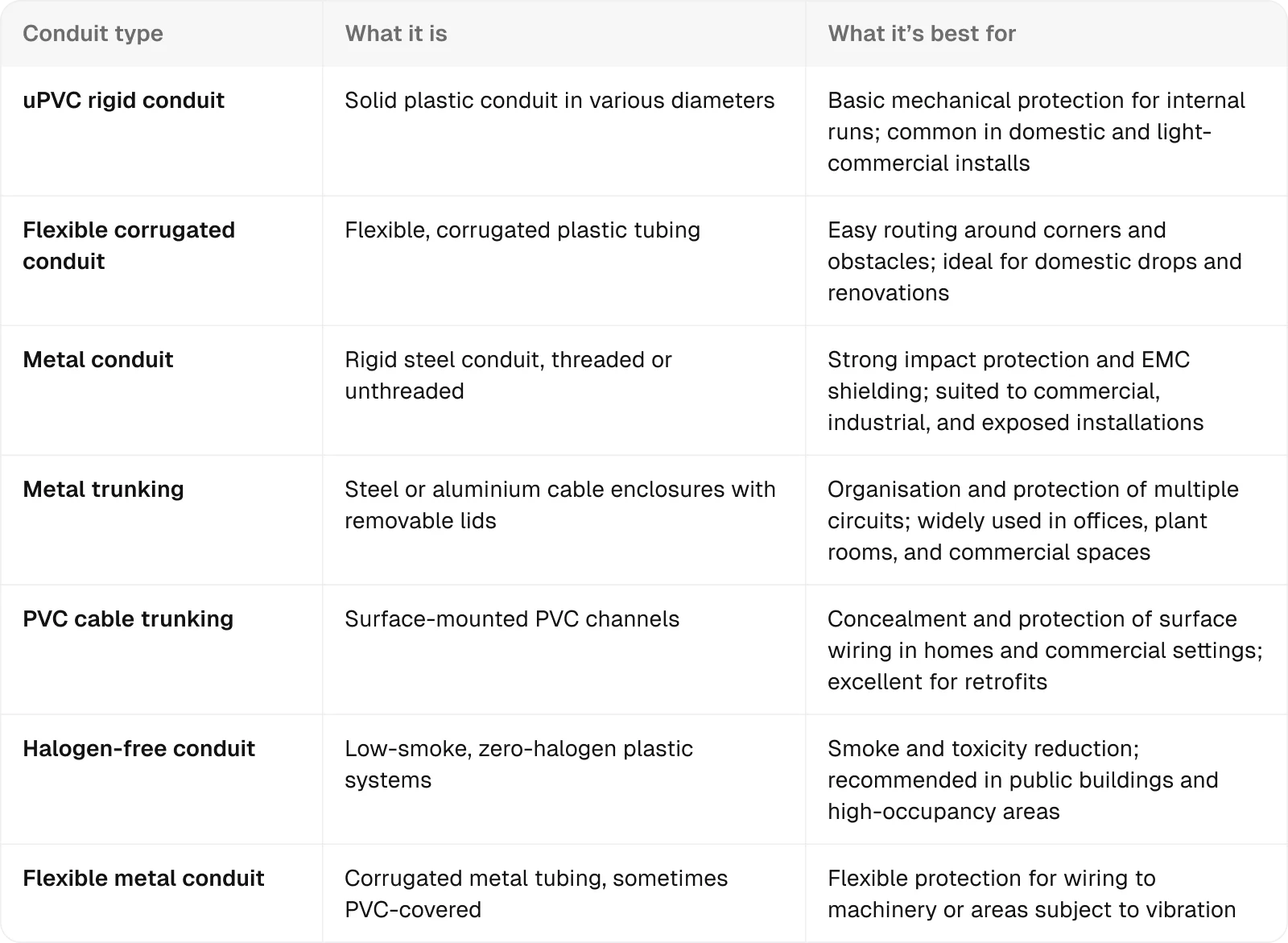
Conduits and raceways: These protective pathways shield wires from impact, corrosion, moisture, and environmental hazards.
Junction boxes, switches, and receptacles: Connection and control points allow devices and fixtures to interface with the electrical system.
Different buildings and environments require different wiring methods, and conduits are one of the clearest examples of how much variation exists, as shown below:
Why it matters
Quality wiring ensures electrical safety, system reliability, and long-term performance. It also reduces fire and shock risks, prevents equipment failures, and supports efficient power distribution.
4. Lighting systems
Lighting systems provide the illumination a building needs for everyday use, safety, and comfort. By blending fixtures, controls, and different lighting layers, they turn empty rooms into usable, inviting environments.
What they include
Before lighting can function as a complete system, it draws on several elements, each with a different purpose:
Overhead lighting: This broad, even illumination makes spaces usable day-to-day.
Task lighting: It delivers targeted light for activities that require focus, such as food prep, reading, or desk work.
Accent lighting: It adds emphasis to architectural details, artwork, or display areas.
Emergency and exit lighting: This crucial illumination keeps paths visible during power failure and supports safe evacuation.
Lighting control systems: Dimmers, sensors, timers, and smart controls fine-tune light levels and reduce energy use.
Why they matter
Well-planned lighting improves safety, accessibility, and overall user comfort. However, it also drives energy efficiency.
Take LED fixtures as an example. A leading U.K.-based retailer reportedly saved £4.5 million in a single year just by transitioning to LED lighting in all of its stores. Another contributing factor was smart controls, which can be used to automatically adjust brightness based on occupancy and daylight levels, cutting unnecessary runtime.
5. HVAC and mechanical electrical work
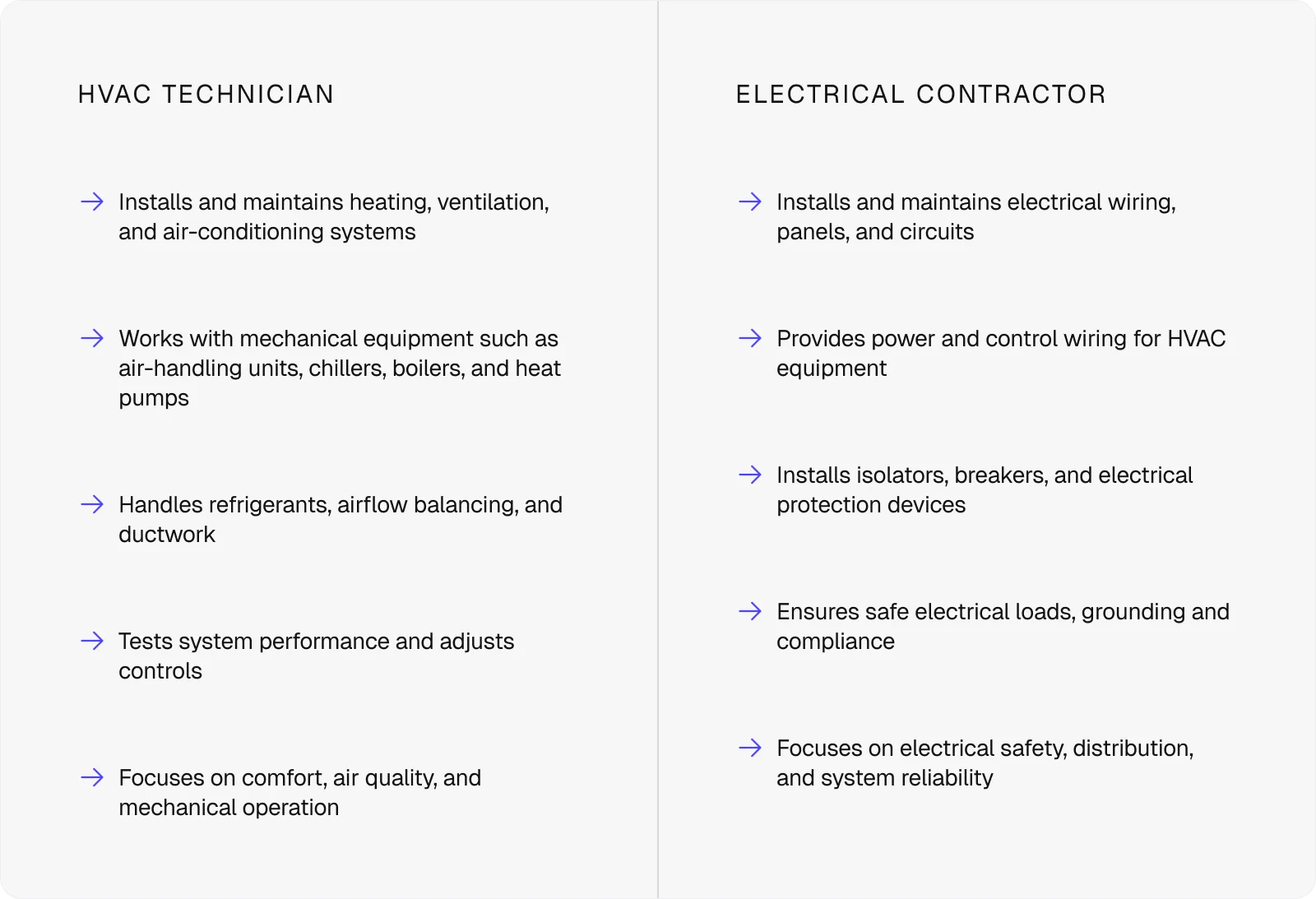
Although HVAC is a separate discipline with its own specialists, it is still one of the key types of electrical work in construction. That’s because each of these heating, ventilation, and air-conditioning systems relies on electrical components: motors, fans, sensors, controls, and wiring.
Without the electrical side handled properly, the mechanical systems won’t work safely or reliably.
What it includes
From an electrical point of view, HVAC includes the following:
Power for HVAC systems: It comes from feeders, isolators, and panels supplying individual units.
Controls and sensors: Thermostats, air-quality sensors, and control systems regulate HVAC operation.
Motor and equipment wiring: HVAC is driven by wiring for fans, pumps, compressors, and other mechanical plants.
Why it matters
Comfort, indoor air quality, and the overall performance of the building depend on the HVAC system and, by extension, on the electrical work behind it.
Reliable electrical work in this area ensures systems behave as expected, integrate with controls, avoid faults, and support long-term building efficiency. That last part is especially important since efficient HVAC systems can cut electricity use by up to 25%.
6. Low-voltage and communication systems
Just because these systems run on low-voltage power doesn’t mean they should be installed by anyone other than trained electrical specialists.
Low-voltage work is still one of the core types of electrical work in construction, covering the cabling, devices, and controls that keep a building connected, protected, and compliant.
What they include
For the electrical team, low-voltage work centres on the systems that carry data, signals and life-safety information, such as:
Data and networking cabling: Cat6, fibre, and structured cabling form the backbone that carries internet, telephone, and network traffic across the building.
Fire alarm and life-safety systems: Smoke and heat detectors, alarm panels, and notification devices work together through dedicated wiring to deliver early warning in an emergency.
Security systems: CCTV, access control, and sensors rely on low-voltage wiring to power each device and link them into a single, reliable security network.
Audio/visual and intercom systems: Cabling and AV components support communication, announcements, and media use throughout the building.
Why they matter
These systems carry the information a building depends on: alerts, access, communication, and safety signals.
They’re also heavily regulated, with their own codes and inspection steps. In fire protection work, for example, protected cable routes, certified devices, and full documentation are required before a building can be signed off.
How Onetrace supports safer, smoother electrical work

No matter whether you specialise in one or several types of electrical work in construction, Onetrace helps you manage the job with more clarity, control, and confidence.
This electrical contractor software brings your projects, teams, and proof of work into one place, so nothing gets lost in the noise of a live site.
Onetrace allows you to:
Create custom installation and inspection forms: Capture the right evidence for temporary power, distribution boards, low-voltage systems, fire alarm installs, and HVAC wiring.
Strengthen compliance and documentation: Store test sheets, fire-protection evidence, and sign-offs in one secure place for a clean audit trail.
Use multi-stage approvals for quality control: Move the job sheets through the right approval chain, speeding up remediation, avoiding late snagging, and spreading accountability.
Capture photographic proof quickly: Record before-and-after photos, cable runs, containment, terminations, and commissioning evidence with marked-up images and live updates.
If you want a clearer way to manage electrical work, book a personalised demo and see how Onetrace can fit your workflow.
Marketing Team
@Onetrace
The Onetrace marketing team is passionate about sharing insights, ideas, and innovations that help construction businesses stay connected, compliant, and efficient. Combining industry expertise with a love for clear communication, we aim to deliver content that empowers professionals to work smarter and safer.