The importance of site inspections in construction [Explained]

By
Marketing Team
@Onetrace
Construction is a high-risk, fast-moving environment, where small oversights can easily turn into big problems.
A loose scaffold board, an unprotected edge, or dust that nobody’s damping down might not look like much on the day, but they add up: Construction loses around 2.2 million working days a year to injury and ill health.
The same goes for quality.
If spotted late, a missed fixing or the wrong product means taking work apart and doing it again. These types of avoidable errors can end up costing the project up to 25% of its overall budget, according to the Get It Right Initiative.
Safety risks and rework are only part of the picture, but they clearly show the importance of site inspections in construction.
This article looks at the whole picture, breaking down all the reasons regular site inspections matter and best practices for conducting them.
Key takeaways
Site inspections help prevent accidents and protect workers
Regular checks can identify hazards, unsafe conditions, and ineffective controls before they cause harm.Inspections catch quality issues before they become expensive problems
Checking materials, workmanship, and installations while work is accessible can reduce rework, delays, and disruption.Inspections help keep projects compliant and on track
They provide a practical check against drawings, specifications, regulations, and project requirements, while giving managers current information on progress.Proper inspection records improve coordination
Sharing findings, photos, drawings, and actions gives contractors and subcontractors a reliable record of what has been checked, what needs attention, and what is complete.Digital inspection software can make the process easier to manage
Onetrace brings forms, evidence, drawings, approvals, and reports into one system, helping subcontractors manage inspections and keep project records organised.
What is a site inspection in construction?
In construction, a site inspection is a structured check of site conditions, work, materials, or controls to make sure the project is being carried out safely, correctly, and in line with the relevant requirements.
Its purpose is to identify hazards, defects, non-compliant work, and deviations from the plans or specifications, so they can be addressed before they lead to injury, rework, delays, or failed regulatory checks.
Site inspections can look for various types of issues.
The scope can range from a quick daily check of housekeeping, access, or plant use to a more detailed review of specific risks, workmanship, records, or compliance.
Inspections also differ in how formal they are.
A supervisor might make routine observations as part of the working day, while a planned inspection may use a checklist, record findings, and require corrective actions to be followed up. More formal inspections can also involve reviewing documents alongside physical site conditions.
These distinctions matter for contractors and subcontractors.
A check designed to find safety issues isn’t necessarily going to pick up a workmanship defect, just as a quality control check may not cover every site safety risk. Knowing what a site inspection is intended to cover helps you understand which benefits it can deliver, what it may miss, and where other types of inspection may be needed.

The importance of site inspection in construction: 8 key benefits
These eight benefits help explain why regular site inspections are such an important part of keeping construction projects safe, compliant, and on track. They show what effective inspections can help you catch, prevent, and improve throughout the job.
1. Preventing accidents and protecting worker safety
In 2025/26, the fatal injury rate in construction was around five times the average across all industries, with falls from height remaining a particular concern.
While site inspections can’t remove every risk from a live construction site, they let teams check whether hazards have been identified and whether the controls put in place to manage them are working. They can also pick up changes in site conditions that introduce new risks as the project moves through different phases.
Depending on the scope of the inspection, checks might cover:
Scaffolding, mobile platforms, ladders, edge protection, and fall protection systems
The condition and safe use of machinery, vehicles, tools, and lifting equipment
Housekeeping, clear walkways, storage, obstructions, signage, and unauthorised access
Trenches, shoring, scaffolding, temporary supports, and other elements that affect stability
Fire prevention measures, extinguishers, emergency procedures, and access to first aid
Electrical systems, asbestos risks, and controls for dust, fumes, and other respiratory hazards
Suitable protective equipment, toilets, washing facilities, and other basic welfare provisions
After these issues are spotted during an inspection, they should be recorded and assigned a corrective action. This approach turns a site inspection from a walk-round into a crucial part of the overall construction safety management.
2. Catching defects and quality issues early
A site inspection gives contractors and subcontractors a chance to check that materials, workmanship, and installations match the drawings, specifications, and agreed requirements, rather than allowing problems to surface at handover—or much later.
Regular inspections are particularly useful when one trade’s work is covered up or followed by another stage. Finding a problem with a foundation, installation, or finish while the work is still exposed usually gives the team more options to fix it without undoing several phases of work.
Quality checks can look at whether:
The right products have been delivered, stored, and used
Components and systems have been fitted correctly and in line with the design
Work has been completed to the required standard and specification
Completed work matches the required measurements, levels, and positions
Surfaces, coatings, and other visible finishes meet the expected standard
Drawings, work instructions, test results, and other quality records support what has been installed
3. Keeping work compliant with regulations and specifications
Construction work must comply with the relevant regulations, approved plans, specifications, and contract requirements. Site inspections provide a practical checkpoint for ensuring that what’s being built matches what was agreed on paper.
For contractors and subcontractors, this can mean inspecting whether:
The work matches the latest approved drawings and project requirements
Work meets the applicable building regulations and standards
Required measures are in place and being followed, including those covered by CDM duties
Inspections, tests, permits, changes, and other required records are properly documented
Areas like accessibility, environmental controls, or waste management are being handled as required
4. Reducing rework, delays, and project costs
In construction, rework is expensive because the cost is rarely limited to fixing the original mistake. It can mean extra labour and materials, disrupted sequencing, time lost by other trades, and changes to the programme.
Regular site inspections help control these knock-on costs by checking that each stage of the work is ready for the next. Depending on the inspection, teams may look for:
Incomplete work that could hold up the next trade or project stage
Incorrect installations that would need to be removed and redone
Material or product issues before they are incorporated into further work
Work that doesn’t match the drawings or specification, creating potential changes later
Coordination problems between trades, such as installations that clash or are incorrectly sequenced
Progress issues that could affect planned activities or the wider programme
Outstanding corrective actions that could otherwise remain open until later stages
5. Improving coordination and communication
Construction projects bring together multiple contractors, subcontractors, suppliers, and other teams, often working on interdependent tasks. A site inspection creates a regular point for those teams to see what has been done, flag issues, and agree on what needs to happen next.
An inspection can bring coordination problems to light, such as:
Trades working out of sequence, leaving another team unable to start its work
Clashes between installations, such as plumbing and electrical work competing for the same space
Changes that haven’t reached everyone, leading teams to work from different information
Unclear responsibilities, where it isn’t obvious who needs to resolve an issue
Progress or access constraints that could affect another contractor’s planned work
A key part of improving coordination is keeping inspection information accessible to everyone who needs to act on it.
This is best achieved with construction site inspection software like Onetrace, which brings inspection forms, photos, drawings, findings, and follow-up actions into one system. Teams can link findings to specific locations, assign inspection statuses, and keep the supporting evidence with the relevant record.
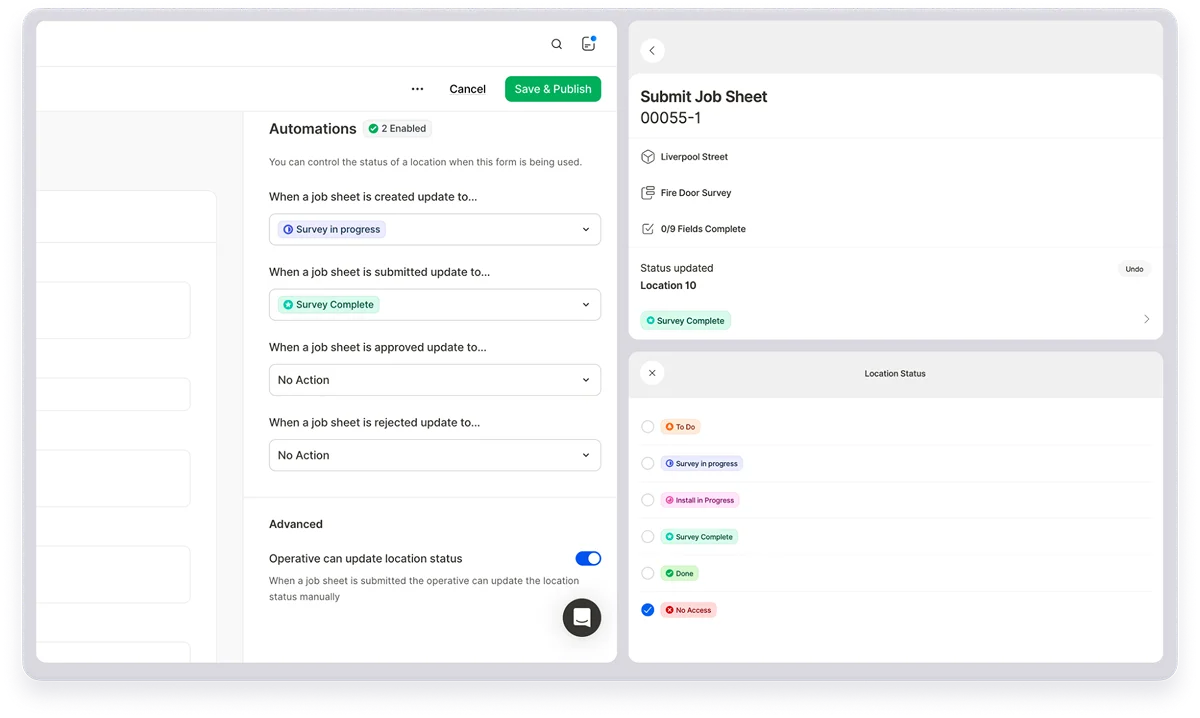
This centralised approach gives all relevant stakeholders a shared view of what has been inspected, what needs attention, and what has been signed off.
6. Supporting better project planning and progress
A hold-up in one area of a construction project can disrupt following trades, extend labour and plant costs, and push back the planned completion date. The longer problems remain unresolved, the more difficult it can be to adjust the programme without adding cost.
Site inspections support uninterrupted progress by:
Confirming that planned work has been completed and identifying activities that are falling behind
Making sure an area or installation is complete before the next trade starts work
Identifying problems with labour, access, materials, equipment, or working conditions that could slow progress
Recording changes to the scope or work sequence so the programme can be adjusted rather than relying on outdated assumptions
Giving the main contractor a clearer view of whether different teams are delivering the required work, quality, and progress
Providing progress records for project managers to use in progress meetings and when reviewing the programme
The aim isn’t for inspections to manage the programme themselves.
Their value is that they give the people managing the project current information about what’s happening on site, so they can make better decisions about time, resources, and next steps.
7. Promoting a culture of safety
Regular site inspections show that safety compliance is something the project actively pays attention to, rather than something discussed only during inductions or after an incident.
This commitment can influence how people behave on site.
When workers see managers and supervisors checking conditions, asking questions, and taking safety concerns seriously, they’re more likely to treat safe working practices as part of the job rather than an additional requirement.
These practices can also affect morale.
People are more likely to feel valued when they can see that their employer is taking practical steps to protect their health and wellbeing.
For contractors and subcontractors, this can help create a workforce that’s more engaged, more willing to raise concerns, and more likely to look out for colleagues.
8. Building client confidence and protecting your reputation
Clients want more than a project that looks finished. They want confidence that the work has been properly managed, standards have been maintained, and problems have been dealt with throughout the build.
Regular site inspections can help demonstrate that level of control.
They also help contractors and subcontractors show reliability to future clients by building a track record of organised, well-managed work, as well as strengthen their reputation by demonstrating that safety and quality are treated as core responsibilities, not afterthoughts.
For subcontractors in particular, reputation is built project by project.
Consistently showing that your work is well managed, properly checked, and delivered to the required standard can make you a more trusted partner when the next opportunity comes around.
Best practices to reap construction site inspection benefits
To make sure your site inspection process delivers practical value throughout the project, keep these best practices in mind:
Define the scope: Set out exactly what each inspection needs to cover so it doesn’t turn into an unfocused review.
Use a competent inspector: Choose someone with the right construction knowledge and experience for the risks being assessed.
Build detailed checklists: Create checklists around the specific work, risks, and requirements of the project so inspections stay consistent across stages and teams.
Document your findings: Record observations clearly using photographs and other evidence where useful, so there’s a reliable reference for follow-up and future review.
Use digital tools where they add value: Centralise inspection records, photos, and notes in one system to make information easier to access and keep processes consistent across the project.
Match inspections to project risk: Increase the frequency of inspections for higher-risk activities, larger projects, and sites with multiple contractors or trades.
Why use Onetrace for your site inspection process
Onetrace brings the different parts of a site inspection process into one place, allowing contractors and subcontractors to manage the inspection itself while keeping the information it produces connected to the wider project.
Here are some of the features that make that possible:
Customisable inspection forms: Build forms around the specific requirements of each job or trade, with different field types, conditional questions, and mandatory fields to help teams capture complete, consistent information.
Photographic evidence: Capture photos alongside inspection findings to provide a reliable record of issues, risks, and completed work, including before-and-after evidence where needed.
Drawings and location pins: Pin inspections to the exact location on a drawing and organise them by blocks, levels, zones, or cores, making it easier to find and report on specific areas of the site.
Approval workflows: Set up review stages so supervisors, managers, or clients can approve or reject submitted work, with feedback and approval history kept as part of the record.
Offline working: Let operatives access drawings and data and complete inspections without a signal, with the app designed to keep work moving on difficult sites.
Structured reporting: Turn inspection and job data into branded PDF or Excel reports, giving clients and auditors an accurate record without manual formatting.
QR codes: Link physical locations to their digital records so operatives can scan a code and see the history of work carried out there. This can be particularly useful for ongoing site inspections and maintenance.
Together, these features connect what happens on site with the information needed to manage, review, and prove the work afterwards. Learn more about them and the platform in general by booking a personalised demo with the Onetrace team.
FAQ
How to conduct a site inspection?
Plan the inspection around the work, risks, and areas that need checking, then have a competent person inspect the site, record findings, and agree on any corrective actions. The inspection should be followed by a review to make sure required actions have been completed.
What is the purpose of a construction site inspection?
The purpose is to check that site conditions, work, and controls meet the required safety, quality, regulatory, and project standards, while identifying risks or issues that need attention.
What are the responsibilities of a site inspector?
A site inspector should carry out the inspection competently, assess the relevant work and conditions, record significant findings, and identify any action needed. They should also communicate the findings to the relevant people and support follow-up where required.
What is the most essential part of the site inspection?
The most essential part is acting on what the inspection finds. Identifying a hazard, defect, or failed control has little value unless the issue is properly addressed and the outcome checked.
Marketing Team
@Onetrace
The Onetrace marketing team is passionate about sharing insights, ideas, and innovations that help construction businesses stay connected, compliant, and efficient. Combining industry expertise with a love for clear communication, we aim to deliver content that empowers professionals to work smarter and safer.