Fire protection compliance: What subcontractors need to prove

By
Marketing Team
@Onetrace
Construction compliance is fundamental to delivering safe and lawful building work.
With roughly one in three construction professionals reporting involvement in a dispute each year, solid evidence of compliance can make a subcontractor’s work more defensible, strengthen its position in a dispute, and help protect relationships with contractors and clients.
While compliance matters across all construction trades, fire protection subcontractors often face a higher bar than most, as their work must not only be done right, but proven right—often years after the job is finished.
With this in mind, let’s break down what fire protection compliance means for UK subcontractors, what they need to prove, and what that proof should look like.
Key takeaways
Fire protection compliance covers more than installation
Subcontractors need to prove that the right products were used, that they were installed correctly and in line with the approved design, and that the work was carried out by competent people.Sound evidence links the work to the right details
Product records, photographs, locations, inspections, drawings, competence records, and sign-offs should create a clear trail of what was installed and where.Changes need to be assessed and recorded
Product substitutions, site conditions, or changes to services should be properly reviewed, approved where needed, and added to the project record.Records matter long after work is complete
Fire protection is often concealed, so contemporaneous records can help establish what was specified, installed, and checked if questions arise later.Digital tools can bring the evidence together
Onetrace helps subcontractors capture project data, link records to locations, manage approvals and changes, and produce organised compliance reports when evidence is needed.
What is fire protection compliance?
Fire protection compliance means meeting the legal, regulatory, design, and contractual requirements that govern fire protection work on a building project.
For a subcontractor, this means that the fire protection products, systems, and installation meet the requirements set by the applicable regulations, approved design, and project specification, with evidence to demonstrate that they do.
In terms of scope, fire protection compliance covers more than specialist fire-stopping work.
Any subcontractor whose work affects the building’s fire performance may have compliance responsibilities, including those:
Installing services through fire-rated walls and floors
Working on walls, ceilings, and façades
Why does fire protection compliance matter for subcontractors?
Fire protection compliance matters because subcontractors are part of the chain responsible for delivering safe, high-quality, and lawful work.
Here’s what getting this compliance right can help subcontractors achieve.
It protects people from fire and smoke
Fire protection measures are designed to limit the spread of fire and smoke, protect escape routes, and give occupants and firefighters more time to respond.
However, these measures only work when they are correctly specified and installed.
A missed fire stop, poorly fitted fire door, or unsuitable product can compromise a fire-resisting element and allow fire or smoke to spread beyond the area it was designed to contain.
That’s why proper subcontracting work in this area should primarily aim to protect people by ensuring that fire protection measures perform as intended.
It makes subcontractors accountable for their work
Under the Construction (Design and Management) Regulations 2015, subcontractors are classed as contractors and have duties around competence and the planning, management, and monitoring of their work.
In England, contractors also have duties under the Building Regulations dutyholder regime.
These include taking reasonable steps to ensure their work complies with relevant requirements, working with other dutyholders, and providing information about their work where it’s needed for others to meet their duties.
It helps prevent rework, delays, and disputes
Fire protection defects don’t always come to light while the work is still accessible.
If an installation fails an inspection or can’t be shown to meet the required specification, completed work may need to be opened up and repaired before the project can move on.
This can mean extra labour and materials for the subcontractor, delays to other trades, and disagreements over who is responsible for the cost.
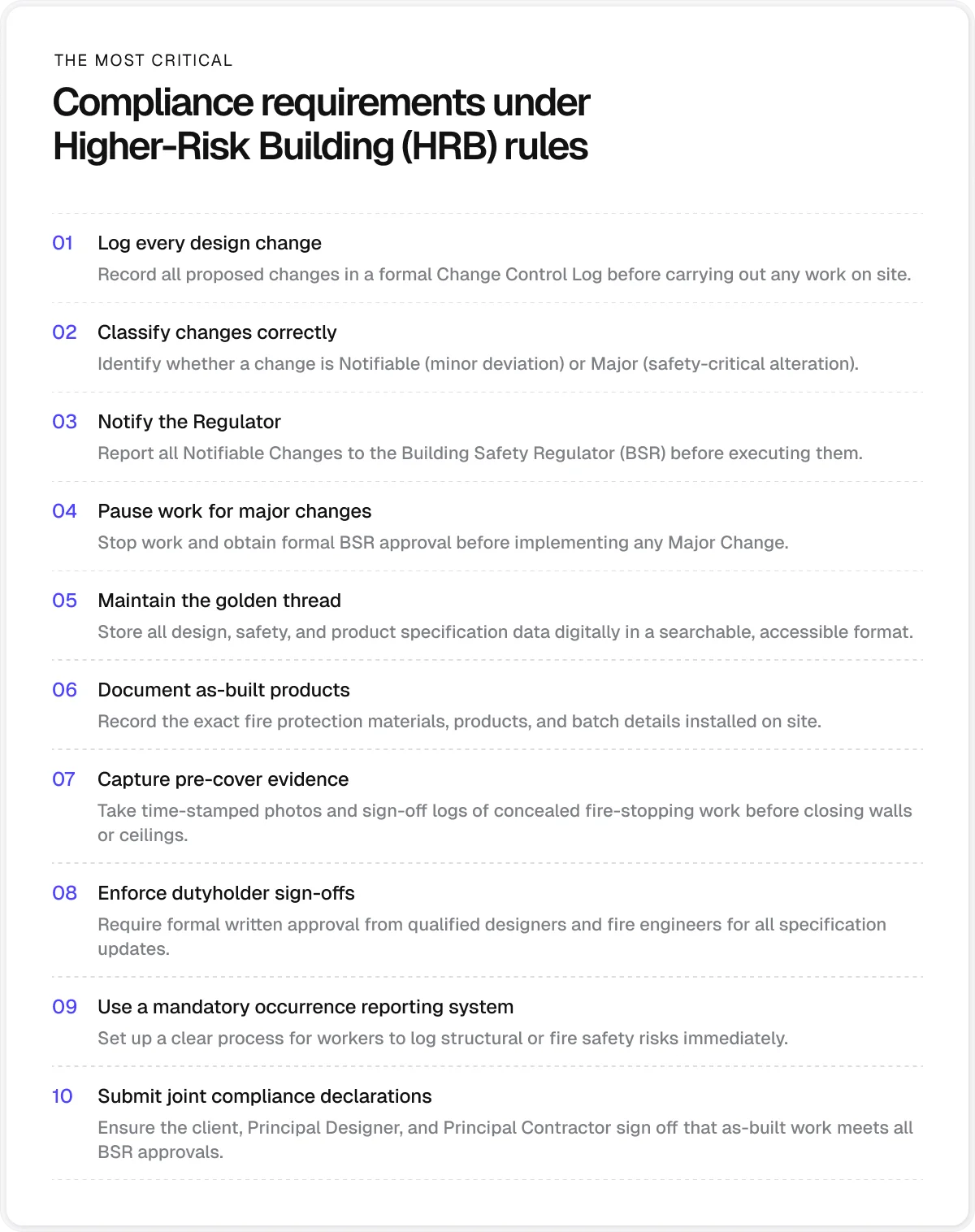
On higher-risk building projects in England, changes and compliance information are also subject to formal control and record-keeping requirements.
It gives subcontractors evidence when their work is challenged
Reliable records of which products were used, where they were installed, how the work was checked, and what changes were made can give a subcontractor a stronger position if their work is later questioned by a contractor, client, regulator, or other party.
These records are particularly important as building projects increasingly rely on traceable compliance information.
For higher-risk buildings, for example, the principal contractor must keep evidence that building work meets Building Regulations, and fire protection documentation also needs to be passed on for the building to be safely managed after completion.
While a comprehensive evidence trail can’t prevent a claim or contractual challenge, it can make the facts easier to establish and the subcontractor’s position more defensible.
It can matter long after the work is finished
Fire protection work is often concealed once walls, ceilings, and other finishes are complete. That’s why, years later, it may be difficult to establish what was installed without records created at the time.
This matters because certain building claims can now be brought much later than they could before the Building Safety Act 2022.
For instance, for claims under section 1 of the Defective Premises Act 1972, the limitation period was extended retrospectively from six years to 30 years and prospectively from six years to 15 years.
For subcontractors, this makes contemporaneous records more than a handover requirement.
They can provide evidence of what was specified, what was installed, and how the work was carried out if questions arise long after the project is complete.
What subcontractors need to prove about their fire protection work
Given the importance of fire protection work, compliance needs to be approached with care throughout the project.
Here’s what proving fire protection compliance means in practice.
1. The right fire protection products and systems were used
Fire protection products and systems need to be suitable for the application.
For example, fire-stopping materials must be suitable for the type and size of penetration and form part of a tested system that provides the required level of fire resistance. Using a different product or substituting one component without the right supporting evidence can leave the installation outside the tested or specified system.
For subcontractors, proving this means being able to identify exactly what was used and show why it was suitable. A generic statement like ‘Brand X fire sealant was used’ doesn’t tell the full story. The evidence should link the specific product and system to the actual application.
Relevant fire protection evidence
Product name, manufacturer, and identification
Relevant product data and technical information
Fire-test and classification evidence
Declaration of Performance, where applicable
UK Conformity Assessed (UKCA) or Conformité Européenne (CE) information, where applicable
Manufacturer installation instructions
Evidence that components are compatible
Evidence that the tested or classified system covers the actual application
Records showing any approved product substitutions
2. The fire protection was installed correctly
Using the right fire protection products is only part of compliance. Those products and systems also need to be installed in line with the tested or classified system, manufacturer instructions, and approved specification.
For fire-stopping, proper installation can include the correct sealant depth, backing materials, substrate preparation, and treatment of the specific penetration. Similar principles apply to fire doors, penetration seals, compartmentation, and other fire-resisting elements.
Sound installation records should make it easy to establish what was installed, where it was installed, and whether the work was checked before it was concealed. This is particularly important for passive fire protection, where completed work can later be hidden behind walls, floors, or ceilings.
Relevant fire protection evidence
Dated photographs of completed work
Before, during, and after photographs where appropriate
Location references for each installation
Installer identity
Inspection and check sheets
Relevant dimensions
Substrate and penetration or service details
Product and system references
Sign-off or inspection status
Snagging and corrective-action records
Pro tip:
A photograph on its own may not show enough to prove how or where the work was completed.
Linking photographs to the location, installer, product, and inspection record creates a more complete evidence trail.
Dedicated fire protection software like Onetrace can help bring these records together, allowing site teams to capture photos alongside job details, inspections, and other project information.
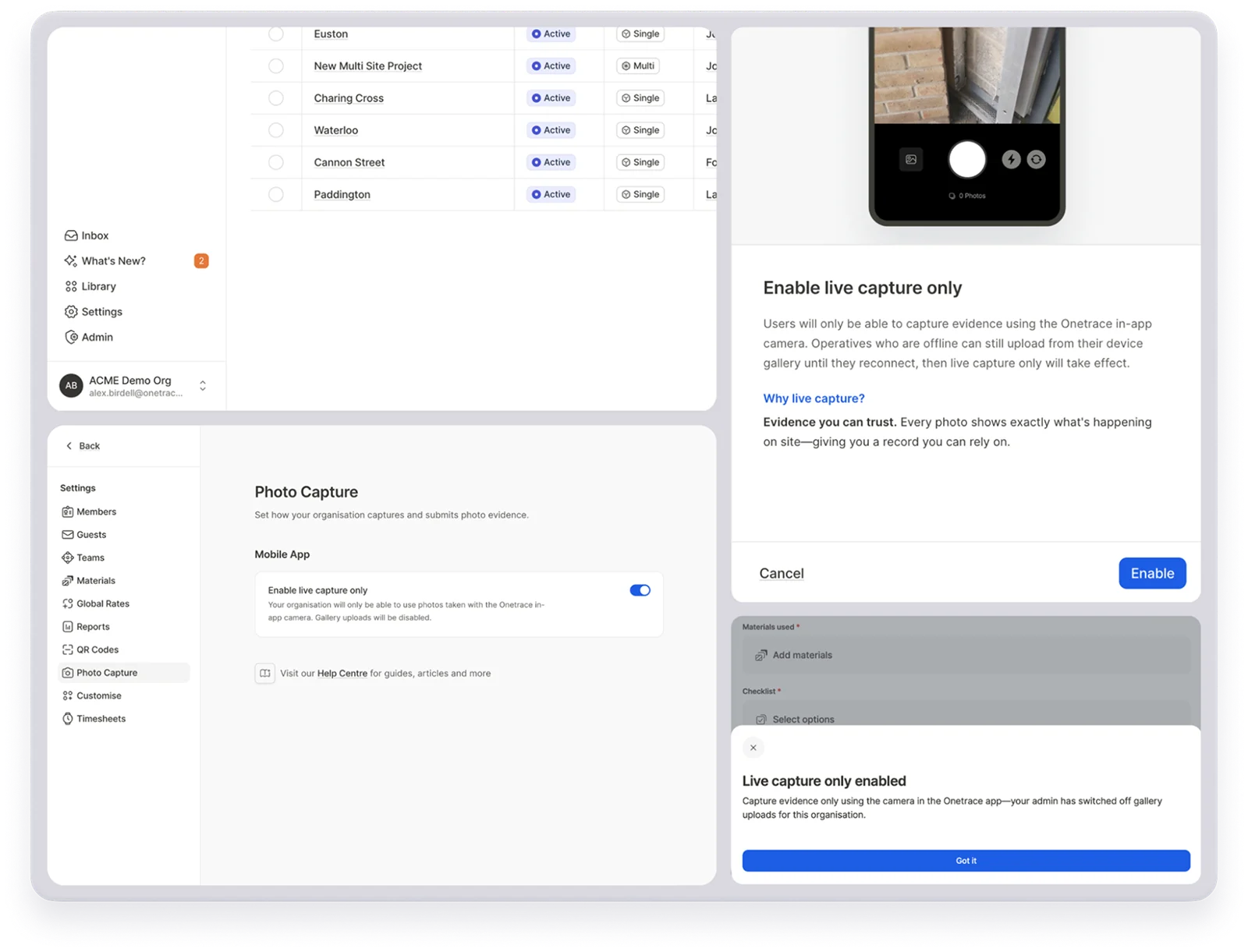
This gives subcontractors concrete reference if the installation is questioned after the work has been completed or concealed. It also makes photographic evidence easier to find later, helping you avoid searching through a scattered library of site photos.
3. The installation matches the approved fire strategy and design
The fire protection work should correspond to the relevant drawings, specifications, fire strategy, and system details for the project.
Rather than recording that ‘fire-stopping was installed on Level 4’, the evidence should link the installation to a specific location and approved system. This makes it possible to establish what was supposed to be installed and compare it with what was completed, giving a stronger record of compliance if the installation is reviewed later.
If the finished installation differs from what was approved, the reason for that difference needs to be clear and properly addressed.
Relevant fire protection evidence
Approved drawings
Fire strategy or fire-stopping drawings
Penetration schedules
Door schedules
System details
Specification references
Installation method
Location or unique reference for each installation
Records showing any discrepancies were identified and resolved
4. The work was carried out by competent people
Fire protection work needs to be carried out by people with the right skills, knowledge, experience, and training for the work involved.
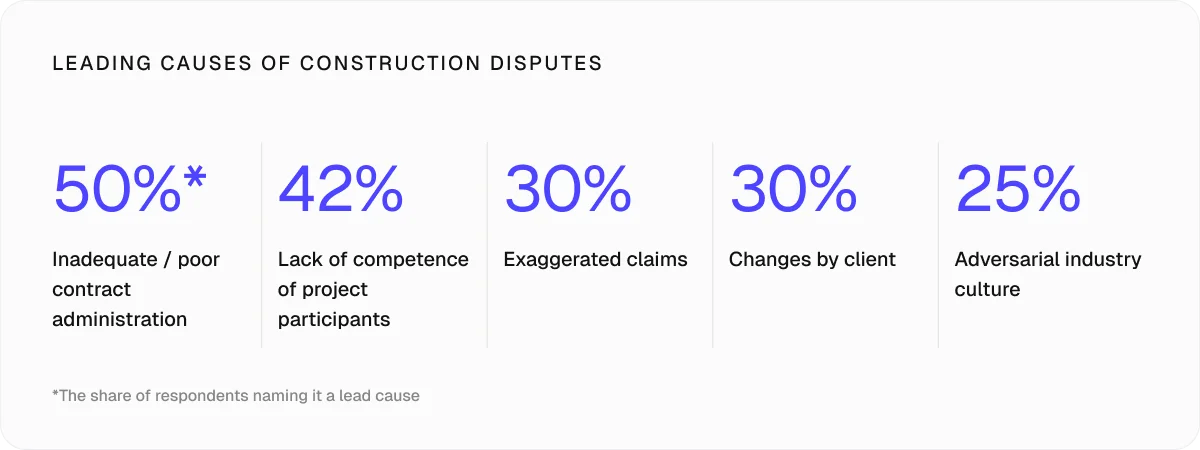
Keeping competence records alongside the installation evidence helps establish who carried out or supervised the work and why they were considered competent to do it. This is crucial because lack of competence has been pinpointed as one of the leading causes of construction disputes.
Relevant fire protection evidence
Training certificates
Competency cards
Installer qualifications
Records of relevant experience
Manufacturer training or approved installer evidence, where relevant
Third-party certification, where specified
Supervisor competency records
Records showing appropriate supervision
5. Changes to the fire protection were properly assessed and recorded
Fire protection work doesn’t always go exactly to plan.
Products may become unavailable, site conditions may differ from the drawings, or another trade may change the way services pass through a fire-rated wall or floor.
When a change like this affects the fire protection system, the issue should be assessed, the appropriate approval or revised information obtained where required, and the change recorded.
A clear record of why the finished installation differs from the original design is important because without it, a legitimate change can look like non-compliant work when the installation is reviewed later.
Relevant fire protection evidence
Approved product substitutions
Records of unexpected site conditions
Revised drawings or system details
Records of changes to penetrations or services
Design or manufacturer approval, where required
Details of who approved the change and why
Updated installation records
Records of work that was subsequently disturbed or altered
How digital tools can make fire protection compliance easier
Fire protection work involves a lot of information, including specifications, materials, site records, inspections, approvals, and handover documents. Managing that information across paper forms, spreadsheets, email chains, and separate systems can make it harder to keep records consistent and up to date.
Digitising the fire protection workflow can bring the different parts of the job into one structured system. This makes it easier to capture information as work happens, keep it linked to the right project and location, and maintain an accurate record from installation to completion.
Onetrace is designed specifically for subcontractors, helping them track what's been done, identify what still needs attention, and produce the evidence needed for client sign-off, audits, or later queries.
The table below gives an overview of what subcontractors need to prove and the Onetrace features that support each part of the process:
What needs to be proved | How Onetrace can help |
The right products and systems were used | Material tracking records material types and details, including quantities, dimensions, and manufacturer tags. Materials can be linked to project records, helping create a clearer record of what was used. |
The fire protection was installed correctly | - Custom forms can capture installation details, checklists, measurements, and photographs. - Photographic evidence supports before, during, and after records of completed work. |
The installation matches the approved design | Drawings and pins allow work to be linked to specific locations on project drawings. Blocks, levels, zones, and cores provide further structure, making installation records easier to trace back to the relevant part of the building. |
The work was carried out by competent people | - Operative records and job sheets identify who carried out the work, while operative declarations provide a record of the person confirming the work. - Docs & Files provides centralised storage for all competence and project records, with access controls to manage who can see them. |
Changes and deviations were properly recorded | - Variation tracking makes it possible to identify changes to the original scope and record additional work or locations. - Approvals can provide a structured review process, with approval and rejection history showing who made decisions and when. |
Comprehensive reporting tools also allow you to produce the necessary evidence when required. You can use them to bring project data together into branded PDF or Excel reports, with options to include photographs and organise information by location, operative, or other project data.
To see how these features can support your fire protection projects, schedule a personalised demo with the Onetrace team.
FAQ
What is the ISO standard for fire safety?
There’s no single ISO standard covering all aspects of fire safety. Examples include ISO 23932-1:2018 for fire safety engineering and ISO 16732-1:2012 for fire risk assessment. The relevant standard depends on the type of fire safety work and the project's requirements.
What is the best fire protection certification?
There’s no single certification that proves all fire protection work is compliant. The appropriate certification depends on the type of work, system, and project requirements. UK examples include FIRAS and BM TRADA for passive fire protection, while BAFE schemes cover areas like fire alarm systems and fire risk assessment.
How often should fire protection be inspected?
Fire protection inspection frequency depends on the type of system and the building. Inspections can take place as frequently as weekly for fire alarm systems or monthly for emergency lighting and fire doors, depending on the specific requirements.
Marketing Team
@Onetrace
The Onetrace marketing team is passionate about sharing insights, ideas, and innovations that help construction businesses stay connected, compliant, and efficient. Combining industry expertise with a love for clear communication, we aim to deliver content that empowers professionals to work smarter and safer.