What should be included in your fire protection documentation?

By
Marketing Team
@Onetrace
Fire protection is the single most important defence any business can build against disaster.
Protecting lives is the priority, but financial stakes are also impossible to ignore.
In the U.K., for example, a major fire costs businesses an average of £657,074 per incident. Manufacturing gets the worst of it, with total losses exceeding £800 million in a single year.
That’s why fire protection has to be taken seriously from the very first moment, long before people actually move in. Especially because construction sites are no strangers to fire either, with hundreds of incidents recorded every year.
An early commitment to safety starts with your fire protection documentation: clear, up-to-date records that prove how safety has been planned and managed from day one.
This guide breaks down key fire protection documents every contractor should have in place to stay compliant and safeguard both people and projects.
Key takeaways
Start fire safety early
Fire protection should be built into your project from day one, not added later. Early planning through a fire risk assessment helps prevent hazards before they reach site level.Keep your fire safety plan practical and active
This plan explains how fire risks are controlled during construction. It must include prevention, detection, evacuation, and training procedures that evolve with your site.Document every hot work and inspection
Activities like welding or grinding need hot-work permits, and all checks should be recorded in a fire logbook. Keeping traceable, signed records proves your safety controls are real, not just written down.Keep drawings current and accessible
Fire safety drawings are the visual map of your protection strategy. Update them as the site changes so escape routes, hazards, and firefighting points stay accurate for everyone on site.Digitise and centralise your documentation with Onetrace
Managing all this paperwork manually invites errors. Onetrace keeps every fire safety record, drawing, and signature secure in one place, helping you stay compliant, audit-ready, and in control.
Putting together complete fire protection documentation: 6 key categories to include
Fire protection documentation brings order and accountability to everything that keeps a site safe. It shows how risks are managed, who’s responsible, and which systems are meant to prevent or respond to fire.
While every project is different, most construction teams should build their fire protection documentation around these six categories.
1. Fire risk assessment
According to the Health and Safety Executive (HSE), fire risks should be considered as early as possible, ideally during the design phase of the project.
A fire risk assessment (FRA)—an organised review of how a building or site could be affected by fire—allows contractors to build fire protection into the project from the very beginning.
The aim of this document is to identify:
What could ignite
What might burn
Who could be at risk
What measures are needed to prevent or control the potential fire
Because every site evolves, the FRA should be reviewed and updated throughout construction to reflect new layouts, materials, or work phases.
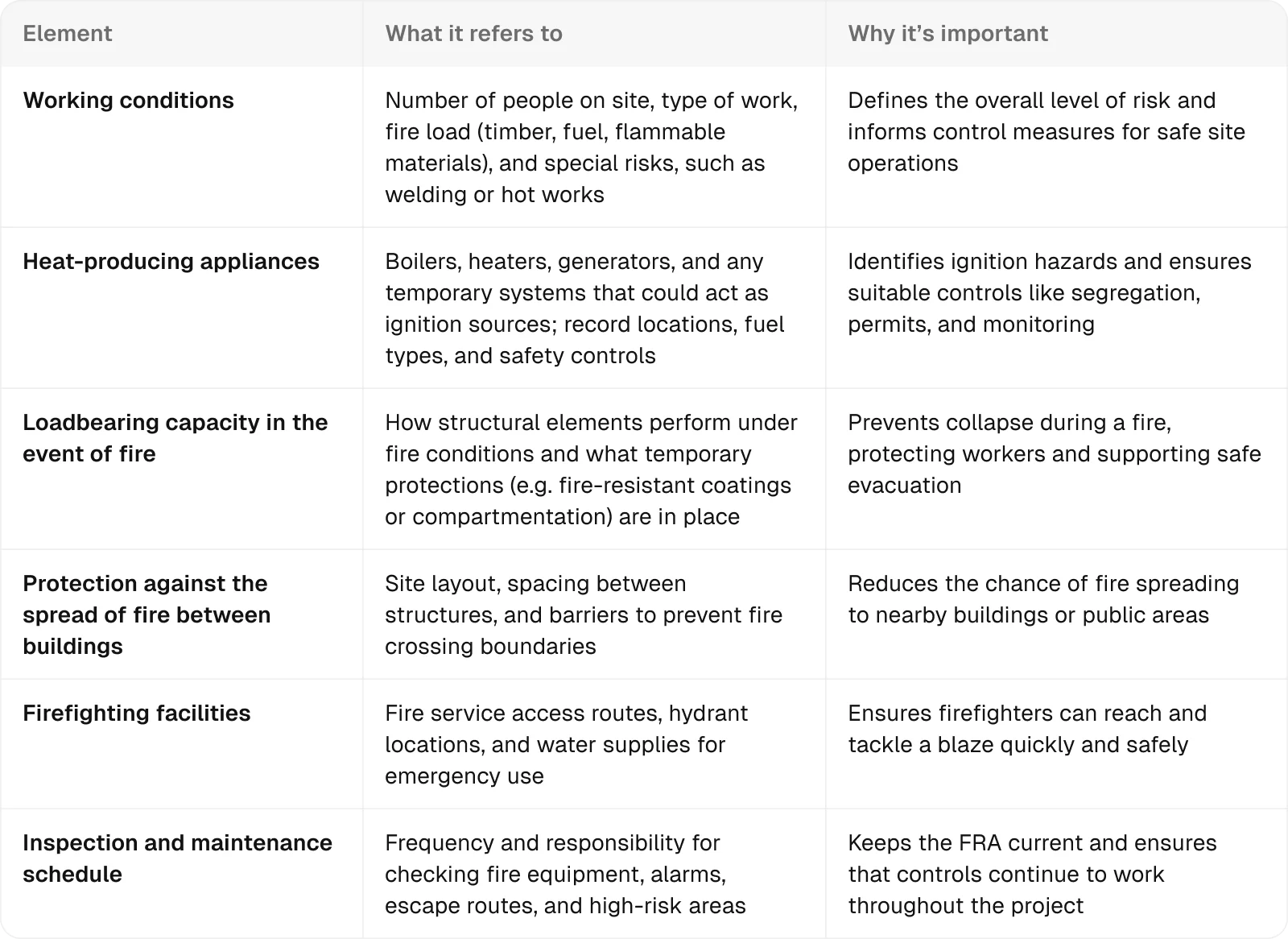
The table below summarises what a standard FRA should cover:
2. Fire safety plan
A fire safety plan, sometimes called a fire prevention plan, is a project-specific document that outlines how fire risks will be controlled and managed during the construction phase.
Under Construction (Design and Management) Regulations 2015, the principal contractor must reflect these fire safety arrangements in the overall construction phase plan.
Here’s what those safety arrangements should include, and why each element matters:
Fire prevention measures: Proper storage of combustibles, safe management of hot works, and control of ignition sources reduce the chance of a fire starting in the first place.
Fire detection and alarms: Clear placement of alarms, detectors, and call points ensures early warning and gives people time to react.
Escape routes and evacuation: Marked routes, exits, and assembly points help everyone find their way out safely if a fire breaks out.
Firefighting equipment: Having extinguishers, fire points, and hydrants in the right places allows small fires to be tackled quickly before they spread.
Emergency contacts and roles: Defining who is responsible for what ensures quick, coordinated action when an alarm is raised.
Training and inductions: Regular briefings, drills, and induction sessions make sure every worker knows the fire safety procedures.
Maintenance and inspections: Keeping logs of safety checks and equipment servicing shows that fire protection measures are working as intended.
Such a detailed plan shows that fire safety has been properly planned and documented, and not left to chance—something inspectors, auditors, and insurers will look for if anything goes wrong.
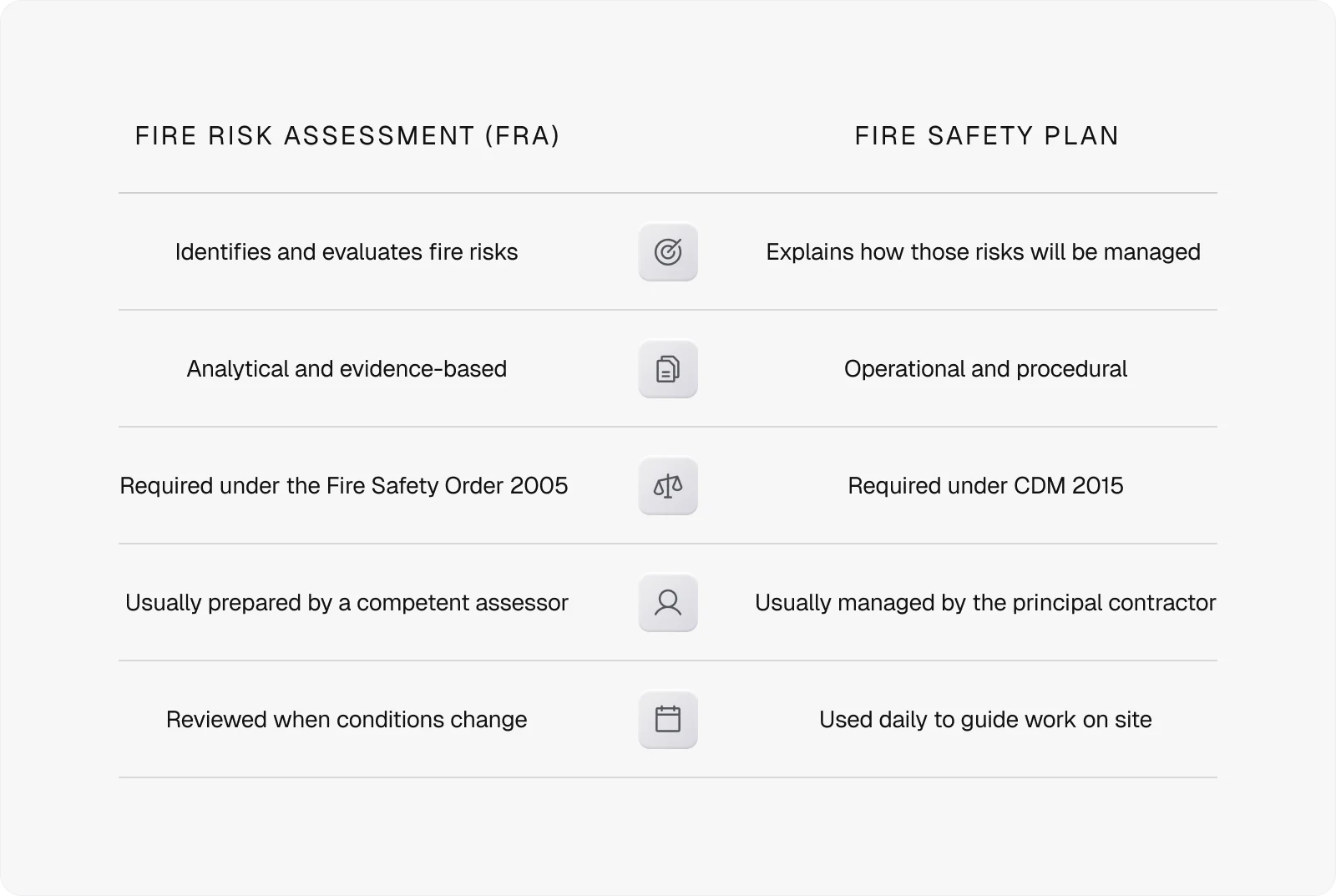
Essentially, the fire safety plan is the practical follow-up to the fire risk assessment. While the former tells you what could go wrong, the latter tells you how to stop it from going wrong.
3. Hot-works permits
Hot works include any task that produces heat, flame, or sparks, such as welding, cutting, grinding, soldering, or using blowtorches and bitumen boilers. Since these activities create ignition sources, they require strict control through hot-work permits.
This permit is a formal, time-limited authorisation that confirms all fire prevention measures are in place before, during, and after the work. It sets clear conditions for the hot works task: who’s doing it, where, when, and under what safety precautions.
Including this permit in your fire protection documentation shows that ignition risks are actively managed, not just noted in the fire risk assessment.
4. Fire logbook
Fire protection is a living process. It doesn’t stop once the first assessment is written or the safety plan is approved.
Construction sites change daily, with new materials arriving, temporary structures moving, and new people coming on board.
That’s why your fire protection documentation should include a fire logbook.
Think of this logbook as the project’s memory. It should show that checks are being carried out, systems are working, and the workforce remains trained and alert.
A complete fire logbook should record:
Dates and results of checks on alarms, extinguishers, hose reels, and other firefighting gear
When fire drills took place, who participated, and any lessons learned
Daily or weekly fire checks covering escape routes, hot-works areas, and storage of combustibles
Details of fire safety training sessions, toolbox talks, and induction briefings
Any fires, false alarms, or close calls, along with how they were handled and what follow-up actions were taken
Keeping all of these records up to date is proof of an active fire safety culture, providing traceable evidence that fire prevention measures are being maintained, reviewed, and improved over time.
Pro tip:
Many fire safety records, such as training logs and toolbox talks, should be signed off to confirm they’ve been completed and understood.
That’s where Onetrace can help.
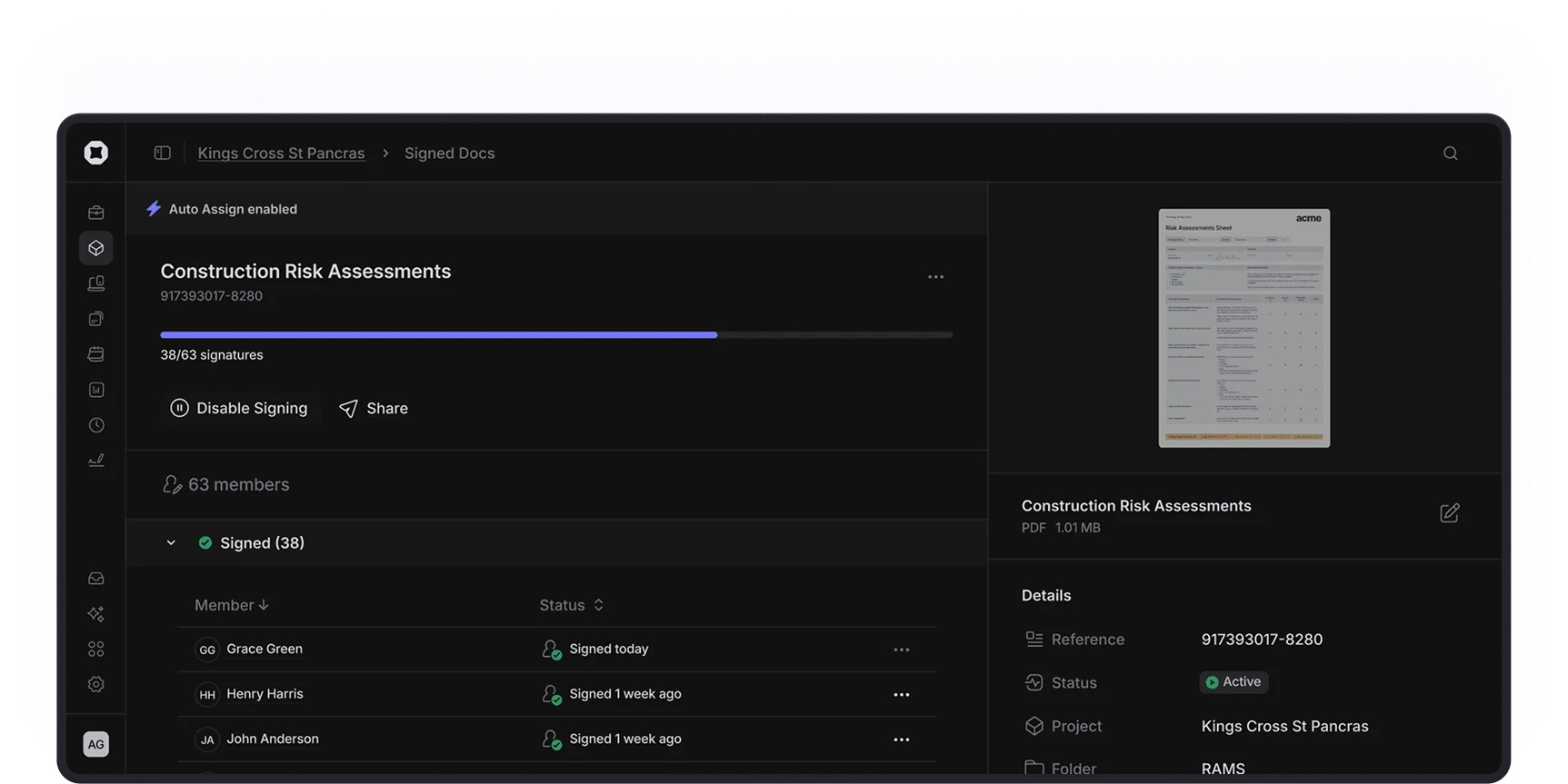
This fire protection software offers a Signed Docs feature that lets you request and collect signatures digitally, whether you’re on site or in the office.
Operatives can read and sign documents straight from the mobile app, and you can track their progress in real time.
Each signature creates a traceable digital record, giving you visible, verifiable proof of compliance at every stage of the project.
5. Fire safety drawings and plans
Fire safety drawings and plans turn written procedures into something everyone on site can understand at a glance.
They show how people can escape, where the firefighting equipment is, and what hazards need to be kept in check. Simply put, they’re the map of your fire strategy in action.
But be careful: these plans must reflect the current state of the site, not just the finished design. In other words, your fire drawings should evolve with your site.
Thanks to regular updates, your workers, fire wardens, and emergency services will be able to navigate the site safely, even as structures, access routes, and storage areas change.
Here’s what your drawings should show:
Exact locations of extinguishers, hose reels, fire points, and any nearby hydrants
All designated escape paths, exits, and assembly points, marked for easy recognition
Placement of call points, alarm panels, and directional signage to guide evacuation
Offices, cabins, or storage areas that might affect access or evacuation
Areas where fuels, gases, chemicals, or flammable materials are stored or used
Entrances, roads, and turning areas to ensure clear access for emergency vehicles
Any fire-resisting barriers or divisions that help contain a blaze
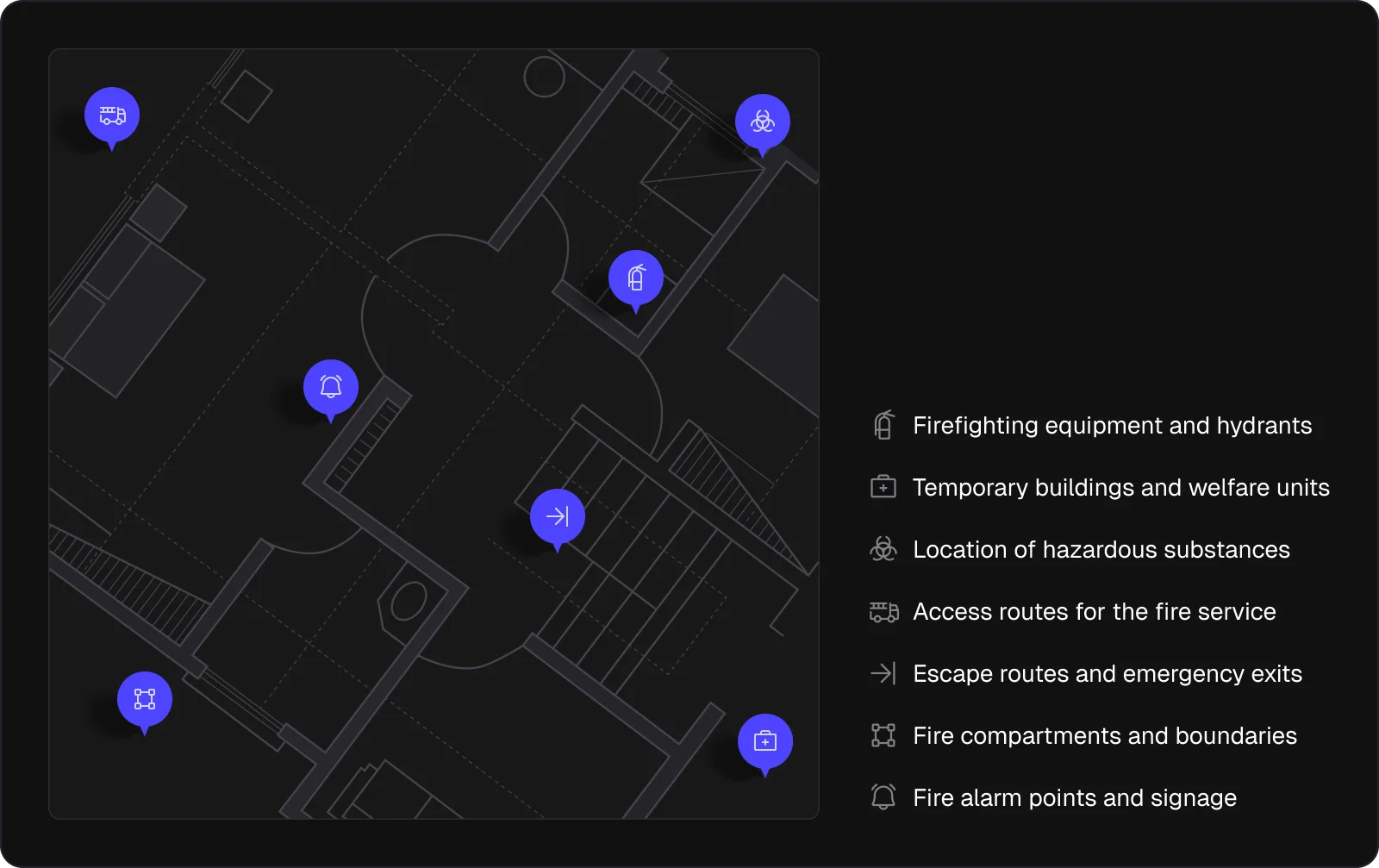
Clean, accurate drawings with all these details are essential for effective communication and quick decision-making during an emergency. They’re also part of your compliance documentation, showing that the site layout has been reviewed with fire safety in mind.
Pro tip:
Given how important accuracy is in fire safety drawings, you need a system that keeps every update precise, verified, and consistent across the project.
Onetrace allows you to mark up drawings with exact pin placement, so locations for fire doors, and compartmentation elements are never left to guesswork.
Plans are organized by blocks, levels, and zones, helping teams reference the right drawing instantly and avoiding mix-ups.
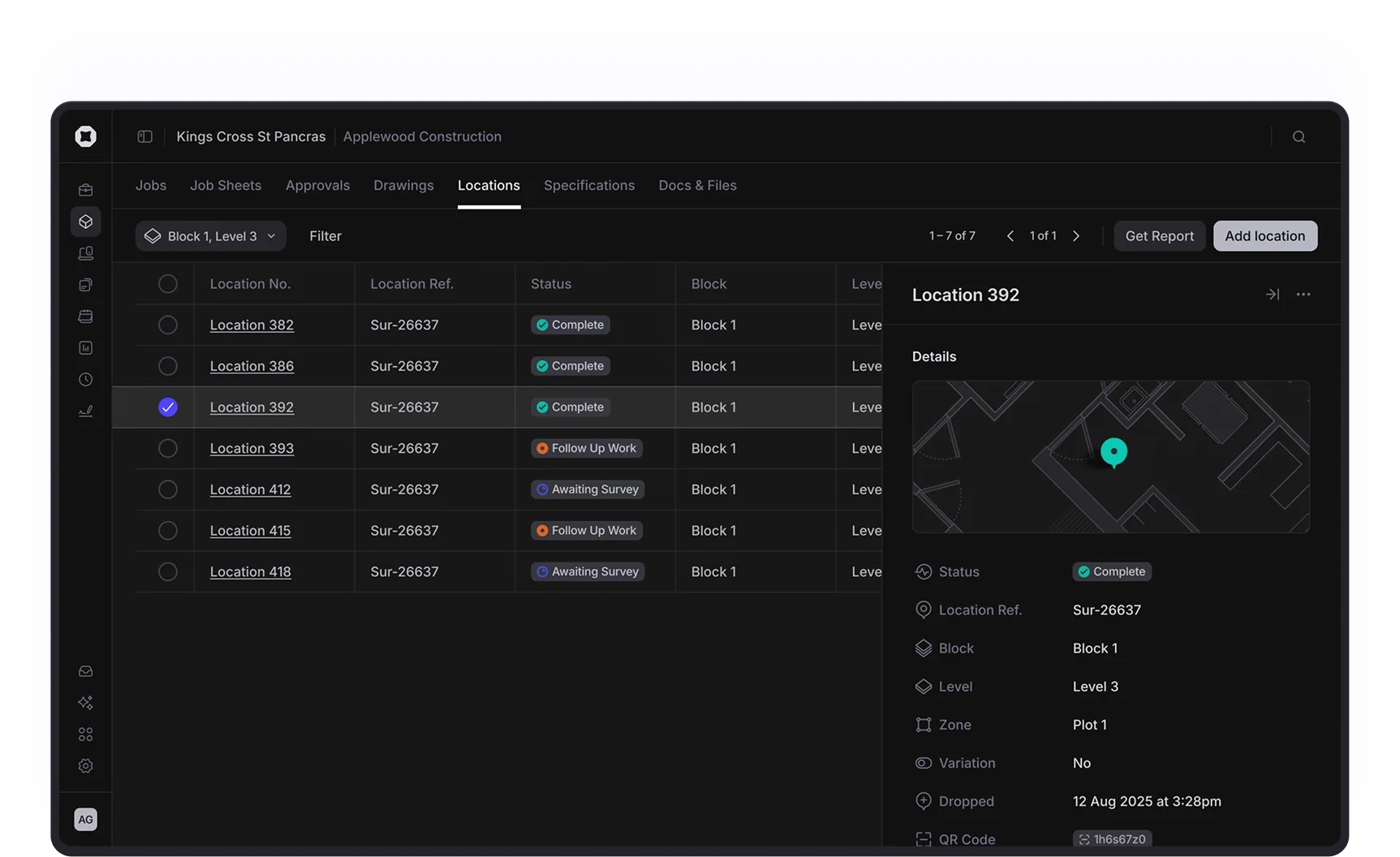
Every change is timestamped and stored automatically, creating traceable records of who updated what and when.
Even offline, drawings stay editable and accurate, so your markings and measurements never get lost with the connectivity.
6. Fire strategy document
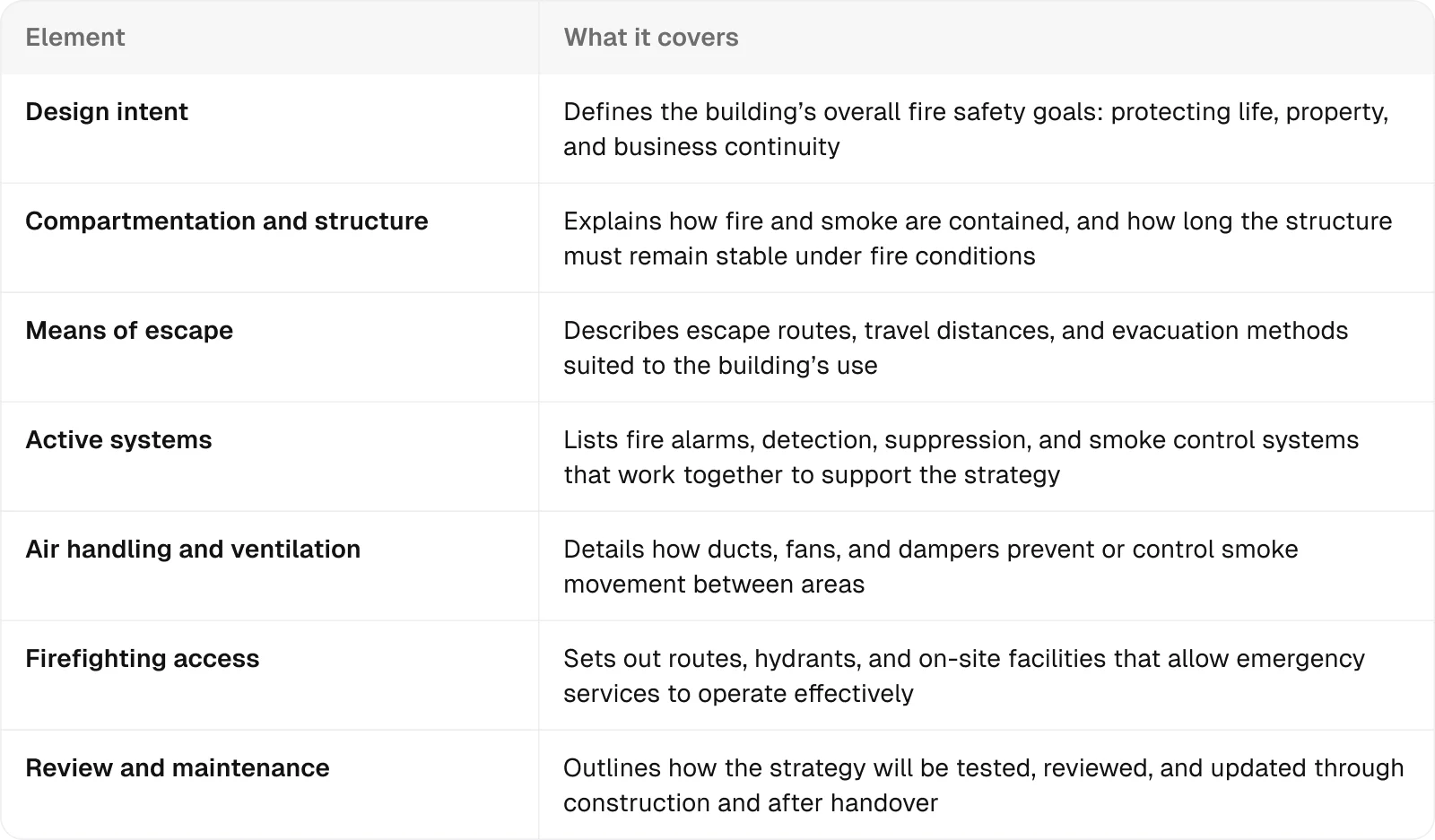
A fire strategy document brings every element of fire safety into one coordinated plan. It shows how a building is designed to resist fire, contain smoke, and protect the people inside.
For contractors, this technical document is a master reference.
It tells you things like why walls are fire-rated, why certain routes can’t be obstructed, and how services like sprinklers or ventilation are meant to perform.
At a practical level, a fire strategy should summarise the following elements:
Bring fire protection documentation into the digital age with Onetrace

For the most part, fire protection documentation has gone digital, and that’s a good thing. Digital records mean fewer errors, instant access, and a clear record of accountability.
However, with multiple teams, sites, and compliance checks to manage, you need one secure location where you can keep every drawing, certificate, and record.
And that’s what Onetrace delivers.
Besides allowing you to sign important documents in-app and mark up drawings with pinpoint accuracy, this platform offers:
Centralised compliance records: Store all your fire safety certificates, risk assessments, drawings, and inspection reports in one secure, cloud-based location and forget about chasing files across drives or emails.
Material traceability: Pre-configure materials like fire-rated mastic, wraps, or intumescent paint to match manufacturer specifications and ensure a full audit trail from material selection to job completion.
Smart templates for repeat tasks: Create and reuse job templates for common fire protection tasks so the right details are captured every time.
QR-code tracking: Label fire doors, penetrations, or service areas with QR codes, making on-site verification and reporting effortless.
Access control and privacy: Restrict sensitive documents like audit results or client data to authorised users only, protecting confidentiality without slowing down collaboration.
Sign up for a personalised Onetrace demo to see how your fire protection documentation can stay accurate, accessible, and up to date.
FAQ
What information should a fire protection plan include?
A fire protection plan should include how fire risks will be prevented, detected, and managed on site, covering elements like prevention measures, alarm and evacuation arrangements, firefighting equipment, training, and ongoing maintenance to keep everything effective and compliant.
How to write a fire safety plan?
To write a fire safety plan, start by identifying fire risks and detailing how you’ll prevent, detect, and respond to them. Keep the plan clear, site-specific, and easy to follow, with defined roles, escape routes, and contact details.
Marketing Team
@Onetrace
The Onetrace marketing team is passionate about sharing insights, ideas, and innovations that help construction businesses stay connected, compliant, and efficient. Combining industry expertise with a love for clear communication, we aim to deliver content that empowers professionals to work smarter and safer.