Fire risk assessment in construction: Is your site safe?

By
Marketing Team
@Onetrace
From 2015 to 2024, there have been roughly 300 fires on construction sites each year in England.
That may seem like a small percentage of the total 177,219 fires attended by fire and rescue services in 2025, but this doesn’t make construction fires any less devastating.
A fire on site can put workers at risk, stop work overnight, and damage buildings and equipment. In serious cases, the damage can cost millions, with one hot work fire in 2020 leading to nearly £20 million in losses.
That’s why it’s crucial to manage fire risks from the start of a project, and a risk assessment is a key part of doing so.
Carrying out regular fire risk assessments helps teams spot hazards early, control them properly, and keep sites safe.
This guide focuses on the first phase of a fire risk assessment in construction: reviewing the main hazards on site and the conditions that could allow a fire to start or spread. It should help you determine whether your site is safe and where risks may need closer attention.
Key takeaways
Construction site fires can cause major disruption and financial loss
Fires on construction sites can stop work immediately, put workers at risk, and damage buildings, materials, and equipment. In serious cases, the resulting losses can run into the millions, making prevention critical for both safety and project continuity.Fire risk assessments help identify hazards before they escalate
Regular fire risk assessments allow teams to review on-site conditions and identify hazards early. Checking common risk areas such as waste buildup, flammable material storage, electrical work, and plant operation helps prevent fires from starting or spreading.Hot work is one of the biggest fire risks on construction sites
Activities like welding, grinding, and cutting generate sparks and heat that can easily ignite nearby materials. Proper controls, such as hot work permits, fire watches, and clearing combustible materials from the work area, are essential to keeping these tasks safe.Everyday site practices play a major role in fire prevention
Good housekeeping, safe storage of materials, clear escape routes, working alarms, and regular inspections all reduce the likelihood of a fire. Consistent routines on site often make the biggest difference in keeping risks under control.Digital tools can simplify fire safety compliance
Managing fire safety involves inspections, documentation, and follow-up actions across the site. Fire protection software like Onetrace helps teams keep records organised, track issues, and ensure fire protection work is completed and verified properly.
Fire risk assessment in construction: A 12-area checklist for identifying hazards
The checklist below highlights key questions that can help identify common fire hazards on construction sites. It’s not a full fire risk assessment, but it provides a comprehensive starting point when reviewing conditions on site.
A simple scoring approach can help when working through the questions:
Yes: The risk appears to be controlled.
No: Action may be needed to reduce the risk.
N/A: It’s not applicable to your site or activity.
Before starting, remember that a fire risk assessment in construction is a serious responsibility.
You can still carry it out yourself using recognised guidance. However, if you don’t have the expertise or time, it’s best to appoint a competent person, such as a professional fire risk assessor.
1. Site housekeeping and waste control
Waste materials like packaging, wood, cardboard, and oily rags can quickly become fuel if they are allowed to build up.
Checklist:
Are combustible waste materials removed from work areas regularly to prevent buildup?
Are combustible materials kept away from heat sources and ignition points?
Are rubbish skips and waste storage areas located away from buildings, temporary structures, and flammable materials?
Are suitable containers used for hazardous waste, such as metal bins with lids for oily rags or flammable waste?
Are work areas, storage spaces, and walkways kept clear of loose materials and debris?
Is combustible waste prevented from accumulating in enclosed or below-ground areas?
Are escape routes, shafts, and access routes kept clear of waste and stored materials?
Are clear site rules in place requiring contractors to remove waste and keep work areas tidy?
Is waste disposed of through proper waste management methods rather than burned on site?
2. Storage of flammable materials
Flammable liquids, gases, and other combustible materials are common on construction sites, but they can quickly turn a small spark into a serious fire if they aren’t stored properly.
Checklist:
Are flammable liquids such as fuel, paint, and solvents stored in approved containers designed for that purpose?
Is the quantity of combustible or flammable materials on site kept to the minimum needed for the work?
Are flammable liquids and materials stored away from buildings, work areas, and ignition sources?
Are fuel storage areas clearly marked and kept well-ventilated?
Are gas cylinders stored upright, secured, and protected from unauthorised access?
Are oxygen cylinders stored separately from fuel gas cylinders?
Are flammable liquids and gas cylinders stored separately from each other?
Are flammable materials avoided in underground or confined working areas unless required for immediate use?
Are storage areas kept clear of waste, vegetation, and other combustible materials?
Are appropriate fire extinguishers available near flammable material storage areas?
3. Plant and equipment operation
Engines, generators, lighting, and batteries can all become ignition sources if they overheat, are poorly maintained, or are used in the wrong location.
Checklist:
Is the plant and equipment suitable for the task and sized to prevent overheating during normal use?
Is the plant positioned in well-ventilated areas and kept away from combustible materials and structures?
Are generators and engine-driven plant avoided in enclosed or poorly ventilated spaces where possible?
Is petrol-fuelled equipment avoided indoors and only used in open or well-ventilated areas when necessary?
Are designated refuelling areas used, away from ignition sources and combustible materials?
Is refuelling carried out only when engines are switched off and cooled down?
Are the plant and equipment maintained regularly, including cleaning air filters and intakes in dusty conditions?
Are leaking machines removed from service until repairs are completed?
Are exhausts, hot surfaces, and lighting equipment kept clear of combustible materials?
Are temporary lights securely fixed and positioned to prevent them from being knocked over or covered?
Are modern battery systems, such as lithium-ion batteries, stored, charged, and used safely to prevent overheating or damage?
Are the plant and equipment stored in a way that doesn’t block escape routes or emergency access?
4. Vehicle parking and fire risk control
Vehicles are a routine part of construction work, but engines, fuel systems, and hot surfaces can all create fire risks.
Checklist:
Are vehicles parked at a safe distance from buildings and construction areas wherever possible?
Are vehicles checked regularly for fuel, oil, or lubricant leaks?
Are leaks repaired promptly and contained using spill kits or bunding until fixed?
If a fuel leak occurs, is the vehicle removed from the work area and kept out of use until repaired?
Are appropriate fire extinguishers available in vehicle cabs where required?
Where vehicles operate in higher-risk areas like tunnels, are suitable fire suppression measures in place?
5. Electrical safety
Electrical work is common on construction sites and can easily become a source of ignition if installations, cables, or equipment are poorly managed.
Checklist:
Are electrical installations designed, installed, and maintained by competent electricians?
Are temporary electrical systems suitable for site conditions and protected from damage?
Are electrical installations inspected and tested regularly, with records kept of the checks?
Are portable electrical tools and equipment tested and clearly labelled with valid PAT dates?
Are damaged cables, equipment, or appliances removed from use until repaired or replaced?
Are electrical panels and distribution boards kept accessible and free from stored materials or rubbish?
Are extension leads, adaptors, and trailing cables avoided where possible and used safely when required?
Are extension cables fully unwound and protected from overloading or damage?
Are electrical circuits protected with appropriate safety devices such as RCDs?
Is electrical equipment switched off when not in use, where it is safe to do so?
6. Hot work safety
Hot work is consistently one of the biggest causes of fires on construction sites, sometimes accounting for as much as 79% of all construction fires.
Activities such as welding, cutting, and grinding generate sparks and heat that can easily ignite nearby materials if the work isn’t carefully controlled.
Checklist:
Is hot work avoided or replaced with safer alternatives wherever possible?
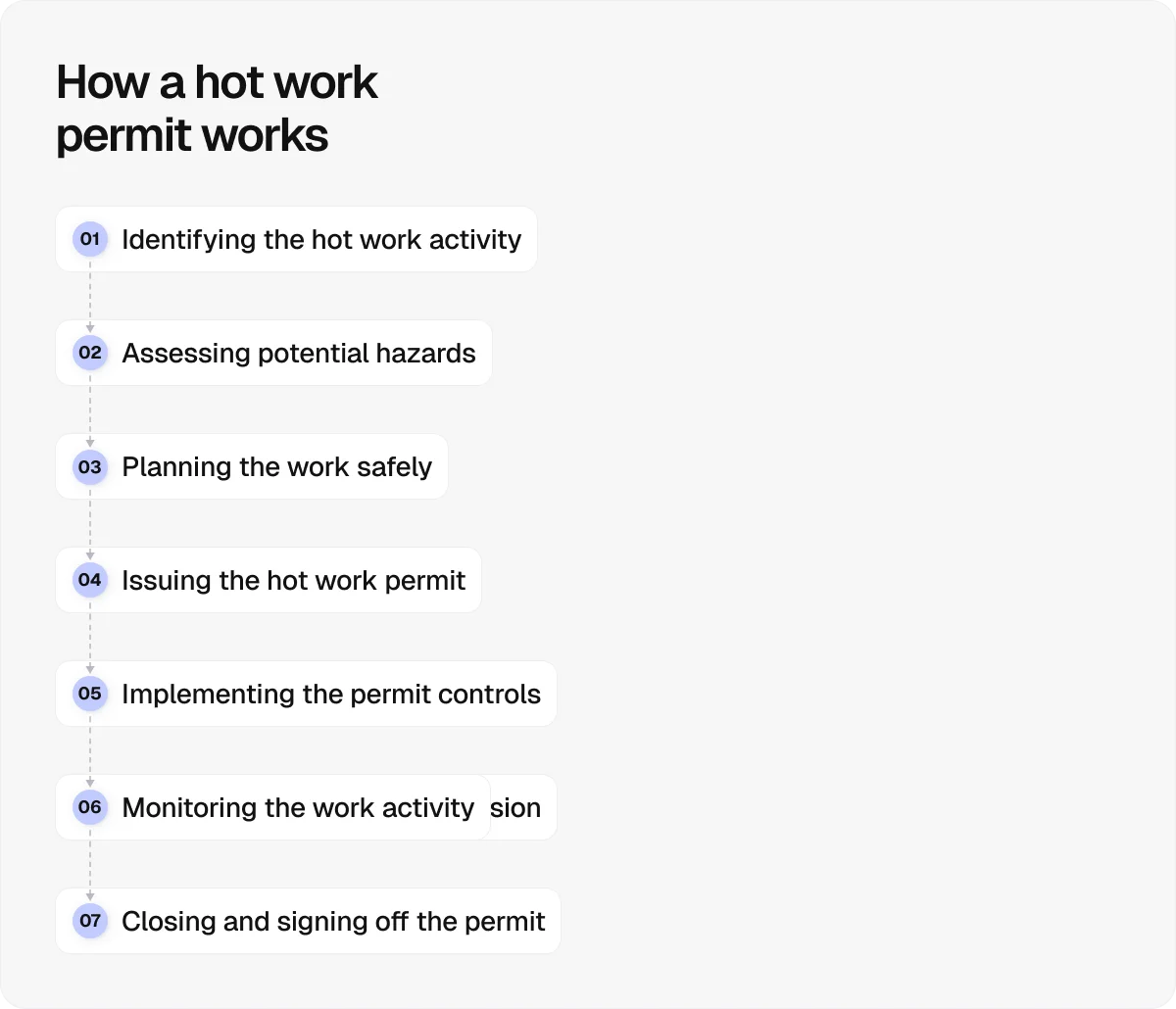
Where hot work is necessary, is a permit-to-work system used to approve and control the activity?
Are hot work permits issued before work begins and closed when the work is complete?
Are combustible materials removed from the work area and nearby spaces before hot work starts?
Where materials can’t be removed, are they properly protected with non-combustible coverings?
Are suitable fire extinguishers available and within reach of the hot work area?
Are workers carrying out hot work trained and competent to perform the task safely?
Is a fire watch maintained during hot work activities?
Is the area monitored for a sufficient period after work ends to ensure no hidden fires remain?
7. Fire protection equipment
Even with good prevention measures, fires can still occur.
Early warning systems and accessible fire-fighting equipment help people respond quickly, raise the alarm, and limit damage before a fire spreads.
Checklist:
Is there a clear system to alert everyone on site in case of fire, such as a fire alarm, klaxon, bell, or air horn?
Is the warning signal distinctive, audible above site noise, and recognisable by everyone on site?
Where fire detection systems are installed, is their coverage suitable for the size and layout of the site?
Are fire extinguishers located at clearly identified fire points around the site?
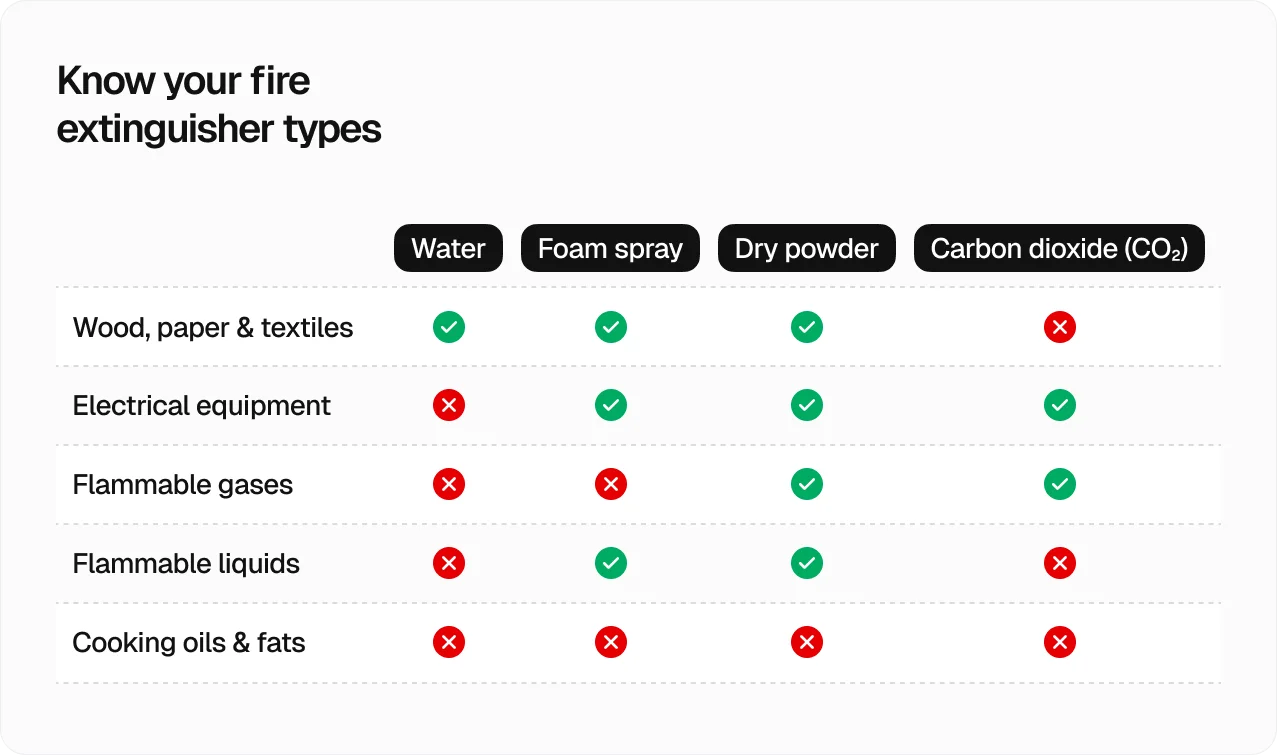
Are extinguishers suitable for the types of fire risks present on site?
Are fire extinguishers inspected regularly and maintained in working condition?
Are fire points and fire-fighting equipment clearly marked and easily accessible?
Are hydrants, hose reels, or water supplies for firefighting available and kept clear of obstructions?
Where installed, are fire doors in place, kept closed when required, and free from obstruction or damage?
Are workers trained in the correct use of fire extinguishers where appropriate?
Is the adequacy of fire-fighting equipment reviewed as the site changes and work progresses?
8. Emergency access and escape routes
If a fire breaks out, people must be able to leave the site quickly and safely.
Checklist:
Are escape routes clearly defined and kept free from obstructions at all times?
Are fire exits clearly marked and easy to open immediately in an emergency?
Are escape routes designed so people can reach ground level safely and quickly?
Where possible, are alternative escape routes available from work areas?
Are escape routes clearly signposted so they are easy to follow, even for workers unfamiliar with the site?
Do escape routes lead to a safe assembly point where workers can gather and be accounted for?
Are designated assembly points clearly identified and known to workers on site?
Is emergency lighting provided where escape routes pass through enclosed or poorly lit areas?
Are fire access routes kept clear so emergency vehicles can reach the site if needed?
9. Smoking control
Smoking is a common source of ignition on construction sites, especially where combustible materials and waste are present.
Checklist:
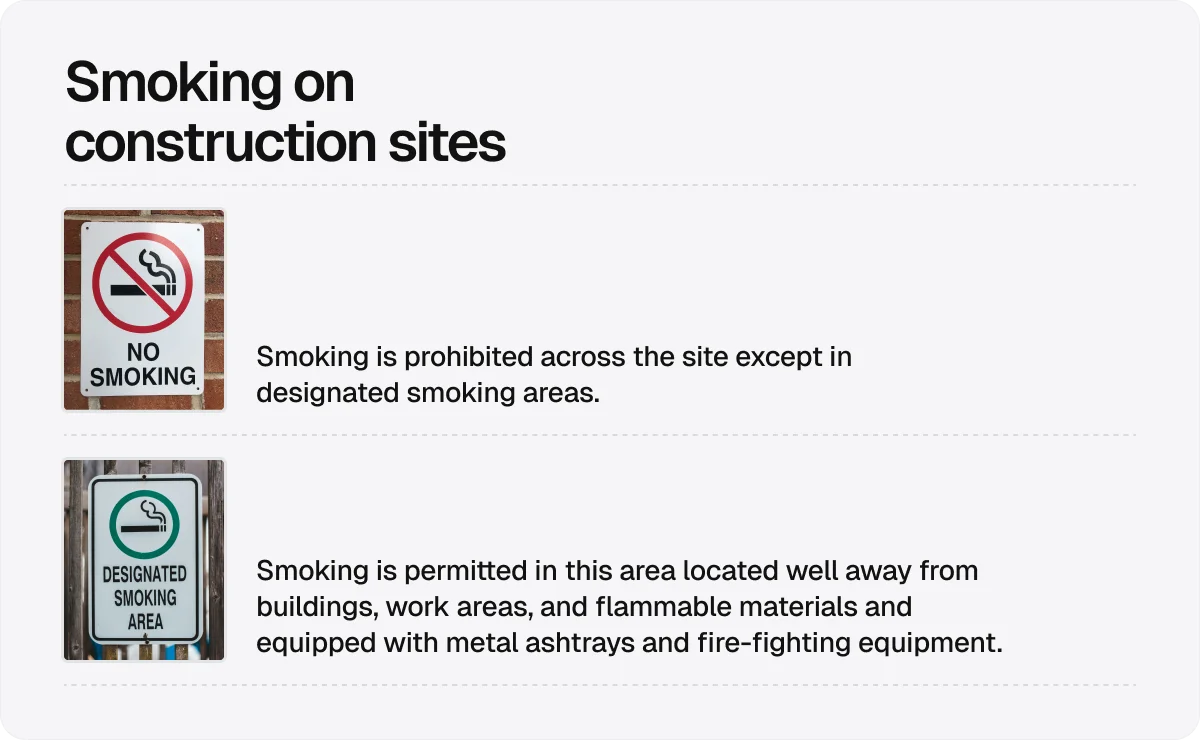
Is a clear no-smoking policy in place across the site except for designated smoking areas?
Are designated smoking areas located well away from buildings, work areas, and flammable materials?
Are smoking areas positioned away from entrances, exits, ventilation inlets, and waste storage areas?
Are metal ashtrays or bins with lids provided to safely dispose of smoking materials?
Is appropriate fire-fighting equipment available near designated smoking areas?
Are smoking rules clearly communicated to workers and visitors on site?
Are ‘No Smoking’ signs displayed in relevant areas across the site?
10. Temporary buildings and accommodation
Temporary buildings like site cabins, offices, and workshops are often used throughout a project.
If they are poorly located or constructed, they can increase the risk of fire spreading quickly across the site or into the main structure.
Checklist:
Are temporary buildings positioned at a safe distance from the main construction area where possible?
Is the space between temporary buildings and the construction site kept clear of combustible materials?
Where buildings are grouped together, are they arranged to help prevent fire from spreading between them?
Do temporary buildings meet fire resistance requirements for walls, roofs, doors, and windows?
Are fire doors fitted where required and kept closed when areas are not in use?
Are fire detection systems installed in temporary buildings where required and connected to the site fire alarm system?
Are escape routes from temporary buildings clearly defined and regularly checked?
Are heaters and cooking appliances installed safely and kept away from combustible materials?
11. Site security and arson prevention
Around 40% of construction site fires are started deliberately, making arson a significant risk, especially when sites are left unattended outside working hours.
Checklist:
Is the site secured to prevent unauthorised access outside working hours?
Are site entrances, gates, windows, and other access points locked or otherwise secured?
Are flammable materials, gas cylinders, and fuels stored in secure compounds or locked storage areas?
Are combustible materials and waste stored away from the site perimeter where possible?
Are security measures such as fencing, hoarding, or controlled entry points in place?
Is adequate lighting provided to deter unauthorised access to the site?
Where risks are higher, are additional security measures such as CCTV, alarms, or security patrols in place?
Are the plant, cables, and other valuable materials secured or kept out of sight to reduce the risk of theft-related arson?
Are fire hazards checked and equipment shut down before the site is left unattended?
12. Documentation and inspections
Fire safety on construction sites depends on regular checks and traceable records.
Checklist:
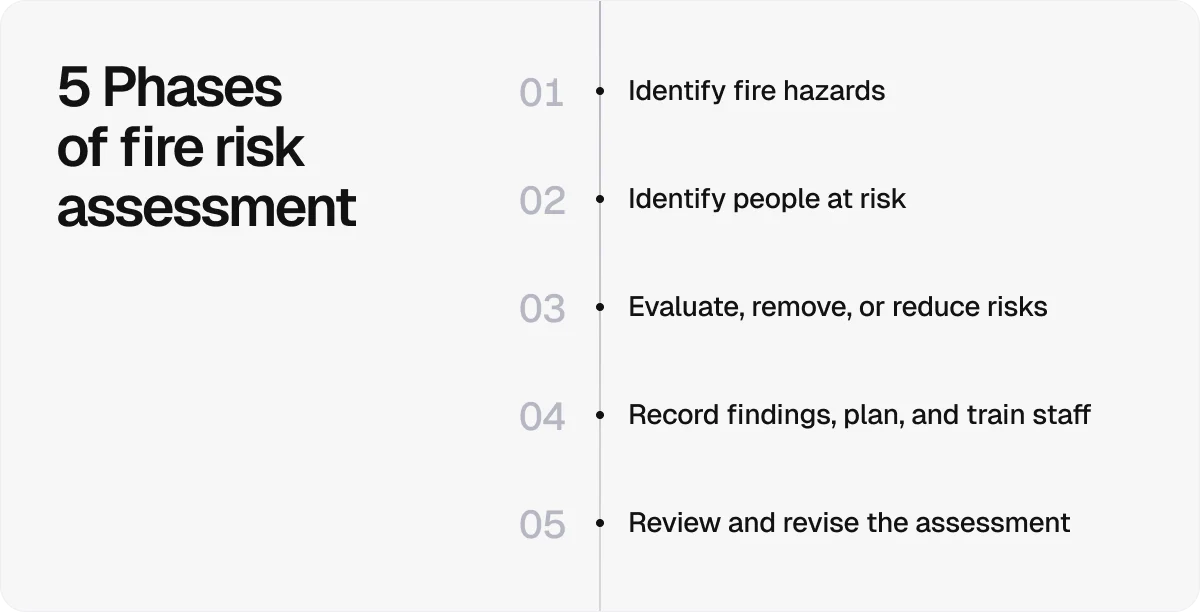
Are fire risk assessments carried out regularly and reviewed when site conditions change?
Is a site fire safety plan in place and based on the findings of the fire risk assessment?
Has a responsible person been appointed to manage fire safety on site?
Are fire safety procedures, including evacuation arrangements, clearly documented?
Are workers given regular training and instructions on what to do in the event of a fire?
Are staff with specific responsibilities, such as fire wardens, given additional training for their roles?
Are routine inspections carried out to ensure escape routes remain clear and fire exits operate properly?
Are fire alarm systems and detectors tested regularly and maintained as required?
Is emergency lighting tested and maintained on a scheduled basis?
Are fire extinguishers inspected and maintained in line with required standards?
Are fire door surveys carried out where fire doors are installed to ensure they remain compliant and in good condition?
Are records kept for fire safety inspections, testing, and maintenance?
Are fire incidents, near misses, and corrective actions documented and followed up on?
How Onetrace helps manage fire risk assessments in construction

Fire risk assessments involve a large amount of information: site checks, documentation, inspections, and follow-up actions.
Keeping everything organised and accessible can make the process much easier.
Fire protection software like Onetrace helps teams track issues, record findings, and maintain traceable compliance records across a project, thanks to features like:
Documents and files: Store fire risk assessments, fire safety certificates, drawings, and compliance records in a single central location, accessible only to authorised personnel.
Form templates: Create standardised forms so inspections collect the right information every time.
Custom forms with required fields: Ensure critical safety details are never missed by making inputs mandatory.
Photographic evidence: Capture visual records of hazards, fire protection measures, or defects directly in the app.
Site manager: Map buildings into floors, zones, and areas to organise fire inspections and track the location of risks or corrective actions.
QR codes: Label areas like fire doors, so teams can quickly access inspection records on site.
Job attributes: Record key fire safety details, such as fire ratings or installation methods, to support compliance checks and audits.
Material tracking: Keep clear records of fire protection materials installed on site to support inspections and verification.
Custom approval flows: Introduce structured approval stages so work is reviewed and verified before sign-off, helping ensure installations meet safety requirements.
Schedule a tailored walkthrough to see how Onetrace helps you manage fire safety compliance on site.
Marketing Team
@Onetrace
The Onetrace marketing team is passionate about sharing insights, ideas, and innovations that help construction businesses stay connected, compliant, and efficient. Combining industry expertise with a love for clear communication, we aim to deliver content that empowers professionals to work smarter and safer.