Understanding construction financial planning [Complete guide]

By
Marketing Team
@Onetrace
Construction financial planning is the process of developing a financial roadmap that supports project delivery, business performance, and long-term commercial stability.
The consequences of poor planning in this area are evident in the number of UK construction businesses facing financial distress and insolvency.
In the 12 months to May 2026, the UK construction industry recorded 3,803 insolvencies—more than any other sector. Specialist contractors took the brunt of it, making up 60% of May’s insolvencies alone.
The picture becomes even more concerning when looking beyond insolvencies. BTG’s Red Flag Alert found almost 9,500 construction firms in ‘critical’ financial distress in the first quarter of 2026, up around 50% compared to the year before.
To help you build a more financially resilient business, this guide breaks down the basics of construction financial planning and shows you how to put it into practice.
Key takeaways
Financial planning protects profit and cash flow
It gives construction businesses a structured way to manage costs, revenue, and financial risk.Cash flow is just as important as profitability
Delayed payments and high upfront costs can create financial pressure even on profitable projects.Proper planning covers more than budgets
Labour, equipment, tax, compliance, and risk management all play a role in financial performance.Financial plans should be reviewed regularly
Updating forecasts and monitoring performance lets businesses respond to changing project conditions.Better data leads to better decisions
Onetrace provides visibility into project progress, labour, materials, and costs, allowing businesses to plan more accurately and maintain control over profitability.
What is construction financial planning?
Construction financial planning is the process of forecasting, allocating, and controlling financial resources across projects to ensure work remains profitable, cash flow remains stable, and business objectives are met.
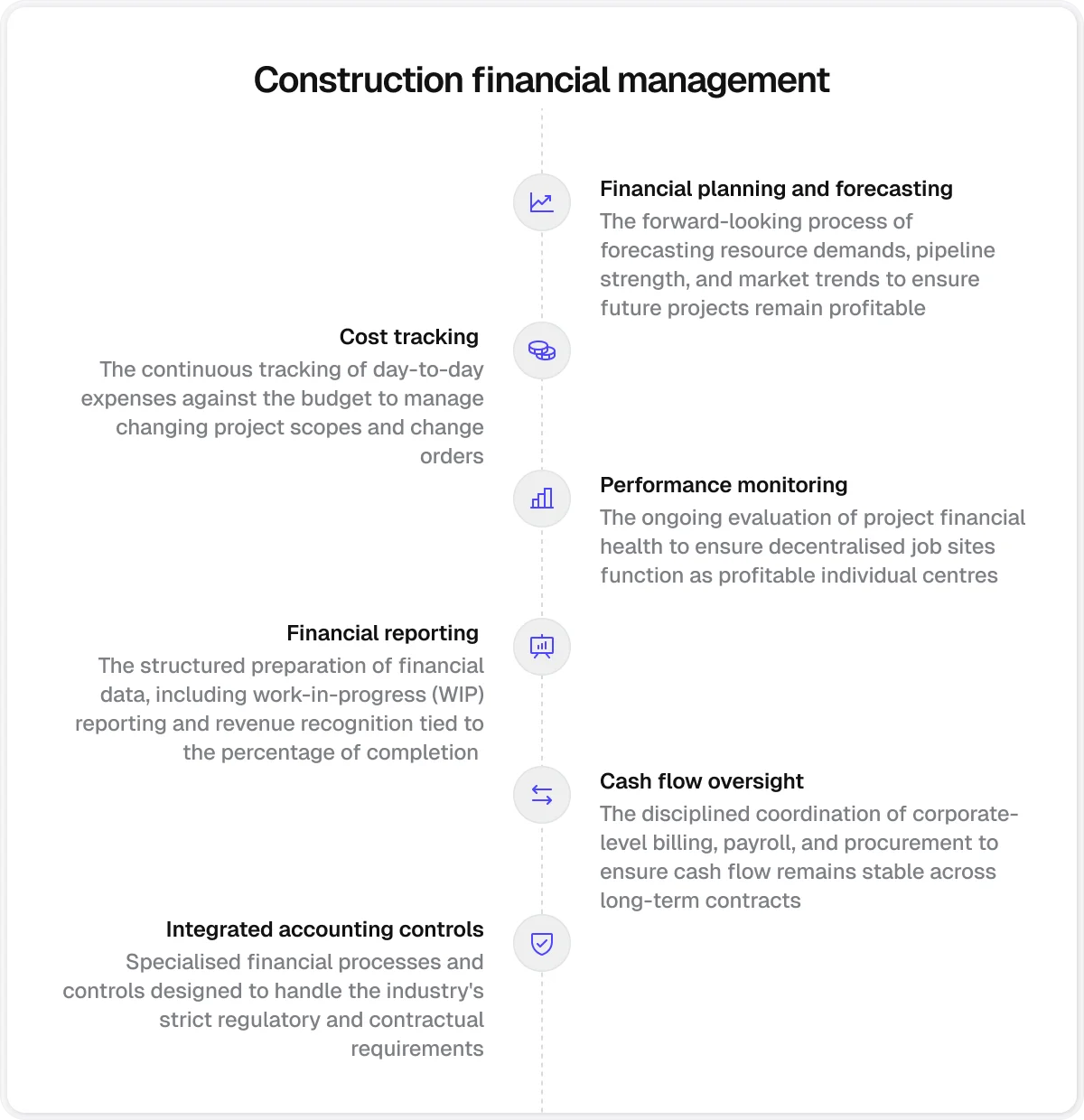
This process sits within the wider discipline of construction financial management, which covers all activities involved in handling a construction company’s finances, including:
Performance monitoring
Financial planning is the forward-looking element of construction financial management. It focuses on what’s expected to happen and what actions need to be taken in response.
Why does construction require a different approach to financial planning?
Construction requires a different approach to financial planning because projects are often complex, long-running, and exposed to a level of financial uncertainty that many other industries don’t face.
Take profitability as an example.
Construction firms usually operate on tight margins, leaving little room for unexpected costs, delays, or budgeting errors. In 2025/26, the median profit margin within the sector was just 3.68%, while many of the UK’s largest contractors reported margins below 2%.
Other factors that differentiate construction budgeting and forecasting from standard business financial planning include:
Long project lifecycles: Projects can run for months or years, requiring businesses to plan finances well beyond a typical accounting period.
Cash flow pressures: High upfront costs, retention payments, and long payment cycles can create cash flow gaps even on profitable projects.
Fluctuating material and labour costs: Changes in market conditions can quickly affect project budgets and expected profit margins.
Changing project scopes: Variations and change orders can alter costs, timelines, and resource requirements during project delivery.
Multiple project budgets: Construction businesses often manage several active projects at once, each with its own costs, revenue, and profitability targets.
Complex contractual and regulatory requirements: Contract terms, compliance obligations, and reporting requirements can all affect financial planning and risk management.
Decentralised operations: Work takes place across multiple sites, while payroll, procurement, invoicing, and financial oversight must remain coordinated.
Why is construction financial planning important?
Construction financial planning is important because it gives businesses the structure and visibility needed to manage uncertainty, which results in the following benefits:
Improved profitability: Better financial planning allows businesses to protect margins, control costs, and identify issues before they affect project performance.
Greater financial stability: Clear visibility over future income, costs, and commitments helps businesses remain financially secure, even during periods of volatility.
More confident decision-making: Access to reliable financial forecasts and performance data supports better decisions around bidding, hiring, investment, and growth.
Reduced financial risk: Planning ahead makes it easier to prepare for unexpected costs, project delays, market fluctuations, and other financial challenges.
Stronger stakeholder confidence: Consistent financial performance and structured reporting build trust with clients, lenders, investors, and suppliers.
Improved operational efficiency: Well-defined financial targets enable teams to prioritise resources, reduce waste, and stay focused on project and business goals.
Faster business growth: Financial planning supports sustainable business expansion by ensuring resources, cash flow, and future commitments remain aligned with growth plans.
Who is responsible for construction financial planning?
Responsibility for construction financial planning typically sits with a construction financial manager, finance director, or business owner, depending on the size and structure of the business.
However, these roles rely on input from several teams, each contributing information that shapes financial forecasts, budgets, and project performance:
Role | Contribution to financial planning |
Estimator | Provides cost estimates that form the basis of project budgets and bids |
Procurement team | Helps forecast material costs, supplier commitments, and purchasing requirements |
Commercial manager / Quantity surveyor | Monitors costs, valuations, variations, and project profitability |
Project manager | Provides updates on progress, resource requirements, risks, and programme changes that affect financial performance |
Contractors and subcontractors | Help identify labour requirements, programme risks, material needs, and potential cost changes that influence project budgets and forecasts |
Payroll / Accounts team | Supports financial planning with accurate records of labour costs, invoices, and payments |
6 core components of construction financial planning
A robust construction financial plan should address each of the six components outlined below.
1. Cash flow forecasting and planning
Cash flow planning gives construction businesses greater confidence that they have enough money available to fund day-to-day operations throughout the project.
This confidence is particularly important in construction, where labour, materials, and subcontractors often need to be paid long before client payments are received.
To make matters worse, client invoices are frequently paid late, with 95% of UK construction businesses reporting late payment issues in 2025. Plus, construction also has the longest average payment delay of any UK sector at 38.2 days, which can create significant cash flow gaps even on profitable projects.
To manage these challenges, cash flow planning typically includes:
Forecasting income and expenditure
Planning for payment delays and retention
Managing working capital requirements
Maintaining cash reserves
Aligning payment schedules with project milestones
2. Project budgeting and financial forecasting
Every construction project starts with financial assumptions. Budgeting and forecasting turn those assumptions into a structured financial plan that guides decision-making throughout the project lifecycle.
A detailed budget establishes expected costs, revenue, and profit margins before work begins. It also lets businesses assess whether a project is financially viable and identify potential funding requirements early.
Key budgeting activities include:
Estimating labour, material, plant, and subcontractor costs
Forecasting project revenue and profitability
Allocating overheads and indirect costs
Setting contingency allowances for unexpected events
Well-developed budgets provide a benchmark against which future performance can be measured and reviewed.
3. Labour and workforce planning
Construction projects depend on having the right people available at the right time. Workforce planning helps businesses forecast labour requirements, control employment costs, and avoid resource shortages that could delay project delivery.
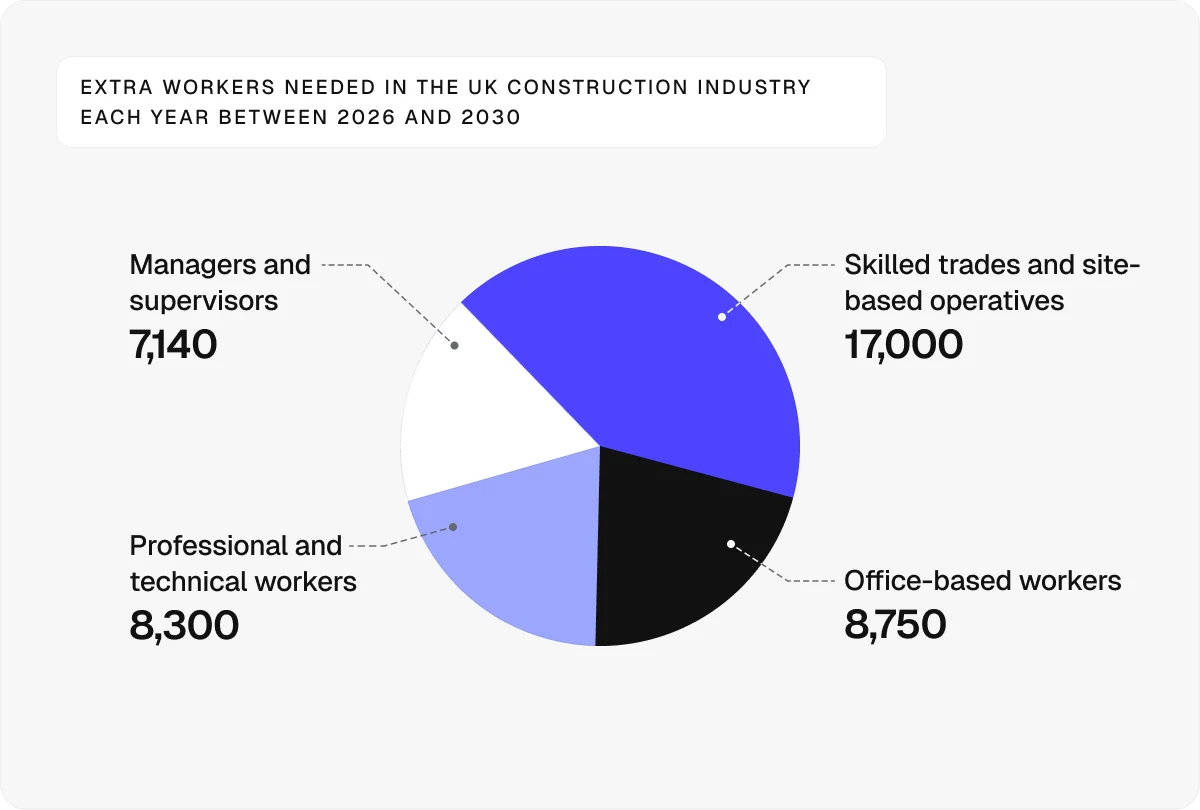
This component has become increasingly important as skills shortages continue to affect the UK construction industry. According to Construction Industry Training Board (CITB) forecasts, UK construction will require an average of around 41,200 additional workers every year between 2026 and 2030 to meet expected demand.
To ensure projects remain properly resourced without placing unnecessary pressure on budgets, labour planning typically includes:
Forecasting workforce requirements
Assessing recruitment needs
Budgeting for wages, training, and employment costs
Planning subcontractor requirements
Preparing for wage inflation and skills shortages
4. Plant, equipment, and asset planning
Plant and equipment decisions can have a significant impact on project costs, cash flow, and profitability. Financial planning informs decisions about what assets will be needed, when they will be needed, and whether buying, leasing, or hiring offers the best financial outcome.
The last decision has taken on a greater significance as the UK market has shifted towards plant hire, with rental companies accounting for around 68% of the equipment ownership in 2023. With this in mind, businesses must carefully assess several factors before committing to equipment purchases:
Expected utilisation rates
Purchase and financing costs
Maintenance and operating expenses
Rental and leasing alternatives
Asset lifespan and resale value
5. Tax, CIS, and compliance planning
Construction businesses operate within a complex regulatory environment that creates financial obligations beyond direct project delivery costs. Thanks to proper financial planning, these obligations are anticipated and funded instead of becoming unexpected liabilities.
This area of planning covers a range of requirements, including:
VAT liabilities and payment schedules
Corporation tax obligations
Payroll taxes and employer contributions
Industry-specific compliance requirements
6. Risk management and contingency planning
Most construction projects don’t go exactly to plan. Material price increases, labour shortages, programme delays, and scope changes can all affect financial performance.
Rather than forcing contractors to react to problems as they arise, financial planning allows them to identify potential risks early, assess their likely impact, and establish appropriate responses.
Common strategies here include:
Maintaining contingency budgets
Scenario planning and stress testing
Reviewing supplier and subcontractor risks
Securing appropriate insurance cover
Developing mitigation plans for high-impact risks
A step-by-step guide to construction financial planning
The following seven steps provide a practical framework for building a construction financial plan.
1. Review your current financial position
Before making financial plans, you need a comprehensive understanding of where your business stands today. To gain this understanding, review key financial information like:
Cash flow
Working capital
Debt levels
Profitability
Available cash reserves
This review creates a realistic baseline for future planning by identifying financial constraints and areas for improvement.
2. Analyse historical project performance
Past projects can provide valuable guidance for future financial decisions.
Go over previous budgets, forecasts, and project outcomes to identify recurring issues like cost overruns, cash flow pressures, or inaccurate estimates. Then, use these findings to improve future planning assumptions and avoid repeating costly mistakes.
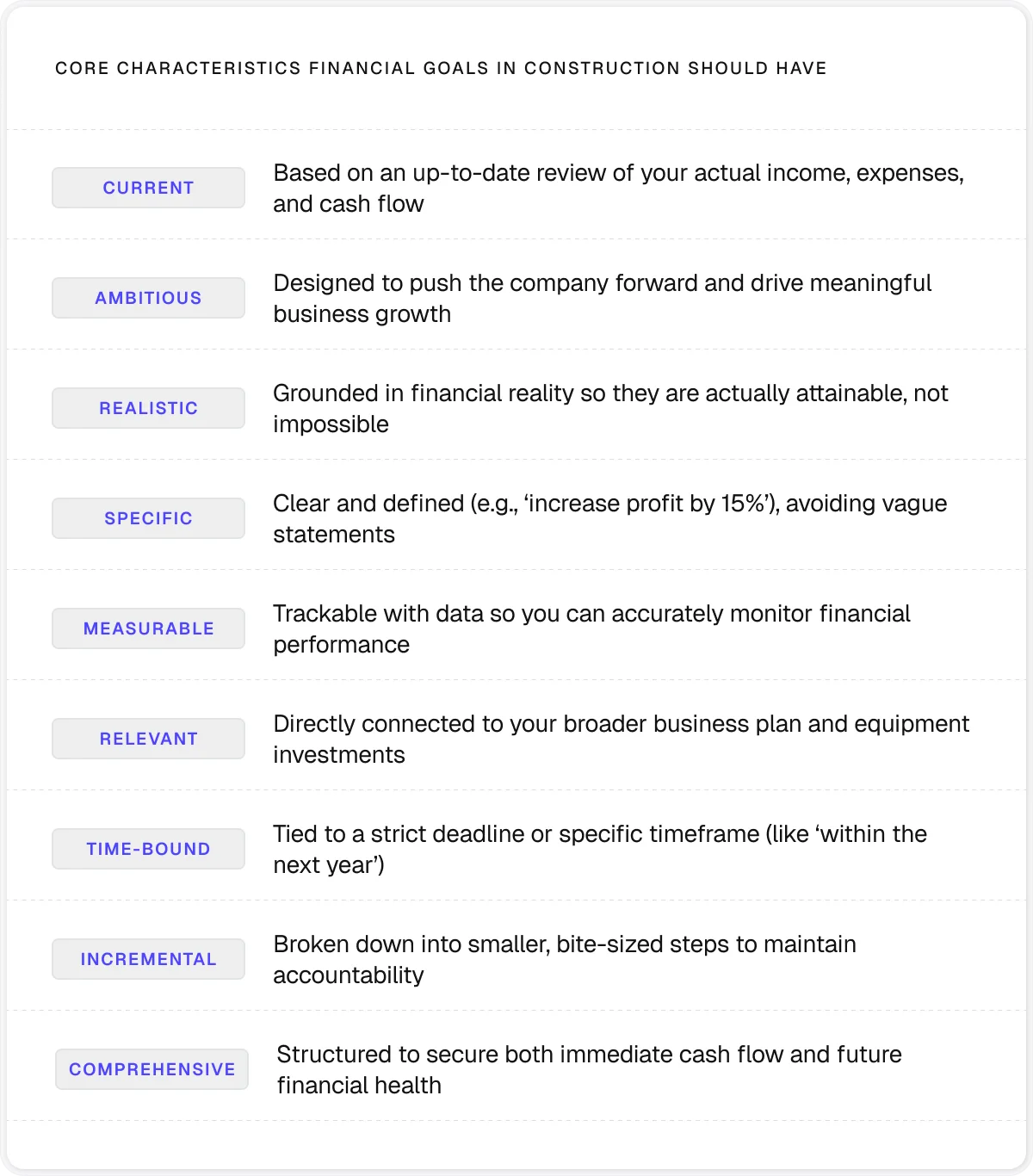
3. Set financial goals and targets
Define specific targets for revenue, profitability, cash reserves, growth, or debt reduction, and ensure they align with your long-term strategy. Well-defined goals provide direction and create defined reference points for assessing future performance.
4. Forecast future revenue and project workload
Forecasting gives businesses greater visibility over future income and resource requirements before committing to new work.
To assess future workload, examine your project pipeline, secured contracts, and expected opportunities. This information allows you to anticipate revenue, identify capacity constraints, and make informed decisions about recruitment, investment, and growth.
5. Build your financial plan
Your financial plan should support both project delivery and business objectives. To achieve this, it should include the information gathered in previous steps and cover all the key financial planning components examined in this article, including project budgets, cash flow forecasts, and tax obligations.
6. Stress-test your plan against potential risks
Financial plans should account for the uncertainty that exists across every stage of a construction project. To build such a plan, assess how factors like material price increases, labour shortages, payment delays, or project variations could affect your finances.
Scenario planning and contingency allowances can reduce the impact of unexpected events and improve financial resilience.
7. Monitor performance and update forecasts regularly
Construction financial plans need regular attention to remain accurate and relevant. This includes:
Comparing actual performance against budgets and forecasts to identify variances and emerging issues
Updating forecasts as project conditions change
Reviewing cash flow projections against actual income and expenditure
Reassessing risks and contingency requirements throughout project delivery
You should also use lessons learned from completed projects to improve future forecasts and budgets.
8 best practices for construction financial planning
These eight best practices can support more accurate forecasting, stronger financial control, and better long-term decision-making:
Base forecasts on reliable data: Use historical project performance, current workloads, and market conditions to improve forecast accuracy.
Account for seasonal and market fluctuations: Factor in changing demand, labour availability, material prices, and wider economic conditions when developing financial plans.
Monitor project profitability, not just revenue: Assess project margins alongside turnover to identify issues early and protect overall business performance.
Separate project and business finances: Distinguish project-level costs and revenue from company-wide finances to improve budgeting, forecasting, and reporting.
Build strong relationships with suppliers and lenders: Favourable payment terms, credit facilities, and reliable supply chains can provide additional financial flexibility when needed. Running KYC checks on new suppliers and subcontractors also helps confirm their financial stability before you commit to a partnership.
Work with construction finance specialists: Specialist accountants and financial advisers can provide guidance on industry-specific issues, such as CIS, retention, tax planning, and profitability management.
Encourage collaboration between financial, commercial, and operational teams: Shared financial information helps ensure budgets, forecasts, and project decisions remain aligned.
Invest in construction management software: Integrated construction software can bring together progress, financial, and resource data in one place, making it easier to build accurate forecasts, monitor performance, and keep financial plans aligned with day-to-day operations.
Why use Onetrace for construction financial planning

Effective construction financial planning depends on more than accounting data. To build accurate budgets, forecasts, and cash flow plans, businesses also need visibility into project progress, labour utilisation, material usage, productivity, and scope changes.
Without access to this operational data, financial plans can quickly become disconnected from what is actually happening on site.
Onetrace helps bridge that gap by bringing project, workforce, and operational information together in a single platform.
Key features that support construction financial planning include:
Labour and workforce visibility: Track operative hours, attendance, productivity, and project allocation to support labour forecasting and workforce planning.
Material and cost tracking: Monitor material usage, quantities, rates, and project costs in real time to improve budgeting accuracy and cost control.
Variation tracking: Record and monitor changes to project scope as they occur to prevent them from affecting project costs and profitability.
Productivity reporting: Analyse project, team, and operative performance to identify trends, improve resource allocation, and support future forecasting.
Project planning and scheduling: Allocate resources, manage workloads, and maintain visibility over upcoming work through a centralised planning system.
Centralised reporting: Generate detailed project reports that bring together operational and cost information, giving decision-makers the visibility needed to monitor performance and make informed financial decisions.
API and system integration: Export project, workforce, and operational data to other business systems, helping ensure financial forecasts and reports are supported by accurate site-level information.
By connecting project delivery with the data that drives financial performance, Onetrace allows contractors and subcontractors to build more accurate financial plans while maintaining greater control over profitability as projects progress.
With the right project data at your fingertips, financial planning becomes more accurate, proactive, and reliable. Book a personalised demo to see how Onetrace can help.
FAQ
How do you construct a financial plan?
To construct a financial plan, assess your current financial position, analyse past project performance, set financial goals, forecast future workload, build budgets and forecasts, and account for risks.
What type of accounting is used in construction?
Construction businesses typically use project-based accounting methods like job costing and percentage-of-completion accounting to track project revenue, costs, and profitability.
Marketing Team
@Onetrace
The Onetrace marketing team is passionate about sharing insights, ideas, and innovations that help construction businesses stay connected, compliant, and efficient. Combining industry expertise with a love for clear communication, we aim to deliver content that empowers professionals to work smarter and safer.