How to improve construction planning skills: 8 practical steps

By
Marketing Team
@Onetrace
Construction planning is the process of organising the execution of a project, from sequencing work and allocating labour to managing materials, timelines, and risks.
The sheer complexity of this process makes construction planning skills among the most important ones you can have as a construction professional, both for your own performance and because the industry increasingly demands them.
With the UK construction output falling by 2% in the three months to February 2026, more than 140,000 roles unfilled, and around 74% of projects running late globally, there’s less room for error when it comes to keeping projects on track.
To help you plan and deliver more reliably despite slower output, skills shortages, and ongoing delays, this guide shows how to improve construction planning skills in eight practical, grounded ways.
Key takeaways
Understand the full project, not just your part
Strong planning comes from seeing how early decisions affect delivery later on. The more you understand design, procurement, and handover, the better your plans will hold up on site.Plan around constraints, not just tasks
Projects rarely fail because a task is missed; they fail because something blocks progress. Focus on labour, materials, access, and approvals early to keep work moving.Use real data instead of assumptions
Planning based on guesswork leads to unreliable schedules. Reviewing past projects, tracking delays, and building benchmarks helps you make more accurate predictions from the start.Stay close to the field, and communicate clearly
Site teams know what’s realistic. Regular check-ins, updates, and feedback loops help catch issues early and keep plans aligned with how work actually gets done.Use the right tools to apply your planning skills consistently
Good planning isn’t just about thinking; it’s about execution. Tools like Onetrace help you keep plans live, aligned, and based on real data, making it easier to reduce delays and deliver projects more reliably.
1. Strengthen your understanding of the full project lifecycle
Many construction planning issues start with a narrow view.
It’s common to focus on scheduling or delivery, without fully understanding what happens before or after. That gap can lead to missed risks, unrealistic timelines, and costly rework later on.
Strong planners see the full picture—from early feasibility and design through procurement, sequencing, coordination, and final handover.
To build that wider view, you should:
Sit in on phases you’re not usually involved in
Review past projects from start to finish, not just your part
Ask senior team members how early decisions affected delivery
Pay attention to where delays actually started, not just where they showed up
The aim is to understand how decisions in one phase affect everything that follows.
2. Learn to think in constraints
A common planning mistake is focusing only on tasks: what needs to be done, and in what order.
The problem with this approach is that construction projects rarely fail due to missing a single task. They typically fail because something gets in the way.
That’s why you should think in constraints, not just activities.
The table below outlines the most common constraints in construction projects and their impact on execution:
Constraint | What it looks like on site | How it impacts delivery |
Labour availability | Crews aren’t available when needed. | Work stalls or gets pushed back. |
Equipment access | Plant or machinery isn’t available when required. | Sequencing breaks down, and idle time increases. |
Material lead times | Materials arrive late or aren’t available. | Work stops or needs to be resequenced. |
Site conditions | Weather, access issues, or ground conditions slow progress. | Delays occur, and rework becomes more likely |
Permits and approvals | Inspections or approvals take longer than planned. | Critical activities are delayed. |
Trade coordination | Trades overlap or interfere with each other. | Productivity drops, and the site becomes congested. |
Logistics and access | Deliveries and site access aren’t well planned. | Work slows down, and inefficiencies increase. |
To plan around these constraints in practice, you should:
Ask ‘What could delay this?’ for every key activity
Check labour, materials, and access before locking timelines
Build programme float around high-risk tasks
Review past delays and trace them back to the original constraint
Given that UK construction productivity lags the wider economy by 13.5%, better planning—especially around constraints—is one of the fastest ways to close that gap, as well as stand out as someone who delivers projects on time.
3. Standardise best practices across projects
A common issue in construction is inconsistency.
Each project is often planned differently, even within the same company. This can lead to wasted time, uneven quality, and avoidable mistakes.
That’s why industry bodies like Construction Leadership Council and Royal Institution of Chartered Surveyors stress the need for more consistency.
You can achieve this by:
Using standard planning frameworks across all projects
Creating shared templates for schedules, reporting, and reviews
This approach allows you to avoid starting from scratch every time and spend more time improving planning decisions.
4. Use data from past projects
Many construction plans rely on assumptions too much, resulting in timelines that look right on paper but don’t hold up on site.
To avoid creating impractical plans, you should use real data to ground each planning decision.
This means:
Reviewing past projects before starting new ones
Comparing planned vs actual task durations
Tracking where delays happened and what caused them
Building simple benchmarks for repeat work
Over time, these steps build a planning instinct based on real outcomes.
5. Improve communication with field teams
Construction planning doesn’t happen in isolation.
The people doing the work often have the clearest view of what’s realistic, what’s missing, and what could go wrong. When that input isn’t built into the plan, problems show up later through delays, rework, or on-site workarounds.
To strengthen communication and avoid any issues in this department, you should:
Get input from site teams before finalising plans
Run short, regular check-ins to keep everyone aligned
Share updates in real time, so changes don’t get missed
Encourage feedback from crews when plans don’t match reality
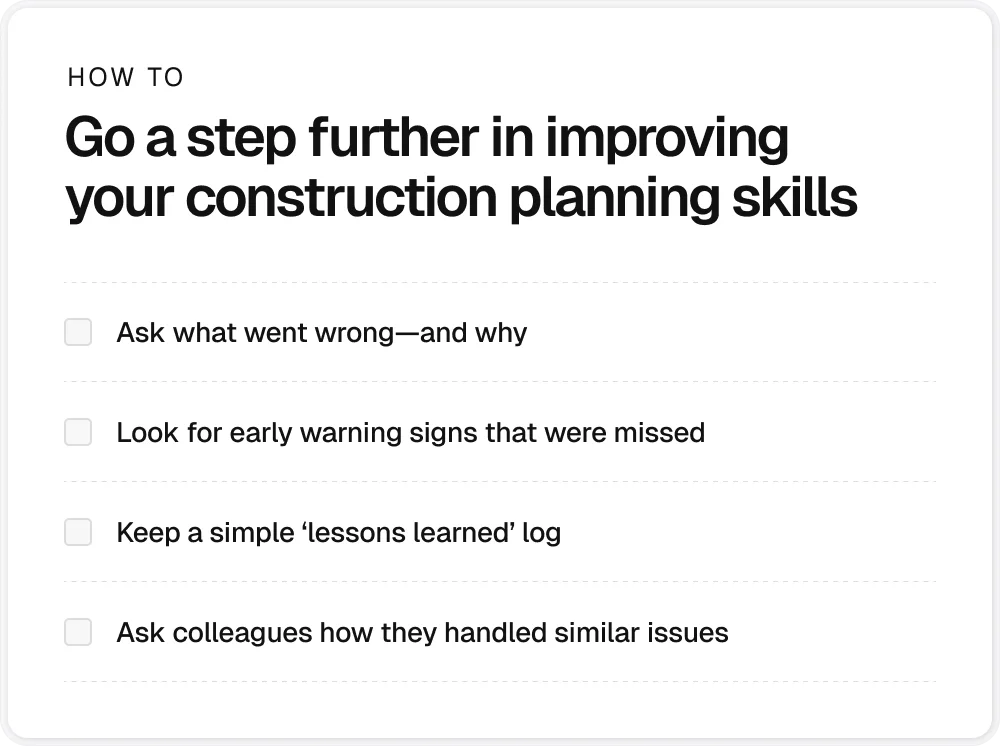
It also helps to close the loop. After key phases, review what didn’t go to plan and why, and feed that back into future work.
6. Develop risk awareness
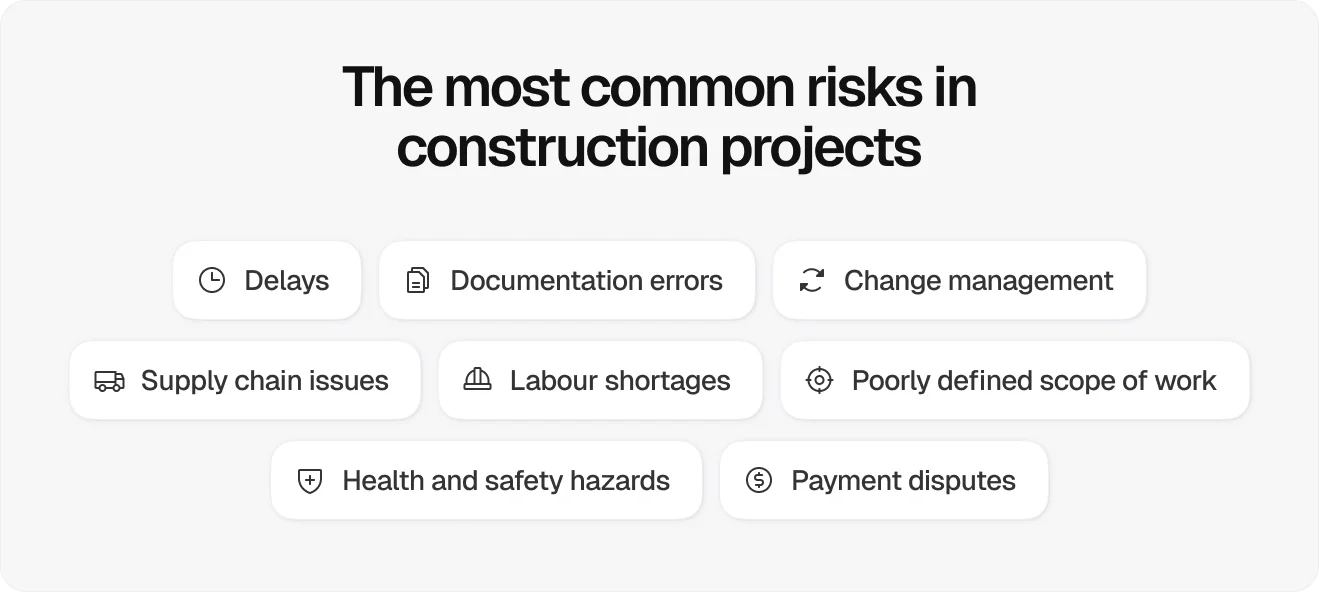
Not everything that affects delivery is known upfront, making risk part of every construction project. This, in turn, makes risk awareness and management a crucial part of effective construction planning.
To build these into your planning process, you should:
Identify potential risks early using risk assessments and past project data
Focus on what might go wrong, not just what is already planned
Prioritise risks based on likelihood and impact
Put practical mitigations in place (e.g., backup suppliers, time buffers, and alternative approaches)
Review and update risks as the project evolves
The most successful planners don’t just manage what’s in front of them. They prepare for what could happen next.
7. Pursue continuous learning
While there’s no shortcut to experience in construction planning, you can speed it up by learning from the right sources.
Many planners rely only on day-to-day work, which limits how quickly skills develop and makes it harder to keep up with new methods, tools, and expectations.
To improve faster, use a mix of learning sources:
Source | What you gain | How to use it |
Senior planners | Real-world judgment and decision-making | Ask how they approach projects and review their plans |
Training courses | Structured methods (e.g. Critical Path Method and risk planning) | Focus on practical techniques you can apply |
Industry bodies | Standards and best practices | Follow updates and guidance |
YouTube and other online content | Quick, visual explanations | Use for specific topics after checking source quality |
Books and publications | Deep, experience-based knowledge | Learn from practitioners, not theory alone |
Internal reviews | Shared lessons across teams | Run planning reviews and post-project feedback |
The key is to learn continuously—not occasionally—and apply what you pick up straight away.
8. Use technology to support (not replace) thinking
Construction management software has become a key part of modern planning, as it gives teams better visibility, faster updates, and a clearer view of progress.
But even with all these benefits, it shouldn’t be used to replace thinking.
The software can help you with:
Tracking progress and changes in real time
Managing labour, materials, and resources more effectively
Improving coordination across teams
Visualising schedules and spotting issues early
However, you’re still the one using that information to make decisions, check assumptions, and adapt plans to what’s actually happening on site. In other words, technology strengthens planning only when it’s guided by experience and judgment.
Support better construction planning with Onetrace
Once you understand how to improve construction planning skills with technology, the next step is choosing tools that actually reinforce good planning habits.
That’s where Onetrace comes in.
This construction site management software is built to support the practical side of planning: staying organised, keeping teams aligned, and making decisions based on what’s happening on site.
This is made possible by the following capabilities:
Clear scheduling and resource planning: A visual planner lets you assign teams, adjust schedules quickly, and keep work aligned as things change, helping you manage constraints and keep plans realistic.
Real-time visibility from site: Live updates on progress, attendance, and job status mean your plans are based on current site conditions, not assumptions.
Standardised project setup: Templates for projects, forms, and workflows ensure consistency across jobs.
Structured data capture: Customisable forms, photos, and checklists make sure key information is recorded properly, reducing guesswork and improving future planning.
Stronger communication and accountability: Centralised approvals and shared access keep teams aligned, reduce miscommunication, and catch issues earlier.
Material and documentation tracking: Traceable records of what’s used, specified, and completed help you plan more accurately and avoid surprises later.
Together, these features give you the clarity and control to do construction planning properly—not just create plans, but keep them accurate, usable, and aligned with what’s happening across your projects.
If you want to see how this works in practice, the best way is to look at your own projects and where Onetrace can improve them.
To do so, book a personalised demo of Onetrace and explore where you can tighten planning, improve visibility, and reduce delays.
FAQ
How do I improve my planning skills?
To improve your planning skills in construction, focus on understanding the full project, not just your part. Learn from past projects, plan around constraints and risks, and stay close to what’s happening on site. Strong planning comes from combining experience, data, and direct communication.
How to increase construction skills?
To increase construction skills, you should build experience across different parts of a project, not just one role. Learn from others, review what worked and what didn’t, and keep up with new methods and tools. Small improvements over time lead to stronger overall performance.
Marketing Team
@Onetrace
The Onetrace marketing team is passionate about sharing insights, ideas, and innovations that help construction businesses stay connected, compliant, and efficient. Combining industry expertise with a love for clear communication, we aim to deliver content that empowers professionals to work smarter and safer.