10 construction workforce development strategies for 2026

By
Marketing Team
@Onetrace
Construction workforce development is the process of aligning workforce supply with project demand by attracting, developing, and retaining skilled workers.
This process is crucial in construction, as there are currently over 140,000 vacancies across the United Kingdom, and the gap is only widening.
Even the most conservative estimates suggest the industry needs around 240,000 additional workers over the next five years. At the higher end of that estimate, projections show demand could reach close to one million new workers by 2032.
To help you address this challenge within your firm, this guide outlines 10 high-impact construction workforce development strategies for 2026.
Key takeaways
Workforce development is about the full picture, not just hiring
Attracting new workers is only one part of the job. You also need to train them properly, support them, and give them reasons to stay if you want a stable workforce.Build reliable pipelines instead of relying on the market
Apprenticeships, partnerships with schools, and outreach to new talent pools help you create a steady flow of workers rather than competing for the same limited group.Retention comes down to how you run your business
Pay, progression, planning, safety, and communication all shape whether people stay. Well-run sites with clear expectations and fair conditions make a measurable difference.Training, safety, and well-being directly impact performance
Investing in skills, managing workloads, and maintaining safe sites reduces errors, improves productivity, and keeps workers engaged over the long term.Use the right tools to support your workforce and operations
Many of these challenges come down to visibility and consistency. Tools like Onetrace help you manage both, from tracking your workforce and planning schedules to standardising site processes and safety. This makes it easier to run organised projects and build a workforce that stays.
What is construction workforce development?
Construction workforce development is a structured approach to building and maintaining a skilled workforce in the industry.
It covers the full workforce lifecycle, from bringing new people into the trade and building their skills to keeping experienced workers in place.
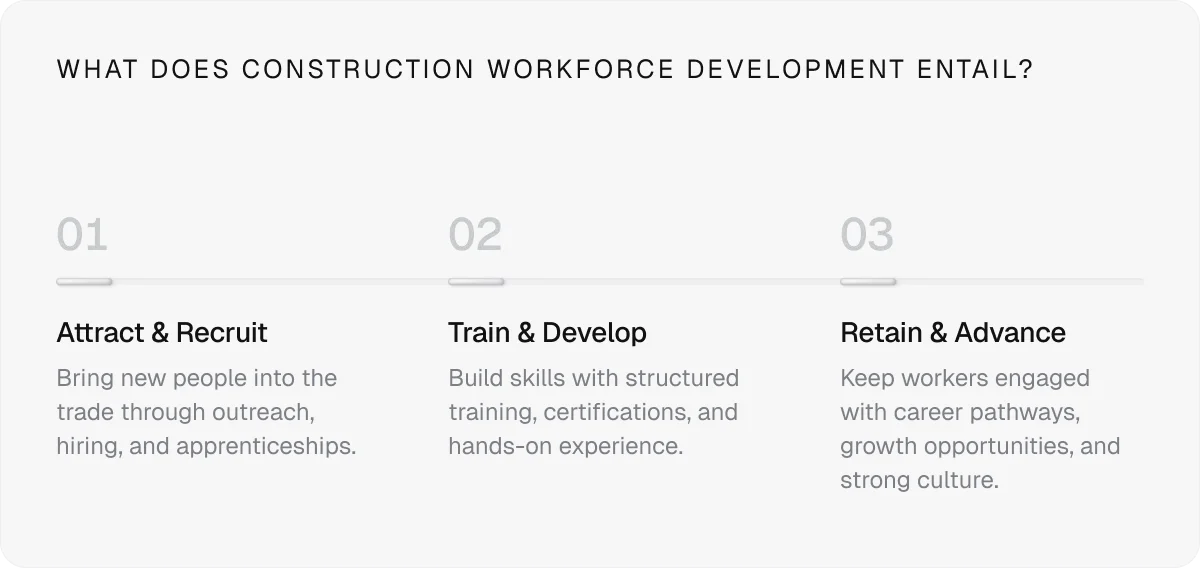
The ultimate goal is to build a stable, skilled workforce that can support reliable project delivery now and in the years ahead.
Construction workforce development: 10 strategies for attracting and retaining talent
These 10 strategies take a holistic approach to construction workforce development, focusing on the bigger picture rather than quick fixes.
1. Build ‘earn while you learn’ pipelines
An ‘earn while you learn’ pipeline combines paid work with structured training, giving individuals an easy entry point into construction.
Apprenticeships are one of the most effective ways to build this pipeline. They can help develop your trainees’ skills on site, reduce long-term hiring costs, and help retain workers who have been trained within your business.
Plus, the scale of demand is significant, with roughly 240,000 new apprentices needed over the next decade to meet UK workforce needs.
A strong talent pipeline covers several key steps:
Partnering with schools, colleges, and training providers to create direct entry routes
Offering paid placements with pre-defined progression, not just short-term roles
Structuring the programme with outlined goals, timelines, and responsibilities
Assigning mentors to support learning on site
Tracking progress and addressing issues early
Focusing on completion, not just recruitment
That last step is especially important, given that less than 50% of apprentices actually complete their training.
2. Expand recruitment through non-traditional talent pools
Traditional recruitment in construction tends to rely on the same channels: word of mouth, repeat hires, and candidates already working in the industry.
However, with demand outpacing supply, firms need to look beyond familiar sources and reach people who may not have considered construction but have the right skills or mindset.
To widen your recruitment pool, you should:
Target school leavers who aren’t pursuing university, through partnerships with colleges and career programmes
Engage with rural communities and agricultural backgrounds, where candidates are often familiar with equipment and hands-on work
Recruit career changers from sectors in decline, such as manufacturing
Work with job centres and local employment schemes to reach people actively seeking new opportunities
Partner with organisations supporting veterans, who often bring discipline and practical skills
Run open days, site visits, or short experience programmes to give people a comprehensive view of the work
3. Create clear career pathways
Many workers leave construction jobs for other employers or industries because they can’t see a defined route to higher pay or more responsibility.
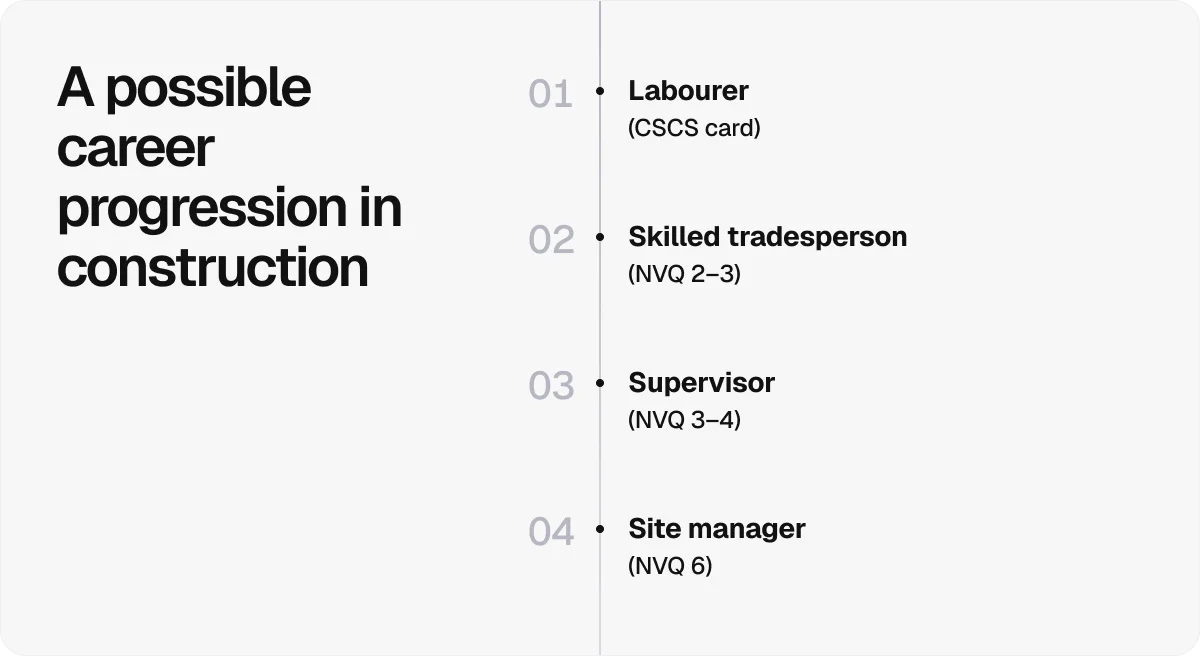
Establishing and advertising defined career pathways can help alleviate this issue by outlining how someone can move from one role to the next.
For example, a worker can progress from labourer to skilled tradesperson, then to supervisor or site manager, with each step tied to specific skill requirements, time expectations, and pay increases.
4. Leverage diversity and inclusion
In the UK, construction ranks lowest for inclusivity, with a significant gender imbalance. Men outnumber women by around 75%, and the gender pay gap sits at 10.2%.
Women make up just 0.9% of housebuilders and around 4% of skilled trades, while ethnic minorities account for only 6% of the workforce.
Besides its role in building a fair and inclusive industry, diversity also affects your ability to hire. A limited talent pool makes recruitment harder, so widening your recruitment and support efforts is a practical way to address that.
You can do so by:
Working with local community organisations to promote construction careers to underrepresented groups
Reviewing job descriptions and hiring criteria to remove unnecessary requirements that may exclude capable candidates
Training hiring managers to recognise and avoid bias during screening and interviews
Providing easy-to-understand training plans and progression routes so all employees can see how to move forward
Improving site culture in practical ways, such as strict behaviour standards, proper facilities, and zero tolerance for discrimination
5. Improve employer branding
Construction often struggles with perception, especially among younger workers.
While you can’t change the industry’s image overnight, you can control how your business is perceived by:
Making the application process quick and straightforward
Delivering projects reliably, with organised sites and realistic schedules
Communicating clearly with your workforce, so people know what’s expected and what’s changing
Paying on time and as agreed, without disputes or delays
Running well-managed sites, with proper planning, coordination, and supervision
Maintaining high safety standards and acting on issues quickly
Treating workers with respect day to day, not just in policy
Reducing constant gaps between jobs by providing steady work when possible
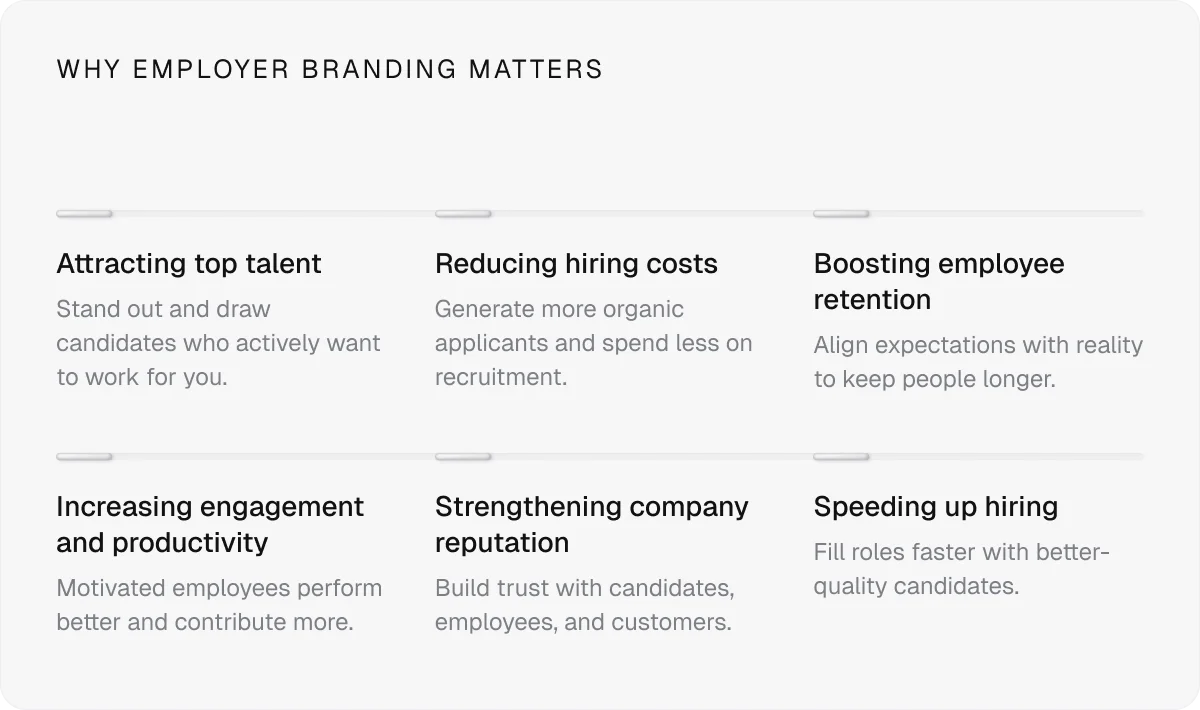
A stronger employer brand helps you attract better candidates and makes it easier for them to choose you.
6. Offer competitive pay and benefits
If your pay is below the going rate for your trade and location, you will lose workers to competitors and struggle to hire replacements.
You can start by benchmarking your wages against local market rates and adjusting them where needed.
Beyond base pay, you should make your benefits package more attractive by offering:
A pension with a clear employer contribution
Private health cover, where possible
Straightforward bonus schemes tied to project performance
Allowances for travel, tools, or overtime
These should be clearly explained in advance and paid on a predictable schedule.
A well-structured, transparent package like this makes it easier for workers to stay with you long term.
7. Invest in employee training and professional development
Given the current state of the industry, firms need to take a more aggressive approach to training and professional development.
Here are key areas to focus on:
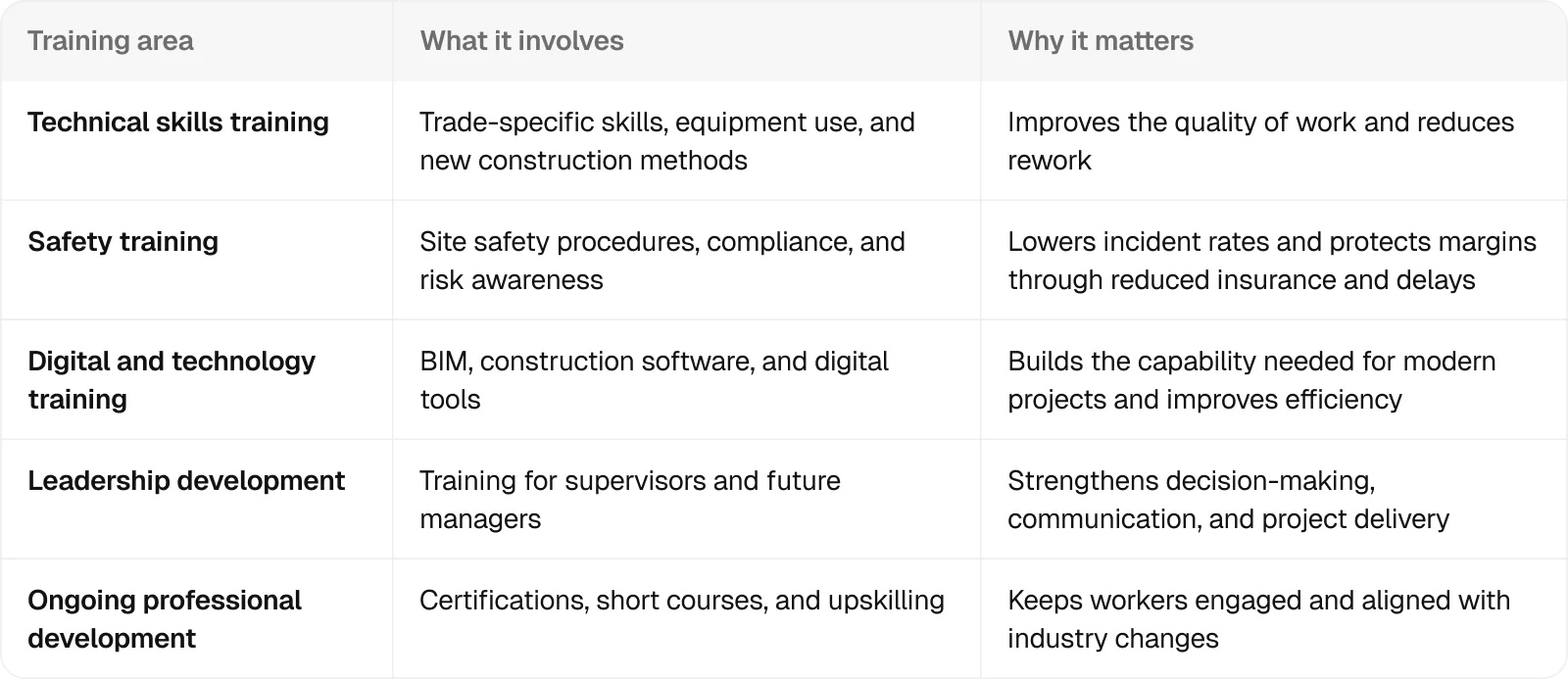
While each of these areas comes with its own challenges, digital training is often the hardest to get right, given that construction has been slow to adopt new technology. Even in 2026, 89% of construction firms aren’t fully digital across all project phases.
That’s why any tool you introduce needs to be straightforward to set up and easy to use on site.
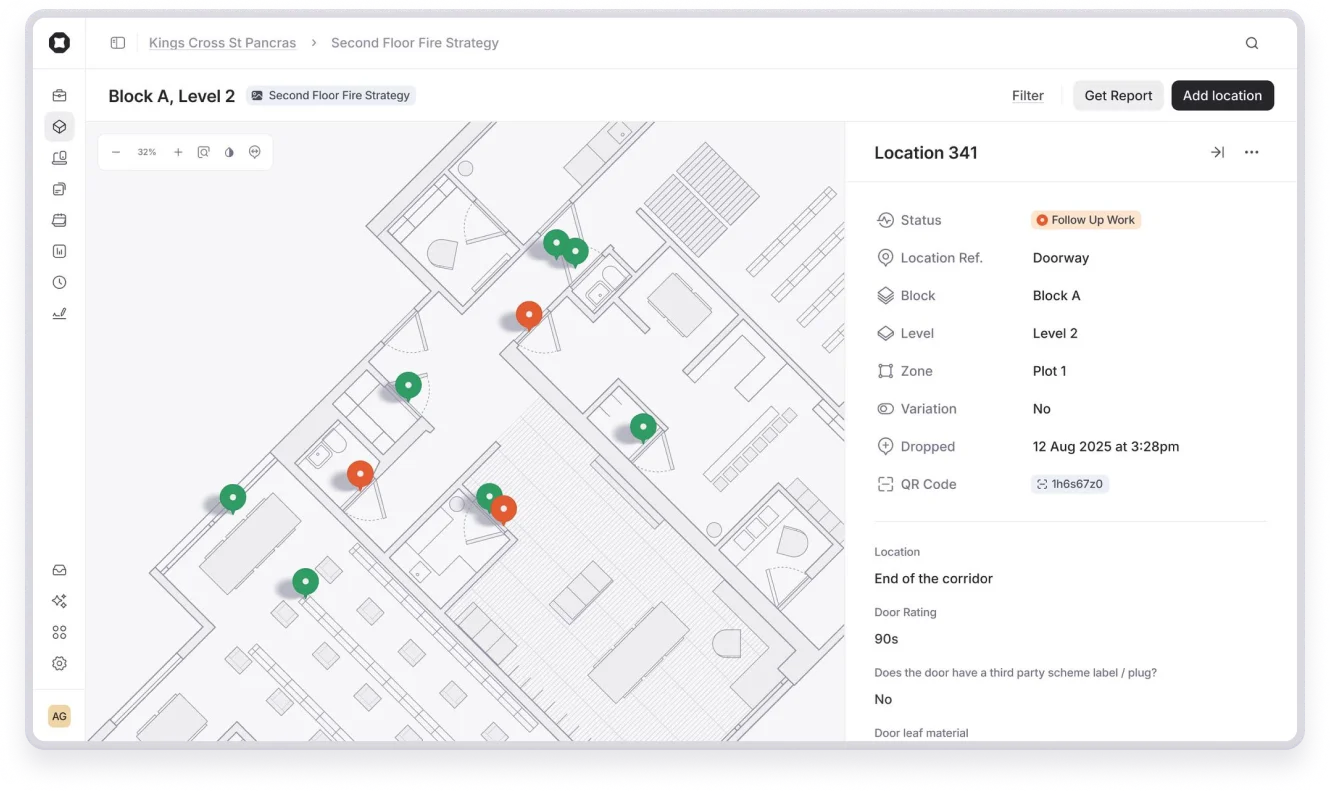
Onetrace is an excellent example in the category of construction site management tools.
The software was designed for site teams who don’t have time for complex systems, with simple workflows, an intuitive interface, and minimal training required.
The focus is on helping teams get up and running quickly, without adding complexity to the job.
8. Modernise safety with smart technology
Construction is physically demanding and carries a higher level of risk than most industries, with the fatal injury rate being almost five times higher than the all-industry average.
This is why safety has to be a top priority—not just for the sake of compliance, but to keep operatives safe and projects on track. This, in turn, helps you retain more workers.
To improve safety in practice:
Carry out and update risk assessments regularly, especially as site conditions change.
Use digital reporting tools to log incidents, near misses, and inspections in real time.
Introduce wearables and monitoring tools to track fatigue, location, and high-risk activity.
Use site management software like Onetrace to standardise safety processes and ensure nothing is missed.
Run regular, targeted safety training based on real site data.
Act on issues quickly, using live data instead of delayed reports.
9. Prioritise workforce retention through well-being
Health issues in construction are largely driven by physical demands.
Around 53% of all ill health in the sector comes from musculoskeletal disorders, while work-related stress, depression, and anxiety account for 19%.
While that doesn’t place construction among the highest-risk industries for mental health, it still represents a significant share of the workforce.
If you want to keep people, you need to address both physical strain and mental pressure. To do the latter:
Plan schedules properly to reduce long hours and last-minute changes.
Set up regular check-ins and simple feedback channels so issues are raised early.
Manage workloads so teams aren’t constantly under pressure to catch up.
Act on feedback so workers see that concerns lead to real changes.
Train supervisors to spot early signs of stress and burnout.
Provide access to mental health support where possible.
Well-being isn’t separate from performance; it directly affects whether people stay and how well they work.
10. Use data to plan workforce needs
Live data is essential for making informed decisions across industries. Without it, workforce planning relies on guesswork, reacting to shortages instead of preparing for them.
In construction, this means tracking who is on site, what skills are available, where gaps are forming, and how workloads are distributed. Used properly, this method helps you plan ahead, avoid overloading teams, and keep projects running smoothly—all of which support retention.
The most effective way to do this is through dedicated software, which can give you real-time visibility, reduce manual tracking, and help you make quicker, more accurate decisions about your workforce.
Putting construction workforce development into practice with Onetrace
Many of these construction workforce development strategies come down to how well you run your business day to day and how you treat the people doing the work.
Planning, communication, safety, and consistency all play a direct role in whether people stay, perform well, and recommend you to others.
With its two products, Traceability and Workforce, Onetrace supports both sides of the equation: how work is delivered, and how your workforce is managed.
Traceability allows you to keep work structured, compliant, and easy to manage by:
Capturing consistent site data with customisable forms, photos, and mandatory fields
Standardising processes across projects so nothing is missed
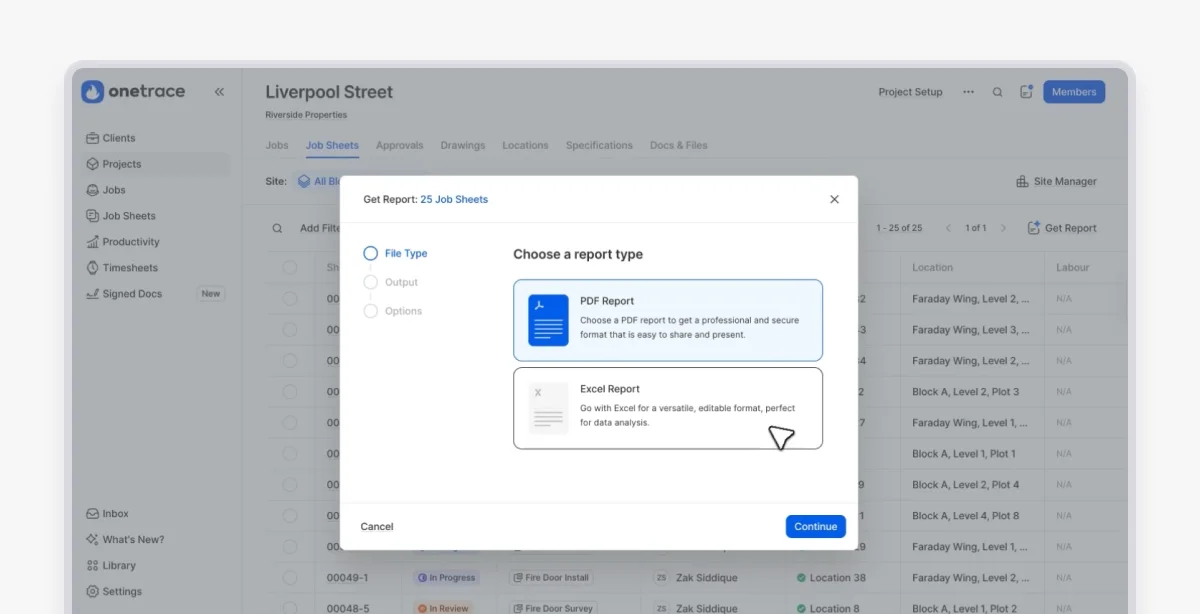
Building a clear audit trail with drawings, pins, and approvals
Generating professional reports to prove work and reduce disputes
As for Workforce, it allows you to:
Plan and adjust schedules quickly with a simple visual planner
Manage compliance with signed documents and live status tracking
Give operatives an easy-to-use mobile app that works on site, even offline
If you want to see how these two products work in practice and support construction workforce development, book a personalised demo with the Onetrace team.
FAQ
How to develop a workforce development plan?
Start by identifying your current skill gaps and future workforce needs. Then set clear priorities—recruitment, training, and retention—and define how you’ll address each. Put simple processes in place, track progress, and adjust as needed.
What are the best practices for developing a workforce?
Focus on consistent hiring pipelines, structured training, clear progression, and fair pay. Support your workforce day to day through effective planning, communication, and safe working conditions.
Marketing Team
@Onetrace
The Onetrace marketing team is passionate about sharing insights, ideas, and innovations that help construction businesses stay connected, compliant, and efficient. Combining industry expertise with a love for clear communication, we aim to deliver content that empowers professionals to work smarter and safer.